


Antique Carved Nursing Seat
An antique carved nursing seat offers low-slung comfort and elaborate timberwork, bringing nineteenth-century parlour elegance directly into modern rooms.
Antique Carved Nursing Seat
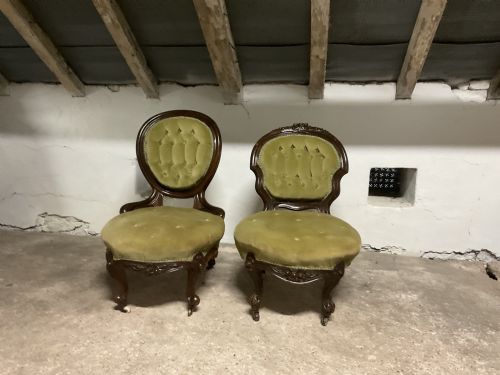
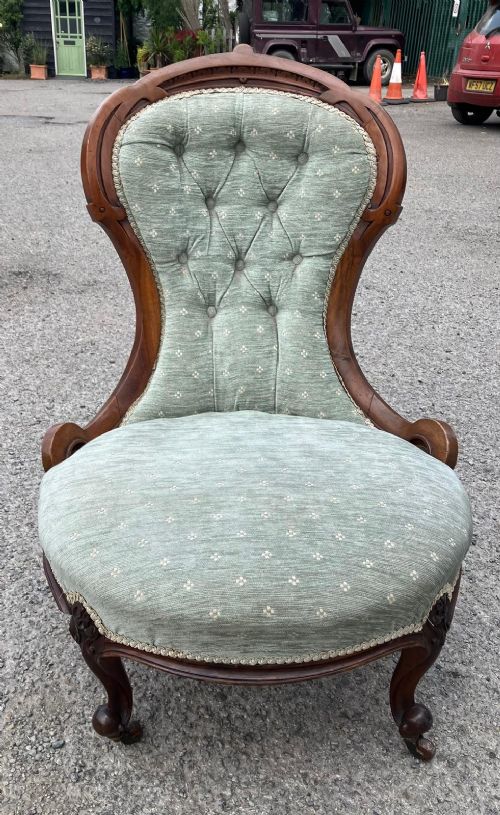
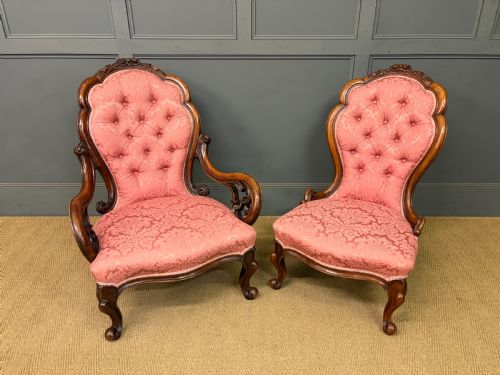
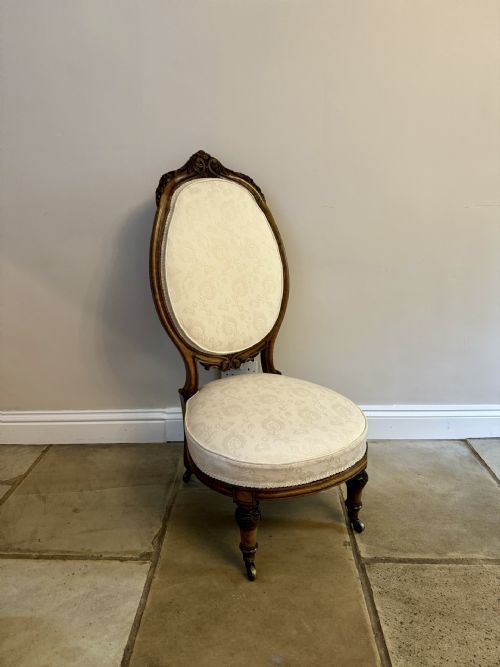
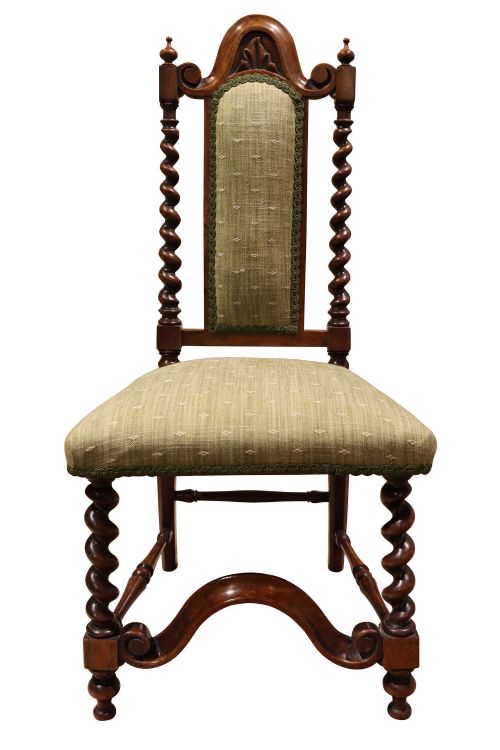
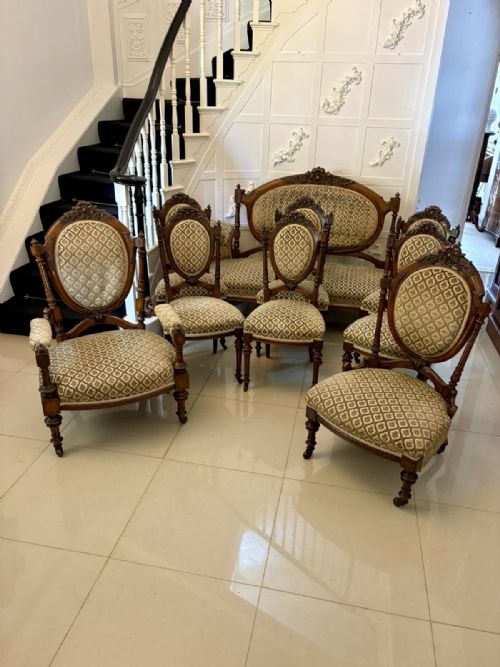
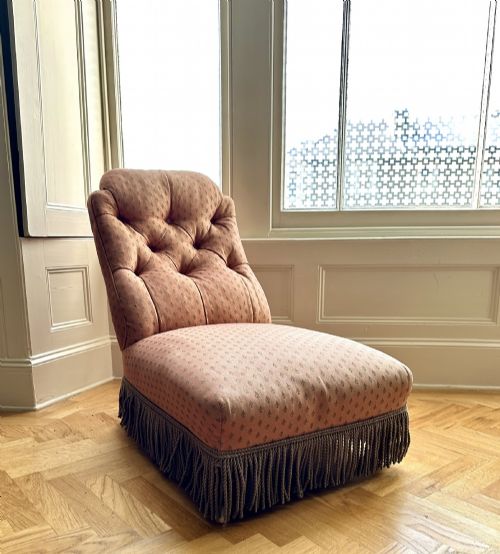
An antique carved nursing seat is a low-seated chair designed for comfort, frequently encountered in Victorian and Edwardian iterations across this selection. These pieces typically manifest as nursing chairs, ladies chairs, slipper chairs, and salon chairs, often sitting lower to the ground than standard parlour seating.
The materials and forms reflect nineteenth and early twentieth-century domestic life, ranging from walnut and mahogany frames to occasional beech pieces. Buyers will find versions featuring exposed carved woodwork alongside examples awaiting re-upholstery or retaining original fabric and fringe details.
Materials and construction methods
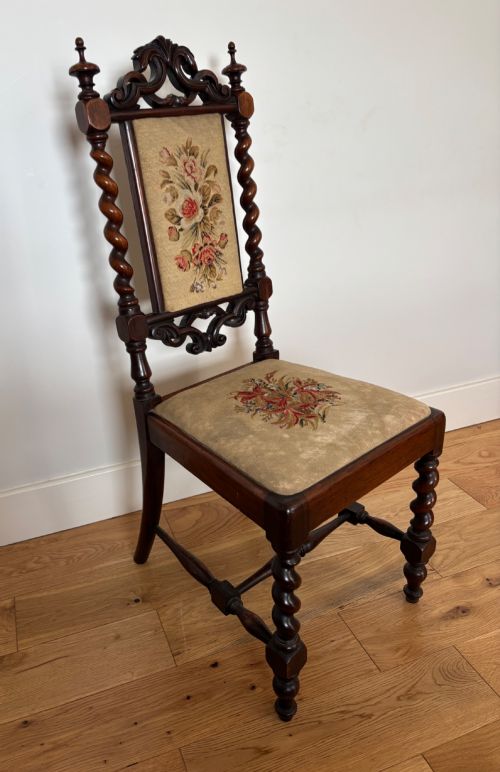
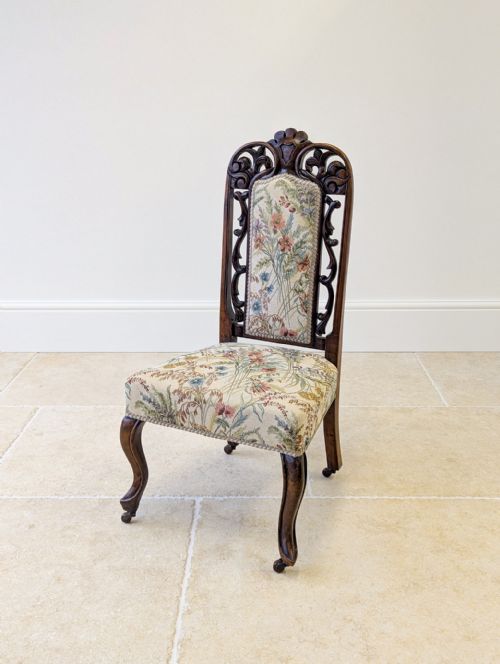
Makers constructed these frames predominantly from dense hardwoods such as walnut, mahogany, and rosewood, occasionally utilising beech, oak, and giltwood. Timber elements received detailed hand-carving, featuring motifs aligned with Victorian Rococo Revival, Gothic Revival, and Aesthetic Movement styles.
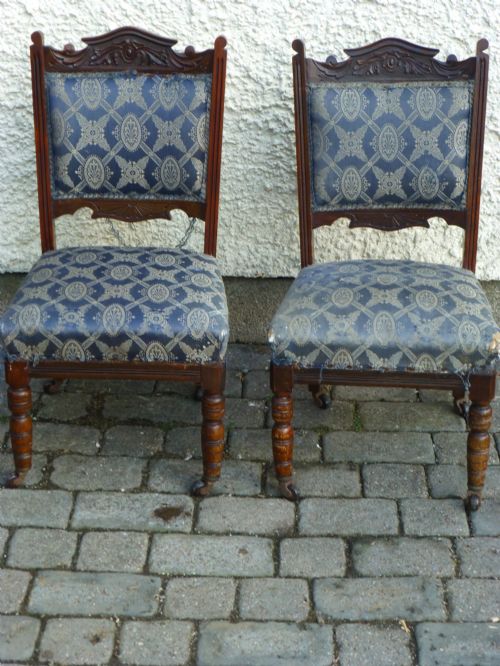
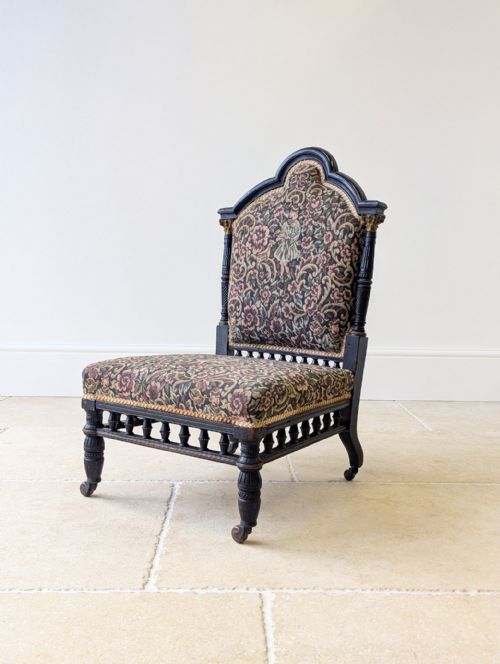
Upholstery formed a central part of the construction, integrating textiles like velvet, fabric, and tapestry, sometimes complemented by brass castors, cane work, or fringe trim. Frames were joined using period techniques, supporting low profiles suited for bedroom and parlour use.
Some nineteenth-century chairs include tiny brass castors designed to protect heavy carpets while ladies moved closer to the parlour fire.
Distinctions in craftsmanship and preservation
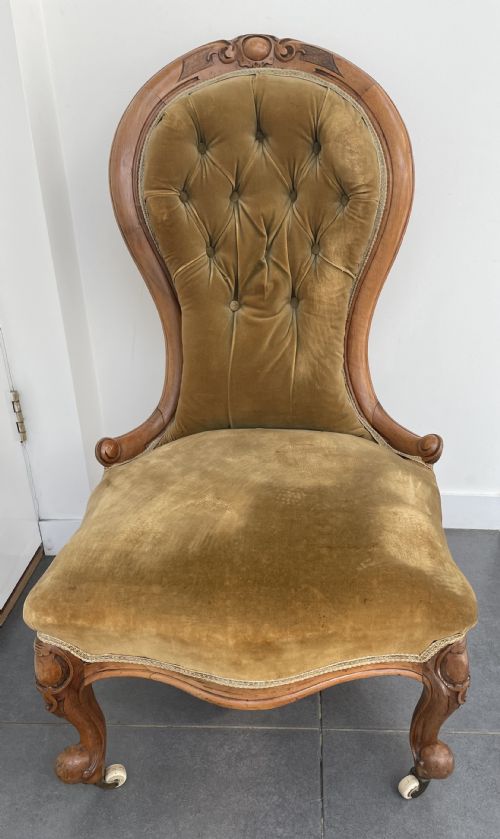
Quality separates pieces through the crispness of the hand-carved woodwork and the selection of dense timbers like walnut or rosewood over basic alternatives. Superior examples display refined proportions, intricate spoon-backs, or barley twist supports that reflect ambitious nineteenth-century design.
R Whytock of Edinburgh·Wheeler Of Arncroach
The Antique Carved Nursing Seat Glossary
- Nursing chair
- A low-seated chair historically designed to allow women to nurse infants comfortably without interference from voluminous Victorian skirts. These seats typically feature padded backs and short legs.
- Spoon-back
- A padded chair back shaped like the bowl of a spoon, curving to fit the human spine. This ergonomic form appears frequently on mid-nineteenth-century walnut seating.
- Giltwood
- Timber treated with gold leaf or gold paint to simulate solid gold enrichment. This finish surfaces on ornate nineteenth-century salon and decorative seating.
- Bergere
- A closed armchair featuring woven cane panels on the back and sides. These frames offer a lighter visual weight within Victorian and Edwardian interiors.
- Prie-Dieu
- A devotional chair featuring a high, narrow back designed for kneeling and prayer. These pieces often incorporate tapestry upholstery and sturdy timber frames.
Antique Carved Nursing Seat: Frequently Asked Questions
What is a nursing chair?
A nursing chair is a low-slung nineteenth-century seat designed with a shortened frame to facilitate comfortable infant feeding during the Victorian era.
These pieces combine decorative carved timber frames with padded upholstery, making them adaptable as low accent seating in modern bedrooms.
How do I date an antique chair?
Dating relies on identifying timber choices, such as rosewood and walnut in mid-Victorian pieces versus mahogany and beech in later Edwardian examples. Stylistic markers like Gothic Revival or Aesthetic Movement motifs also anchor pieces to specific decades.
Hardware additions such as brass castors and the method of frame construction provide further evidence for narrowing the decade of manufacture.
Are these chairs comfortable to use?
These seats offer supportive low seating, though historical padding may feel firmer than modern lounge furniture. Many examples are acquired specifically for their compact proportions and ergonomic curved backs.
Buyers often select pieces requiring re-upholstery to install modern interior cushioning while preserving the antique wooden frame.
Where should I place a nursing chair?
These compact seats fit easily into bedrooms, dressing rooms, and corners of living spaces where standard armchairs prove too bulky. Their low profile ensures they do not overwhelm smaller rooms.
Pairing a carved timber frame against plain walls highlights the detailed woodwork and period upholstery styles.