


Antique Carved Coffer Box
An antique carved coffer box provides robust domestic storage through centuries of timber craftsmanship, offering lasting utility and distinct historical character.
Antique Carved Coffer Box
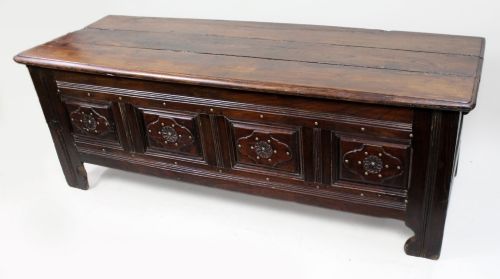
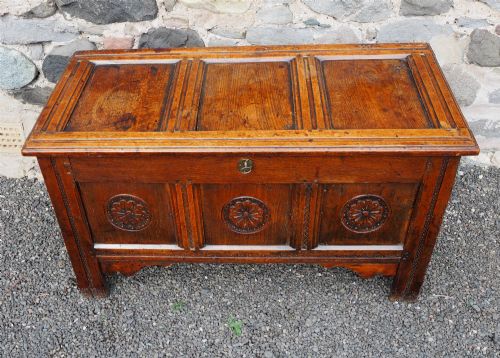
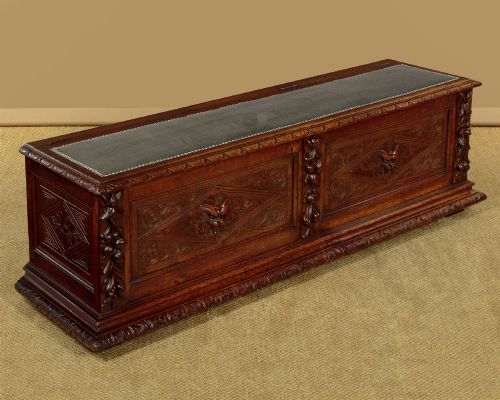
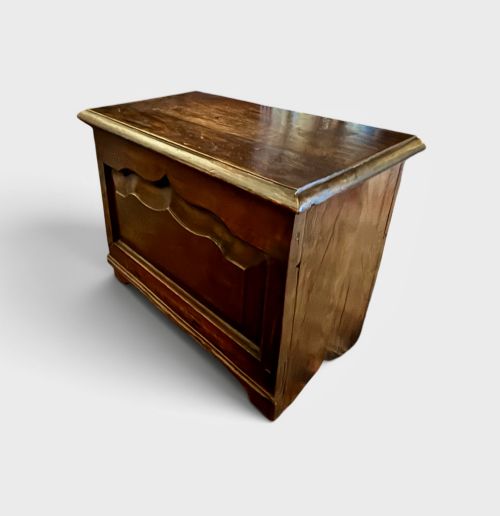
An antique carved coffer box is a heavy timber storage receptacle intended for household valuables, linens, and documents. These pieces range from utilitarian sixteenth-century boarded boxes to highly ornamented seventeenth-century panelled examples and later revival pieces.
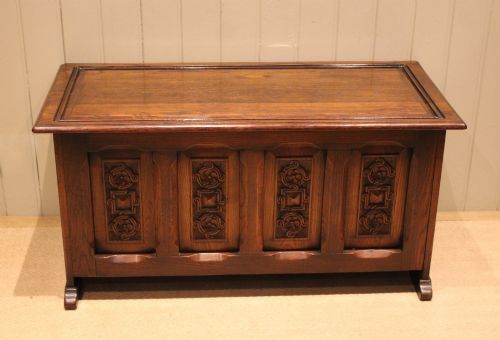
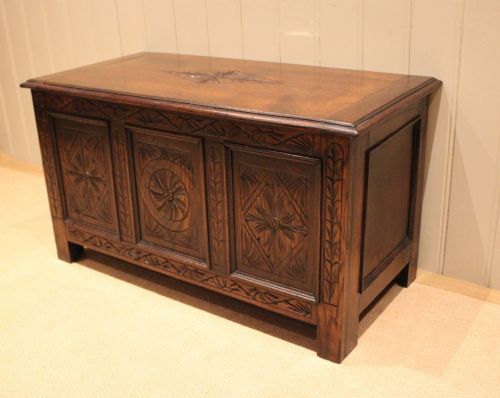
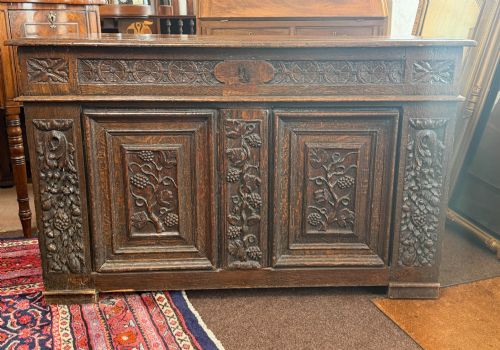
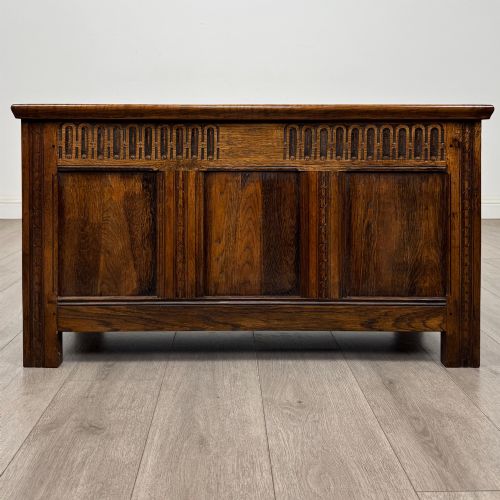
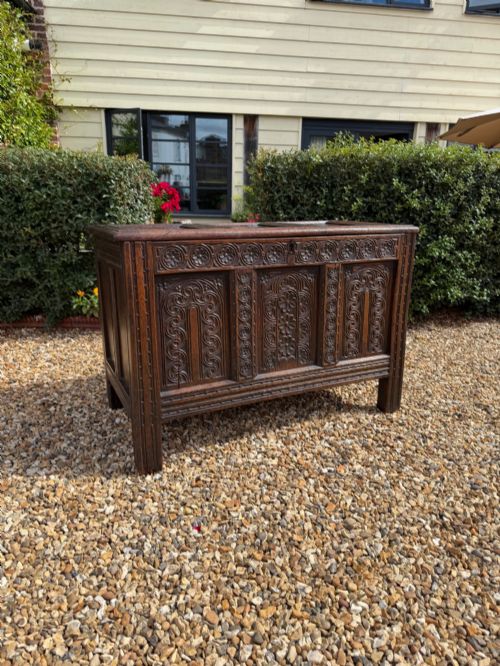
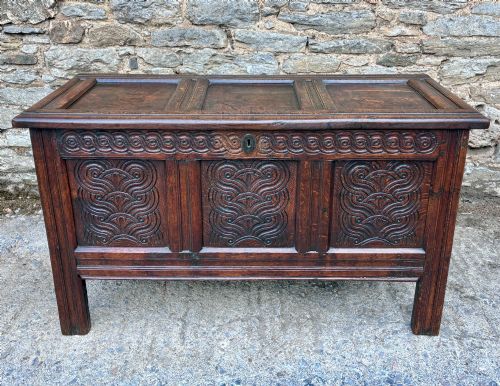
The versions most frequently encountered on this page date from the seventeenth and eighteenth centuries, constructed in solid oak with carved friezes, styles, and rails. Later nineteenth and twentieth-century interpretations emulate these earlier Jacobean and Georgian forms.
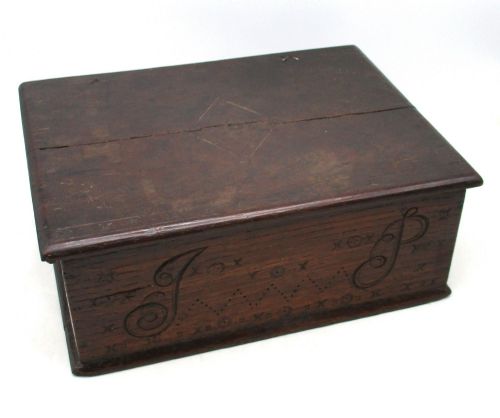
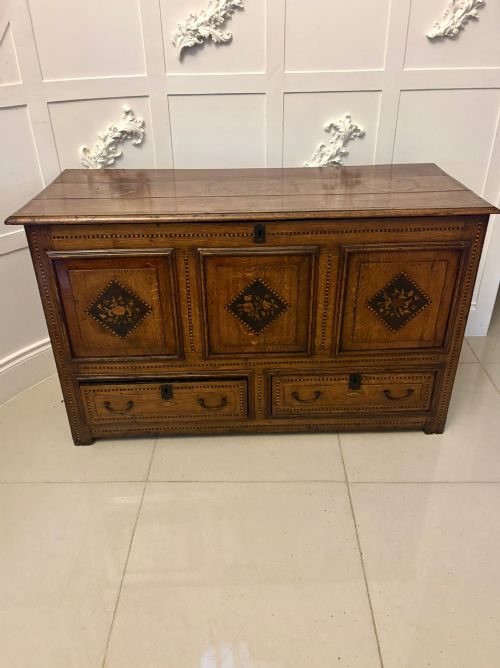
Beyond basic chests, related forms include mule chests featuring lower drawers, box settles with high panelled backs, and smaller document boxes. Regional variations encompass Welsh, English, and continental styles utilising local timbers.
How They Were Made
Early construction relies heavily on solid oak boards joined by pegged mortise and tenon frames surrounding panelled inserts. Simpler sixteenth-century variants utilise six-plank boarded construction joined directly with iron hardware or dovetails.
Surface ornamentation is achieved through chip carving, gouge work, and low-relief geometric or floral patterns directly into the timber. Additional decorative depth appears on select pieces through marquetry inlay utilising contrasting woods or mother-of-pearl.
Hardware such as wrought iron strap hinges, latches, and original locks secure the heavy lids, whilst interior compartments sometimes incorporate small till boxes for coins or papers.
Regional English styles appear alongside French Provincial, North Italian, and Middle Eastern trunk forms across multiple centuries.
What Varies In Quality
The grade of an antique carved coffer box depends heavily on the integrity of its timber and the depth of its original surface patination. Untouched surfaces retain historic wax and dry grain that inferior stripped or heavily refinished pieces lack.
Carving execution separates standard domestic items from exceptional workshop output, with crisp, deeply incised motifs commanding greater presence than worn or shallow execution. Structural completeness, including original lids, bases, and ironwork, dictates historical authenticity.
The Antique Carved Coffer Box Glossary
- Coffer
- A heavy wooden chest traditionally used for storing valuables, plate, or documents. These sturdy receptacles often double as seating within early domestic interiors.
- Mule Chest
- A storage chest featuring one or more drawers built into the base beneath the main compartment. This hybrid form bridges the gap between the simple coffer and the chest of drawers.
- Marquetry Inlay
- The art of applying thin slices of decorative wood veneers to a structural surface to create pictorial or geometric patterns. It adds significant visual complexity to seventeenth-century pieces.
- Six Plank Boarded
- A primitive construction method utilising six distinct boards joined directly at the edges to form a simple box. This technique predominates in sixteenth and early seventeenth-century examples.
- Panelled Construction
- A method where a frame of stiles and rails surrounds a thinner floating central panel, allowing timber to expand and contract safely with humidity changes. This technique prevents warping in large oak chests.
Antique Carved Coffer Box: Frequently Asked Questions
What were antique coffer boxes used for?
These heavy chests served primarily to secure valuable household goods, heavy textiles, and important family documents away from damp floors and pests. In medieval and early modern homes, their secure lids and sturdy locks made them the safest domestic storage option available.
Beyond simple storage, their flat tops allowed them to function as tables, benches, or sleeping platforms for servants within the great hall. Travelling nobility also utilised smaller versions lashed to packhorses or carriages to transport personal belongings.
How do I date an oak coffer?
Dating relies on observing construction methods, joinery marks, and the style of the carved ornamentation. Sixteenth and early seventeenth-century examples typically show boarded construction or heavy pegged frames with simple gouge-carved lunatic or strapwork motifs.
Later seventeenth-century pieces introduce panelled construction with complex geometric mouldings, often bearing inscribed dates or initials. Eighteenth-century and later revival chests frequently exhibit softer timber grain, machine-sawn components, or lighter proportions.
Where should I place a coffer at home?
A coffer fits naturally at the foot of a bed, in a hallway as a bench seat, or as a focal point in a living room. Their internal capacity makes them ideal for storing spare blankets, winter quilts, or bulky household items out of sight.
Because solid oak and historic timbers react to extreme temperature shifts, keep these boxes away from direct radiator heat and strong sunlight. Maintaining a stable indoor climate preserves the dry historic patination and prevents timber splitting.
What is the difference between a coffer and a mule chest?
A standard coffer consists of a single deep box accessed exclusively through a hinged lid on the top. Retrieving items from the bottom requires removing everything stacked above them.
A mule chest incorporates one or more functional drawers beneath the main upper compartment. This addition allows access to stored linens or garments without needing to clear items off the top lid.