
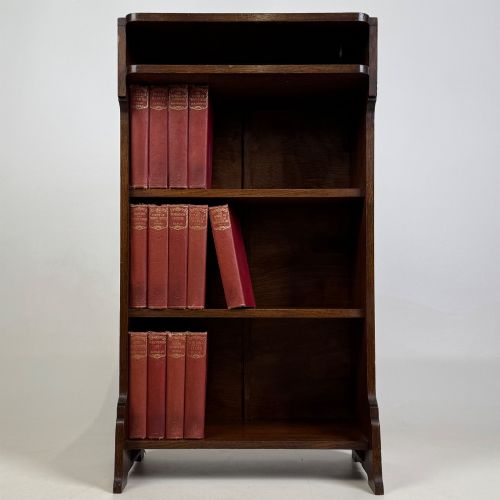
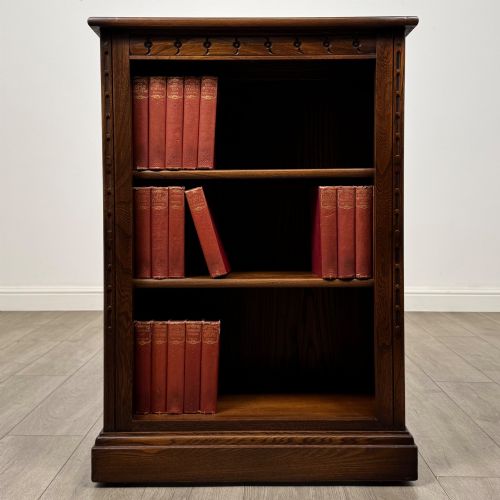
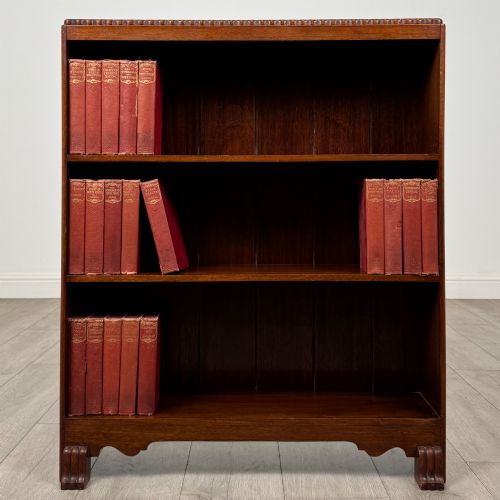
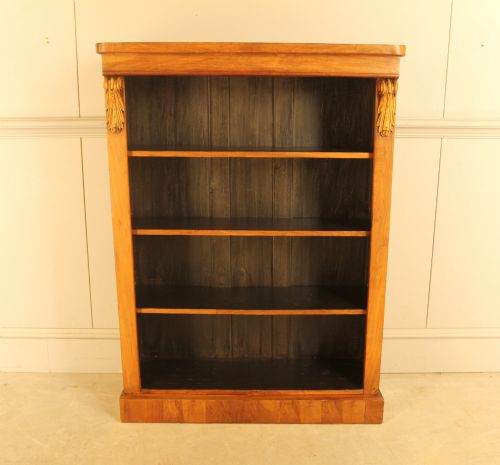
Antique Carved Bookshelf
An antique carved bookshelf brings architectural weight and natural timber grain to a room, offering sturdy ledges for volumes gathered over decades.
Antique Carved Bookshelf
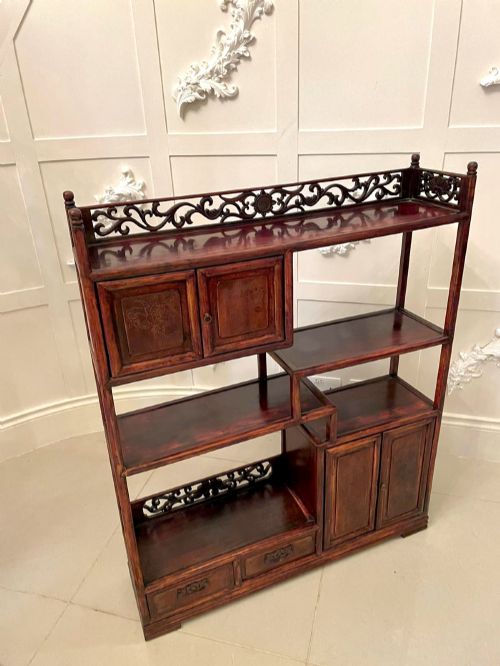
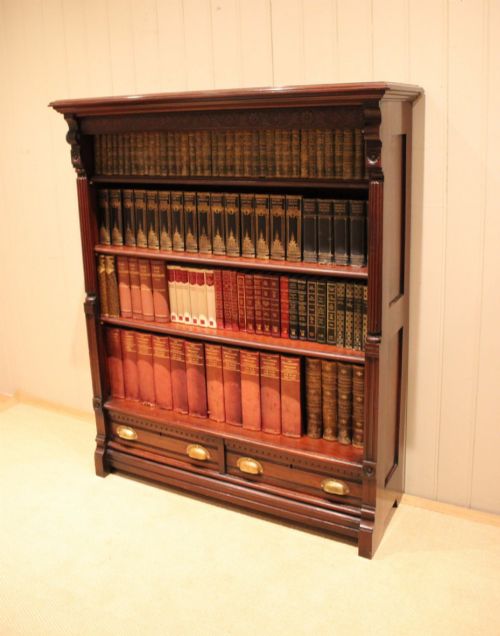
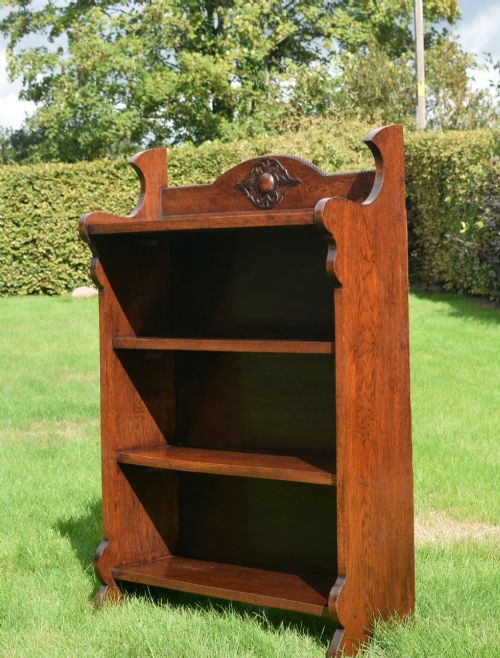
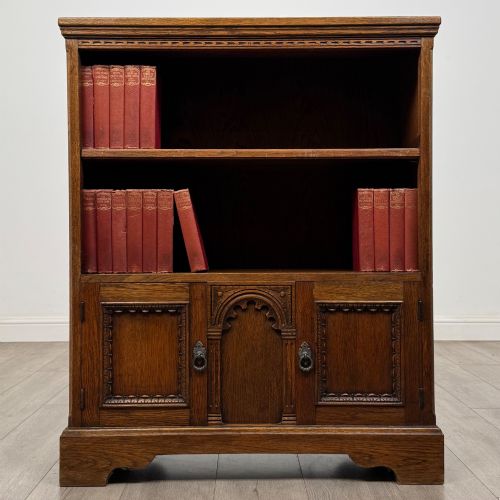
When you search for an antique carved bookshelf, you encounter pieces designed to display and house personal libraries across several centuries of domestic life. The selection here spans the nineteenth and twentieth centuries, taking the form of open bookcases, wall shelves, display cabinets, table cabinets, and book stands.
Oak and mahogany form the backbone of these listings, accompanied by walnut, rosewood, pine, and teak. You will frequently meet pieces bearing the heavy architectural motifs of the Victorian and Edwardian eras, alongside clean-lined items from the Arts and Crafts movement and earlier Regency or William IV periods.
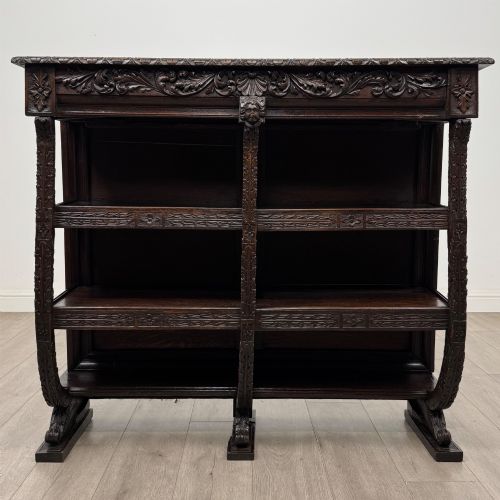
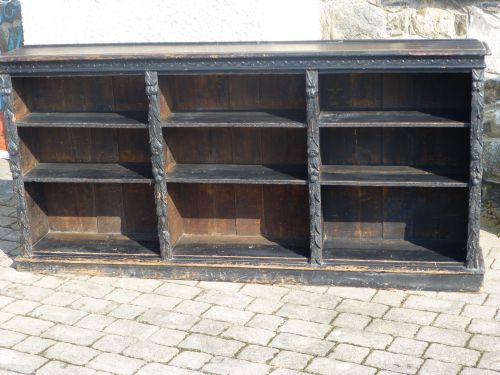
The carvings on these pieces range from linear geometric incisions to robust foliate reliefs and figural details like the green man. Such ornament distinguishes functional utility storage from the more decorative library furniture built to anchor a formal parlour or study.
Materials and construction methods
Cabinetmakers utilised solid hardwoods such as oak, mahogany, walnut, and rosewood, constructing carcases with pegged joints, dovetails, and panelled backs. Timber selection dictated the depth and clarity of the carving, with close-grained woods accepting crisp, sharp chisel work.
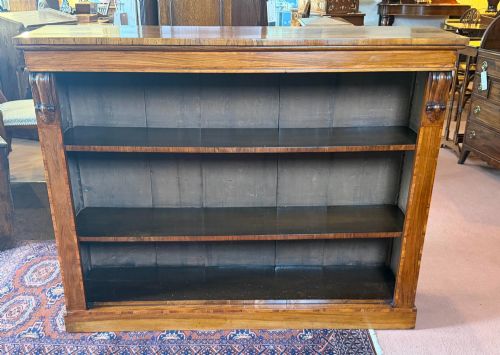
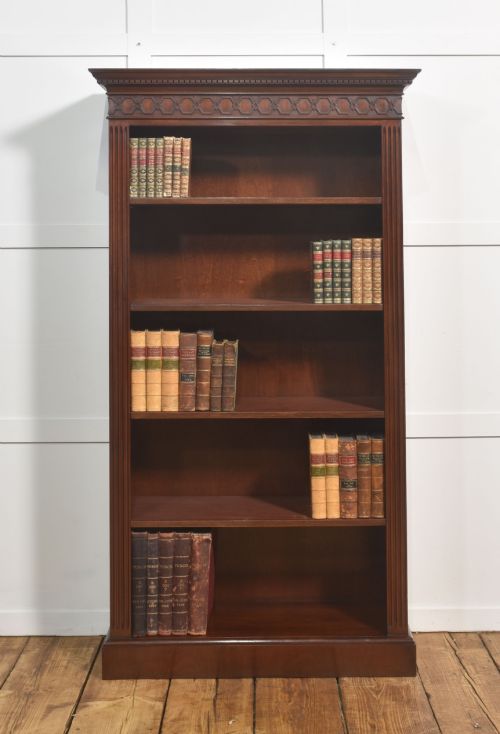
Adjustable shelving systems, often supported on brass ratchets or wooden bearers, appear frequently in the larger open bookcases of the nineteenth century. Ebonised finishes, ormolu mounts, and satinwood veneers surface on specific stylistic pieces, marking distinct regional workshops and period tastes.
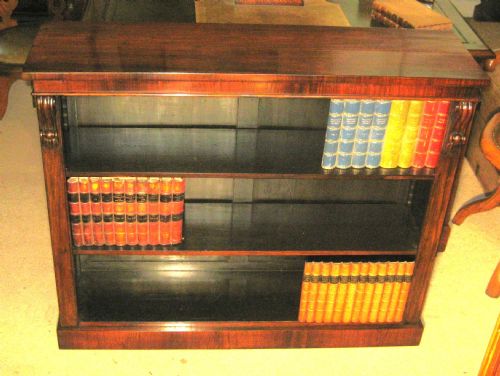
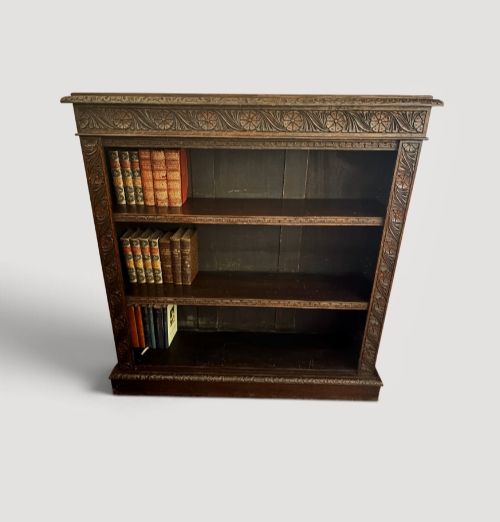
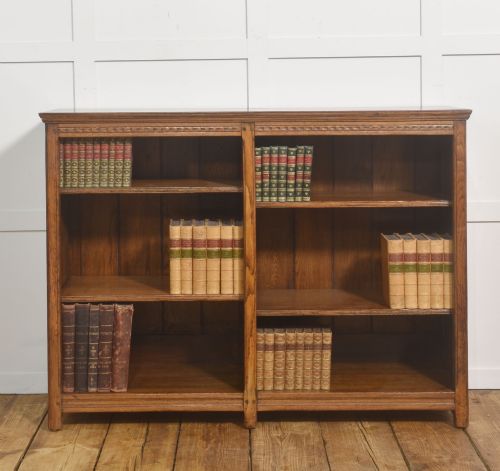
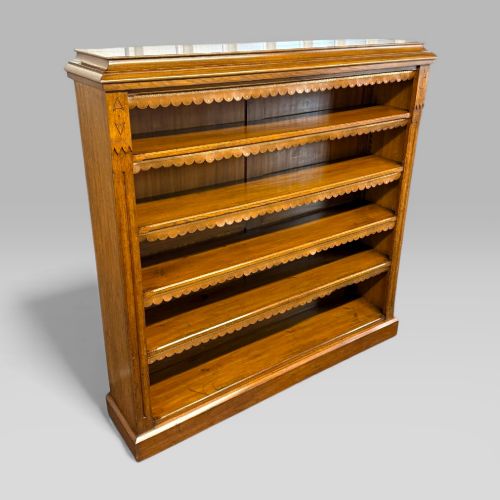
The listings show a strong representation of Edwardian and Victorian oak open bookcases equipped with adjustable shelves.
Markers of fine construction
Quality rests in the crispness of the hand-carved detail and the selection of figured timber veneers for the main panels and cornices. Superior examples exhibit balanced proportions, tight joinery, and well-executed secondary woods within the interior carcase.
The integration of functional elements, such as smoothly operating adjustable shelf mechanisms and robust structural framing that supports heavy volumes without sagging, separates exceptional library furniture from simpler utilitarian storage.
Arthur Simpson of Kendal·James Winter
The Antique Carved Bookshelf Glossary
- Breakfront
- A cabinet or bookcase whose central section projects forward from the flanking wings. This architectural device adds depth and visual rhythm to larger library pieces.
- Dwarf bookcase
- A low open bookshelf designed to sit beneath dado height, leaving wall space above for pictures. These low units were common in Victorian libraries and drawing rooms.
- Green man
- A sculptural face carved from foliage or branches, symbolising rebirth. This motif frequently appears on nineteenth-century oak furniture and revival pieces.
- Ormolu
- Gilded bronze mounts applied to furniture for decorative accent. Cabinetmakers used these metallic details to highlight the corners and friezes of high-status walnut and mahogany pieces.
Antique Carved Bookshelf: Frequently Asked Questions
How do I adjust the shelves?
Many nineteenth-century bookcases utilise brass rack strips inset into the interior sides, allowing small metal clips to support the wooden shelves at exact heights.
Simpler or earlier models rely on fixed wooden pegs resting inside pre-drilled holes or vertical side grooves.
Where should I place an open bookcase?
Position your bookshelf away from direct sunlight and strong heat sources like radiators to prevent the solid timber and veneers from drying out and splitting over time.
Ensure the floor is level so the carcase bears the weight of heavy book collections evenly without straining the joints.
How do I date a Victorian bookcase?
Examine the timber species, construction marks, and hardware, as early Victorian pieces often feature rich rosewood and mahogany with hand-cut dovetails.
Later Victorian and Edwardian examples frequently showcase golden oak, machine-sawn backing boards, and more eclectic revival styles such as Jacobean or Arts and Crafts.
Can these shelves hold heavy books?
Solid hardwood shelves made of oak or mahogany possess the structural strength required for heavy octavo and folio volumes without bowing.
Thinner shelves or those spanning wide apertures benefit from occasional rotation or lighter paperbacks to maintain a level surface.