
Antique Carved Animals
These antique carved animals bring character to a room through the varied hands of European, Asian and folk carvers.
Antique Carved Animals
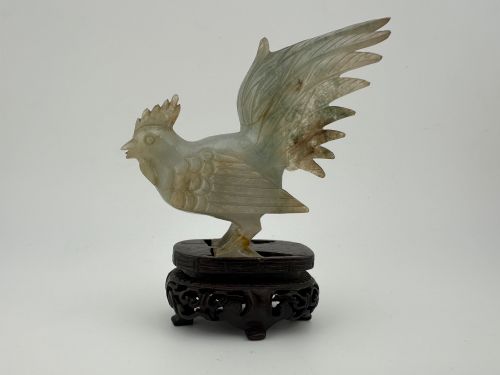
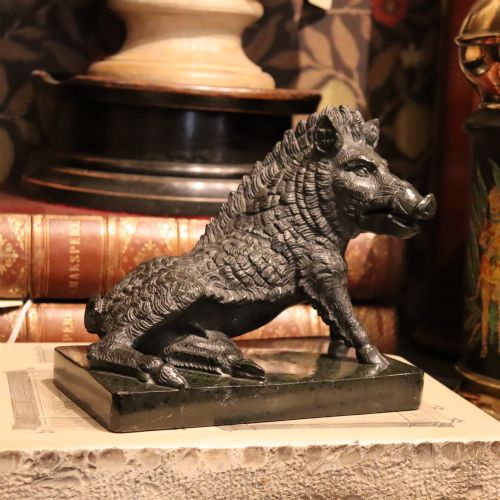
When you search for antique carved animals, you encounter a diverse collection of sculptural objects ranging from Black Forest linden wood bears and deer to Chinese jade horses and Japanese cedar figures. The pieces on this page span several centuries, with a strong representation of nineteenth-century European woodcarvings and Asian hardstone fauna.
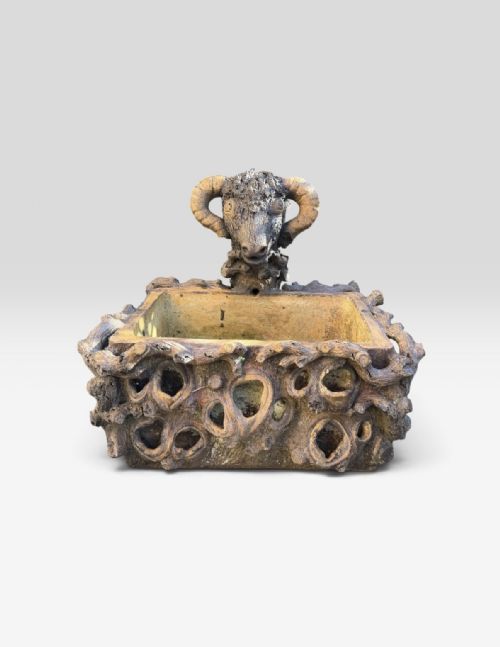
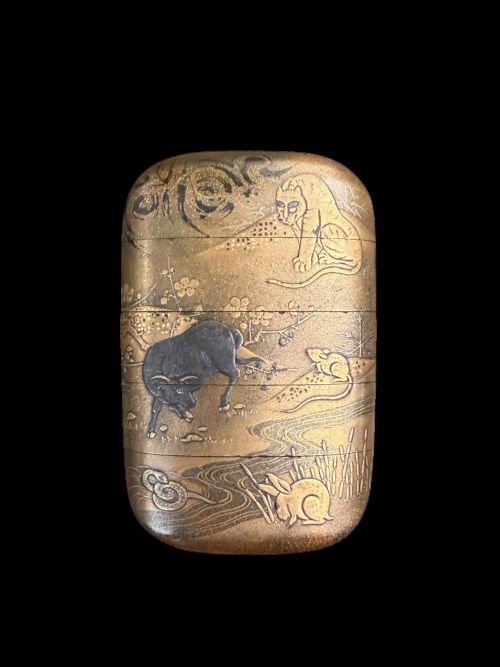
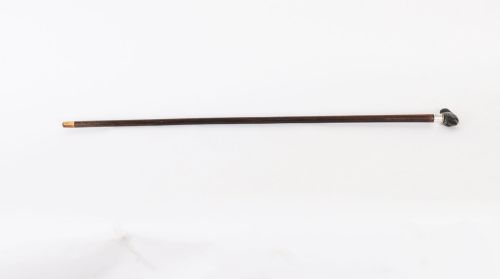
Forms include freestanding decorative sculptures, bookends, inkwells, snuff boxes, and functional items like walking stick handles and cane tops. You will frequently find domestic and wild creatures portrayed, including dogs, birds, monkeys, fish, and mythical beasts.
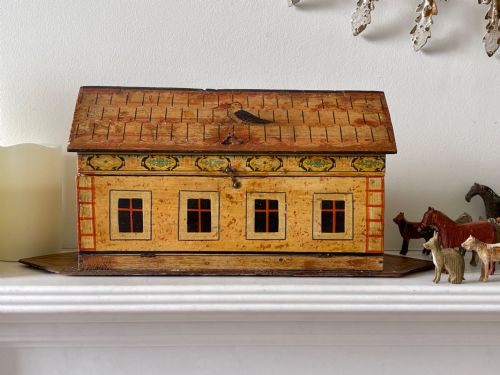
Regional styles dictate much of what appears, from the naturalistic woodland studies of Switzerland and Germany to the stylised forms of Qing Dynasty carvings and Japanese folk art. The selection bridges formal scholarly pieces and naive folk carvings made for everyday use.
Materials and construction
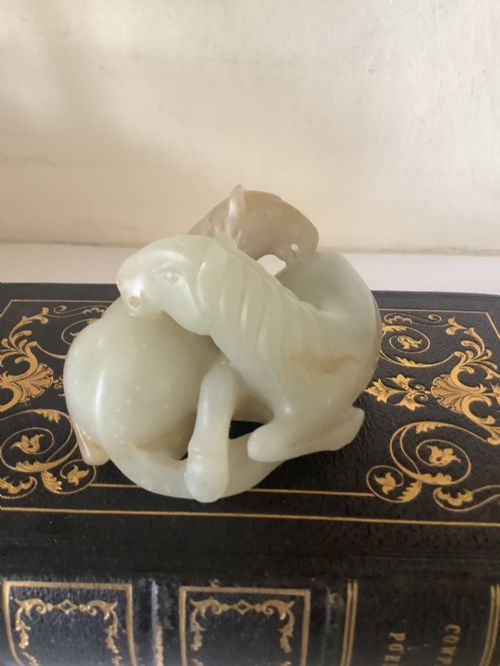
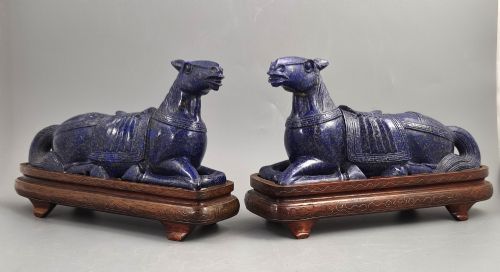
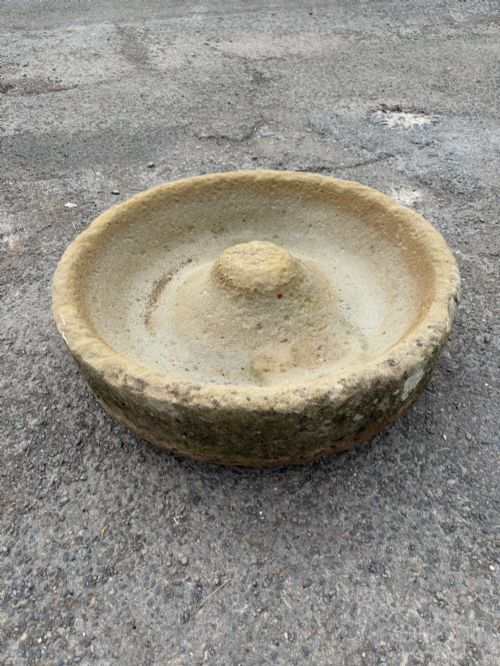
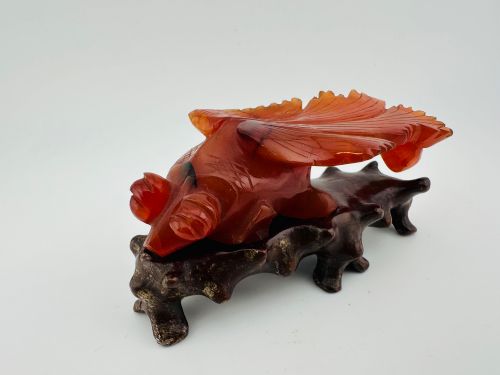
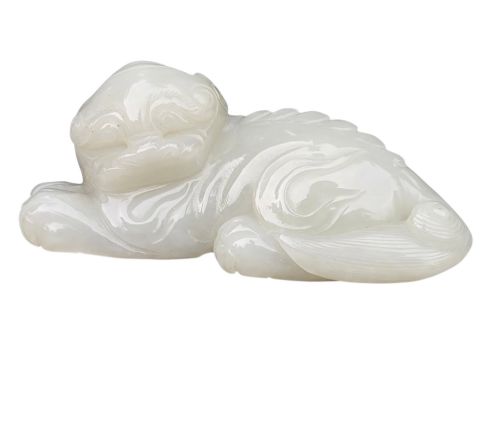
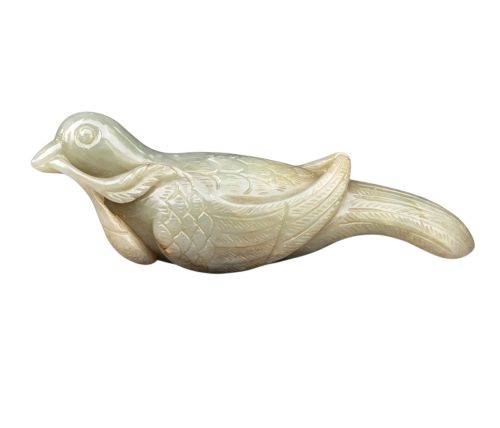
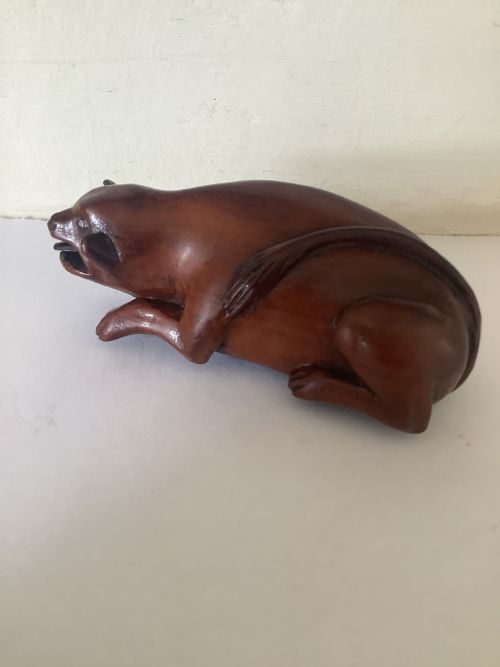
Carvers worked primarily in wood, utilising linden wood, cedar, walnut, and general hardwoods alongside alternative media such as jade, soapstone, sandstone, carnelian agate, and green marble. Wood pieces frequently display visible chisel marks or fine surface smoothing, while stone sculptures exploit the natural colour variations of minerals like jade and lapis lazuli.
Details such as painted highlights, inlaid glass eyes, or silver mounts on walking sticks incorporate mixed media into the construction, enhancing the decorative impact of the animal subjects.
Listings show a strong concentration of nineteenth-century European woodcarvings alongside eighteenth- and twentieth-century Asian hardstone sculptures.
Assessing quality and execution
Quality rests upon anatomical accuracy and the liveliness of the carving, distinguishing stiff, generic forms from pieces that capture the posture and expression of the animal with vitality. Fine works show considered attention to muscle structure, texture, and the natural grain of the material.
The sophistication of the finishing separates standard production pieces from superior examples. Master carvers achieved depth and shadow through controlled undercutting in wood or precise polish across hardstones, whereas lesser pieces remain blunt and flat in detail.
The integrity of the material and its mount also defines the standard, with original fitted stands, well-preserved surfaces, and minimal restoration maintaining the historical value of the sculpture.
J HUGGLER
The Antique Carved Animals Glossary
- Black Forest
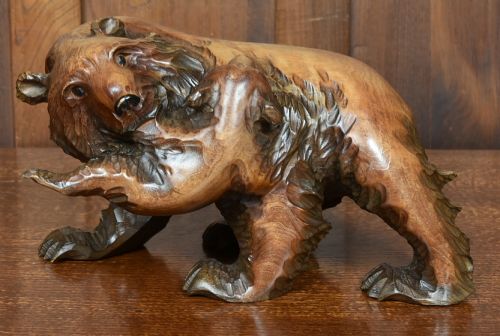
- A style of woodcarving originating from the mountainous region of central Europe, renowned for realistic depictions of bears, deer, and alpine animals. These pieces often utilise linden wood.
- Kibori Kuma
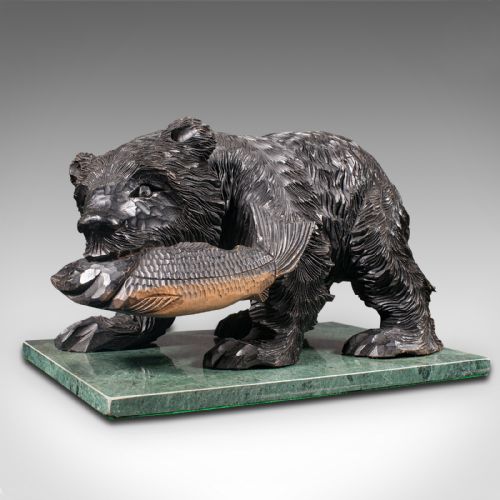
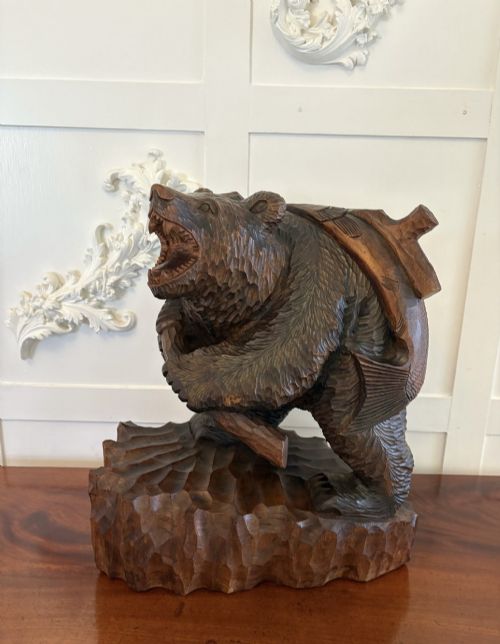
- A style of Japanese wooden bear carving, traditionally originating from Hokkaido, often depicted carrying a fish in its mouth. It forms a distinct subset of folk art sculpture.
- Hardstone
- A term used by collectors to describe semi-precious stones such as jade, agate, and soapstone. These materials require abrasive cutting techniques due to their high mineral hardness.
- Netsuke
- A small Japanese carved toggle used to secure a pouch or basket to a kimono sash. They are intricately detailed and frequently take the form of animals or figures.
- Folk Art
- Objects created by self-taught or traditional artisans outside academic traditions. These pieces often display a naive charm and direct use of local painted or carved wood.
Antique Carved Animals: Frequently Asked Questions
What are Black Forest carvings?
Black Forest carvings are wooden sculptures and decorative objects produced in Switzerland and Germany during the nineteenth and early twentieth centuries. They are best known for realistic woodland animals, particularly bears and deer, rendered in linden wood.
These pieces served as souvenirs for Grand Tour travellers and functional items like inkwells, bookends, and mirrors for Victorian homes.
How do I identify Chinese jade animal carvings?
Chinese jade animal carvings feature compact, smooth forms that often follow the natural shape and colour graduation of the stone. They frequently rest on custom-fitted hardwood or silver-inlaid stands.
Subjects range from practical scholar's water birds to mythical beasts and horses, reflecting centuries of lapidary tradition.
Where were Japanese wooden bears made?
Japanese wooden bears, known as Kibori Kuma, were primarily carved in the Hokkaido region as folk art and winter handicrafts. They typically portray bears with textured fur, often grasping a salmon.
Carvers utilised local cedar and hardwoods, combining traditional woodworking skills with realistic animal observation.