


Antique Captain Chairs
Antique captain chairs offer low-slung, sturdy seating designed for comfort and utility, originating from nineteenth-century offices and ships.
What antique captain chairs are
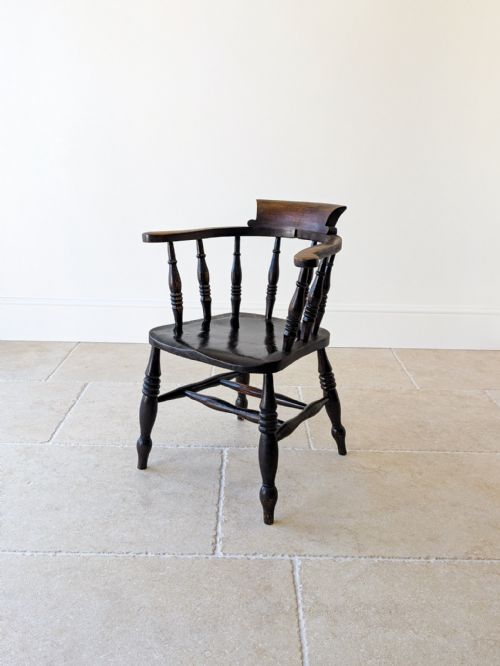
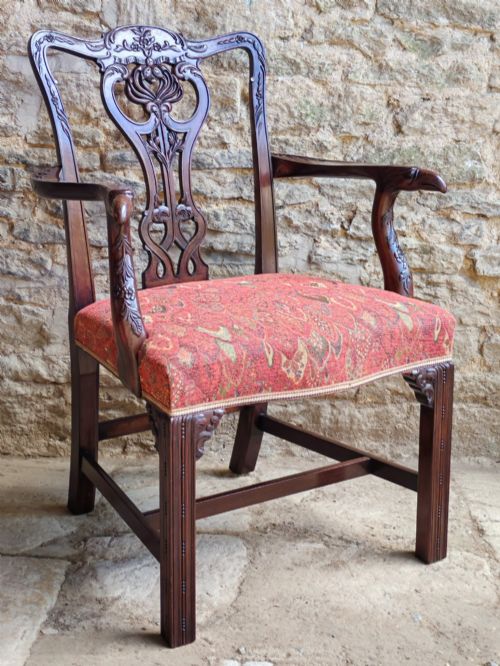
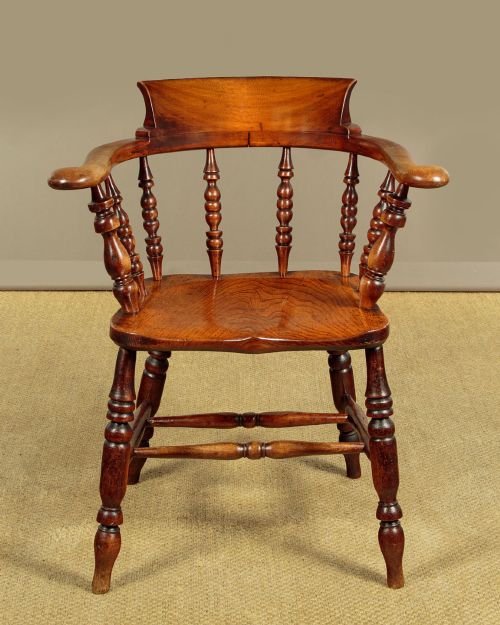
Antique captain chairs encompass sturdy wooden armchairs and carvers designed for steady support during long hours at a desk or table. The evidence reveals pieces spanning the Regency and Victorian eras, alongside robust English country examples.
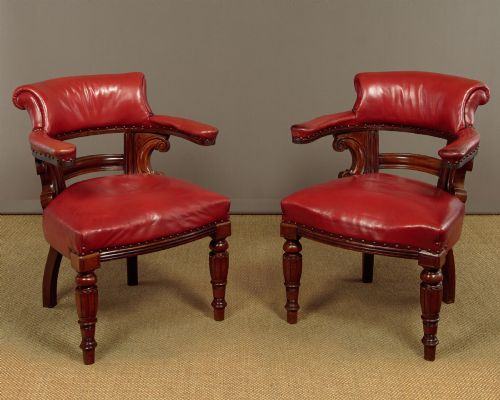
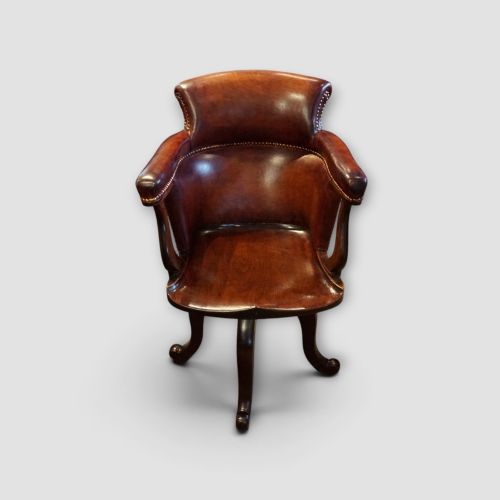
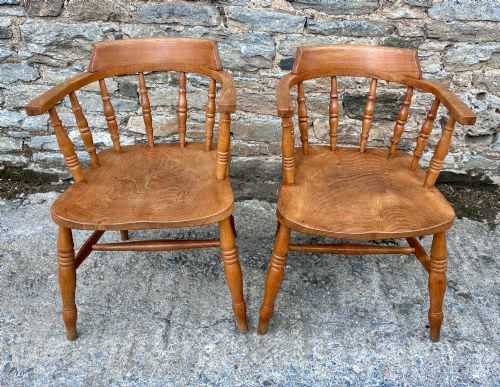
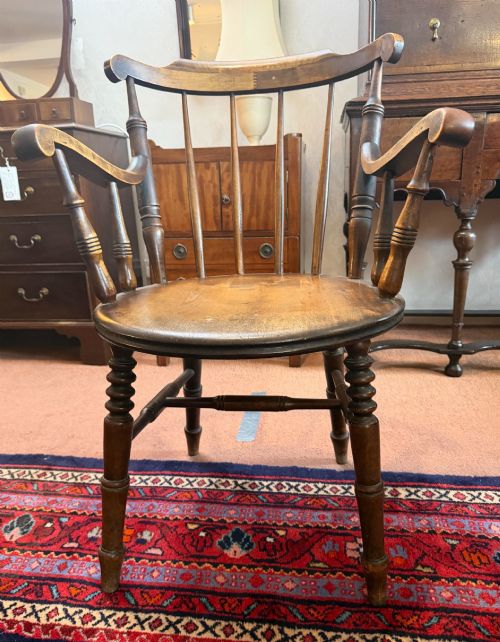
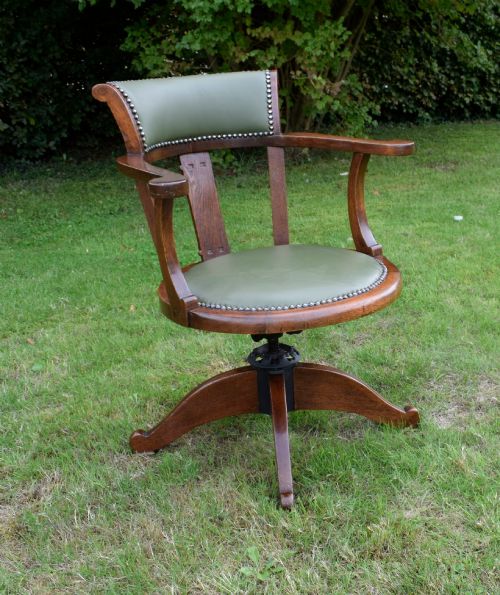
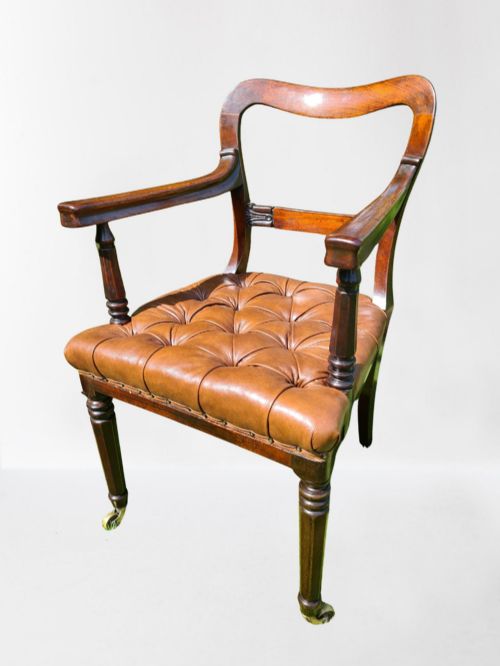
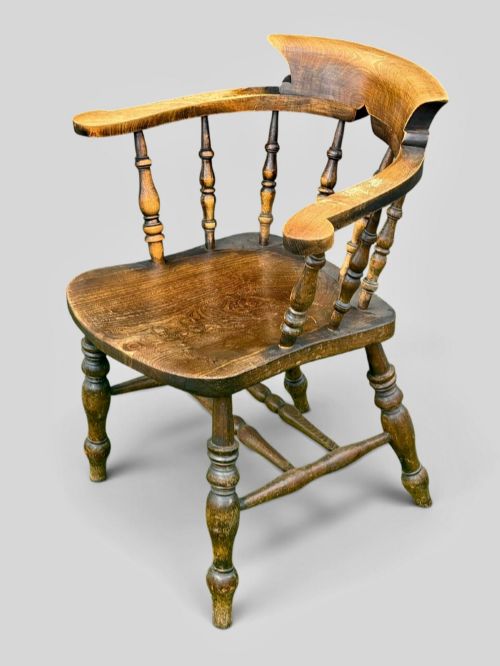
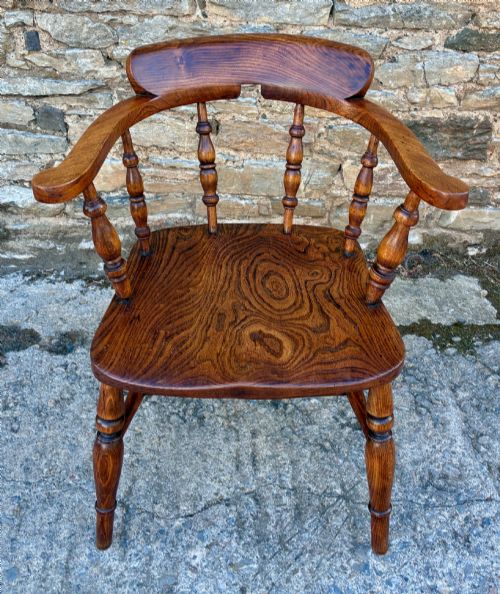
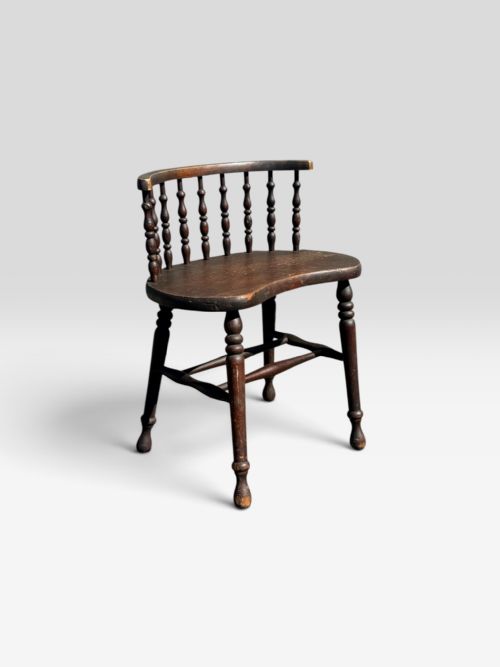
Buyers encounter solid timber frames in mahogany, ash, elm, oak, and beech, frequently paired with leather upholstery or brass inlay. Forms range from low-back Windsor variants and smoker's bows to formal mahogany library chairs.
How they were made
Cabinetmakers and chair bodgers utilised native and imported hardwoods, turning ash, elm, beech, and mahogany into steam-bent rails and spindles. Brass inlay and porcelain accents appeared on finer Regency and Victorian specimens.
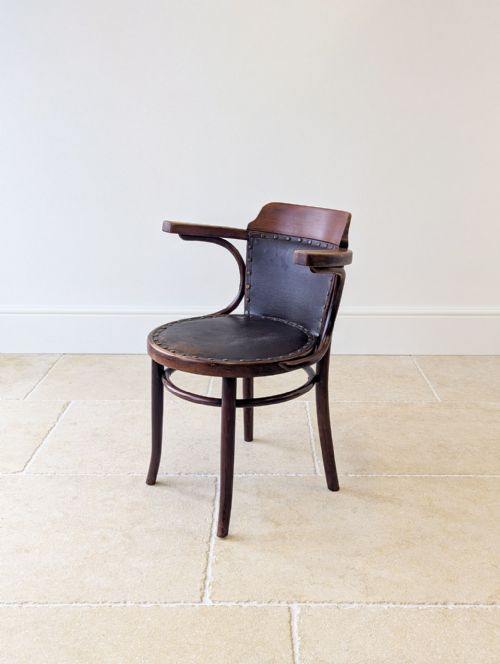
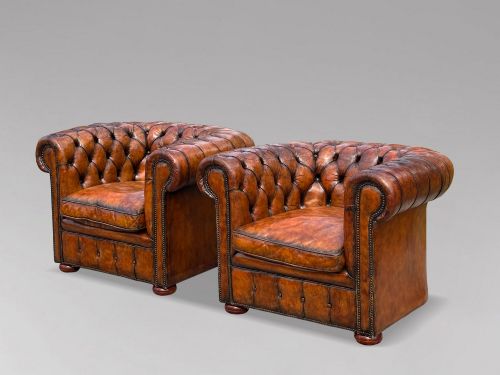
Upholstered versions relied on traditional stuffing finished with leather or fabric upholstery secured by brass tacks.
Retail Price Guide 2026
Typical UK retail prices for captain chairs, calculated from the Sellingantiques database of over a million retail prices indexed since 2003. This retail price guide relies exclusively on Sellingantiques data; no external sources or auction records are used, so the figures do not describe the wider market.
Listings feature mahogany, elm, ash, oak, and beech across the nineteenth century, Regency, and Victorian periods.
What varies in quality
The choice of timber dictates much of the distinction, separating simple turned ash and elm country versions from figured mahogany and brass-inlaid Regency library pieces. Finer proportions and integrated arm construction signal superior workshop execution.
The integrity of turned spindles, steam-bent backrests, and original leather surfaces separates well-preserved seating from heavily restored examples.
Henry Maxwell·Liberty's of London
The Antique Captain Chairs Glossary
- Carver chair
- An armchair, often designed en suite with a set of dining chairs to sit at the head of the table. These examples frequently feature lower backs and sturdy armrests.
- Smoker's bow
- A low-backed Windsor-style wooden armchair with a continuous curved arm rail. They share similarities with captain chairs in their robust country construction.
- Regency
- A British design style spanning the early nineteenth century. Pieces from this period often incorporate classical motifs and brass inlay.
- Windsor
- A chair built with a solid wooden seat into which the legs, back spindles and bow are independently fitted. Ash and elm were traditional woods for this method.
Frequently Asked Questions
What is an antique captain chair?
These pieces are sturdy nineteenth-century armchairs historically used at desks or dining tables, offering low backs and comfortable armrests.
They appear in various woods including mahogany, elm, ash, and oak, frequently featuring leather upholstery or turned wooden spindles.
How do I identify a Regency captain chair?
Regency examples date from the early nineteenth century and typically display classical lines, mahogany timber, and details like brass inlay.
They tend to look more formal than country versions made of ash and elm, such as smoker's bows or low-back Windsor armchairs.
Were captain chairs used for dining?
Nineteenth-century dining sets often included carver chairs placed at the heads of the table alongside matching single chairs.
Their sturdy armrests and compact proportions made them practical for both dining rooms and study libraries.
What woods were used for these chairs?
Makers utilised a range of timbers depending on the intended style, from native English elm and ash to imported mahogany.
Oak, beech, and ebony also appear across nineteenth-century examples recorded in the archive and current listings.