
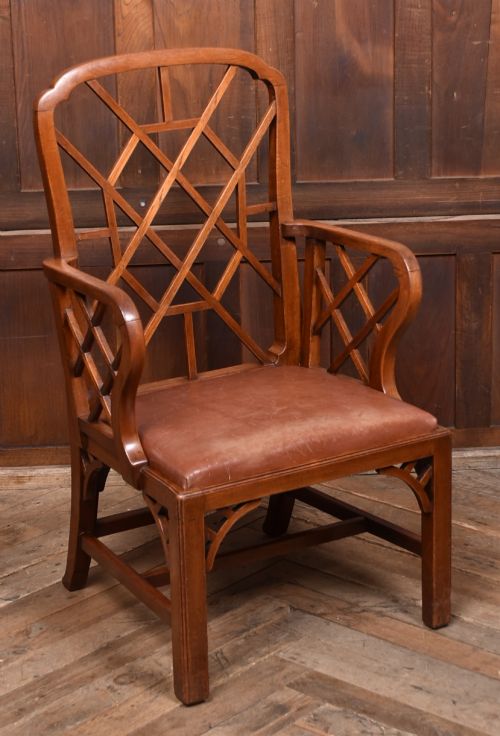
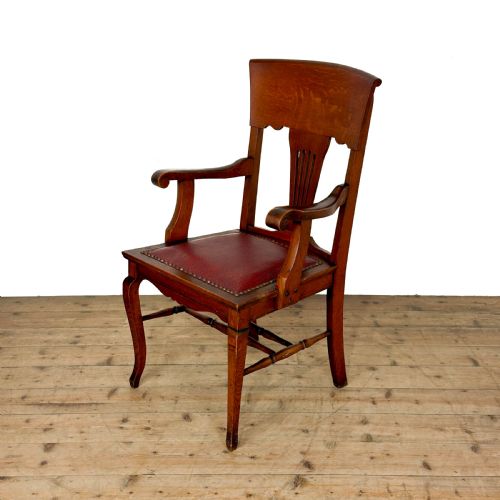


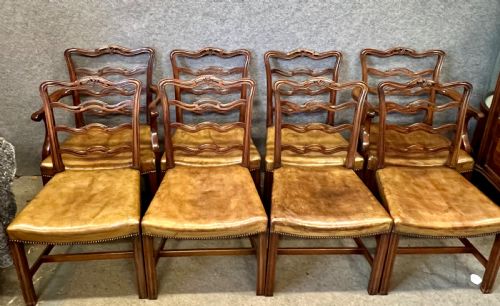


Vintage Leather Carvers
Vintage leather carvers combine the generous arms of traditional seating with resilient hides, spanning periods from the eighteenth century through the art deco era.
Vintage Leather Carvers
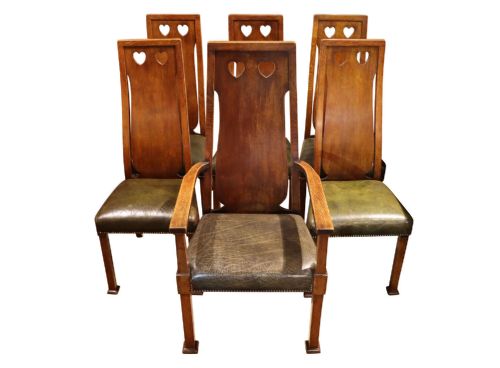
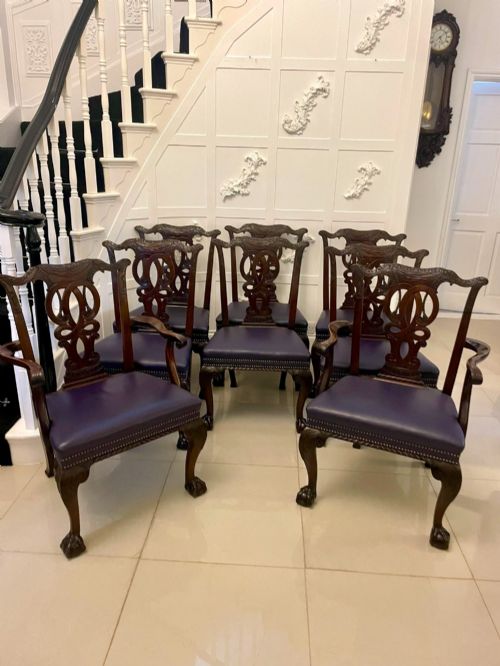
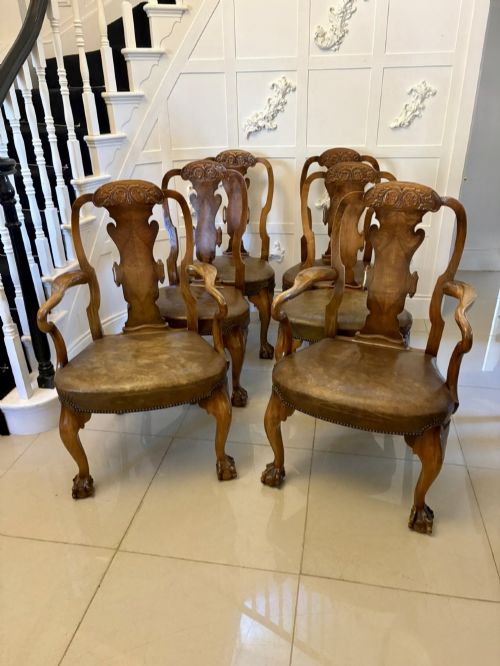
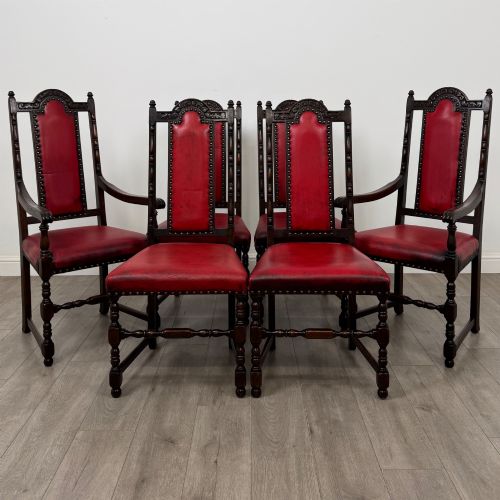
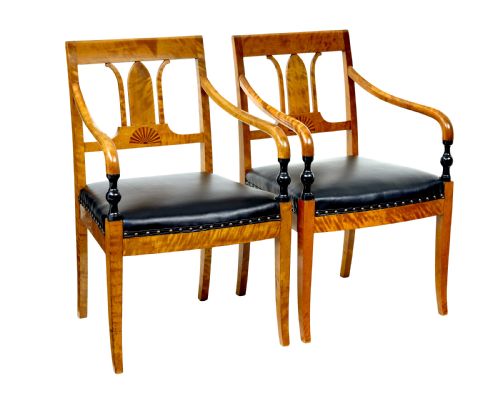
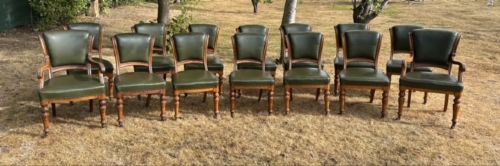
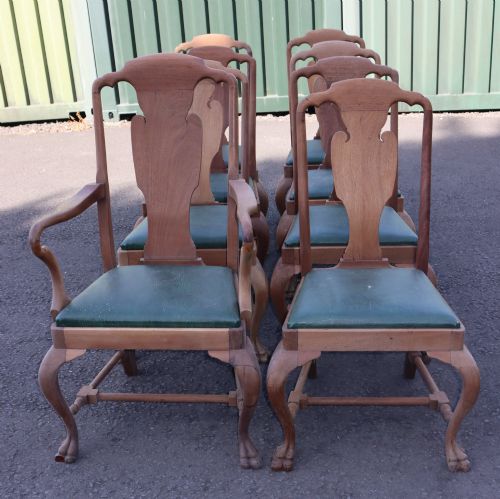
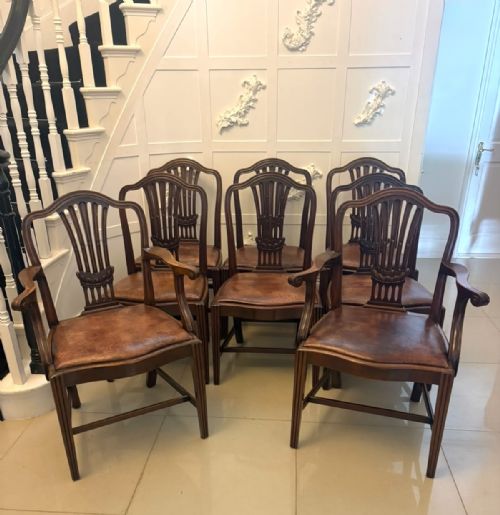
Vintage leather carvers are dining armchairs, desk chairs, and library elbow seats designed with upholstered leather pads or seats. When you search for vintage leather carvers, you encounter single armchairs, pairs, and large sets intended to sit at the heads of dining tables.
The selections span the Victorian, Edwardian, and Art Deco periods, alongside revivals of earlier styles like Chippendale and Hepplewhite. Mahogany and oak dominate the timber choices, frequently paired with tan, red, or black leather.
Sets of dining chairs often include two carvers alongside several side chairs to complete a dining room configuration. Single armchairs appear frequently as desk chairs or library seats.
How they were made
Carpenters constructed the frames from dense hardwoods like mahogany, oak, and walnut, employing traditional joinery such as mortise and tenon. Cabinetmakers shaped the arms and backs into scroll, shield, or cloud forms, sometimes carving details by hand.
Upholsterers fixed leather hides over stuffing using brass studs or tacks to secure the edges to the wooden frames. Timber surfaces received polish or wax finishes to highlight the natural grain of the wood.
Listings feature oak, mahogany, walnut, burr walnut, and flame birch frames paired with leather upholstery across Victorian, Edwardian, and Art Deco periods.
What varies in quality
The refinement of the timber carving and the weight of the underlying hardwood set individual pieces apart. Substantial mahogany or burr walnut frames with crisp, deep carving indicate higher workshops.
The quality of the leather and the integrity of the frame construction determine longevity. Original hides that retain suppleness and tight joinery represent superior survival.
W.Williamson & Sons·Epstein·Lamb Of Manchester·Shoolbred
The Vintage Leather Carvers Glossary
- Carver chair
- An armchair designed with open elbows, traditionally placed at the ends of a dining table. These pieces match standard dining chairs while offering armrests.
- Cockpen chair
- A Chinese Chippendale style chair featuring an open lattice back and square legs. These chairs often incorporate upholstered drop-in seats.
- Shield back
- A dining chair back shaped in the outline of a heraldic shield. Popularised by Hepplewhite in the eighteenth century and revived in later periods.
- Burr walnut
- Timber sliced from walnut tree growths that produce swirling, knotty grain patterns. Makers used burr walnut veneers on prominent surfaces during the art deco period.
- Ebonised wood
- Timber stained or treated to resemble ebony. This dark finish appears on nineteenth-century and arts and crafts frames.
Vintage Leather Carvers: Frequently Asked Questions
What is a carver chair?
A carver chair is an armchair built with open arms, traditionally placed at the head and foot of a dining table. These seats match the surrounding side chairs while providing extra support for the person seated at the table end.
In many listings, carvers appear as pairs or as part of larger dining sets accompanied by matching armless chairs.
How do I date a leather armchair?
Dating involves examining the timber species, the style of the frame carving, and the upholstery methods. Victorian and Edwardian pieces show specific revival characteristics, while art deco chairs display geometric lines and burr walnut veneers.
The construction of the joints and the type of leather finishing also provide clear clues to the decade of manufacture.
Where should I place a desk chair?
Desk chairs fit naturally beneath writing tables, library desks, or vanity stations. Their open arms allow the chair to slide close to the work surface.
In domestic interiors, these armchairs also serve as occasional seating in studies, bedrooms, or hallways.
Are leather carvers suitable for daily dining?
Leather carvers provide sturdy seating designed for daily use around a dining table. The timber frames withstand regular movement, while leather surfaces offer a durable finish.
Routine maintenance keeps the hide supple and protects the wood from heavy wear.