


Antique Caned Carver
An antique caned carver brings robust seating and woven texture to a room, offering sturdy elbow support and classic period proportions.
Antique Caned Carver
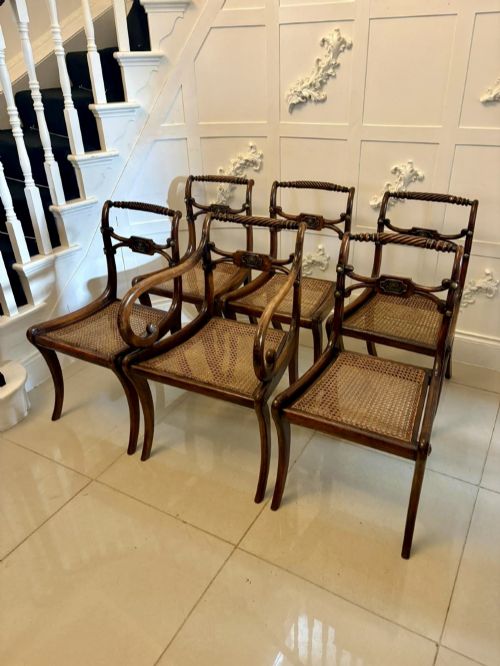
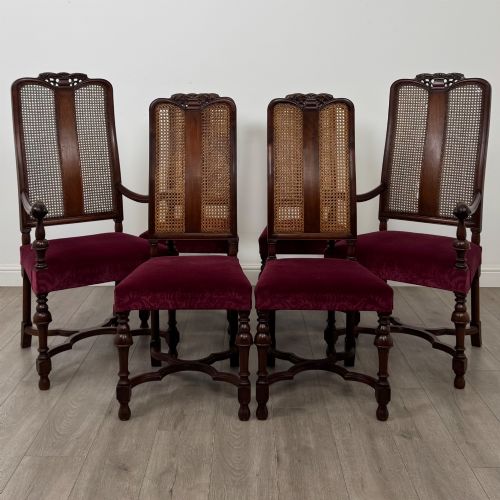
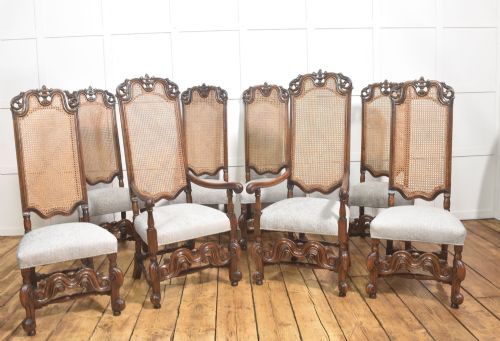
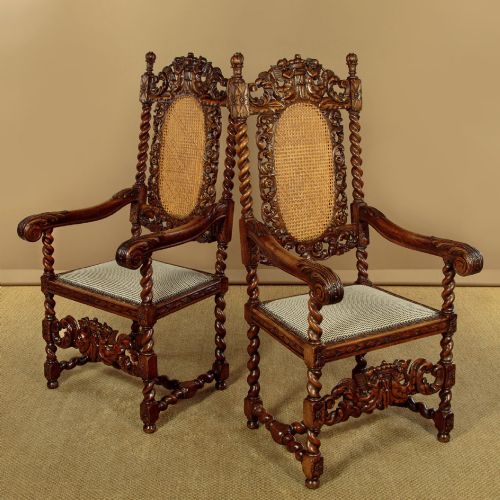
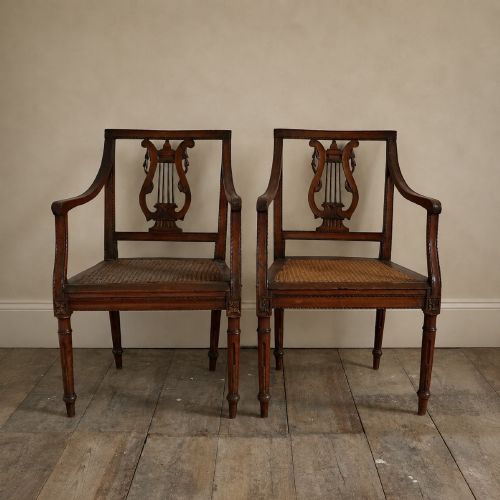
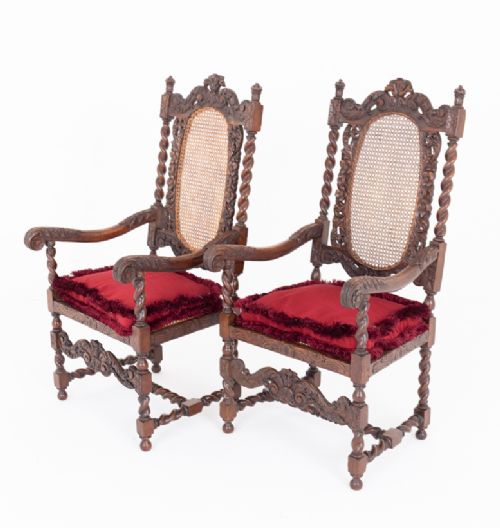
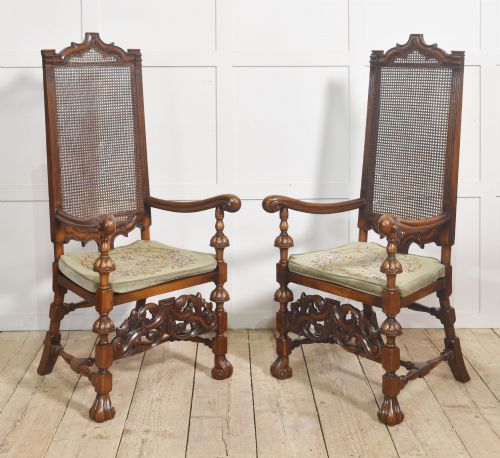
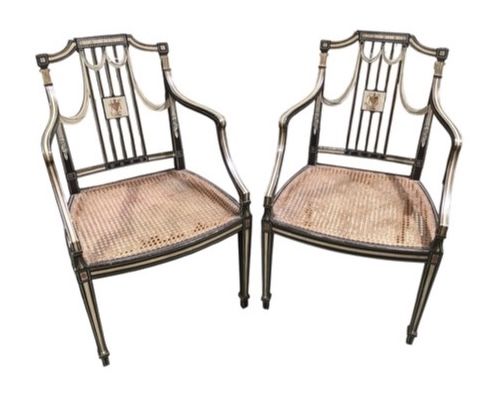
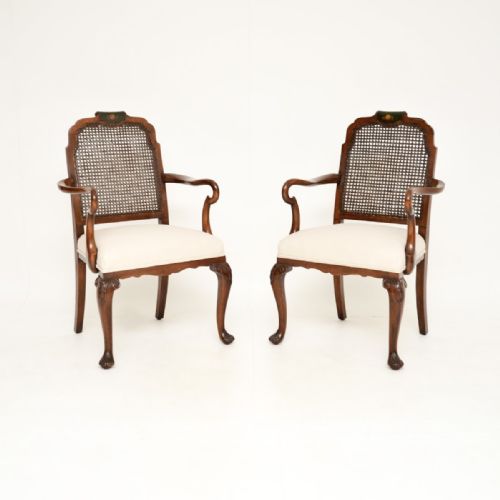
When you search for an antique caned carver, you encounter single armchairs, matched pairs, and larger dining sets that include one principal elbow chair alongside smaller side chairs. These pieces span periods from the eighteenth century through the Edwardian era and the nineteen-twenties, incorporating revival aesthetics such as Carolean, Jacobean, and Regency styles.
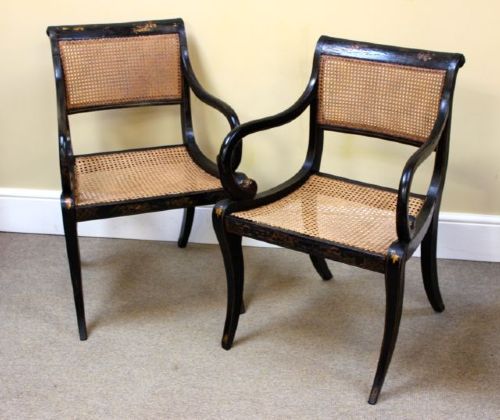
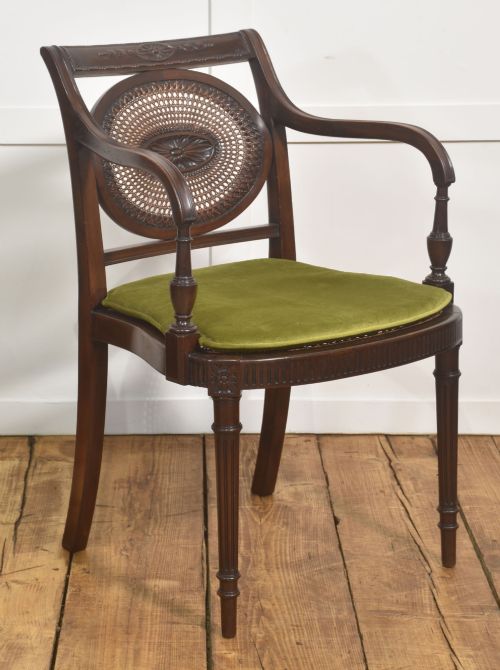
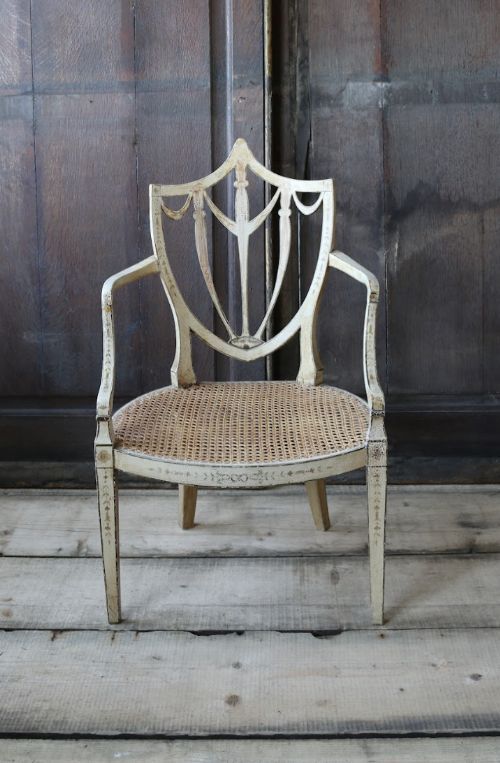
The form functions primarily as a dining armchair or library seat, featuring supportive wooden arms and woven cane panels set into the backrest, the seat, or both. Mahogany, walnut, and oak form the predominant wooden frames, while painted finishes, lacquer, and ebonised wood appear across various nineteenth-century and early twentieth-century examples.
Buyers most frequently meet nineteenth-century Regency models or early twentieth-century revival pieces on this page. These versions showcase regional variations including Anglo-Indian ebony work and faux bamboo framing, alongside standard British dining configurations.
Materials and construction methods
Cabinetmakers constructed the structural frames of these armchairs using dense timbers such as mahogany, walnut, and oak, often shaping the wood through turning, carving, or steam-bending to form curved armrests and raked back legs. Revival pieces from the nineteenth and twentieth centuries adopted earlier joinery techniques, employing pegged mortise and tenon joints to secure the heavy frames.
The distinctive seating and back panels utilise natural cane woven through drilled holes along the wooden perimeters. Artisans also integrated upholstered elements using fabric or velvet on related salon and drawing room chairs, while select pieces featured painted, parcel-gilt, or japanned lacquer surfaces over the base timber.
Several armchairs incorporate faux bamboo framing, proving that nineteenth-century makers thoroughly enjoyed mimicking exotic forest grasses.
Distinguishing quality across examples
The refinement of the wooden carving and the crispness of the turning define the upper tier of these armchairs. Superior examples display deeply sculpted details on the arms, crest rails, and legs, whereas simpler pieces rely on plain, straight turnings.
The tightness and uniformity of the cane weave indicate the standard of craftsmanship. Original or expertly renewed hand-woven cane panels demonstrate greater regularity and tension than hurried replacements.
Gillows
The Antique Caned Carver Glossary
- Carver
- An armchair designed with elbow rests, traditionally placed at the head of a dining table or matched with a set of smaller side chairs.
- Cane
- Strips of rattan woven into open mesh patterns to form resilient, lightweight panels for chair seats and backrests.
- Elbow chair
- An alternative term for an armchair, referencing the supportive wooden rests framing the sides of the seat.
- Bergere
- An enclosed upholstered or caned armchair featuring solid upholstered sides or cane panels fitted into a wooden frame.
- Japanned
- A style of European lacquerware imitating Asian decorative finishes, applied to furniture using dark varnishes and raised metallic motifs.
Antique Caned Carver: Frequently Asked Questions
How do I use a carver with modern dining chairs?
A carver sits naturally at the head of a dining table, contrasting with smaller side chairs while providing comfortable elbow support during meals. Its larger scale grounds the arrangement and establishes a formal focal point in the dining space.
Ensure the arm height clears the underside of your table so the chair can push in properly. Pairing a single antique carver with simpler chairs prevents the room from feeling overcrowded.
Can I replace damaged cane on an antique chair?
Skilled restorers can re-cane historic chair seats and backs using traditional hand-weaving methods that match the original pitch and hole spacing. This preserves the structural integrity and aesthetic balance of the frame.
Professional re-caning maintains the piece's authenticity far better than attempting makeshift repairs with synthetic materials. Regular conditioning helps keep natural rattan pliable over time.
What is the difference between a carver and an armchair?
The term carver specifically denotes an armchair designed to accompany a matching set of dining chairs, sharing the same stylistic vocabulary and height proportions. General armchairs may serve standalone functions in drawing rooms, libraries, or parlours.
Dining carvers typically feature narrower arm profiles to fit comfortably beneath standard table surfaces. Library and salon armchairs often prioritize wider upholstered or caned dimensions for lounging.
How do I care for antique caned furniture?
Keep caned chairs away from direct heat sources and strong sunlight, which can dry out and brittle the natural rattan fibres. Light dusting and occasional damp wiping maintain the moisture balance of the cane.
Avoid placing heavy point loads on caned seats to prevent premature snapping of the woven strands. Using a supportive cushion can also extend the lifespan of antique woven panels.