




Antique Cane Tub Chair
An antique cane tub chair brings curved comfort and woven texture into a room, offering a supportive seat with deep historical roots.
Antique Cane Tub Chair
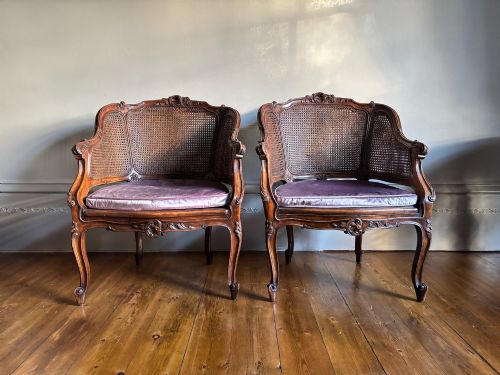
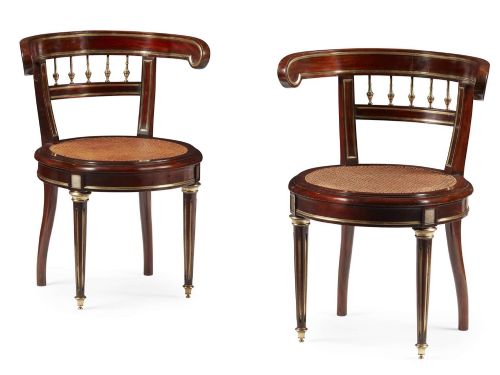
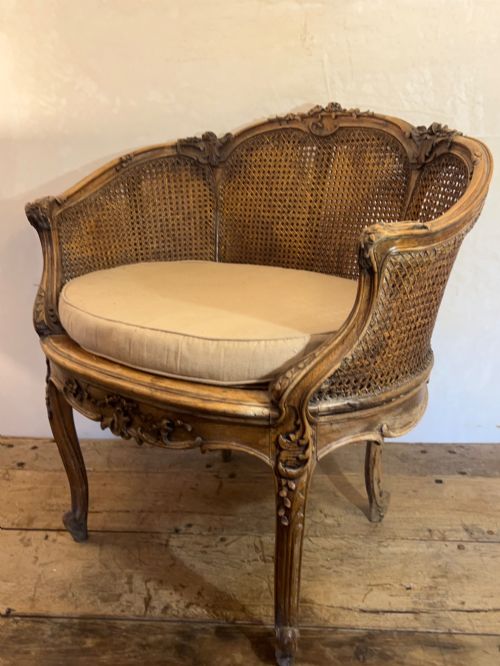
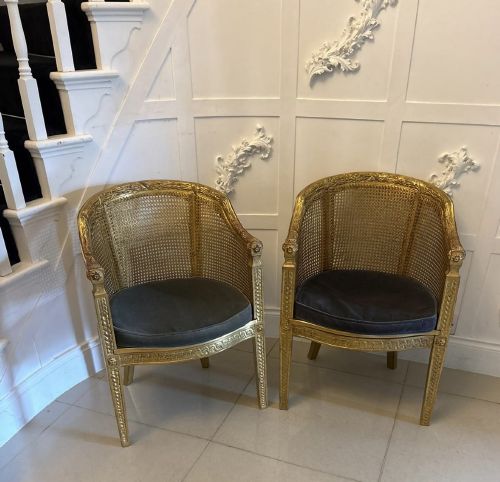
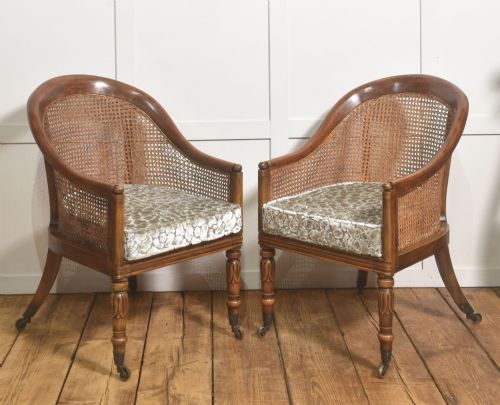
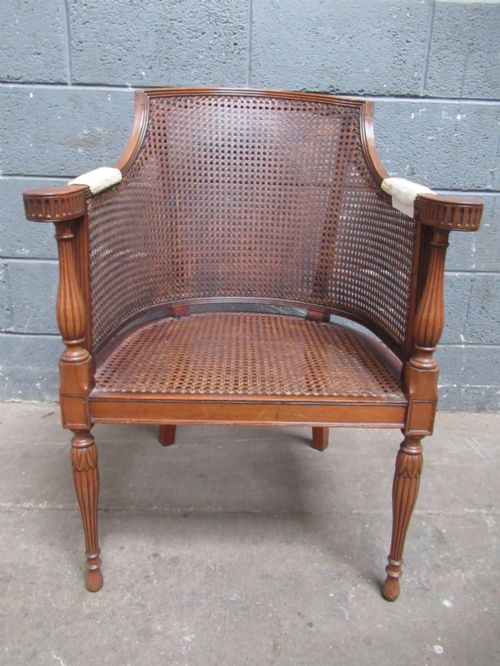
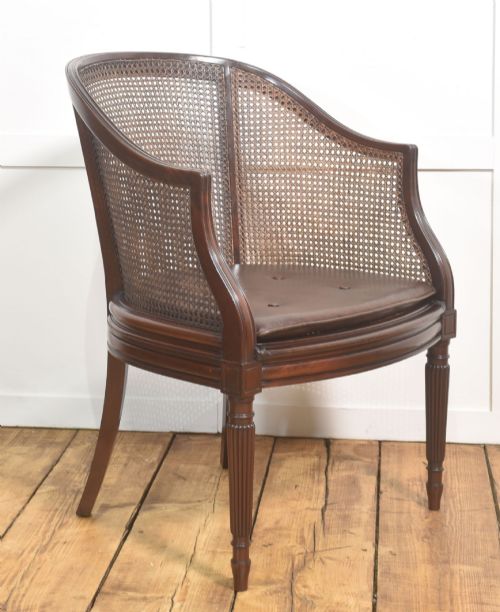
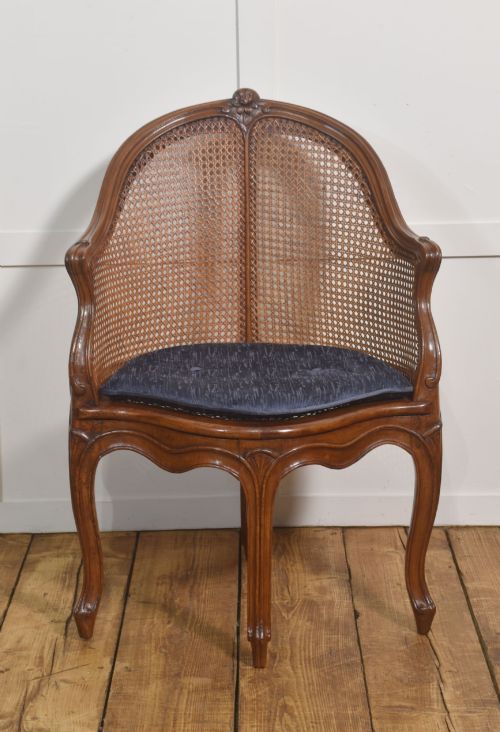
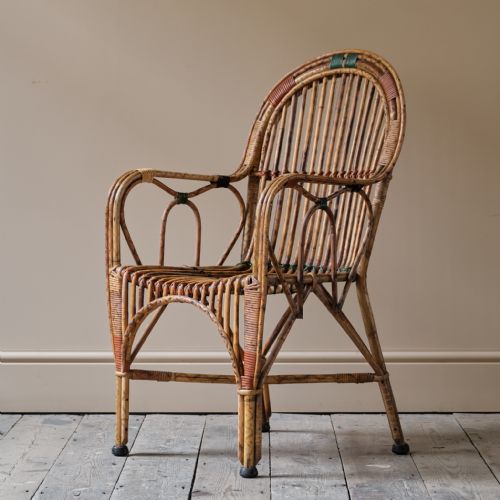
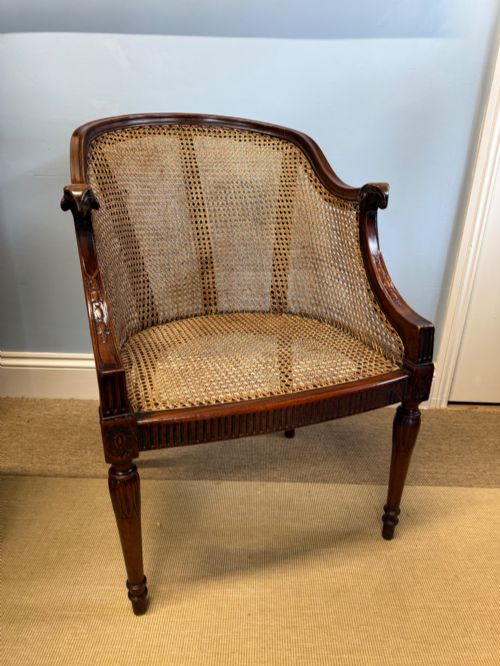
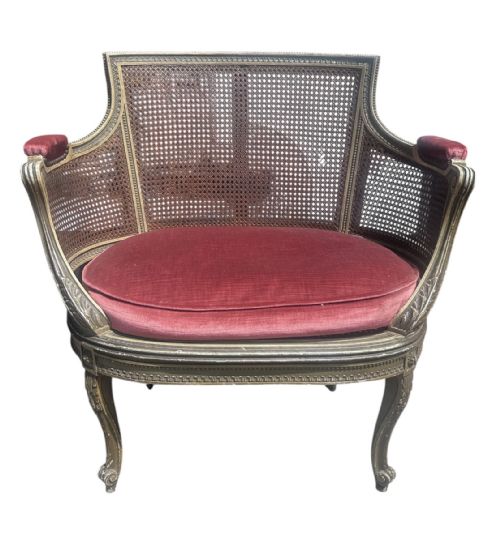
An antique cane tub chair is a rounded armchair featuring woven panels that form the back and sides, enclosing the sitter in a continuous curve. Buyers seeking this form encounter variations ranging from formal Regency library seats to French Louis XV style painted models and Edwardian mahogany frames.
The selections span the nineteenth century through the early twentieth century, including occasional child high chairs and compact parlour seating. Mahogany and walnut provide the primary timber structures, whilst rattan and split cane create the characteristic open-work panels.
How they were made
Cabinetmakers constructed the foundational frames using dense hardwoods like mahogany, walnut, and oak, often shaping the timber into continuous rounded rails or carving intricate floral motifs in the French taste. Some Regency examples utilise ebonised finishes or simulated faux rosewood graining to imitate exotic woods.
Cane and rattan materials are hand-woven through pre-drilled holes along the frame channels, creating taut, supportive mesh panels that allow air circulation. Drop-in squab cushions upholstered in leather, velvet, or fabric provide the primary seat comfort atop the woven bases.
Antique Cane Tub Chair Retail Price Guide 2026
Typical asking prices for cane tub chair among the pieces listed under this phrase on Sellingantiques today, from the lower quarter to the upper quarter. They describe what is for sale here now, not the wider market.
Listings span the nineteenth and twentieth centuries, featuring robust mahogany and walnut frames alongside delicate French painted finishes and woven rattan.
What varies in quality
The refinement of the timber carving and the precision of the joinery set finer examples apart from standard workshop production, particularly in the crisp detailing of Louis XV style scrolls and Regency reeded legs. Superior execution shows in the seamless integration of the curved back rail with the arm supports.
The tightness and uniformity of the hand-woven cane panels indicate the skill invested in the piece, with evenly spaced strands representing superior craftsmanship. Original surface patination on the timber and brass fittings also elevates the standing of an individual chair.
Gillows·Dryad & Co·Dryad of Leicester
The Antique Cane Tub Chair Glossary
- Tub chair
- An armchair characterised by a low, rounded back that curves continuously into the arms. This form wraps around the occupant for security and warmth.
- Bergère
- An enclosed upholstered armchair with wooden framing and cane-work sides and back. It frequently incorporates a loose seat cushion.
- Cane
- Strips of rattan peel woven into a mesh pattern used for chair backs and seats. It offers flexibility and strength while maintaining a light visual profile.
- Regency
- A British design style dating from the early nineteenth century defined by classical restraint and Grecian influences. Pieces from this period often feature saber legs and dark polished timbers.
- Louis XV style
- A revival design drawing on eighteenth-century French rococo aesthetics with asymmetrical curves and floral carvings. Walnut and painted frames typify this tradition.
Antique Cane Tub Chair: Frequently Asked Questions
How do I care for cane?
Keep cane panels clean by gently dusting them with a soft brush and maintaining moderate room humidity to prevent the natural fibres from drying out and snapping.
Avoid placing these chairs directly against intense heat sources or in harsh sunlight, which can weaken the woven rattan over time.
Were these used as library chairs?
Many examples served in Regency and Victorian libraries where readers required comfortable seating that supported prolonged sitting.
Their enclosed tub shape kept out draughts in large, high-ceilinged rooms while accommodating heavy leather cushions.
How do I identify a French style piece?
French style models generally display carved walnut or painted wood frames decorated with floral motifs, cabriole legs, and sweeping serpentine rails.
They often carry the designation of bergère chairs, reflecting their continental origins and enclosed woven architecture.
What is the difference between cane and rattan?
Rattan is the strong, fibrous vine plant harvested from climbing palms in tropical regions, forming the core and structure of the material.
Cane specifically refers to the outer glossy skin of that vine, stripped and processed into thin ribbons for weaving mesh panels.