


Antique Cane Bergere
An antique cane bergere brings deep seated comfort and classic French or English styling into a library or drawing room.
Antique Cane Bergere
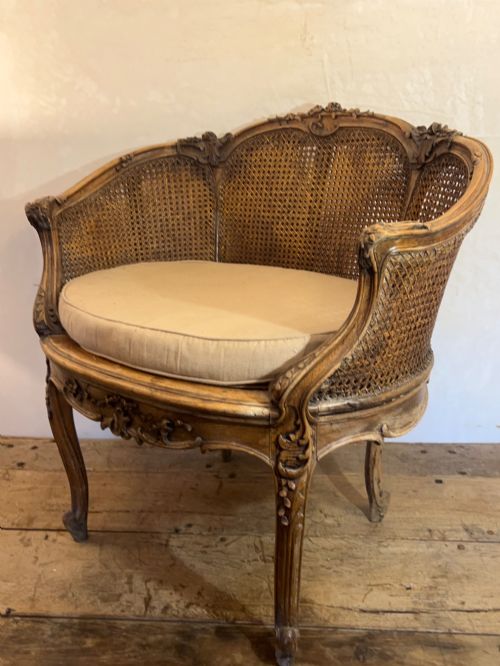
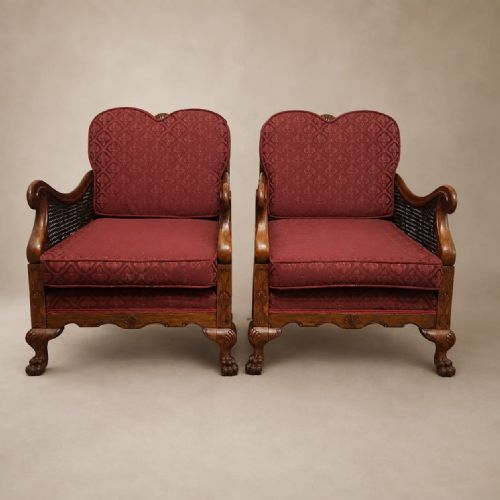
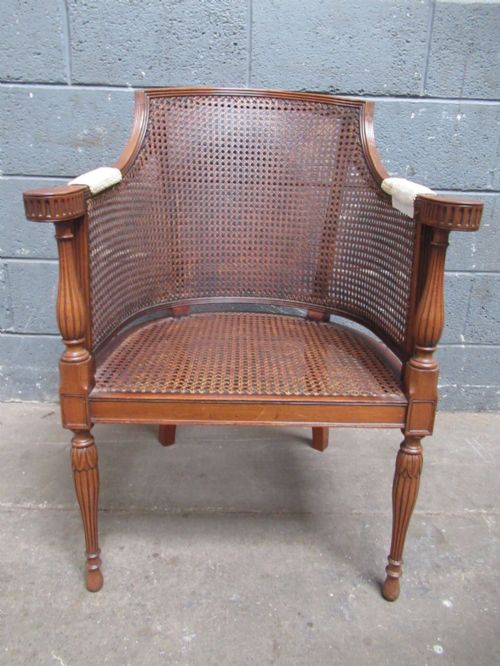
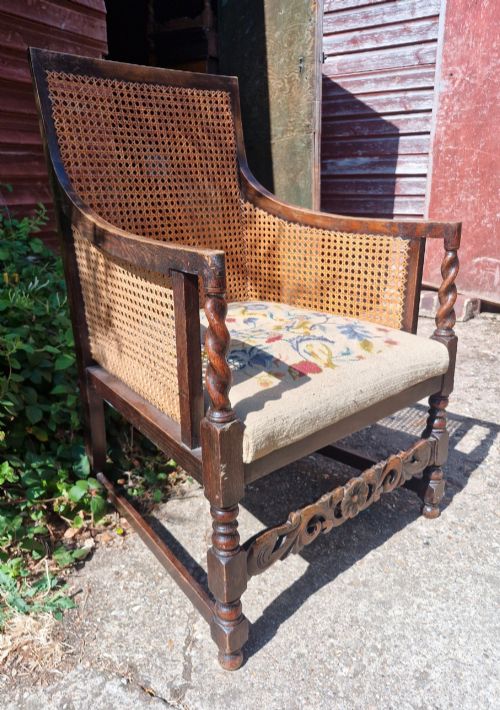
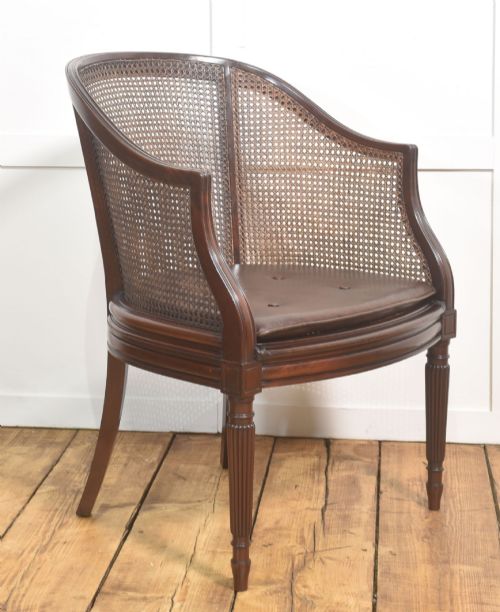
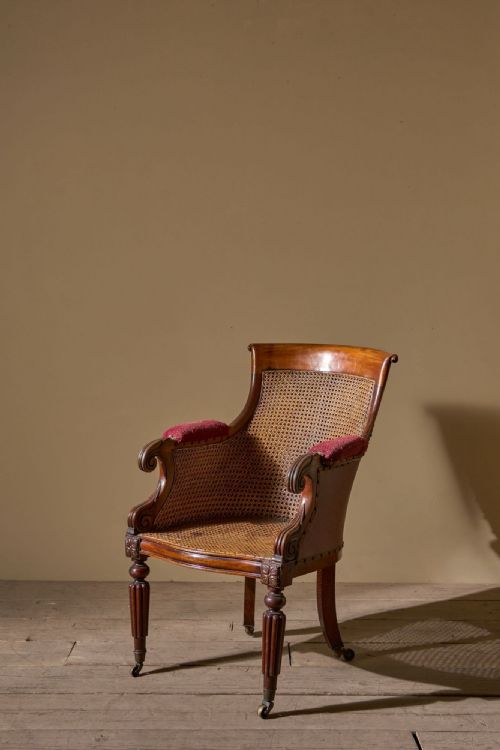
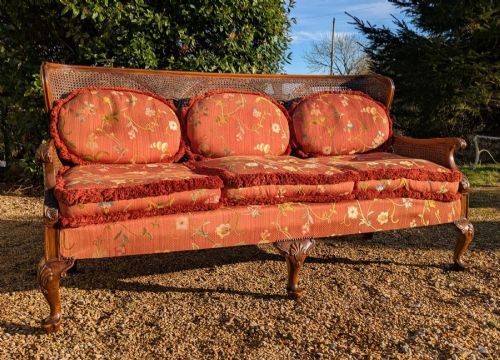
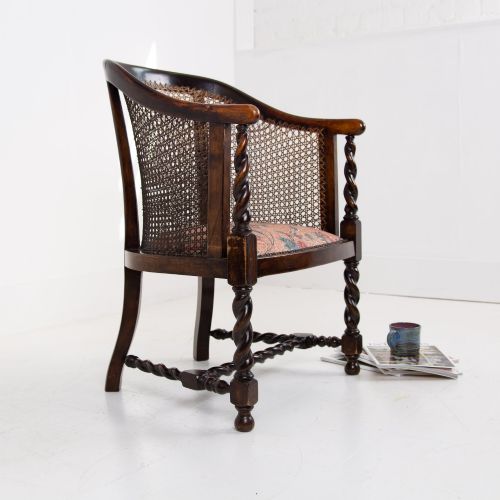
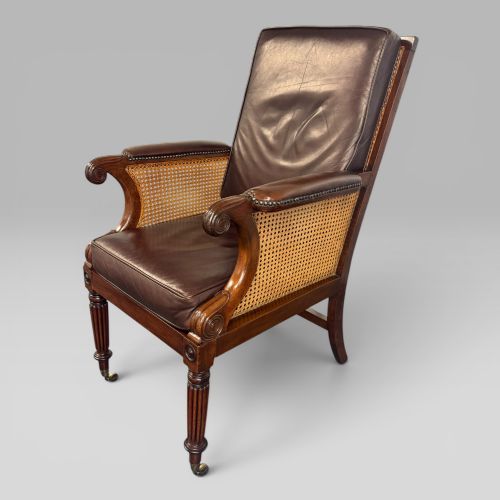
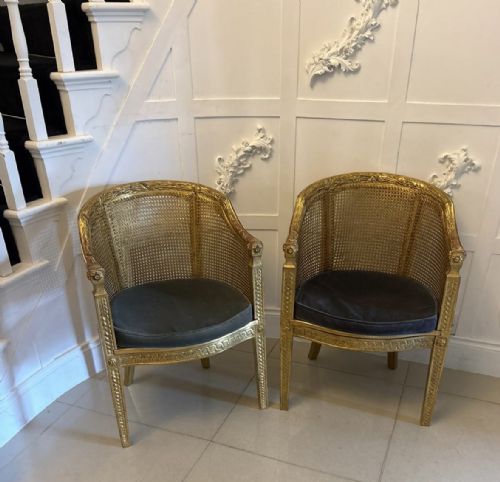
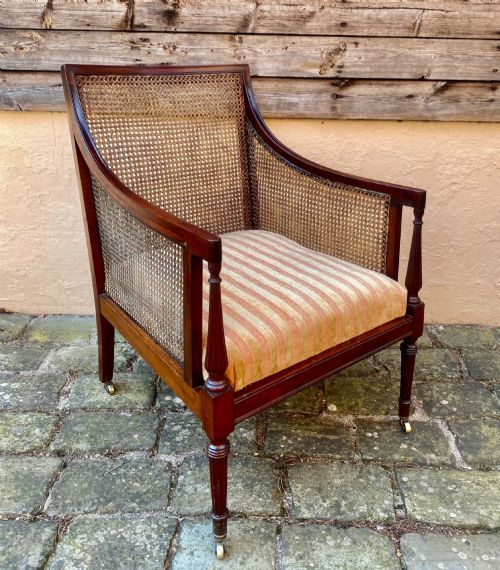
An antique cane bergere is a closed-sided upholstered armchair or sofa featuring woven cane panels on the back and arms. The form originated in France before being adopted by English cabinet makers during the Regency period and later revived in Edwardian times.
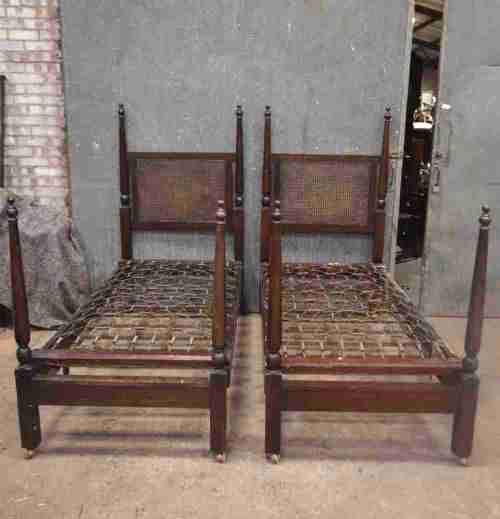
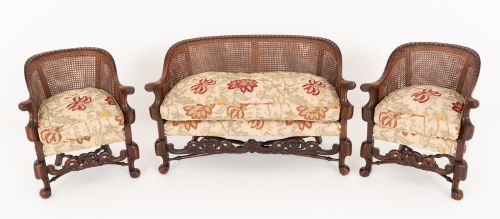
Armchairs dominate the available selection, though larger seating suites, sofas, daybeds, and occasional chairs also appear. Mahogany and walnut provide the primary timber frames, while styles range from restrained Regency lines to elaborate Louis XV carvings.
Buyers seek these pieces for their combination of architectural timber frames and the lighter visual weight provided by pierced cane panels. They function naturally as library chairs, reading seats, or statement items in traditional living spaces.
How they were made
Cabinet makers constructed the foundational frame from dense hardwoods such as mahogany, walnut, oak, or beech, often turning or carving the legs and arm supports. Selected pieces employ finer decorative treatments like giltwood, ebonising, or brass mounts.
Artisans wove rattan cane through drilled holes around the perimeter of the frame recesses, creating tight single or double cane meshes. Feather-filled or upholstered loose cushions were then added to the seat base for comfort.
Current listings feature frames built from solid mahogany, walnut, oak, and rosewood, spanning the Regency, Victorian, and Edwardian eras.
What varies in quality
Quality rests upon the crispness of the timber carving and the architectural proportion of the frame. Finer examples display hand-cut details and select grain figures in the mahogany or walnut timber rather than flat, machine-shaped mouldings.
The precision of the hand-woven cane work marks another clear distinction, with evenly spaced strands and intact structural integrity separating workshop masterpieces from utilitarian seating.
Gillows·James Shoolbred·J. S. Kinsey
The Antique Cane Bergere Glossary
- Bergere
- A closed-arm upholstered armchair with wooden frames and woven cane sides. The design prioritises domestic comfort over stiff formal seating.
- Caning
- The craft of weaving rattan material into patterned meshes for chair backs and panels. It provides a flexible yet supportive surface.
- Regency
- A British design period spanning the early nineteenth century defined by classical restraint and archaeological revival forms. Furniture from this era often utilises dark mahogany or ebonised timber.
- Louis XV style
- A French rococo revival aesthetic characterised by asymmetrical curves, scrollwork, and naturalistic floral carvings. Frames in this style frequently feature cabriole legs.
Antique Cane Bergere: Frequently Asked Questions
How do I style a bergere chair?
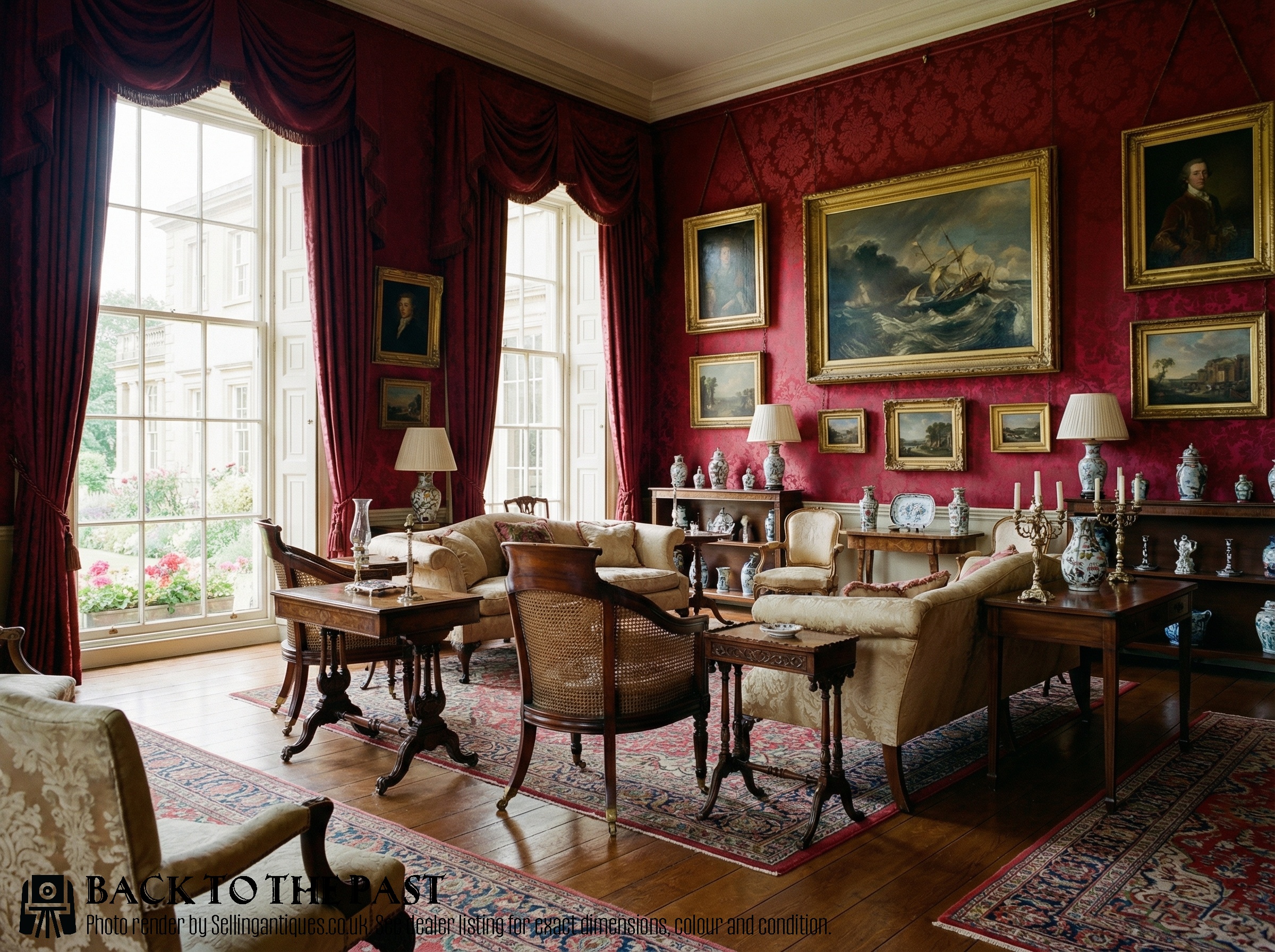
Pair the armchair with a reading lamp and a low side table to create a functional corner in a study or drawing room. The neutral tones of the cane and timber allow the piece to sit comfortably alongside both antique and contemporary furnishings.
Larger spaces accommodate matching three-piece suites or sofas, which establish a cohesive seating arrangement. Adding contrasting scatter cushions brings colour while retaining visibility of the woven cane back.
Were these chairs used in libraries?
Library seating required deep proportions and sturdy armrests suited to prolonged reading sessions. Cabinet makers designed many Regency and Victorian models specifically for this purpose.
The inclusion of low backs and comfortable squab cushions made these armchairs practical for quiet rooms where occupants sat for hours.
How do I distinguish French from English pieces?
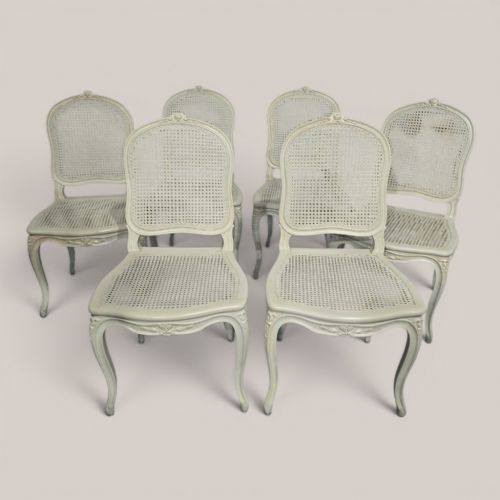
French models tend to exhibit flowing cabriole legs, giltwood finishes, and pronounced Louis XV scrollwork. The carved decoration is typically more elaborate and organic in line.
English variations, particularly from the Regency and Edwardian eras, lean towards cleaner architectural lines, straight or sabre legs, and figured mahogany or walnut surfaces.
Is original cane better?
Original cane demonstrates the precise hand-weaving techniques of past centuries, though material degradation is common over long periods. Surviving intact historical mesh is valued by purists.
Many functional pieces have received professional rewoven cane seats or backs to ensure daily usability. The replacement work preserves the decorative aesthetic while restoring structural strength.