



Antique Canape Sofa
An antique canape sofa brings French and Continental elegance into a room, offering ornate seating crafted from rich woods and fine gilding.
Antique Canape Sofa
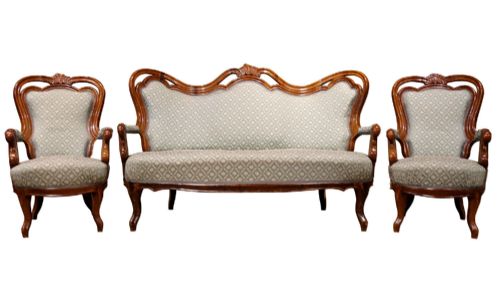
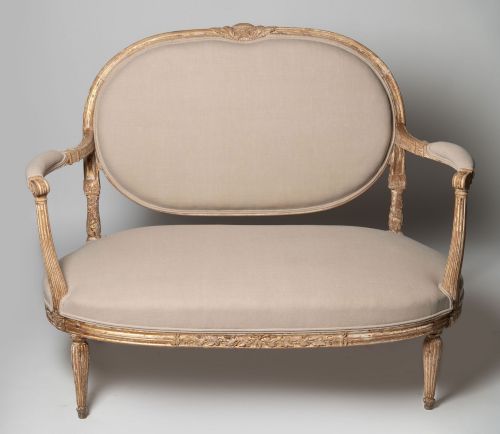
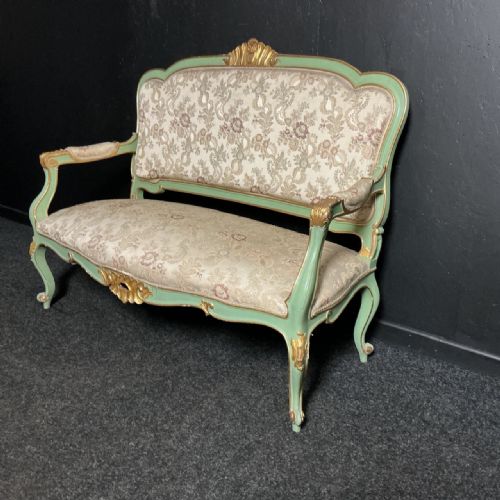
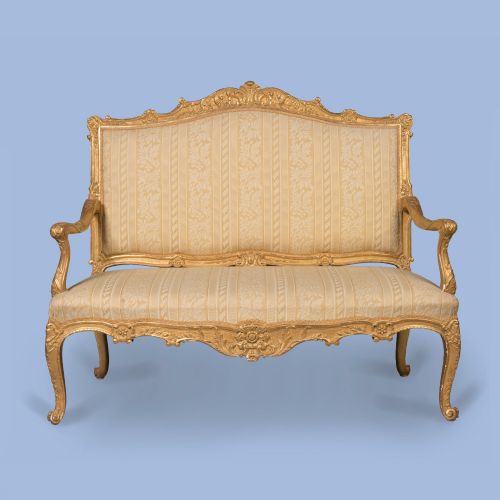
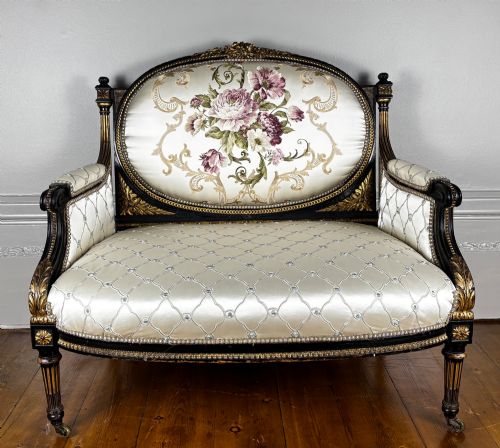
An antique canape sofa represents an extended form of seating originating from continental Europe, spanning styles from the eighteenth century through to the early twentieth century. When exploring this selection, buyers encounter pieces categorized variously as settees, couches, and salon suites alongside traditional canapes. These items frequently manifest in Louis XV and Louis XVI designs, displaying carved frames and upholstered backs intended for formal reception rooms.
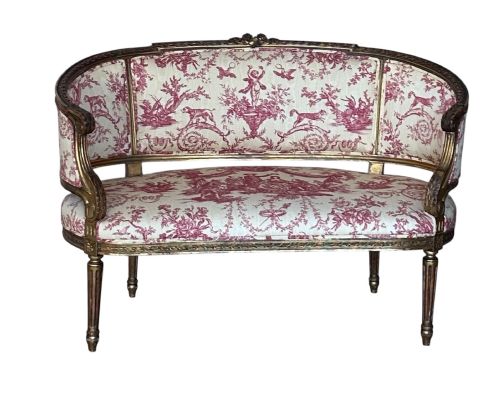
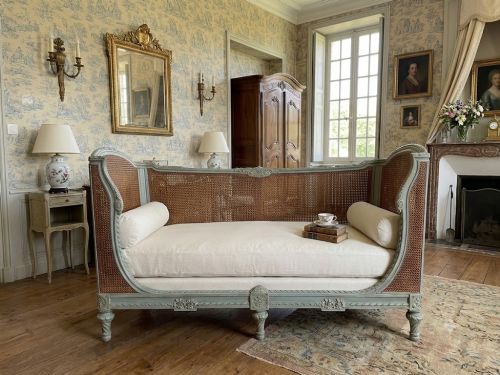
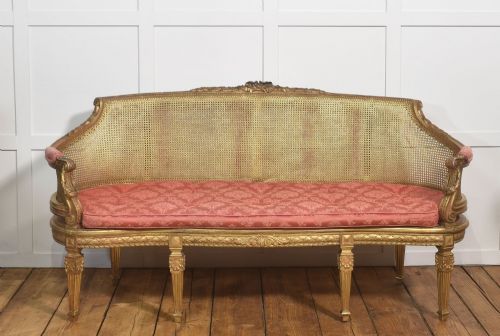
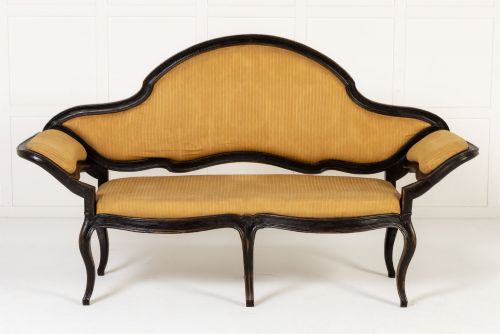
The primary forms on this page include two-seat and three-seat variations, often identified as corbeille sofas or day beds. Makers constructed these seats using beech, walnut, mahogany, and giltwood, frequently incorporating cane panels into the backrests and sides. Regional variations extend to Italian, German, and Swedish pieces, reflecting local interpretations of Rococo and neoclassical aesthetics.
How they were made
Craftsmen built the structural frames of these seats using solid hardwoods such as beech, walnut, and mahogany, carving details by hand before applying paint, parcel gilt, or ebonisation. Giltwood finishes required the application of gold leaf over a prepared gesso base on carved wooden surfaces. Canework frames involved weaving natural cane through drilled holes along the rails to create open, breathable backrests and seat bases.
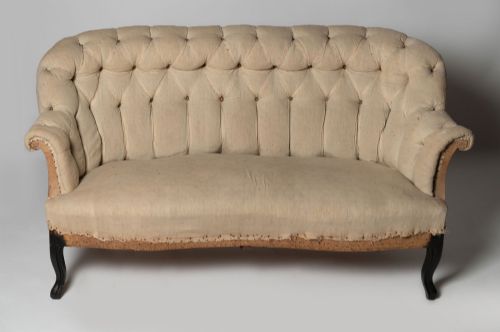
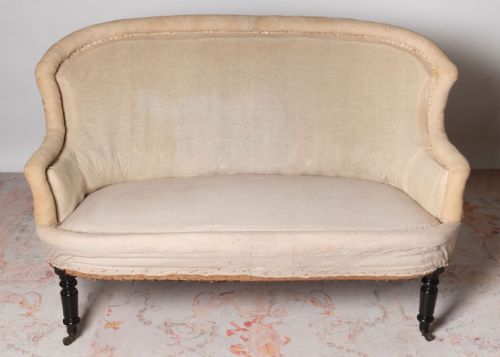
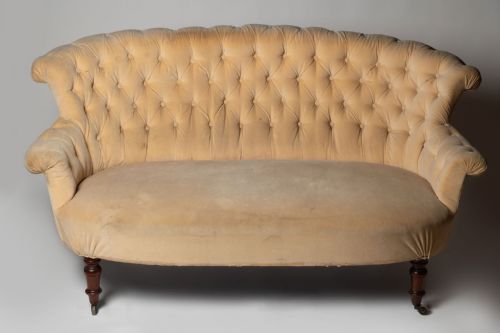
Upholstered versions relied on traditional stuffing techniques using materials like horsehair and linen web foundations beneath top fabrics such as velvet, silk, and plain linen. Frames often featured exposed carved woodwork with cabriole legs, scroll ends, and intricate floral motifs pinned or joined securely together. Inlaid details in mahogany pieces demonstrated precision cabinetmaking through contrasting veneer work.
The selection includes various formats such as day beds, two-seat corbeille sofas, and complete three-piece salon suites.
What varies in quality
The standard of carving on the wooden frame dictates much of the visual distinction across these pieces, with crisp, deep relief work signifying superior craftsmanship. Smooth integration of joints and the retention of original gilding or paint finishes further elevate a piece above standard production. Proportion and balance in the arms and backrest determine how successfully a sofa sits within an interior space.
The integrity of the structural wood and the authenticity of surface treatments separate ordinary examples from exceptional ones. Pieces retaining their original cane panels or early upholstery foundations demonstrate higher preservation value. Subtle variations in the complexity of the scrollwork and the choice of primary timber, such as figured walnut or dense mahogany, mark the upper tiers of the range.
The Antique Canape Sofa Glossary
- Canapé
- An upholstered French sofa featuring an exposed wooden frame, typically with carved details and open arms. This form became popular during the seventeenth and eighteenth centuries in formal salons.
- Giltwood
- Wood that has been coated with a thin layer of gold leaf. This finish appears frequently on formal French and Continental seating from the eighteenth and nineteenth centuries.
- Corbeille
- A French term describing a basket-shaped piece of furniture with a rounded, enclosing backrest. In sofa design, it wraps around the sitter in a continuous curved line.
- Cabriole leg
- A furniture leg that curves out and then in, resembling the leg of an animal. This feature characterises many pieces influenced by Louis XV and Rococo styles.
- Bergère
- An enclosed upholstered armchair or settee with wooden sides and an upholstered back. These seats often include loose cushion pads for added comfort.
Antique Canape Sofa: Frequently Asked Questions
How do I use an antique canape sofa today?
These sofas fit well in living rooms, bedrooms, or large hallways as statement seating pieces. Their traditional upholstery and decorative frames make them ideal for adding character to formal sitting areas.
Because many examples feature delicate carved wood or cane panels, they suit low-traffic areas rather than heavy daily lounging. Pairing them with complementary armchairs from a salon suite creates a cohesive seating arrangement.
What is the difference between a canape and a settee?
A canape specifically denotes a formal French-style sofa with an exposed carved wooden frame and upholstered seat and back. The term often implies a lighter, more decorative profile associated with salon culture.
Settee is a broader term used for any medium-length wooden or upholstered seat accommodating two or more people. While all canapes function as settees, not every settee shares the distinct French stylistic lineage of a canape.
How can I tell a Louis XV style sofa from Louis XVI?
Louis XV style pieces display curving lines, asymmetrical Rococo ornamentation, and cabriole legs. The overall silhouette feels organic and flowing, with floral and scroll carvings integrated into the frame.
Louis XVI pieces introduce neoclassical symmetry, featuring straight fluted legs, rectangular or oval backrests, and geometric motifs. The transition moves away from exuberant curves toward restrained classical proportions.
Are these sofas suitable for everyday sitting?
Many antiques possess sturdy hardwood frames that support regular use if the internal webbing and padding remain sound. However, historical pieces often have lower seat heights and shallower depths than modern sofas.
Upholstered versions may require careful maintenance or professional restoration of the internal stuffing to ensure comfortable daily seating. Preserving delicate giltwood or painted finishes also requires placement away from direct sunlight and heavy knocks.