
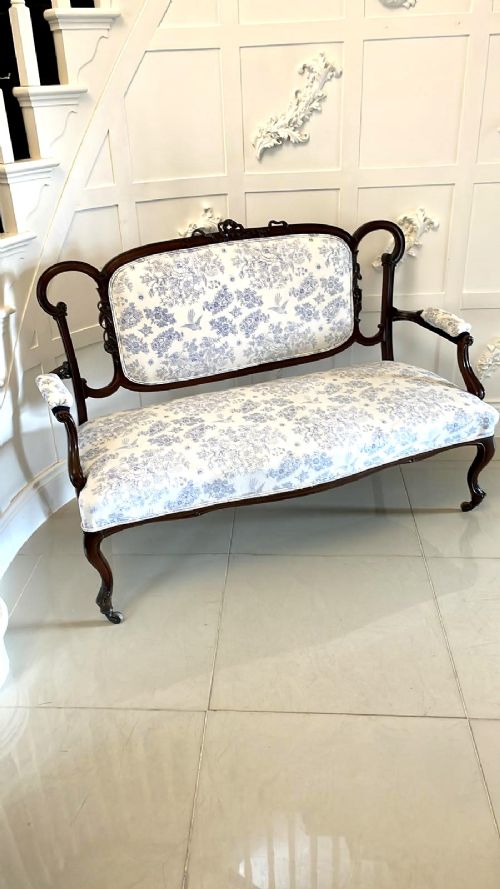
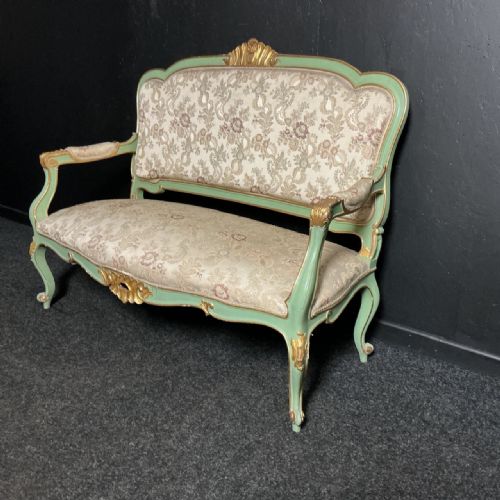


Rococo Two Seater Sofa
These rococo two seater sofa pieces offer compact seating rooted in nineteenth-century revivals and twentieth-century interpretations, bringing ornate French flair to smaller spaces.
Rococo Two Seater Sofa
A rococo two seater sofa brings together the compact proportions of a settee, love seat or window seat with the curved lines characteristic of French Louis XV revival and Victorian rococo styles. When searching for a rococo two seater sofa, a buyer encounters pieces originating across the nineteenth and twentieth centuries, including examples from eighteen fifty, eighteen ninety, nineteen hundred, nineteen ten, nineteen thirty and nineteen sixty.
The forms span various regional and stylistic interpretations such as the canapé, boudoir settee, bergere settee and open arm sofa. Many pieces reflect French Louis XV style, French chateau aesthetics and Victorian rococo revival designs.
These items function primarily as two-seat settees and loveseats, often utilised in bedrooms at the end of a bed or as ornamental window sofas. The diverse selection on this page demonstrates how makers adapted traditional seating layouts into smaller, intimate dimensions.
How they were made
Makers constructed these frames predominantly using timber such as walnut, rosewood and carved wood, supplemented by giltwood and painted finishes. Artisans applied intricate carving to the exposed wooden framework, defining the characteristic fluid lines and asymmetrical motifs of the style.
Upholstery techniques involved fabric, textile, silk and upholstery fabric secured to the frames, alongside cane panels used in specific walnut and cane variations. Additional structural and decorative elements included brass fixtures.
Materials recorded across the inventory include walnut, rosewood, cane, giltwood, silk, brass, and various upholstery textiles.
What varies in quality
Quality reveals itself in the crispness of the carved wood details and the structural integrity of the timber frame, whether walnut, rosewood or giltwood. Superior examples exhibit harmonious proportions and refined execution in stylistic flourishes like those seen on French Louis XV style canapés.
The choice of materials, from silk upholstery and painted finishes to cane work and brass accents, influences the overall character of each settee. The finesse of the upholstery work and the preservation of the original framework distinguish the finer pieces from simpler iterations.
The Rococo Two Seater Sofa Glossary
- Canapé
- An ornamental French sofa or settee featuring an upholstered seat and back within a decorative wooden frame. These pieces often draw from Louis XV revival designs.
- Bergere
- An enclosed upholstered armchair or settee with wooden frames, where the sides are filled with upholstery or cane work. This form appeared in nineteenth-century French seating.
- Giltwood
- Timber treated with gold leaf or gilt finish to create a brilliant decorative surface. This treatment highlights the carved details on revival frames.
- Cane
- Woven material made from rattan or similar plant stems, utilised for seat panels or backrests. It provides a lighter texture alongside carved wood.
- Love Seat
- A small upholstered two-seater sofa designed for intimate seating. The evidence includes silk examples created for boudoir settings.
Rococo Two Seater Sofa: Frequently Asked Questions
Where do I put a small settee?
These small settees fit well in bedrooms at the foot of a bed, inside boudoirs, or positioned near windows as decorative seating.
Their compact two-seater proportions allow them to occupy tight corners or smaller rooms where standard sofas would overwhelm the floor plan.
How do I identify a French style settee?
French style settees typically display Louis XV revival characteristics, such as exposed carved wooden frames, painted finishes, or giltwood surfaces.
Look for distinctive touches like open arms, silk upholstery, and fluid, asymmetrical wooden carvings along the top rail and legs.
What materials are used in these sofas?
Makers constructed these frames using solid woods including walnut, rosewood, and carved timber, sometimes applying paint or gold leaf.
Upholstery materials range from standard fabric and textiles to silk, accompanied occasionally by cane panels and brass details.
How do Victorian and French styles differ?
Victorian interpretations often lean towards heavier walnut frames and traditional upholstery, reflecting nineteenth-century British tastes while retaining rococo curves.
French revival pieces more closely follow Louis XV aesthetics, frequently incorporating giltwood, painted finishes, cane work, and lighter boudoir proportions.