


Antique Canape Frame
An antique canape frame offers the structural bones of a formal salon seat, ready for custom upholstery.
Antique Canape Frame
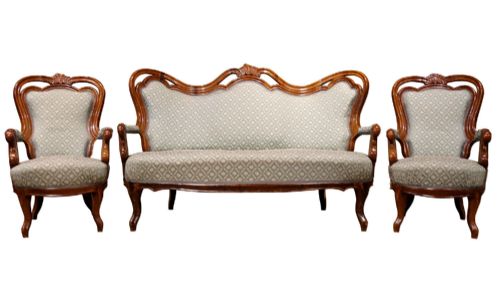
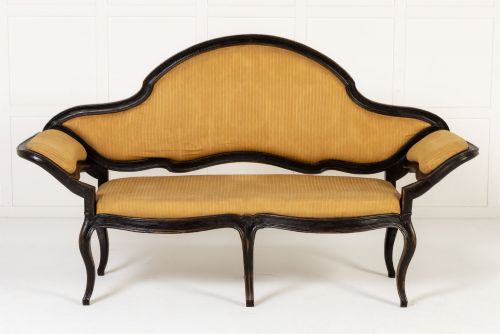
An antique canape frame provides the exposed wooden or gilded skeleton of an upholstered settee or sofa, typically originating from French or English workshops. When buyers search for an antique canape frame, they encounter open frameworks carved from walnut, mahogany, rosewood, or giltwood, often stripped down or awaiting new textile coverings.
The majority of pieces span the eighteenth and nineteenth centuries, taking forms such as the Louis XV style, Louis XVI style, Regency scroll end, and Rococo Revival. These skeletal structures emphasise exposed woodwork, cabriole legs, and ornate crest rails designed to frame the seated user.
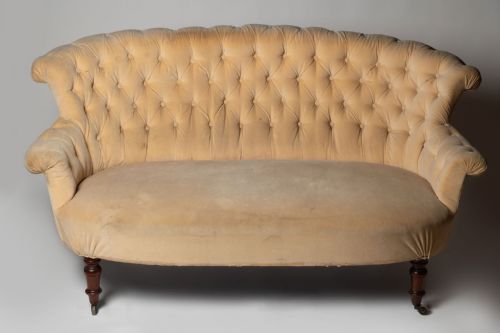
Many examples appear as two-seat or three-seat settees, salon suites, or open-arm couches. The physical evidence shows frames built for domestic display in parlours and drawing rooms rather than heavy everyday lounging.
Materials and construction
Maker workshops utilised dense hardwoods such as walnut, mahogany, and rosewood to support complex curved rails and deep carving. Artisans shaped these timbers by hand, joining structural corners with mortise and tenon joints before applying surface treatments like ebonising, paint, or gold leaf.
Giltwood frames required a delicate base of gesso applied over timber before water-gilding with thin sheets of metal leaf. Other surfaces received plain wax polish to highlight the natural grain of walnut or mahogany frames.
The documented forms range from single open-arm sofas and two-seat settees to large three-piece salon suites.
Judging the quality
Quality rests in the crispness and depth of the hand carving along the crest rail, apron, and cabriole legs. Superior examples display undercut floral or scroll motifs carved directly into the solid wood rather than applied composition ornaments.
The integrity of the structural joinery dictates durability, with tightly fitted joints and substantial timber thickness separating fine salon seating from lighter domestic furniture. The weight and selection of the primary wood, such as figured walnut or dense mahogany, further distinguish high-grade items.
The Antique Canape Frame Glossary
- Giltwood
- Timber coated with gold leaf or metal leaf over a prepared gesso ground. This finish appears frequently on formal eighteenth and nineteenth-century French frames.
- Cabriole leg
- A furniture leg that curves outward and then tapers inward to a foot. It imitates the shape of an animal's leg and dominates Rococo revival designs.
- Louis XV style
- A design aesthetic defined by asymmetrical scrolls, cabriole legs, and naturalistic leaf carving. It originates from the eighteenth century but saw widespread revival in the nineteenth century.
- Salon suite
- A matching set of seating furniture comprising a central settee alongside matching armchairs. These groups furnished large reception spaces during the nineteenth century.
Antique Canape Frame: Frequently Asked Questions
What is an antique canape frame?
An antique canape frame is the exposed wooden or gilded skeleton of a period settee, stripped of fabric or presented for re-upholstery. These pieces retain the carved crest rails, arms, and legs typical of formal European seating.
Buyers acquire these frames to commission bespoke textile coverings that match specific interior schemes. They function primarily as decorative furniture pieces rather than casual lounging sofas.
How do I choose the right style?
Selecting a style involves matching the carved woodwork and leg profiles to your existing interior architecture. Options range from the fluid curves of Louis XV and Rococo Revival to the strict geometry of Regency scroll ends.
Consider whether an ebonised, giltwood, or polished walnut finish complements your room. The overall scale of the settee must also suit the proportions of the intended space.
Can I use the frame without upholstery?
These frames are built to house webbing, springs, stuffing, and outer fabric. Leaving them entirely bare exposes the structural webbing channels, tack holes, and raw joinery intended to remain hidden.
Some buyers temporarily display the carved wooden skeleton as a decorative object before sending it to a professional upholsterer. Full padding and fabric are ultimately necessary to complete the seat properly.
How do I date an antique frame?
Dating relies on observing the timber species, joinery methods, and stylistic carving traits. Eighteenth-century models exhibit hand-cut joints and distinct regional tool marks, while nineteenth-century revival pieces often display heavier proportions and machine-assisted preparation.
Comparing the decorative motifs, such as Adam period neoclassical details or later Victorian flourishes, helps narrow the decade of manufacture. Documentation or provenance, when present, provides definitive confirmation.