



Antique Cake Display Stand
An antique cake display stand holds afternoon tea pastries or centrepiece gateaux, bringing tiered utility and period charm to a table.
Antique Cake Display Stand
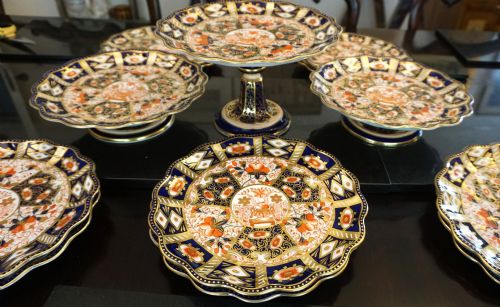
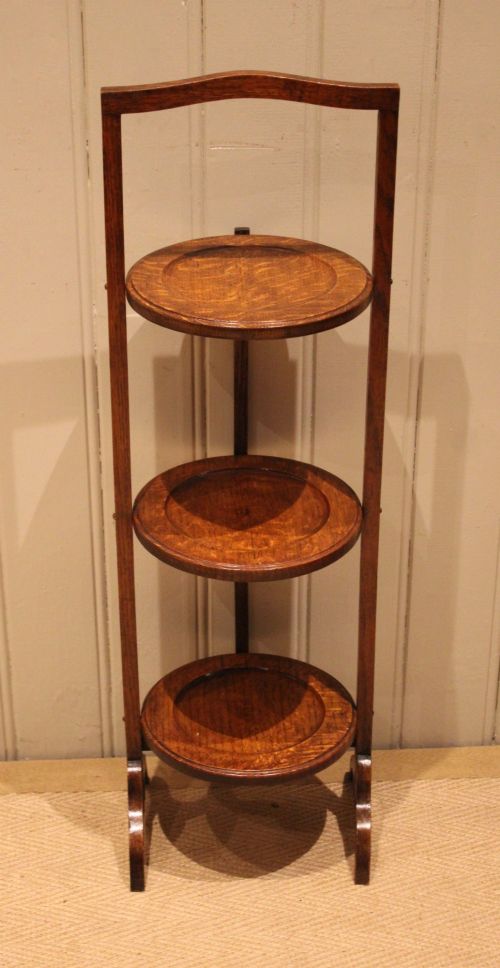
An antique cake display stand encompasses tiered structures, tazzas, and folding occasional pieces designed for presentation. The selection spans the Georgian, Victorian, and Edwardian eras, reflecting changing social habits around tea and dessert service.
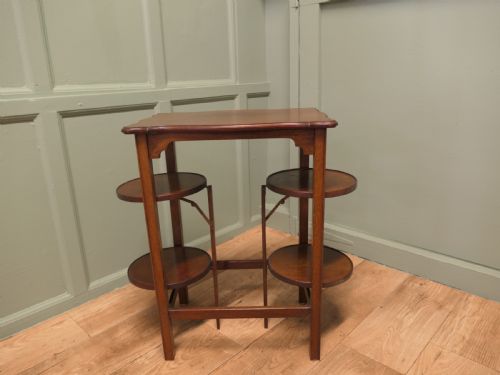
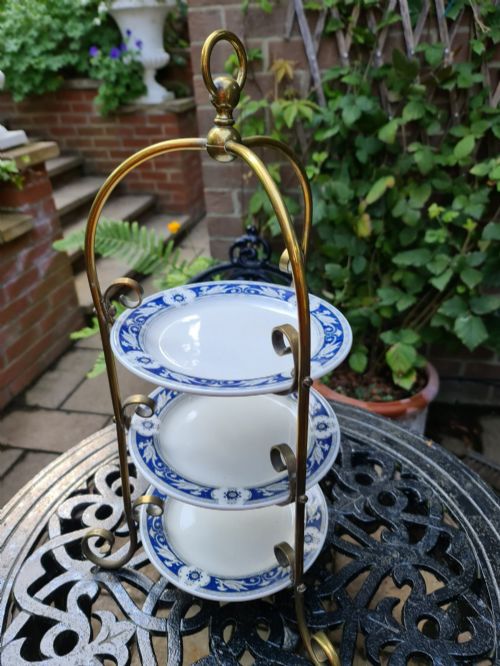
Tiered models in oak, mahogany, and walnut dominate the offerings, often constructed with folding frames for practical storage. Simpler circular stands and tazzas in glass, silver plate, and brass also appear, alongside occasional tables adapted for display.
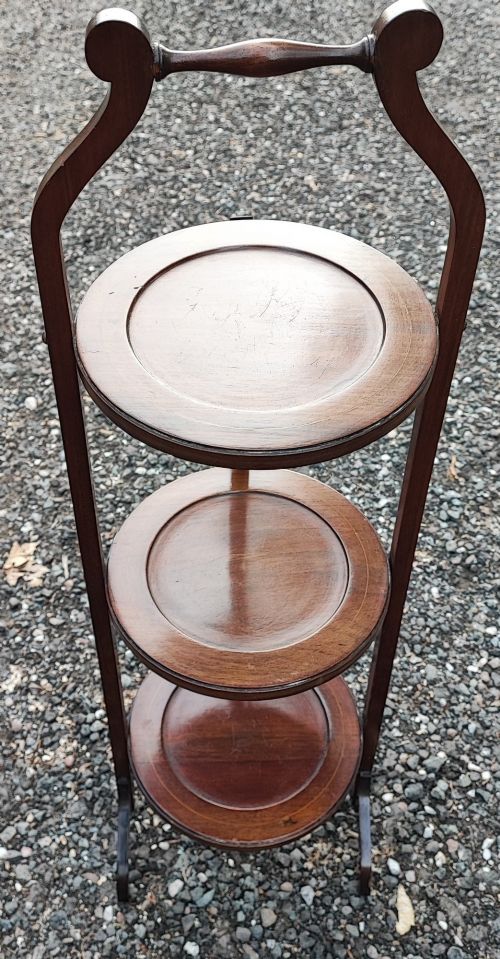
Buyers encounter multi-tier configurations frequently, particularly Edwardian inlaid versions and Victorian revolving or stationary tiers. These forms serve modern homes as display surfaces for small items just as readily as for baked goods.
How they were made
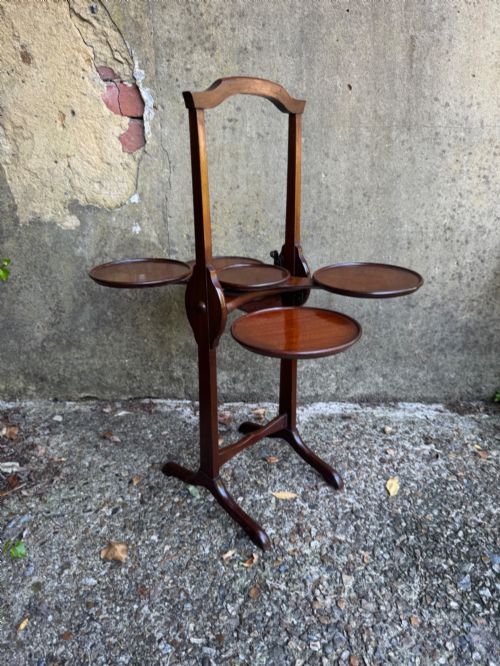
Cabinetmakers utilised hardwoods such as mahogany, oak, walnut, and satinwood, frequently employing inlay, turning, and tripod pedestal supports. Timber stands often feature hinged mechanisms to allow multi-tier trays to fold flat.
Metalwork and glass production played a significant role, seen in silver plate mountings, brass pedestal platters, and heavy moulded glass tazzas. Artisans combined these materials with mirrored glass inserts and beadwork panels to create reflective display surfaces.
Antique Cake Display Stand Retail Price Guide 2026
Typical asking prices for cake display stand among the pieces listed under this phrase on Sellingantiques today, from the lower quarter to the upper quarter. They describe what is for sale here now, not the wider market.
Listings feature mahogany, oak, walnut, silver plate, and glass across Georgian, Victorian, and Edwardian periods.
What varies in quality
Quality rests on the selection of timber figures, the precision of inlaid veneers, and the stability of folding hinge mechanisms. Superior examples exhibit balanced proportions across multiple tiers without structural sag.
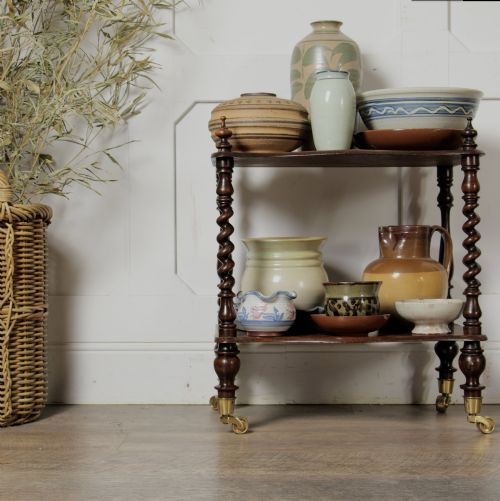
Finishing details distinguish finer items, from crisp barley twist turnings to unblemished mirrored inserts and heavy-gauge silver plate. The integration of structural supports determines how firmly each tier holds its weight during daily use.
The Antique Cake Display Stand Glossary
- Tazza
- A shallow saucer or bowl raised on a slender stem and foot, used historically for serving small cakes or fruit. Glass and metal examples appear across eighteenth and nineteenth-century inventories.
- Etagere
- A set of open shelves for displaying small objects, sharing a tiered vertical format with many cake stands. These pieces use multiple platforms supported by upright columns.
- Dumb waiter
- A multi-tiered freestanding piece with revolving or stationary shelves used to hold dishes beside a dining table. Georgian and nineteenth-century variants often feature three circular graduating tiers.
- Mirror plateau
- A mirrored glass tray with a decorative metal frame, utilised as a table centrepiece to reflect light beneath cake stands or display items.
- Sheraton Revival
- A late nineteenth and early twentieth-century design style drawing on neoclassical eighteenth-century motifs, frequently featuring satinwood inlay and fine mahogany frames.
Antique Cake Display Stand: Frequently Asked Questions
What is an antique cake display stand used for today?
These pieces function effectively as serving tiers for afternoon tea, desserts, and celebration cakes in contemporary settings. Collectors also utilise them to display decorative objects, plants, and tableware.
Their vertical structure makes them practical for saving table space while adding period character to a room. Folding models allow for easy storage when not in active use.
How do I date an Edwardian cake stand?
Edwardian stands typically date between nineteen hundred and nineteen ten, often constructed from lightweight mahogany with subtle satinwood inlay. They frequently incorporate folding mechanisms that allow the tiers to collapse together.
Comparing the timber grain, brass hardware, and inlay motifs to dated pieces helps confirm the era. The presence of registration numbers or retailer stamps can also narrow down the production year.
What is the difference between a tazza and a tiered stand?
A tazza consists of a single flat or shallow bowl supported by a central pedestal foot. It provides one prominent display surface for a single gateau or arrangement of pastries.
Tiered stands utilise multiple platforms stacked vertically on a central column or folding frame. This design increases surface area for presenting a larger variety of smaller cakes.
How do I care for wooden and silver plated stands?
Wooden surfaces require occasional application of appropriate wax to maintain the finish and prevent the timber from drying out. Avoiding placement near direct heat sources protects the joints and veneer.
Silver plate elements benefit from gentle cleaning with a soft cloth to preserve the metallic sheen without abrasive wear. Mirrored glass inserts should be wiped with standard glass cleaner applied to a cloth rather than sprayed directly.