
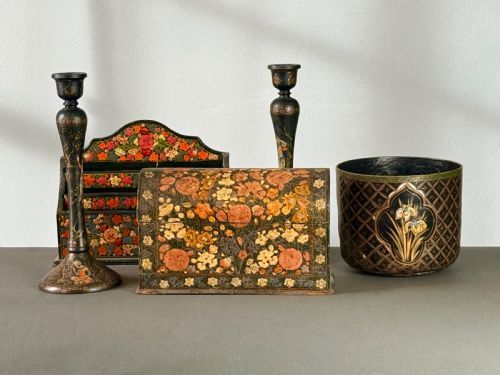

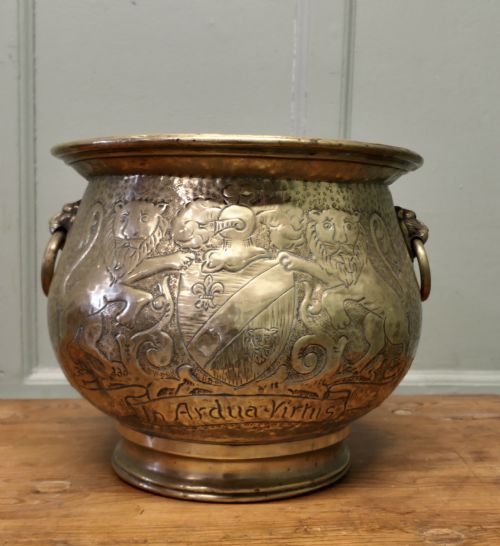
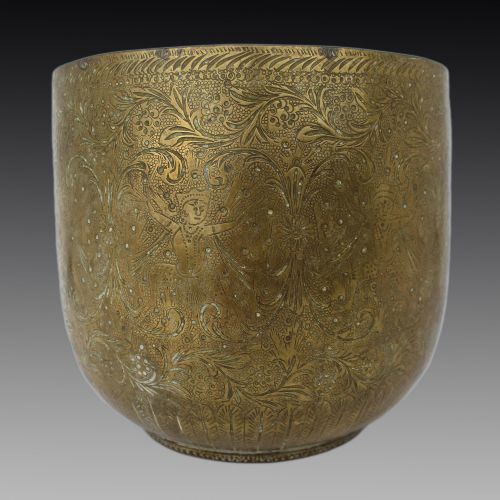
Antique Cachepot
An antique cachepot is a decorative outer pot designed to conceal a flowerpot, bringing greenery indoors with period elegance.
Antique Cachepot
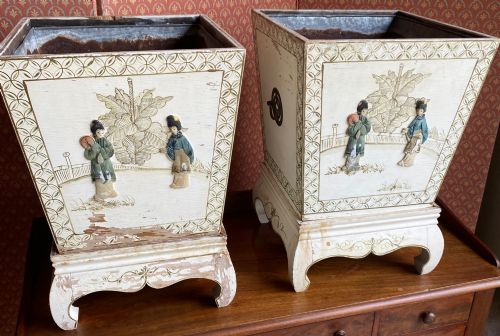
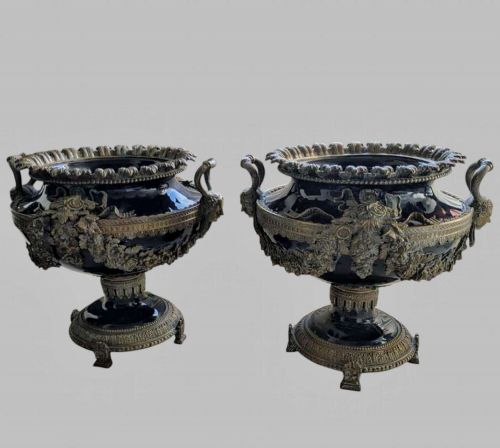
An antique cachepot serves to hold plant pots and protect interior surfaces, often appearing alongside related planters, jardinières, and bough pots. The pieces span centuries of domestic horticulture, originating in materials designed to manage moisture while presenting a decorative exterior.
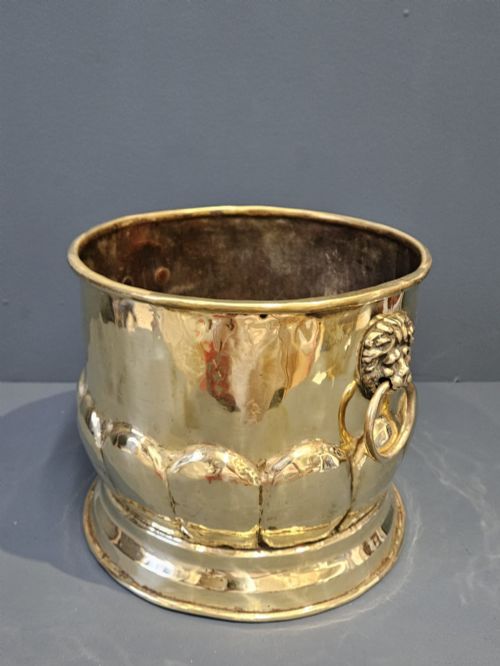
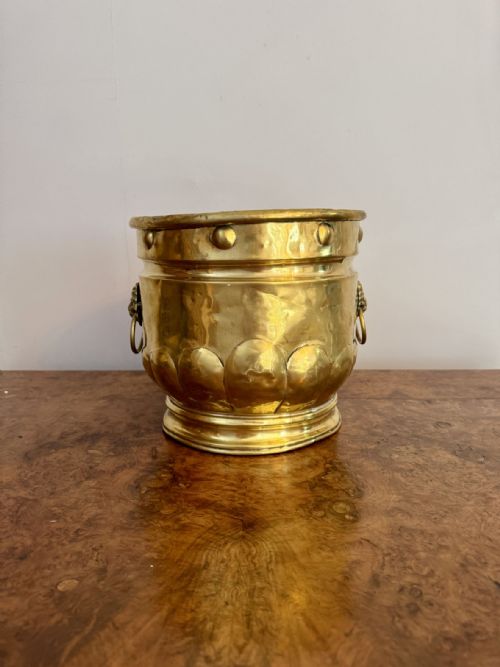
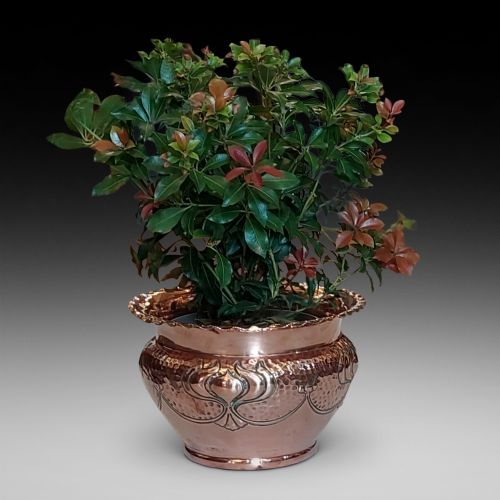
Victorian brass and copper vessels dominate the selection, alongside ceramic and porcelain examples from English, French, and Asian makers. Buyers frequently encounter nineteenth-century metal planters alongside earlier eighteenth-century earthenware and porcelain pot forms.
The objects reflect changing interior tastes from the Georgian era through the Arts and Crafts and Art Nouveau movements. Each piece provides a historical container for indoor plants, uniting utilitarian function with ornamental craftsmanship.
Materials and Construction Methods
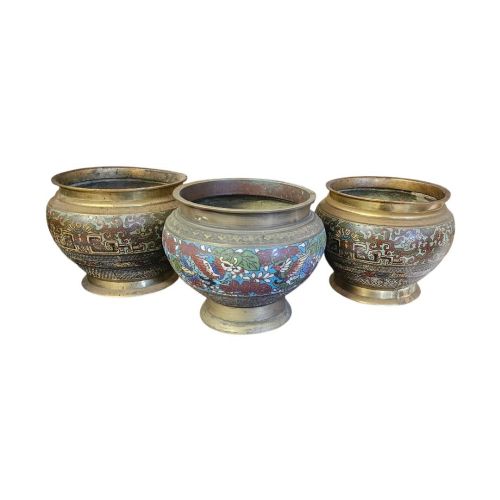
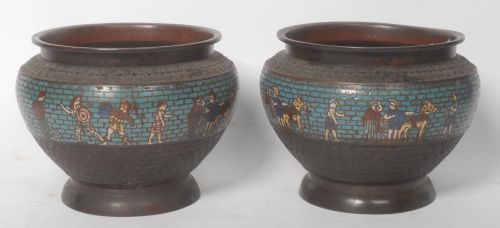
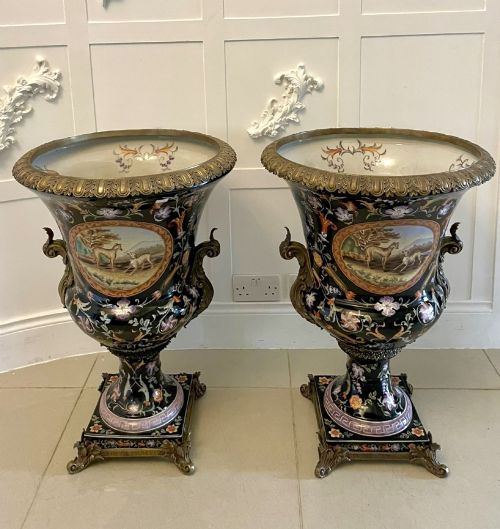
Metals such as brass, copper, and bronze were beaten, cast, or pierced to create durable planters that could withstand damp environments. Makers employed champlevé enamel on bronze vessels or mounted porcelain bodies in brass frames to elevate the decorative scheme.
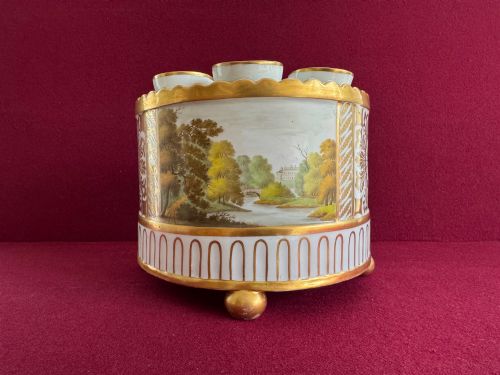
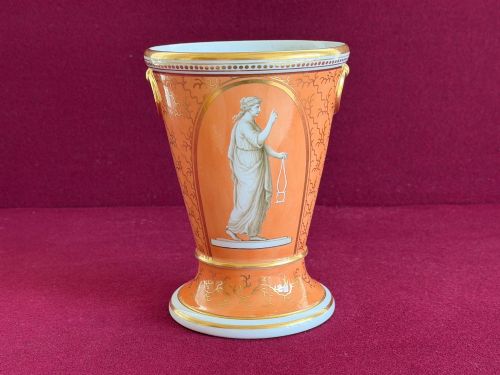
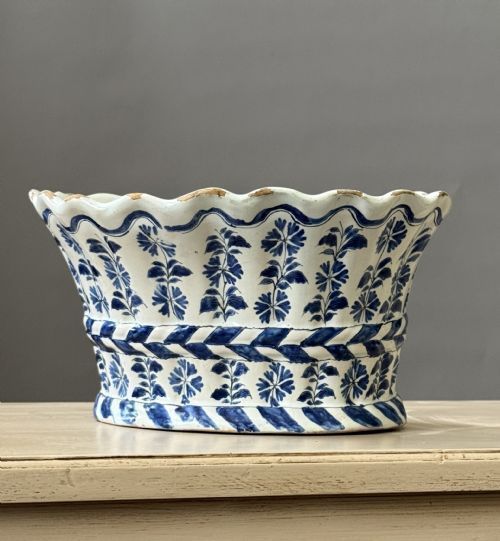
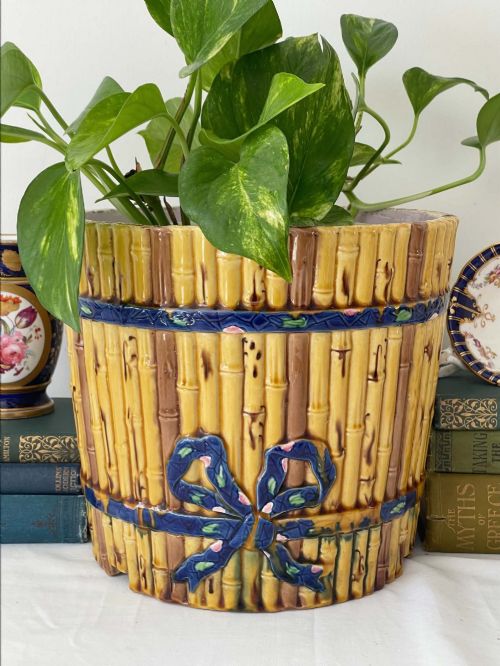
Ceramic examples rely on earthenware, stoneware, and porcelain, shaped on the wheel or in moulds before receiving glazes, blue and white transfer printing, or hand-painted details. Majolica and Delft earthenware provide porous bodies suited to traditional potting uses.
Wood construction appears in specialised forms such as olive wood mounted with bronze, demonstrating cabinetmaking techniques applied to horticultural accessories.
Listings feature 18th-century Delft and Japanese Arita Imari alongside 19th-century Victorian brass and Edwardian copper.
Distinguishing Quality and Execution
The standard of modelling and surface decoration separates utilitarian vessels from masterwork productions. Finely chased metalwork, crisp casting details, and hand-painted ceramic glazes indicate superior workshop output.
The integrity of construction, including the weight of the metal gauge and the proper fit of brass mounts to ceramic bodies, determines the durability of the piece. Intact original stands and liners contribute to the integrity of surviving examples.
Flight & Barr Worcester·Barr Flight & Barr·Royal Doulton·Doulton Lambeth·William Adams & Sons·W.A. Adderley·Minton
The Antique Cachepot Glossary
- Cachepot
- A decorative outer pot designed to hide an ordinary plant pot. The term translates from French as hiding pot.
- Jardiniere
- A large ornamental pot or stand for plants or flowers. These vessels often take circular or boat shapes in ceramic or metal.
- Bough pot
- An eighteenth-century vessel intended for holding cut boughs or flowers. They frequently feature pierced covers to separate stems.
- Champleve
- An enamelling technique where sunken cell areas on a metal surface are filled with vitreous enamel. The metal partitions remain visible between the coloured enamel fields.
- Majolica
- A type of earthenware decorated with opaque coloured glazes over a white tin-glazed background. The technique produces vibrant hues popular in nineteenth-century production.
Antique Cachepot: Frequently Asked Questions
What is an antique cachepot used for?
These vessels were created to sit beneath or around potted plants, catching excess water while concealing standard terracotta flowerpots from view in domestic interiors.
They allowed homeowners to display living greenery on tables and mantelpieces without risking water damage to fine furniture.
How do you clean an antique brass planter?
Dust accumulation is best managed with a dry microfibre cloth to preserve the natural oxidation and historical patina accumulated over the decades.
Harsh chemical polishes should be avoided because they strip the surface character and diminish the age of the metal.
Are cachepots and jardiniere the same thing?
While both terms describe vessels for plants, a cachepot specifically hides an inner pot, whereas a jardiniere often functions as the primary container for soil or floral arrangements.
Jardinières also tend to be larger in scale and sometimes incorporate matching stands or pedestals.
How can I date an antique ceramic planter?
Dating relies upon maker marks, glaze characteristics, and stylistic markers such as Victorian aesthetic motifs or Art Nouveau asymmetry.
Base inspection often reveals factory stamps or registration ciphers that narrow the production window to a specific decade.