


Antique Cabinet with Key
An antique cabinet with key secures your collection behind period timber and brass while keeping everyday contents safely locked away.
Antique Cabinet with Key
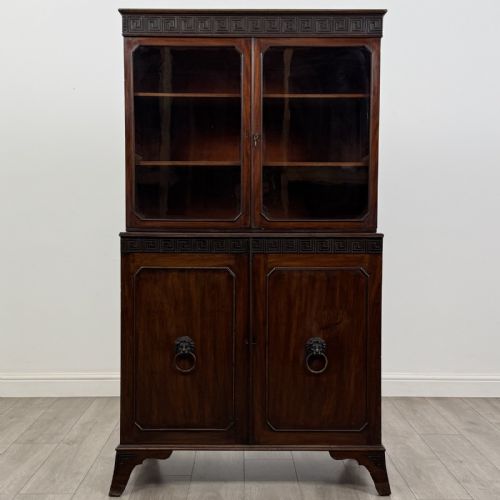
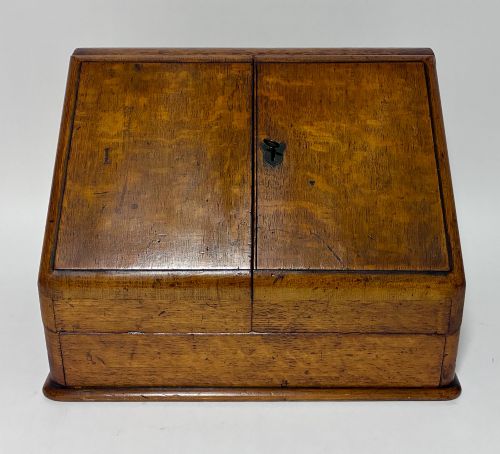
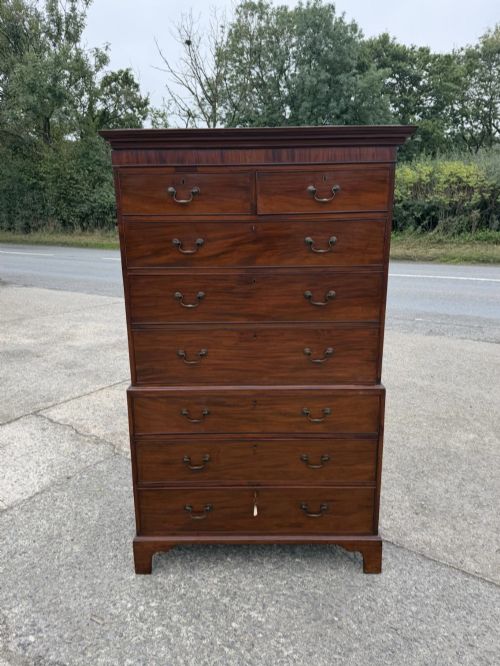
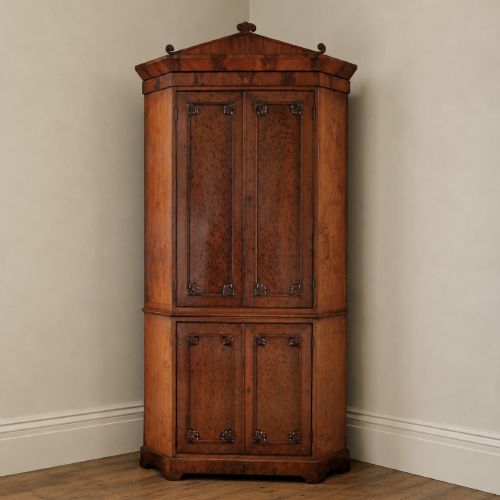
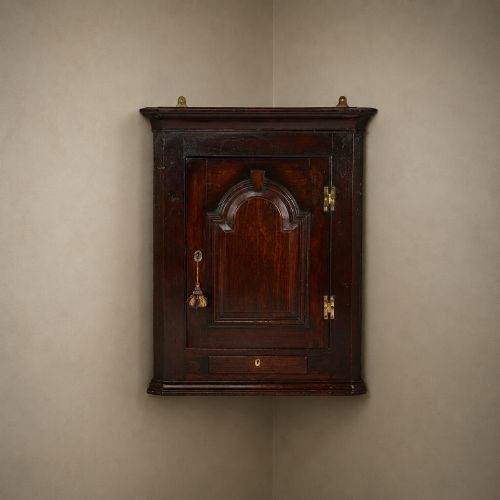
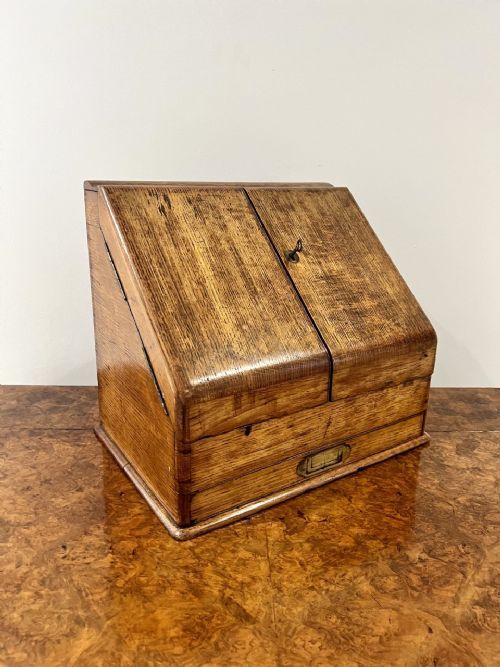
An antique cabinet with key spans domestic furniture from Georgian hanging wall cupboards to Edwardian display cases and heavy Victorian safes. You encounter forms designed for specific domestic and business uses, including corner cupboards, collectors' cabinets, cutlery canteens, and sideboards.
The pieces on this page originate across the nineteenth and early twentieth centuries, drawing on Georgian, Victorian, William IV, Edwardian, and French Belle Epoque styles. Woods like mahogany, oak, and plum pudding mahogany dominate the structural forms, complemented by glass, brass, and cast iron.
Corner cabinets and wall-hanging units provide space-saving storage, whilst larger buffets and bureau bookcases offer multi-tiered compartments. Each surviving piece retains its operational locking mechanism and key, bridging ornamental display with practical security.
Materials and construction methods
Cabinet makers utilised dense hardwoods such as mahogany, oak, and bird's-eye maple to build robust frames that withstand generations of use. Plum pudding mahogany and figured veneers introduce distinct decorative grain patterns to prominent exterior surfaces.
Functional metalwork forms an integral part of the construction, employing brass for escutcheons and locks, alongside cast iron and wrought iron in heavy fireproof safes. Glass panels feature in display and drinks cabinets, allowing visibility while maintaining secure interior storage.
Materials recorded across the archive range from dense mahogany, oak, and plum pudding mahogany to cast iron and wrought iron.
Factors separating the grades
The sophistication of the timber selection dictates the initial visual appeal, distinguishing plain structural planks from highly figured veneers and decorative hardwoods. Superior examples display careful grain matching across drawer fronts and door panels.
The integrity and complexity of the internal configuration mark the difference between standard storage and bespoke craftsmanship. Fitted stationery compartments, multiple graduated drawers in collectors' cabinets, and fully operational original locks elevate a piece's standing.
Walker and Hall·Milners·George Price·Standish
The Antique Cabinet with Key Glossary
- Collector's cabinet
- A specialised piece of furniture featuring numerous shallow internal drawers designed for storing natural history specimens, coins, or medals. These cabinets often incorporate locking glazed or panelled doors.
- Cutlery canteen
- A fitted box, chest, or cabinet designed specifically to store flatware and table silver in dedicated slots and compartments. Edwardian examples often pair secure locks with brass carrying handles.
- Escutcheon
- A protective plate surrounding the keyhole of a cabinet door or drawer. In better pieces, this plate is cast or engraved brass.
- Buffet
- A sideboard or low storage cabinet used for serving food and displaying tablewares. Nineteenth-century versions frequently incorporate marble tops and ormolu mounts.
Antique Cabinet with Key: Frequently Asked Questions
How do I secure an antique cabinet with key?
Most pieces on this page retain functional locks operated by their original or period-replacement keys. Turn the key gently in the brass escutcheon to engage the internal bolt within the wooden housing.
For heavy safes, turn the key alongside any combination mechanism to release the heavy iron bolts. Avoid forcing stiff mechanisms; a local restorer can lubricate vintage locks safely.
What were collector's cabinets used for?
Collector's cabinets were built with multiple shallow internal drawers to house delicate items like insects, minerals, shells, or coins. The tight-fitting drawers protected fragile specimens from dust and light exposure.
Today, these multi-drawer units suit the storage of jewellery, watches, and small personal collections. Their secure locking doors keep valuable contents out of sight.
How do I date an antique corner cupboard?
Georgian corner cupboards often feature astragal glazing bars and solid mahogany or oak construction with pegged joints. Edwardian and later variations introduce lighter timbers, simpler mouldings, and machine-cut fixings.
Examine the backboards, drawer linings, and interior hinges for signs of hand-tool work. Georgian and Victorian pieces show irregularities in timber preparation absent in later mass-produced items.
Are these keys original to the cabinets?
Many listings specify the inclusion of a key, which may be the original brass or iron key accompanying the piece since manufacture. Some items feature period-appropriate replacement keys cut to fit the vintage mechanism.
Working locks with functional keys enhance the utility of drinks cabinets, bureau bookcases, and safes. Check individual descriptions to confirm whether the key operates the primary lock.
How do I care for mahogany and oak cabinets?
Maintain timber cabinets by dusting with a dry lint-free cloth and applying microcrystalline wax sparingly to nourish the polish. Keep wooden furniture away from direct sunlight and radiators to prevent wood shrinkage.
Brass escutcheons and handles benefit from careful cleaning without abrasive polishes that damage surrounding timber. Ensure marble tops on buffets are wiped promptly to avoid staining.