


Antique Cabinet with Brass
An antique cabinet with brass brings together timber and metalwork, offering practical storage alongside the gleam of period mounts and handles.
Antique Cabinet with Brass
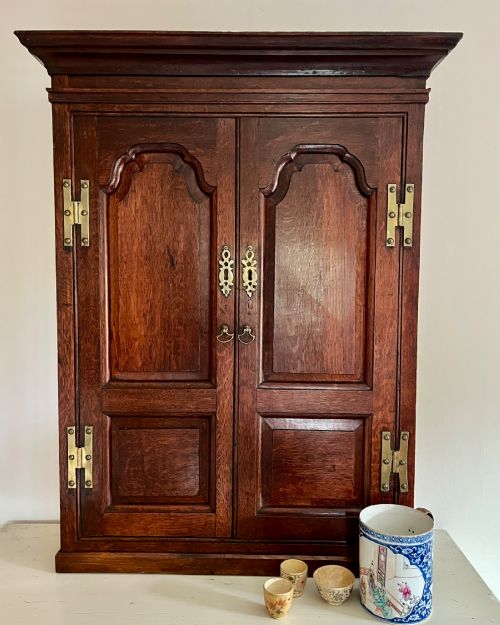
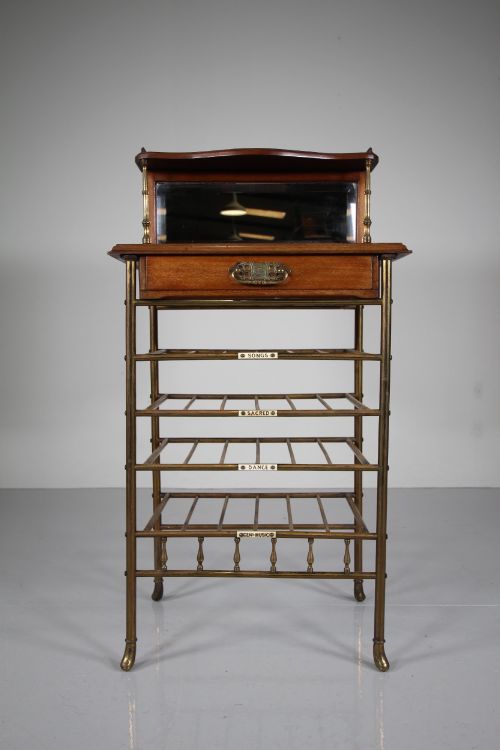
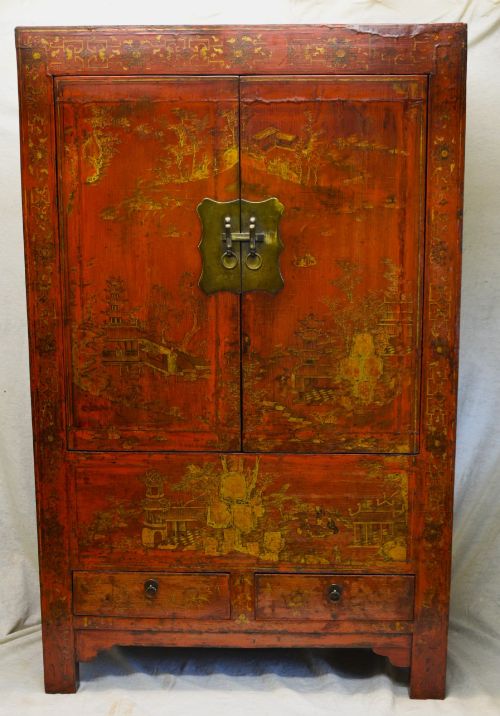
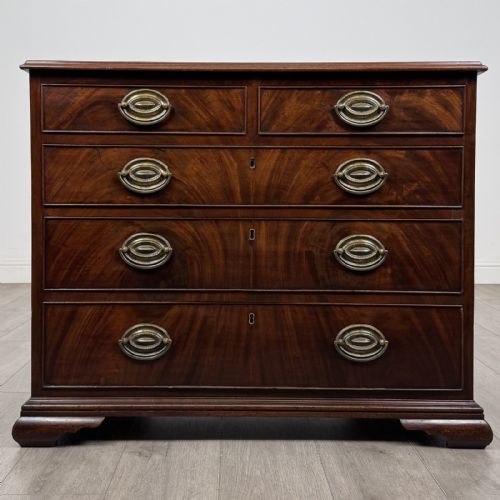
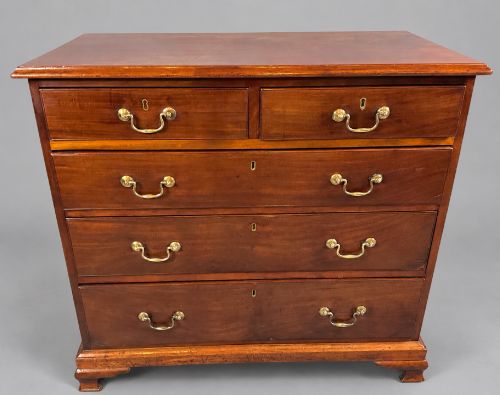
When you search for an antique cabinet with brass, you encounter a varied group of storage pieces originating from the eighteenth, nineteenth, and early twentieth centuries. These encompass chiffoniers, side cabinets, bookcases, and writing desks produced across Georgian, Regency, Victorian, and Edwardian eras.
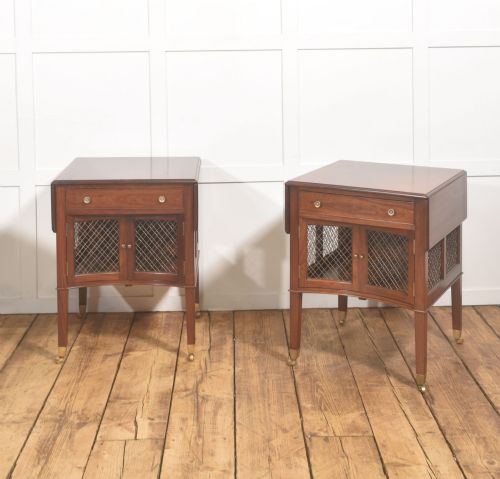
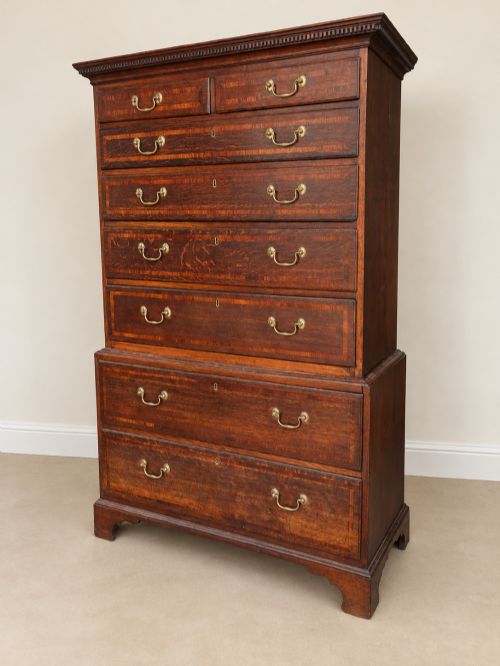
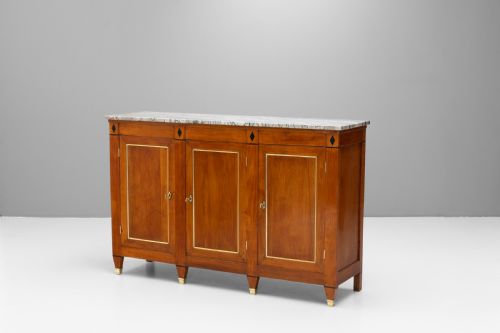
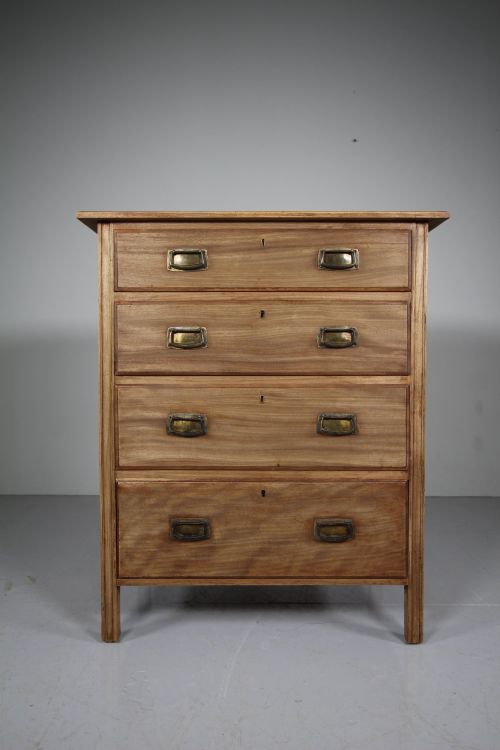
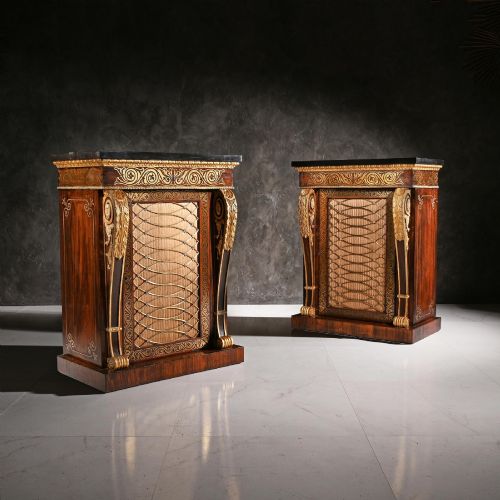
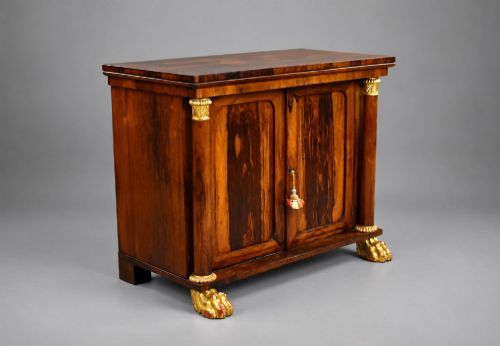
The most frequent examples on this page are mahogany, rosewood, or walnut pieces incorporating brass handles, galleries, inlay, or grilles. They range from formal Regency chiffoniers with brass wire panels to compact Victorian bedside cabinets and oak storage chests.
Makers and workshops from Britain and France feature strongly, alongside occasional regional pieces like Korean elm chests with brass hardware. Each form serves a distinct domestic purpose, from displaying books to concealing correspondence behind fall-front writing surfaces.
Materials and Construction
Cabinet makers utilised dense timbers such as mahogany, rosewood, burr walnut, and oak as the structural body for these pieces, often applying veneers of satinwood or kingwood to prominent surfaces. Timber preparation required careful seasoning to prevent warping across large doors and fall-front panels.
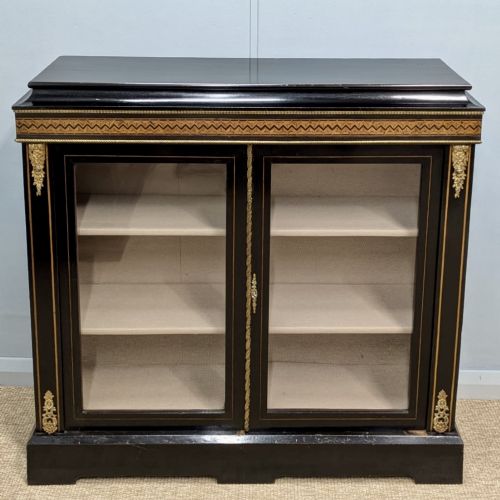
Brass elements were integrated through cast handles, escutcheons, inlaid stringing, galleries atop open shelves, and perforated grilles backed by fabric. Ormolu mounts and gilt bronze embellishments appear on continental pieces, fixed securely to the timber carcase.
Internal construction relies on traditional joinery, including dovetail joints for drawers and panelled backs for bookcases and side cabinets. Castors and paw feet made of brass frequently support heavier mahogany and rosewood items.
Antique Cabinet with Brass Retail Price Guide 2026
Typical asking prices for cabinet with brass among the pieces listed under this phrase on Sellingantiques today, from the lower quarter to the upper quarter. They describe what is for sale here now, not the wider market.
Some nineteenth-century writing desks come equipped with secret drawers designed to outsmart wandering hands.
Standards of Execution
Quality rests upon the crispness of the brass casting and the precision of its integration into the timber, whether through delicate stringing or structural mounts. Finer pieces display hand-chased detail on metalwork rather than mass-produced uniformity.
The selection and matching of wood veneers, particularly burr walnut and flame mahogany, distinguish higher-grade examples from simpler utility furniture. Grain patterns flow naturally across drawers and doors on superior commissions.
The integrity of original fittings, such as locks, key escutcheons, and hinges, dictates the standing of a piece within its period. Replacements alter the physical continuity between the timber carcase and its metal decoration.
Gillows·Robert Strahan
The Antique Cabinet with Brass Glossary
- Chiffonier
- A low sideboard or cabinet developed during the Regency period, frequently fitted with enclosed shelves below and a raised superstructure or brass gallery above. It functions primarily as a serving or display surface in a dining room or parlour.
- Secretaire
- A cabinet or bureau containing a pull-down writing drawer or fall-front flap that conceals small drawers and pigeonholes. It combines storage with a dedicated writing surface.
- Ormolu
- Gilded bronze ornamentation applied to furniture, popular on nineteenth-century French cabinets and vitrines. It provides a bright metallic contrast to dark kingwood and mahogany surfaces.
- Gallery
- A low railing, usually made of pierced or cast brass, positioned along the top edge of a bookcase or side cabinet to keep items from sliding off. It adds an architectural finish to the upper surface.
- Stringing
- Thin lines of contrasting timber or brass inlaid into the surface of a cabinet to form geometric borders or panels. It requires precise channel cutting by the maker.
Antique Cabinet with Brass: Frequently Asked Questions
What is a chiffonier?
A chiffonier is a low cabinet featuring cupboard doors below and often a shelf or brass gallery above. It served domestic storage needs in nineteenth-century sitting rooms.
These pieces typically combine timber carcases with brass inlay, grilles, or galleries, reflecting the design preferences of the Regency and Victorian eras.
How do I care for brass hardware?
Brass mounts and handles require minimal intervention to preserve their historic surface. Dust them gently with a dry, soft cloth rather than using aggressive chemical cleaners.
Avoid applying metal polish directly onto the surrounding timber veneer, as polish residue can stain or damage antique wood finishes over time.
Are brass galleries original?
Brass galleries on bookcases and side cabinets are often original if the fixing pins match the period construction methods of the piece. Look for consistent patination between the gallery rail and the corresponding hardware elsewhere on the cabinet.
Replacements usually show modern screw types or unaged metal surfaces that contrast with nineteenth-century timber wear.
Where were these cabinets used?
Antique cabinets with brass appeared across various domestic spaces, from formal libraries and drawing rooms to bedrooms and offices. Bookcases and vitrines displayed prized volumes and porcelain, while bureaus provided private writing quarters.
Smaller bedside cabinets and chiffoniers held personal items and table linen close to hand within private chambers.