




Antique Burmese Statue
An antique burmese statue brings centuries of ritual art into a room, combining cast metal and carved timber with the serene presence characteristic of Southeast Asian sculpture.
Antique Burmese Statue
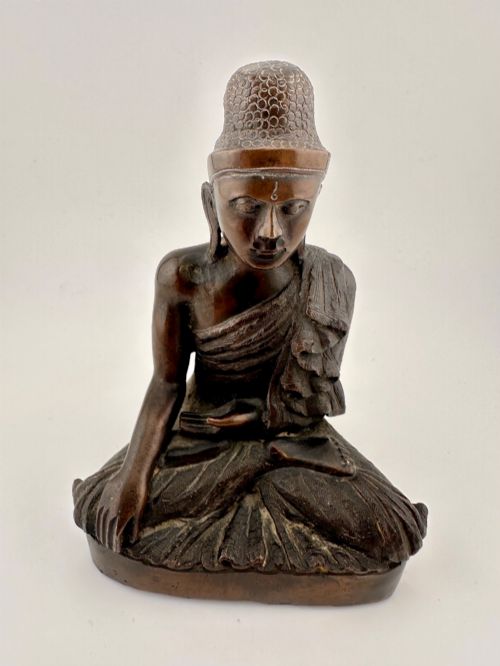
When searching for an antique burmese statue, collectors encounter representations of figures and animals spanning from early temple carvings to later domestic works. The selection most frequently includes bronze representations of the Buddha, alongside carved wood figures and temple lions.
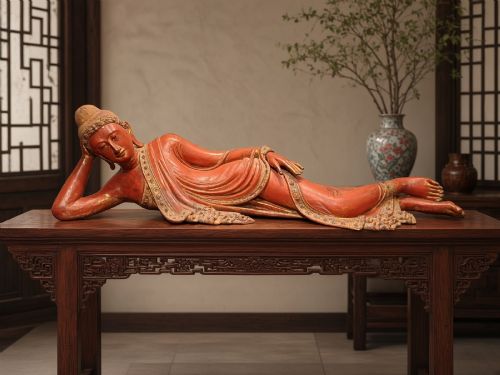
Pieces originate from periods such as the eighteenth and nineteenth centuries, with specific regional expressions like the Mandalay style appearing regularly. Forms range from seated and reclining Buddhas to protective temple lions and carved animal figures.
Materials and construction
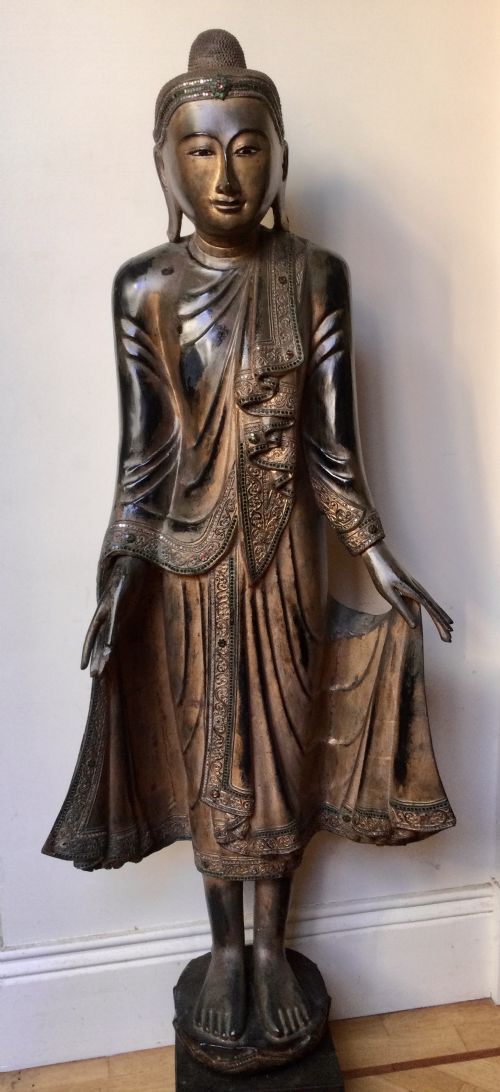
Maker techniques rely heavily on bronze casting, producing substantial metal statues that often retain traces of gilding or surface patination. Wood is similarly common, utilised for carved figures enhanced with gold leaf and glass inlay.
Alternative materials include white marble and stone, shaped into detailed temple statues. Artisans applied polychrome finishes, gold leaf, and mirror glass to timber and metal cores to achieve rich surface textures.
Object forms include seated and reclining Buddhas, temple lions, Nats, and carved elephants originating from Southeast Asian workshops.
Assessing quality
Quality differentiates by the crispness of the carving and the precision of the metal casting, where finer pieces display deeply rendered drapery and calm facial expressions. The survival of original gilding, gold leaf, and glass inlay strongly influences the desirability of a sculpture.
Proportion and stance distinguish regional works, with master-carved temple figures exhibiting balanced anatomy and refined detailing compared to standard decorative items. The integrity of the material, whether bronze, wood, or marble, remains central to the standing of any given piece.
The Antique Burmese Statue Glossary
- Mandalay Period
- A distinct nineteenth-century aesthetic phase in Burmese art characterised by oval face shapes, prominent robe borders, and serene expressions. This style represents a high point in regional sculpture production.
- Bhumisparsha Mudra
- The earth-touching gesture depicted on seated Buddha statues, where the right hand reaches down to touch the ground. It symbolises the Buddha calling the earth to witness his enlightenment.
- Gilt Wood
- Timber sculpture surfaced with a thin layer of gold leaf. This technique was widely applied to temple carvings and Buddha figures to impart a radiant finish.
- Nat
- A traditional spirit figure worshipped in Burma, often depicted in pairs as carved wooden statues. These figures wear traditional court dress and distinct headgear.
- Temple Lion
- A mythical guardian beast, often cast in bronze or carved from wood, positioned to protect sacred spaces. Pairs of these lions frequently show dynamic postures and decorated surfaces.
Antique Burmese Statue: Frequently Asked Questions
What periods do these statues come from?
The available pieces span multiple centuries, with a strong representation of nineteenth-century works alongside eighteenth-century examples and earlier temple carvings.
Earlier stone and wood pieces date back centuries before the modern era, reflecting traditional craftsmanship across different dynasties and regions.
What materials are most common?
Bronze and carved wood form the majority of the surviving pieces, often embellished with gold leaf, glass inlay, or polychrome paint.
White marble and stone appear less frequently, used primarily for substantial temple figures and reclining Buddhas.
How were these statues used originally?
Most of these figures served devotional and protective functions within Buddhist temples, monasteries, and household shrines across Burma.
Guardian animals like temple lions stood at entrances, while figures of Buddhas and Nats occupied central altars for worship and ritual.
How do I care for a wooden Buddha?
Wooden and gilt wood statues require stable indoor humidity levels and protection from direct sunlight to preserve the delicate surface finishes.
Dusting should be performed gently with a soft, dry brush to avoid disturbing any remaining gold leaf or pigment.