



Antique Buffet Display Shelf
An antique buffet display shelf brings architectural timber and tiered storage together, offering a practical stage for silver and china.
Antique Buffet Display Shelf
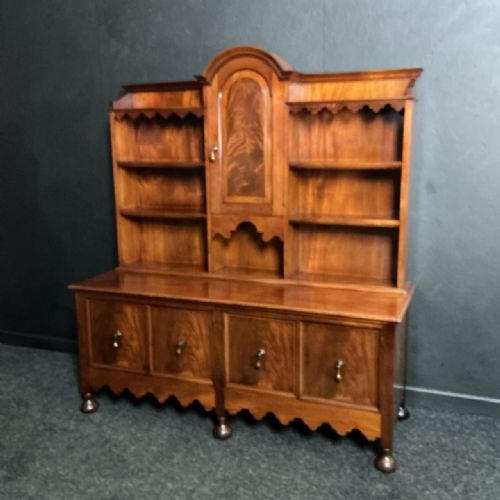
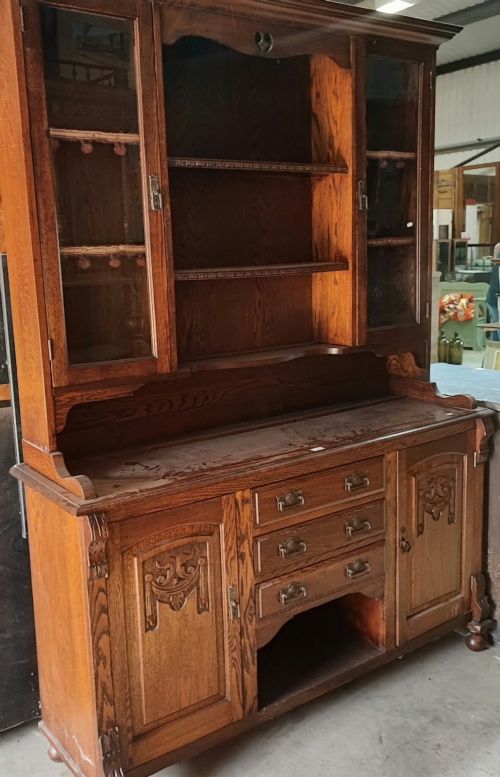
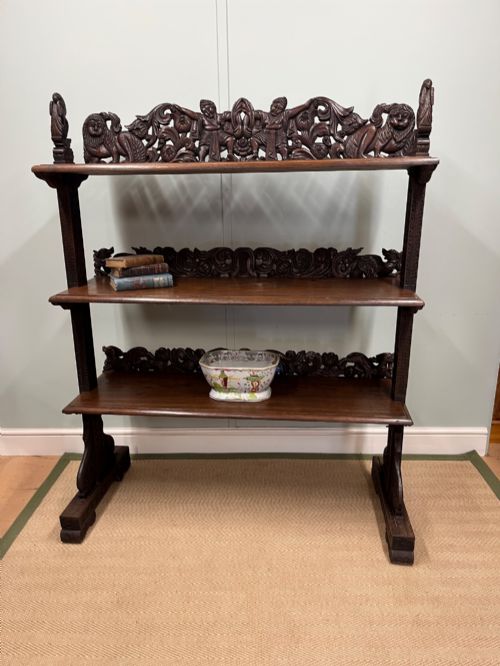
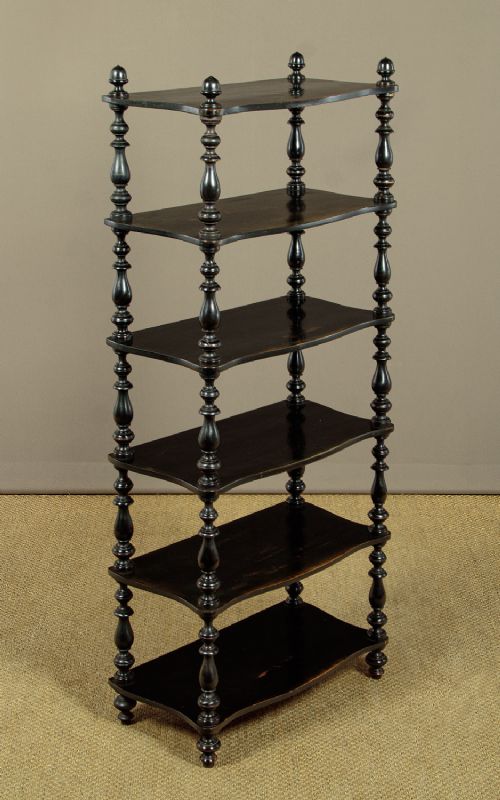
When you search for an antique buffet display shelf, you encounter a variety of multi-tiered furniture including buffets, etageres, whatnots, and dressers spanning the eighteenth, nineteenth, and early twentieth centuries. These pieces combine flat serving surfaces with open display tiers or enclosed cabinet space, originating across periods from Regency elegance to Victorian elaboration.
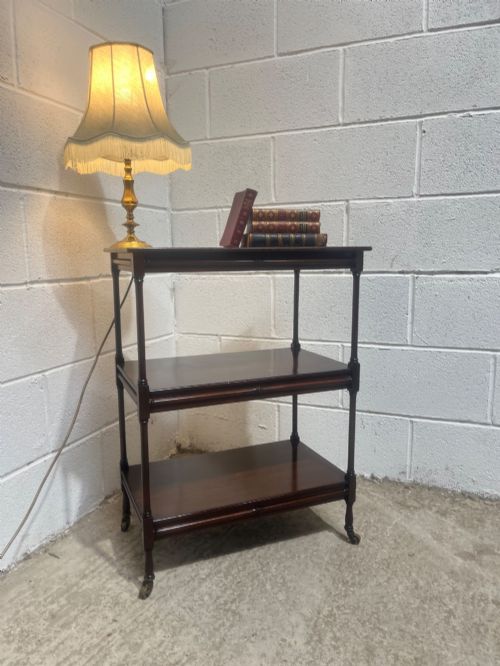
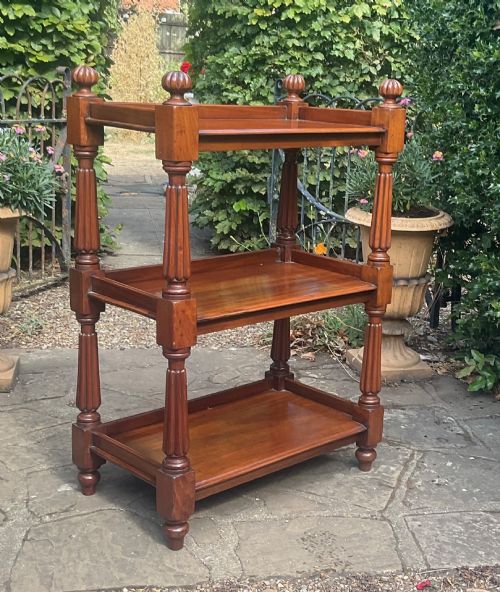
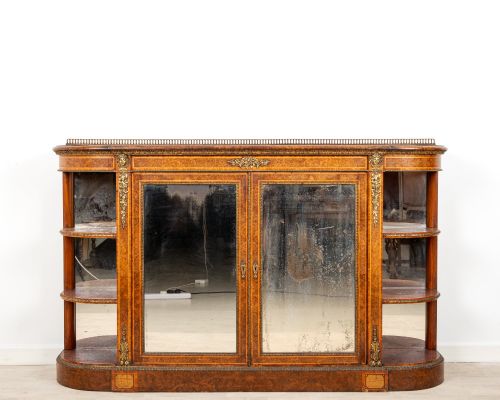
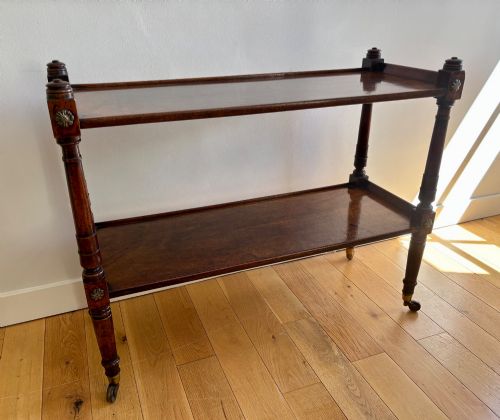
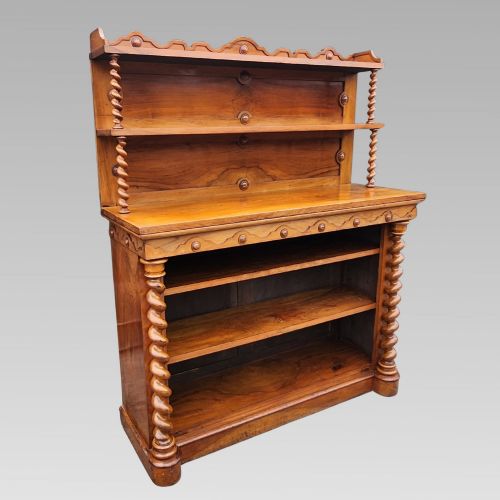
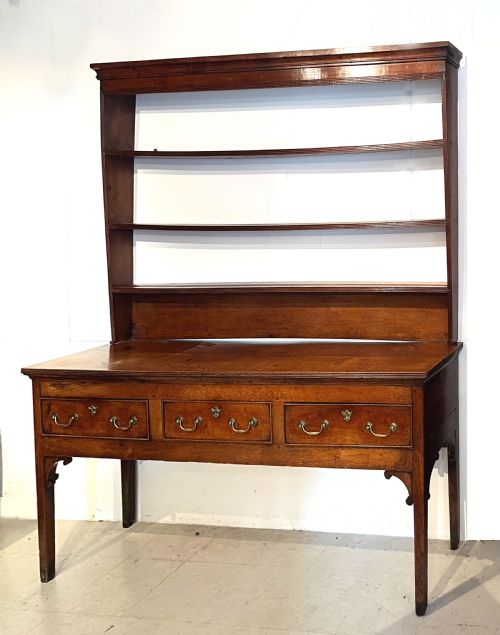
The version you are most likely to meet on this page is a nineteenth-century mahogany or burr walnut tiered piece, often featuring three levels supported by turned columns or brass details. Alongside these, oak dressers and rosewood chiffoniers appear, reflecting the diverse domestic storage needs of past centuries.
How they were made
Cabinet makers utilised dense hardwoods such as mahogany, walnut, rosewood, and oak, frequently selecting figured veneers like burr walnut, flame mahogany, and plum pudding mahogany for visual depth. These timbers were shaped into tiered shelves, side cabinets, and credenzas using traditional joinery.
Metal components played a structural and decorative role, with brass supports and cast ormolu mounts fitted to finer Victorian and Regency items. Glass doors and mirrored backs were also integrated into credenzas and display cabinets to reflect light through the interior.
The listings here include items constructed from rosewood, teak, brass, and ormolu across the Regency and Victorian periods.
What varies in quality
Quality in these tiered pieces rests primarily upon the selection of timber and the precision of the veneer work, where figured grain patterns and symmetrical placement elevate an ordinary carcase. The choice between solid tiger oak, pollard oak, or elaborate burr walnut directly influences the visual weight of the item.
Refinement in secondary details, such as chased ormolu mounts, glazed panels, and turned columns, separates standard utility furniture from high-status reception pieces. The integration of mirrored doors and multi-tiered structural balance further distinguishes the upper tier of surviving examples.
The Antique Buffet Display Shelf Glossary
- Etagere
- A piece of furniture consisting of a set of open shelves for displaying small objects. They typically feature three or more tiers supported by slender columns.
- Credenza
- A-low-standing cabinet or sideboard, frequently fitted with mirrored doors and ormolu mounts during the Victorian period. They often incorporate display space alongside enclosed cupboards.
- Chiffonier
- A small sideboard or low cupboard, popular in the Regency and Victorian eras, usually featuring shelves or a raised back. They provide compact storage and surface display.
- Ormolu
- Gilded bronze used as decorative mounts on nineteenth-century furniture. It adds metallic contrast to dark woods like burr walnut.
- Whatnot
- A tiered stand used for displaying ornaments or books, developed in the eighteenth century and common throughout the Victorian period.
Antique Buffet Display Shelf: Frequently Asked Questions
What is an antique buffet display shelf used for?
These pieces served historically for serving food, storing tableware, and displaying decorative objects in dining rooms and parlours.
Today, they function well in contemporary homes as display furniture for ceramics, books, and collections.
How do I identify a Victorian piece?
Victorian examples often feature dark dense timbers such as walnut, rosewood, and oak, frequently decorated with ormolu mounts and mirrored doors.
They span diverse forms from multi-tiered etageres to elaborate credenzas and heavy sideboards.
What is the difference between an etagere and a buffet?
An etagere is constructed primarily of open shelves designed specifically for display and tiered storage.
By contrast, a buffet combines flat serving surfaces with lower cupboards or drawers for practical storage.
Are these pieces suitable for small rooms?
Many examples, including slim three-tier etageres and small-proportion walnut credenzas, occupy minimal floor space while offering vertical storage.
Their open tiers and mirrored backs also help reflect light and create a sense of openness in compact interiors.