



Marble Top Walnut Console
A marble top walnut console brings together the cool, heavy tactility of stone and the warm, figured grain of timber in a single statement piece.
Marble Top Walnut Console
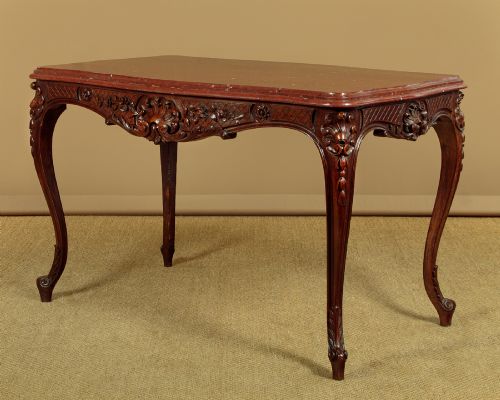
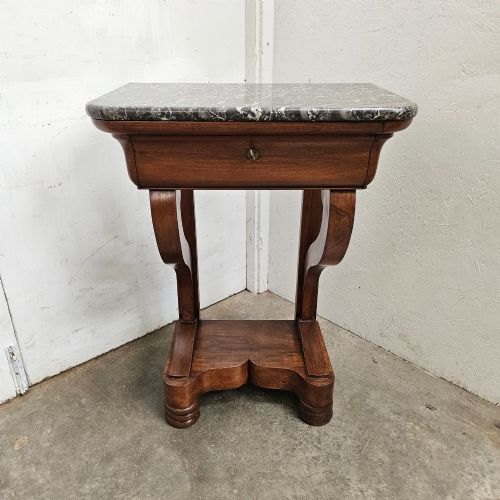
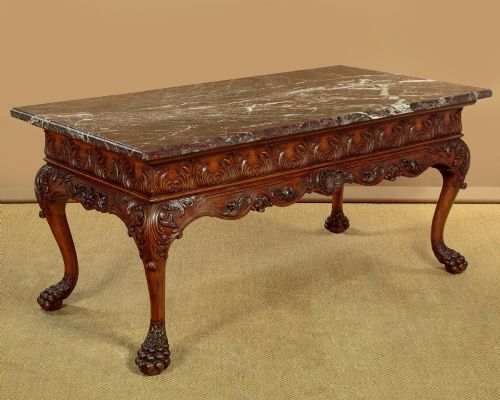
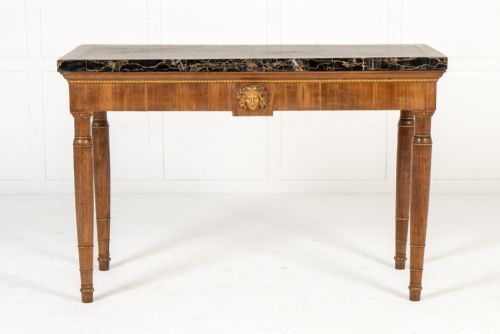
When you search for a marble top walnut console, you are looking at substantial wall-mounted or freestanding furniture designed primarily for formal reception rooms and hallways. These pieces combine a heavy stone slab with a wooden base, appearing across various historical periods from the eighteenth century through to the Edwardian era. You will most frequently encounter nineteenth-century French and Italian interpretations, often bearing stylistic nods to the Rococo or Empire periods.
The form itself spans console tables, side tables, and pier tables, frequently accompanied by matching mirrors. Walnut serves as the primary timber, sometimes selected for its rich, figured burr patterns or enhanced with marquetry inlay. The stone slabs vary from simple white marble to coloured varieties like pink Salome or Rouge Languedoc, resting securely upon the timber framework below.
Materials and construction methods
Cabinet makers utilised solid walnut and burr walnut veneers over secondary timbers, shaping the frames through carving, turning, and occasionally parcel gilt highlights. The timber bases required considerable structural integrity to support the substantial weight of the fitted stone slabs placed on top.
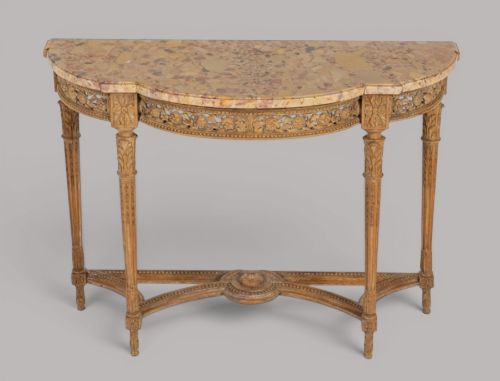
Stonemasons quarried, cut, and polished the marble slabs to fit the specific contours of each table, whether rectangular, serpentine, or demi-lune in profile. Additional decorative elements such as brass, ormolu mounts, and glass were integrated into the design depending on the prevailing style of the workshop.
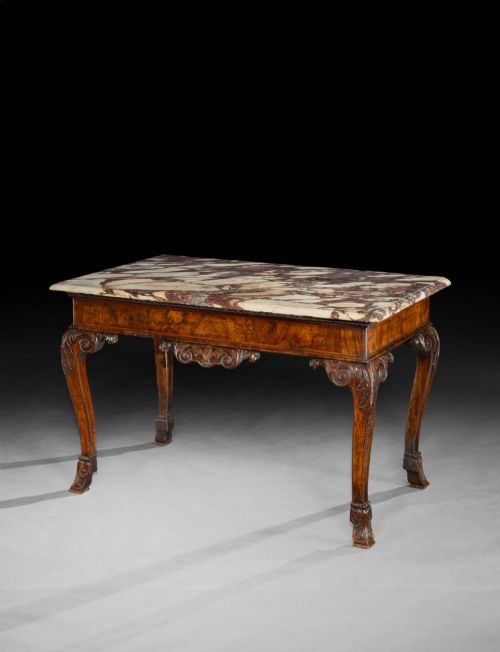
French and Italian workshops dominate the regional origins across these listings, alongside English George II revival pieces.
Distinctions in quality and execution
The distinction between ordinary and exceptional examples rests in the depth and crispness of the timber carving and the choice of materials. Finer pieces display lively, highly figured burr walnut veneers and heavy, intricately veined marble slabs rather than plain timber and standard white stone.
Proportion and structural harmony also separate the better examples from simpler workshop output. A superior console demonstrates careful attention to the joinery and mountings, ensuring the heavy stone top sits naturally upon a balanced, well-proportioned base.
The Marble Top Walnut Console Glossary
- Demi-lune
- A half-moon shape used for console tables designed to sit flush against a wall.
- Burr walnut
- A prized timber cut from the wart-like growths on walnut trees, yielding complex and swirling grain patterns.
- Ormolu
- Gilt bronze mounts applied to furniture for decorative enrichment.
- Pier table
- A table specifically designed to stand against the wall between two windows, often beneath a mirror.
- Parcel gilt
- Portions of a wooden carved surface highlighted with a thin layer of gold leaf.
Marble Top Walnut Console: Frequently Asked Questions
Where should I place a marble top walnut console?
These pieces traditionally anchor a hallway, reception room, or dining space, offering a functional surface for lamps and decorative objects.
Because they often require wall attachment for stability, positioning them against a sturdy structural wall is standard practice.
How do I care for the marble top?
Routine dusting with a soft cloth keeps the stone clean, while immediate blotting of acidic liquids prevents staining on porous varieties.
Using coasters and avoiding harsh chemical cleaners preserves the polished surface of the marble over time.
Are these tables freestanding?
Many console tables are designed to lean against a wall and frequently require fixing brackets for complete stability due to the heavy stone top.
Freestanding centre tables, by contrast, feature fully finished bases meant to be viewed from all sides in the middle of a room.
How can I tell different periods apart?
Stylistic clues such as cabriole legs point towards eighteenth-century revivals or earlier origins, whereas rectilinear Empire forms suggest the early nineteenth century.
Examining the construction methods, timber patination, and the specific profile of the marble edge helps narrow down the date of manufacture.