







Antique Bronze Sphinx
An antique bronze sphinx brings the heavy mythology of the Nile into nineteenth-century drawing rooms through cast metal and carved stone.
Antique Bronze Sphinx
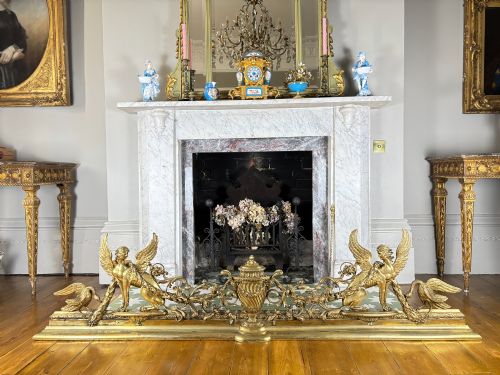
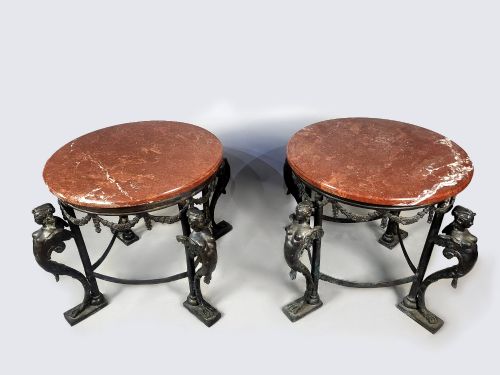
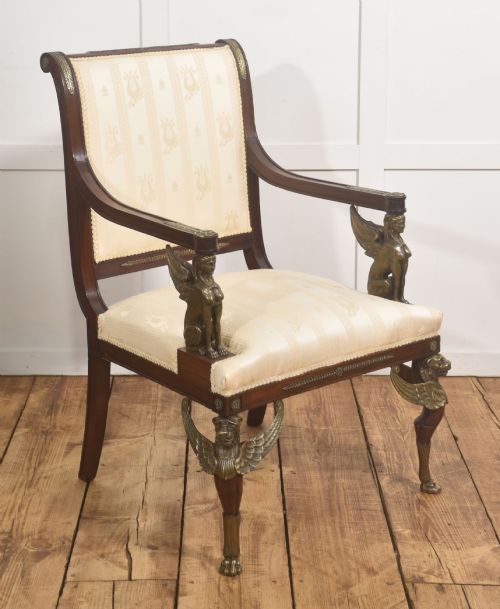
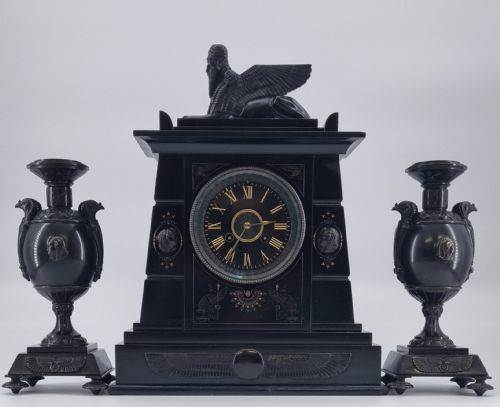
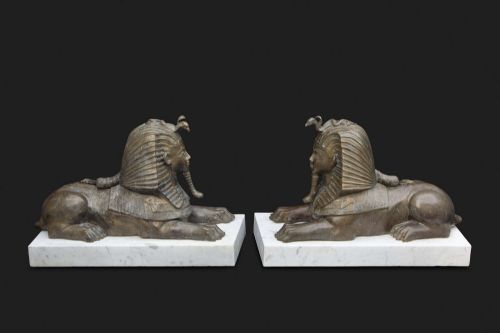
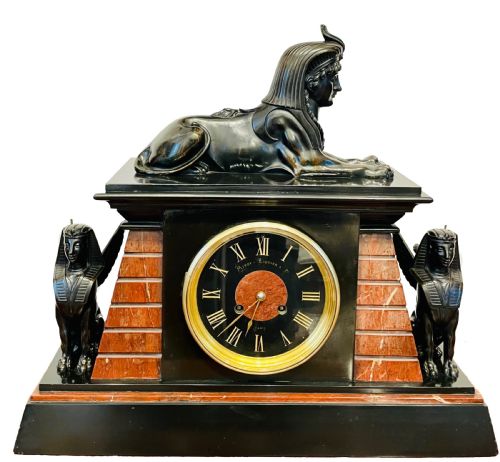
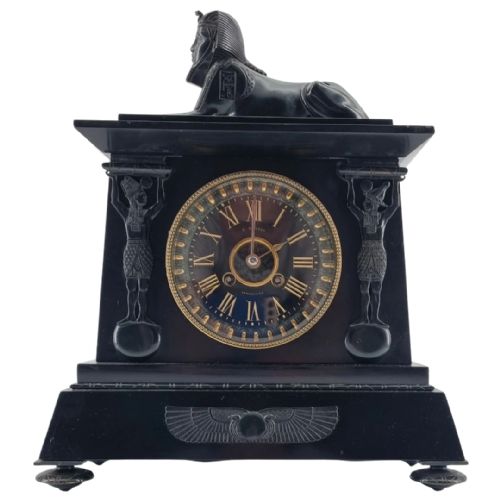
An antique bronze sphinx combines the mythical creature with domestic furnishings and decorative objects from the nineteenth century. Buyers searching for an antique bronze sphinx encounter figures mounted on marble plinths, mantel clocks with garnitures, armchairs, fireplace fenders, and door knockers.
The objects span periods from the Regency era through to the early twentieth century, with a strong representation of Victorian and French Empire taste. These pieces most frequently emerge in Egyptian Revival and Neoclassical Revival styles, reflecting European fascination with antiquity.
How these pieces were made
Foundries cast these figures in bronze, gilt bronze, and brass, often applying dark patination to create contrast with the metal details. Many sculptures and timepieces rest upon heavy bases of white marble, Carrara marble, black slate, or veined marble.
Woodwork such as mahogany supports gilt brass mounts on seating, whilst specialised makers integrated movements into slate clock bodies. Craftspeople combined metal casting, stone cutting, and horological mechanics to produce these decorative works.
Antique Bronze Sphinx Retail Price Guide 2026
Typical asking prices for bronze sphinx among the pieces listed under this phrase on Sellingantiques today, from the lower quarter to the upper quarter. They describe what is for sale here now, not the wider market.
The selection includes mantel clocks driven by chain fusee movements.
What varies in quality
The choice and mass of the mounting materials also mark the difference between standard production and exhibition pieces. Solid marble and slate plinths provide substantial weight and presence compared to simpler wooden or lesser stone mounts.
E F Caldwell New York·D Munsey of Cambridge·Achille Brocot·Barraud and Lund London
The Antique Bronze Sphinx Glossary
- Egyptian Revival
- A nineteenth-century decorative style inspired by the art, architecture, and motifs of ancient Egypt. It gained popularity following Napoleonic campaigns and archaeological discoveries.
- Gilt bronze
- Bronze that has been coated with a thin layer of gold or gold-coloured alloy. It is also known by the French term dore bronze.
- Garniture
- A set of decorative matching objects, usually a mantel clock accompanied by a pair of side urns or vases. They were designed to sit together on a mantelpiece.
- Plinth
- A heavy block or base upon which a sculpture, clock, or architectural column rests. In these listings, plinths are frequently formed from marble or slate.
- Patinated bronze
- Metal that has been treated with chemical solutions to produce a darkened or aged surface colour. This finish highlights the sculptural contours.
Antique Bronze Sphinx: Frequently Asked Questions
How do I date a bronze sphinx?
Dating relies upon the style of the casting, the surrounding decorative motifs, and the materials used for the base. Regency and Victorian examples often feature distinct patination and mounting techniques compared to later twentieth-century works.
The inclusion of related movements in clocks or specific maker signatures helps narrow the date of manufacture to a particular decade.
What is an Egyptian Revival sphinx?
An Egyptian Revival sphinx is a nineteenth-century interpretation of ancient monumental sculpture adapted for domestic interior decoration. These pieces incorporate pharaonic headdresses, winged bodies, and hieroglyphic symbols into mantel clocks, desk items, and sculptures.
European craftsmen produced these works during periods of renewed archaeological interest in North Africa.
Are these sphinxes made of solid bronze?
Many of the figural sculptures and mounts are cast in solid bronze or gilt bronze, whilst clock cases are frequently constructed from heavy black slate. Some items combine patinated metal elements with contrasting brass or gilt details.
The figures themselves generally rest upon distinct heavy stone blocks.
Where were these decorative objects placed?
In nineteenth-century interiors, these pieces served as focal points on mantelpieces, desks, and side tables. Clock garnitures anchored the centre of a room's fireplace surround.
Larger sculptures stood upon pedestals or heavy marble blocks within libraries and formal reception rooms.