


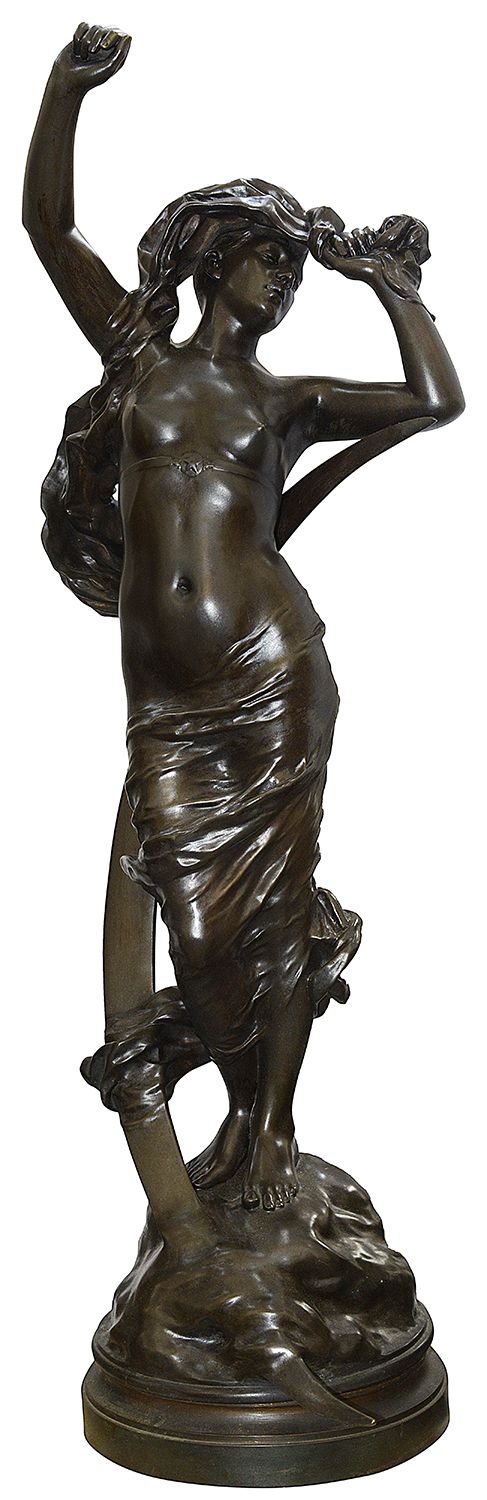


Antique Bronze Nymph
These antique bronze nymph figures and sculptures bring classical myth and graceful movement straight into a room.
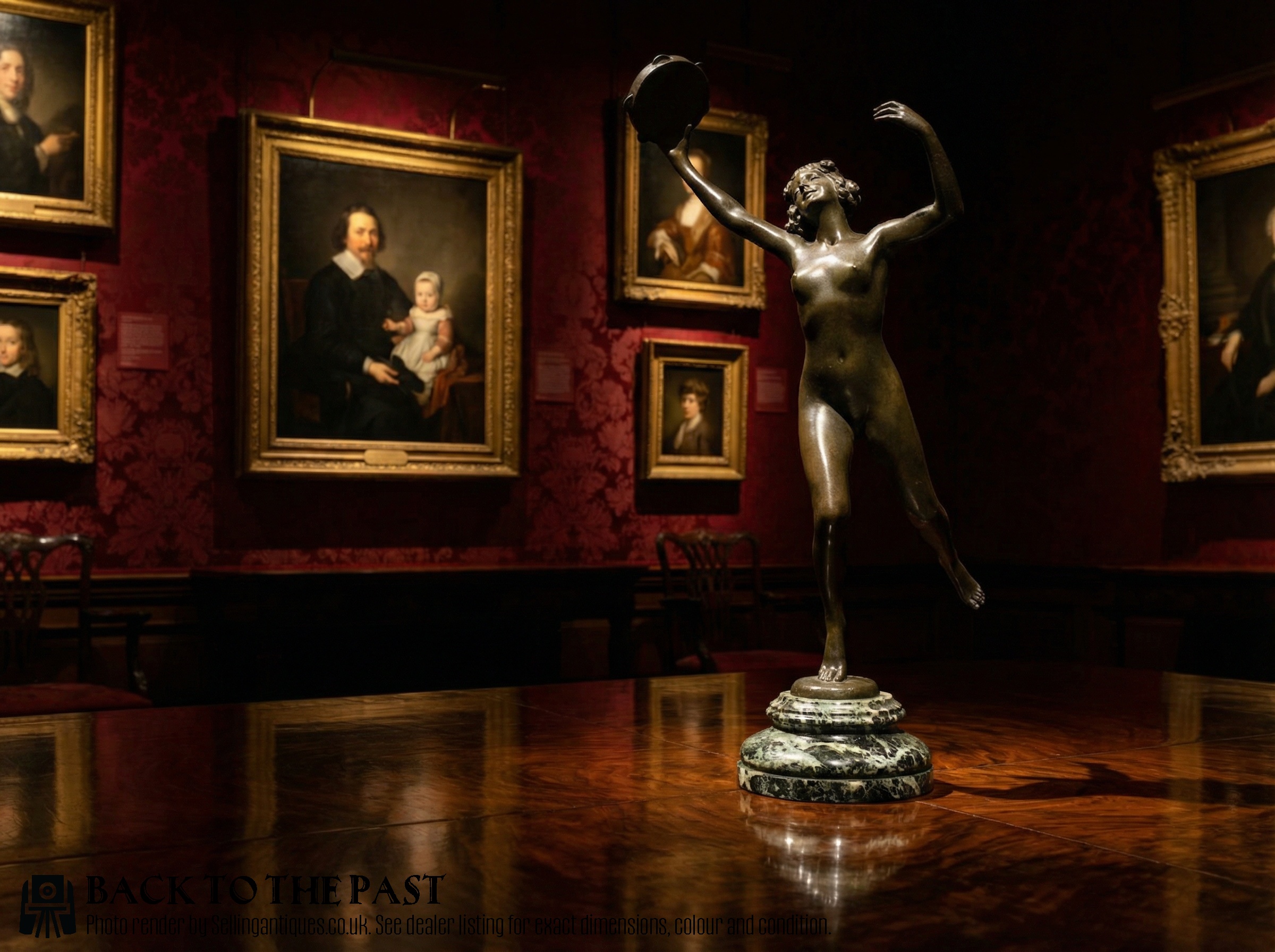
Antique Bronze Nymph
When you search for an antique bronze nymph, you encounter sculptural works that capture classical female figures, maidens, naiads, and dancers drawn from mythology. These pieces take various forms, appearing as standalone statues, figural table lamps, and decorative vases from the nineteenth and early twentieth centuries.
The versions most commonly met on this page span French classical, Art Nouveau, and Art Deco styles. They often incorporate other materials like marble bases or glass elements alongside the metal work.
Many of these sculptures reference earlier master sculptors or carry signatures from notable foundries and artists working in Paris. The subjects range from dancing groups and solitary pipers to semi-nude maidens.
Materials and casting methods
These works rely on bronze cast using traditional foundry methods, frequently finished with patination to create dark, nuanced surface tones. Some examples employ silvered or gilded treatments to highlight specific details of drapery and form.
Makers frequently mounted heavier bronze figures onto shaped marble plinths to provide stability and visual contrast. Certain decorative objects also integrate glass or incorporate delicate hand-painted miniature panels.
Several nymphs are caught mid-dance or mid-pipe tune, proving that bronze ladies love a good party just as much as mortal ones.
Assessing sculptural quality
Quality in these figures rests upon the crispness of the casting and the sensitivity with which musculature, drapery, and facial expressions are rendered. Finer examples display meticulous hand-chiselling after the cast emerges from the mould, preserving sharp definition in hair, fingers, and floral elements.
The sophistication of the patination alters the depth and warmth of the metal surface, separating standard commercial castings from more artistic studio productions. Signatures from established sculptors and renowned foundries also indicate a higher standard of execution.
Zoldan Kovats·Auguste Moreau·S. Kinsburger·Clodion·Charles Korschann·Eugène Désiré Piron·Houdebine·Carrier·P.Sega·Antoine Coysevox·Barbedienne
The Antique Bronze Nymph Glossary
- Patinated bronze
- Bronze that has been chemically treated to alter or enhance its surface colour. This process creates deep brown, green, or near-black tones that protect the metal and accentuate sculptural contours.
- Naiad
- A mythological water nymph inhabiting rivers, streams, and fountains. Sculptors frequently depict these figures with flowing lines and aquatic motifs.
- Lost-wax casting
- A traditional metal-casting method where a model is used to create a mould, allowing for intricate detail and complex undercut forms. This technique underpins many fine nineteenth-century bronzes.
- Art Nouveau
- A decorative art style characterised by flowing, organic lines and plant-inspired motifs. Pieces from this period often blend natural forms with the female figure.
Antique Bronze Nymph: Frequently Asked Questions
Where should I place a bronze sculpture?
These sculptures suit stable, flat surfaces away from direct moisture and excessive heat.
Place them where adequate lighting can catch the patination and subtle contours of the metal.
How do I clean antique bronze?
Dust the surface gently with a soft, dry cloth to prevent any accumulation of grit.
Avoid using harsh chemical polishes or water, which can strip the historic patina from the metal.
What is the difference between Art Nouveau and Art Deco figures?
Art Nouveau works feature flowing, organic lines inspired by nature and curving plant forms.
Art Deco pieces favour geometric abstraction, cleaner symmetry, and more stylised representations of the human body.
Why do some bronzes have marble bases?
Foundries added marble plinths to provide physical stability for heavy figures and to elevate the sculpture.
Different colours of marble also created a deliberate visual contrast against dark patinated bronze.