




Antique Bronze Andirons
Antique bronze andirons anchor the hearth with sculptural weight, bringing period character and metalwork artistry to the fireplace.
Antique Bronze Andirons
When you search for antique bronze andirons, you are looking at heavy metal supports designed to hold logs above the hearth floor for better airflow and combustion. The pieces available here span from the eighteenth century through the nineteenth century, encompassing French and Italian workshops.
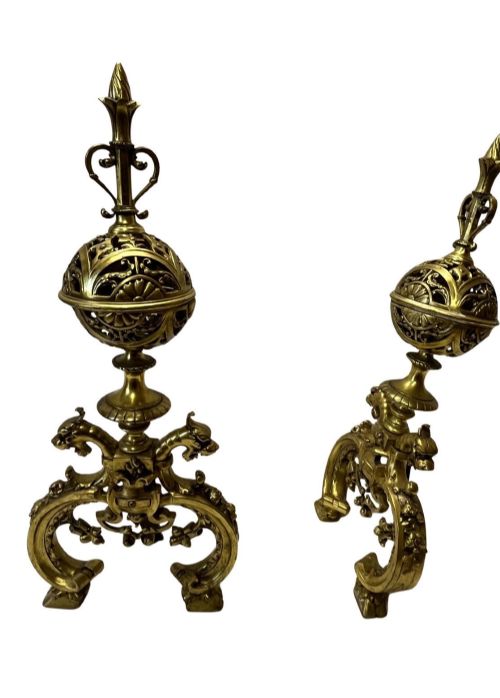
You will most frequently meet pairs cast in the nineteenth century, often reflecting earlier French tastes such as Louis XIV, Rococo, and Empire styles. Alongside standard bronze, listings include combinations of ormolu, gilt bronze, wrought iron, and steel.
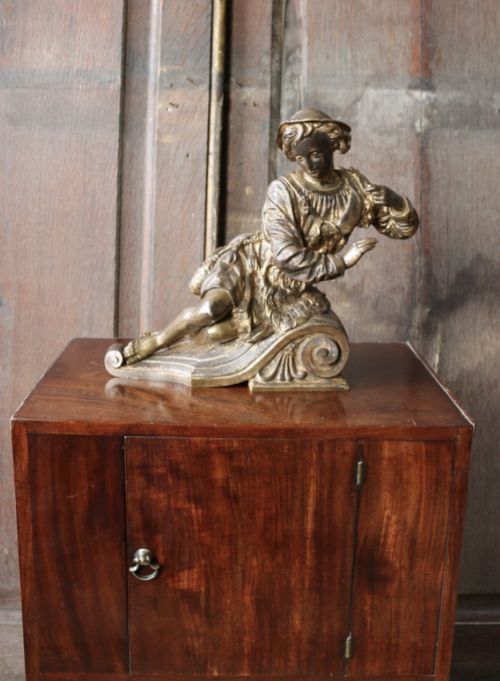
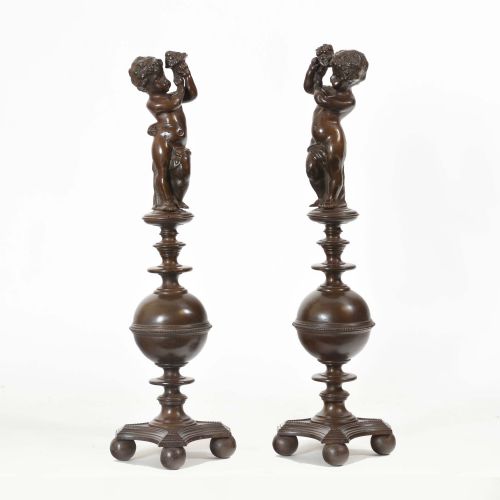
The form stretches from simple functional standards to elaborate figural chenets featuring cherubs, satyrs, and sculptural statuettes. While primarily built for the fireplace, some sturdy examples also function as substantial door stops.
What varies in quality
The refinement of the casting and chasing separates standard workshop production from exceptional studio pieces. Crisp detail in figural elements like cherubs or satyrs indicates skilled hand-chasing after the initial cast has cooled.
The quality of gilding and the depth of the ormolu define the visual impact of the pair when placed by the hearth. Heavier gauge metalwork and integrated steel billets denote pieces built for sustained practical use rather than mere decoration.
Antique Bronze Andirons Retail Price Guide 2026
Typical asking prices for bronze andirons among the pieces listed under this phrase on Sellingantiques today, from the lower quarter to the upper quarter. They describe what is for sale here now, not the wider market.
Keep an eye out for winged cherubs and cheeky satyrs keeping watch over the hearth ashes.
The Antique Bronze Andirons Glossary
- Chenet
- An alternative French term for andiron, frequently used interchangeably in historical listings. These ornamental fire dogs sit at the front of the hearth.
- Ormolu
- Finely ground high-carat gold mercury-gilded onto a bronze base. This technique creates a rich, lasting golden surface common on nineteenth-century French pieces.
- Firedog
- The primary structural support for logs in an open fireplace, consisting of a horizontal bar and an upright decorative front.
- Billet bar
- The horizontal iron or steel bar extending backward from the decorative front to support the firewood. It bears the direct weight and heat of the burning logs.
- Chasing
- The manual finishing process where a metalworker refines cast details using small chisels and punches. Superior chasing adds sharp definition to hair, drapery, and foliage.
Antique Bronze Andirons: Frequently Asked Questions
What is the difference between andirons and chenets?
There is no functional difference between the two terms. Andirons is the standard English name, whilst chenet is the French equivalent.
Both describe the decorative metal supports placed at the front of an open fireplace to hold logs.
Can antique andirons still be used in a working fireplace?
Many sturdy bronze and iron examples remain entirely suitable for active hearth use. You should check that the iron or steel billet bars are thick enough to handle high heat without warping.
Lighter decorative pairs with delicate ormolu mounts are better reserved for decorative hearth display.
How do I identify nineteenth-century French andirons?
Nineteenth-century French pairs often display distinct revival styles such as Louis XIV, Rococo, or Empire. They frequently combine cast bronze with fire-gilt ormolu mounts.
Look for heavy, detailed casting featuring motifs like cherubs, acanthus scrolls, and asymmetrical cartouches.
Why do some andirons have horizontal bars attached?
The horizontal bar, known as a billet bar or log prong, extends backward into the hearth. This construction keeps the burning wood elevated above the brick floor.
Elevating the logs allows air to circulate underneath, improving combustion and protecting the hearth base from direct heat.