


Antique Brass Nautical
These antique brass nautical pieces bring the precision of the open sea and the warmth of heavy metalwork straight into a room.
Antique Brass Nautical
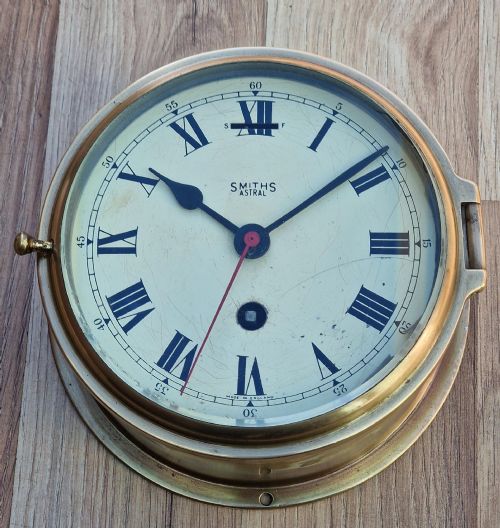
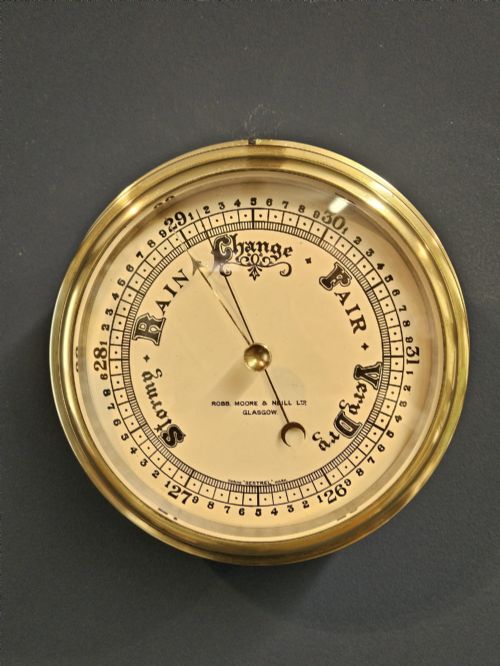
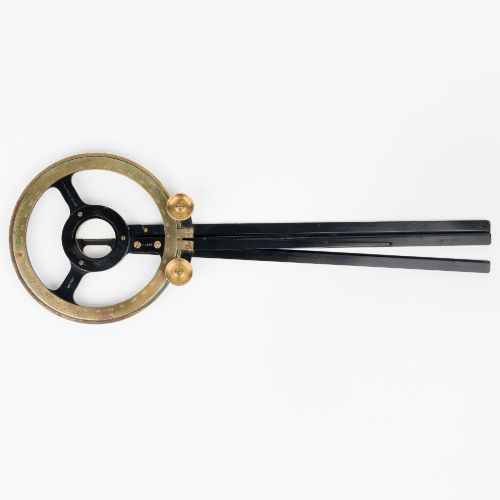
When you search for antique brass nautical items, you encounter the instruments, timepieces and lighting that once governed ships at sea. These survivals range from small pocket instruments to heavy copper and brass navigational gear.
The pieces appearing most often on this page date from the Victorian and Edwardian periods, alongside earlier Georgian items and mid-century survivals. Telescopes, barometers and wall clocks dominate the forms, reflecting the practical needs of maritime life.
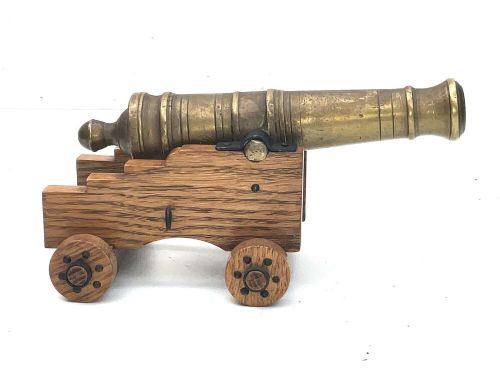
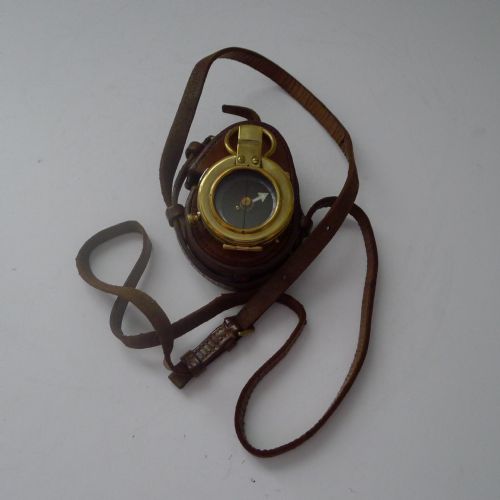
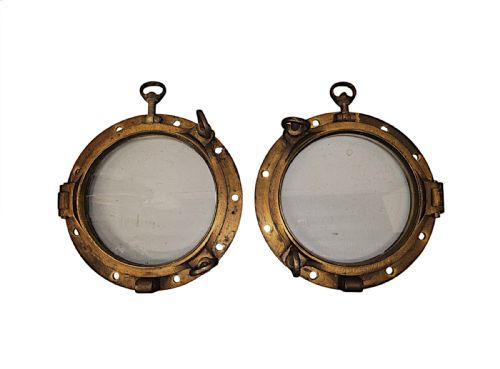
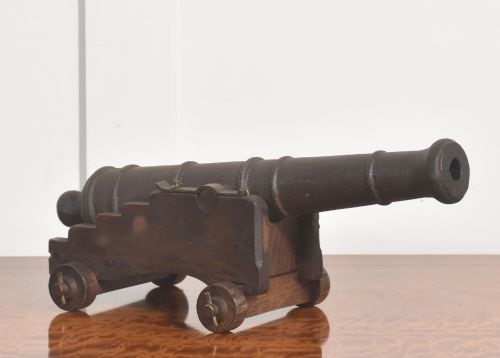
Beyond navigational tools, the selection includes port holes, lanterns, chests and signal cannons. Each object served a distinct function aboard a vessel, whether measuring time, charting position or signalling across the water.
How They Were Made
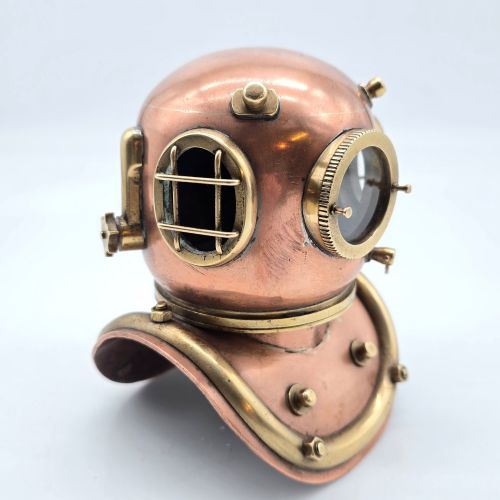
Makers relied primarily on cast and turned brass, paired with woods like mahogany, oak and camphorwood for mountings, cases and chests. Copper and glass appear frequently in lanterns and lighting, while leather and enamel lend durability and detail to portable instruments.
Heavy brass components were cast and hand-finished, then assembled with threaded fittings and glass lenses designed to withstand sea air and vibration. Woodwork on chests and barometers was coopered or joined with tight tolerances to protect delicate mechanisms from moisture.
Listings span the eighteenth, nineteenth and twentieth centuries, using brass, copper, mahogany, oak and smoked glass across scientific instruments and lighting.
What Varies in Quality
Quality rests in the precision of the mechanism and the crispness of the engraved markings. Instruments signed by notable makers show finer tolerances in their draw tubes and dials than unmarked utilitarian pieces.
The integrity of the materials also separates the grades, visible in the weight of the brass castings, the selection of figured mahogany or oak, and the survival of original lenses, gimbals and mounting hardware.
Mercer of London·Nairne & Blunt·French Ltd·Siebe Gorman·Ulugary & Sons·Alderson & Gyde Ltd·Ross of London·Hughes & Son·Elliott Brothers·Thomas Mercer·Bloctube Controls·Voigtländer & Sohn·Clarkson London·Prescot Clock Co
The Antique Brass Nautical Glossary
- Chronometer
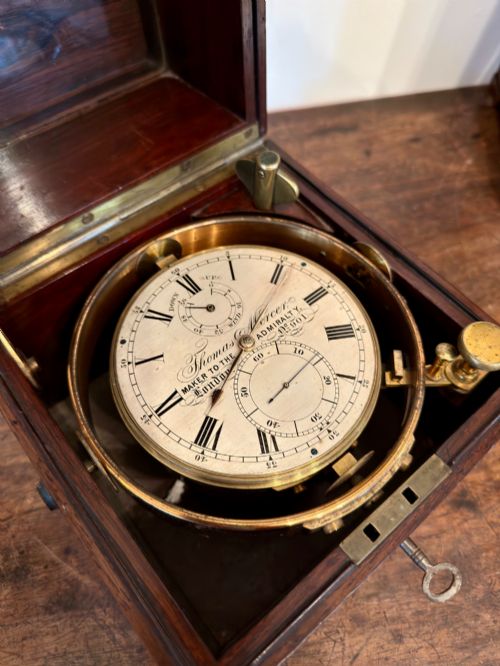
- A highly accurate marine timekeeper used for calculating longitude at sea. These clocks were mounted in gimbals to keep them level regardless of the ship's motion.
- Binnacle
- A upright housing for a ship's magnetic compass, traditionally placed in front of the helmsman. It often incorporates correcting magnets to offset the iron of the vessel.
- Fusee
- A conical pulley used in clocks and chronometers to maintain even force on the gear train as the mainspring unwinds. This mechanism ensures consistent timekeeping.
- Gimbal
- A pivoted ring system that allows a compass, lamp or chronometer to remain horizontal despite the rolling and pitching of a vessel.
- Port hole
- A heavy circular window fitted into the hull of a ship, framed in brass or bronze to withstand heavy water pressure and sea spray.
Antique Brass Nautical: Frequently Asked Questions
How do I mount a ship's wall clock?
Most wall clocks secure directly to a wall through screw holes in the brass bezel or a wooden backboard. Ensure the fixings match the weight of the heavy brass case.
For clocks with fusee movements, check that the mounting is entirely plumb so the pendulum or balance wheel operates without friction.
Can I use an antique brass telescope outdoors?
These instruments remain functional optics, but age makes the lenses and draw tubes sensitive to sudden impacts and moisture. Keep them protected from direct weather.
When extending brass draw tubes, support the metal gently to prevent bending the historical sliding sections.
How should I clean antique brass and copper?
A soft, dry cloth removes dust without disturbing the dark, stable oxidation that accumulates over decades of handling. Avoid harsh chemical polishes.
Leaving the natural surface untouched preserves the age and character recorded on the metal over generations.
What is the purpose of a gimbal?
Gimbals use concentric rings and pivot pins to keep instruments like compasses and lamps upright as a ship rolls. This design prevents swinging and spills.
Testing the pivots reveals whether the brass rings move freely without catching on the surrounding housing.
How do I date a marine barometer?
Makers often engraved their business names and addresses around the dial perimeter, which cross-references with historical trade directories. The style of the wood case also offers clues.
Victorian and Edwardian versions feature distinct mercury tubes and vernier scales that evolved from simpler Georgian designs.