

Antique Brass Music Holder
An antique brass music holder brings adjustable elegance to a room, offering a sturdy brass framework designed to display sheet music or folios.
Antique Brass Music Holder
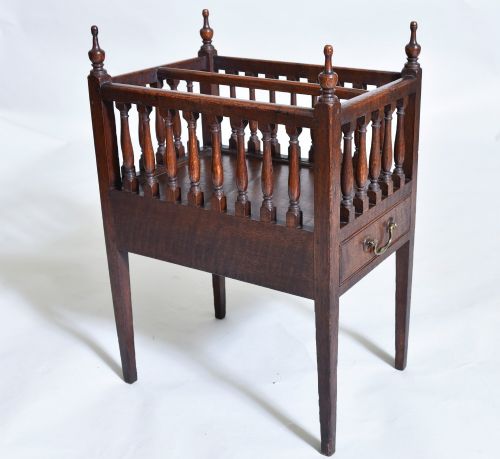
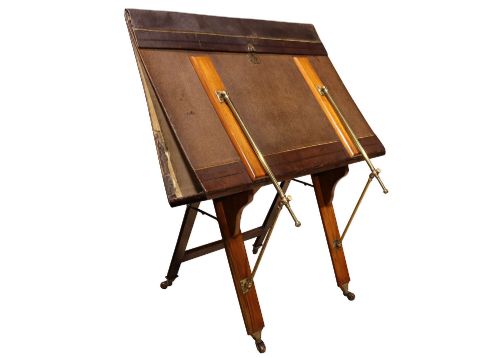
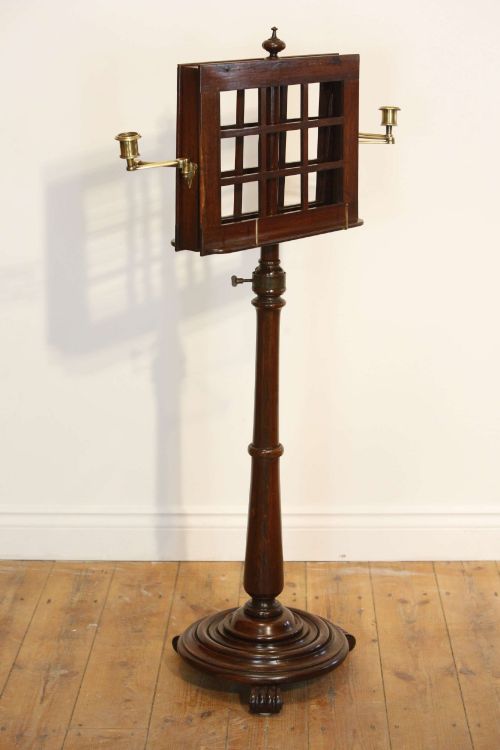
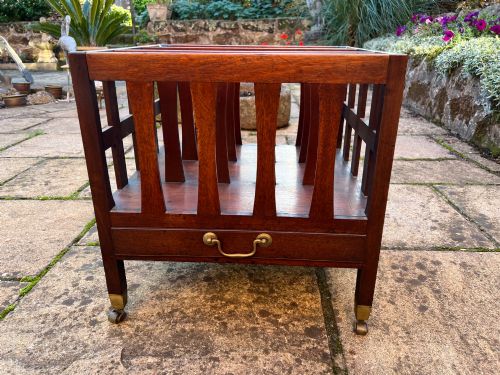
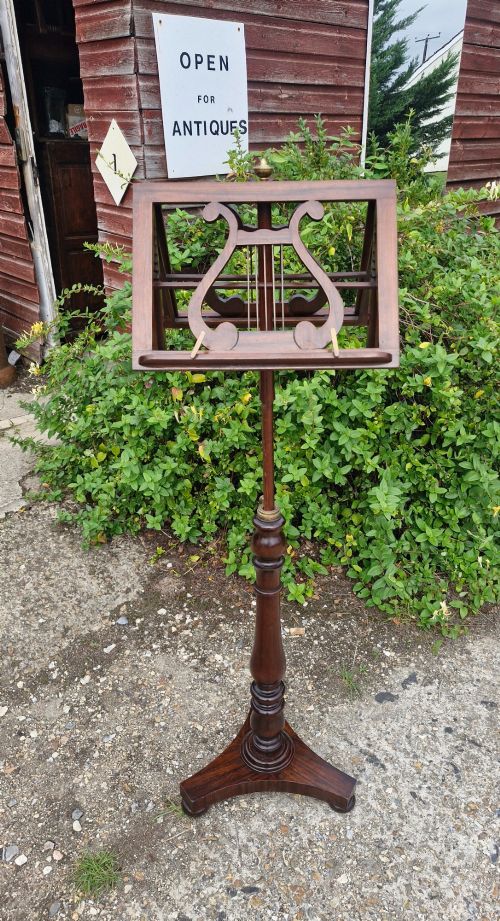
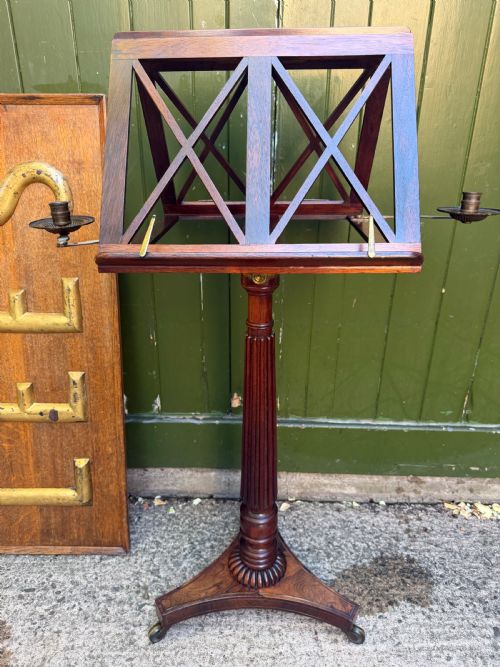
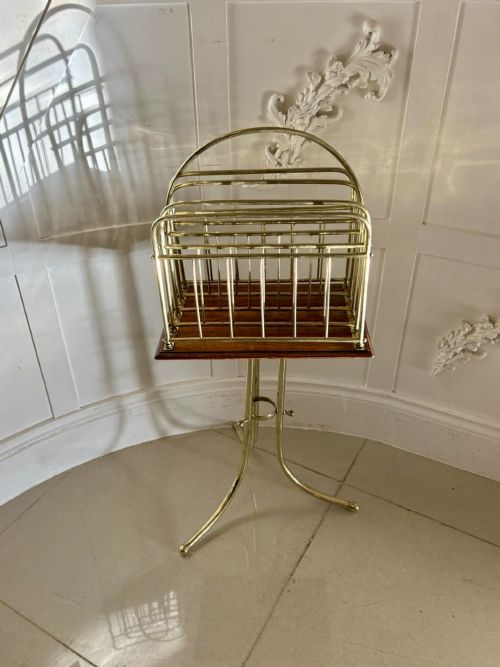
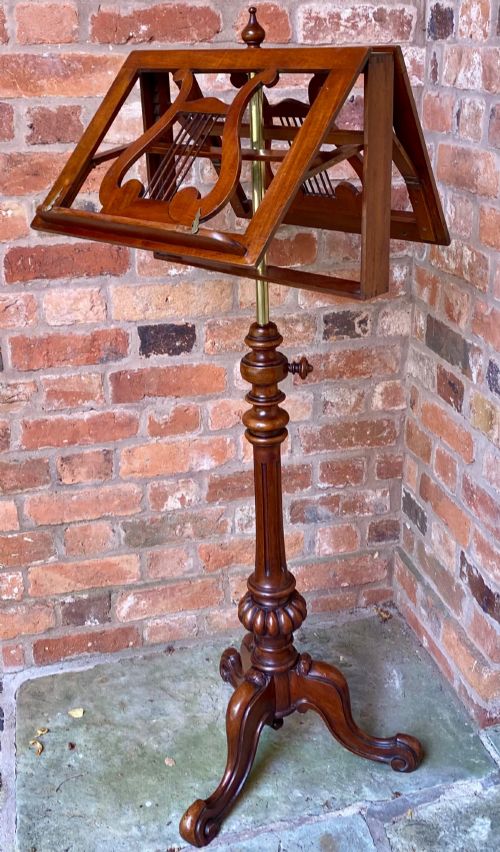
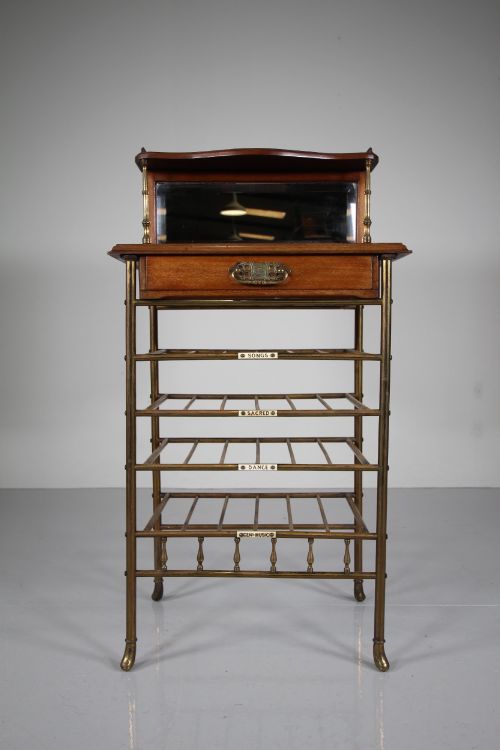
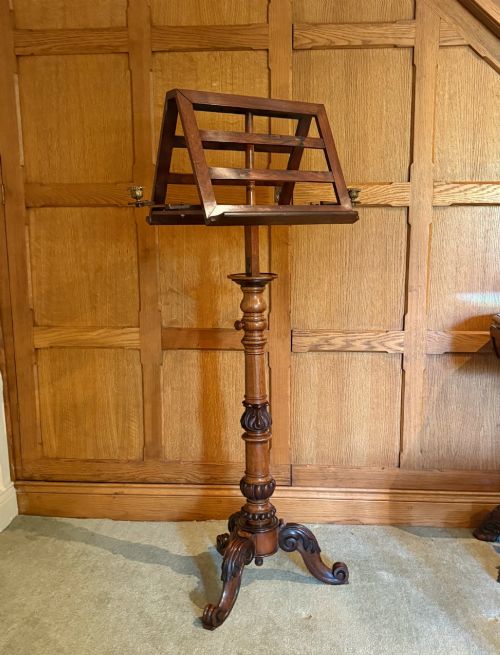
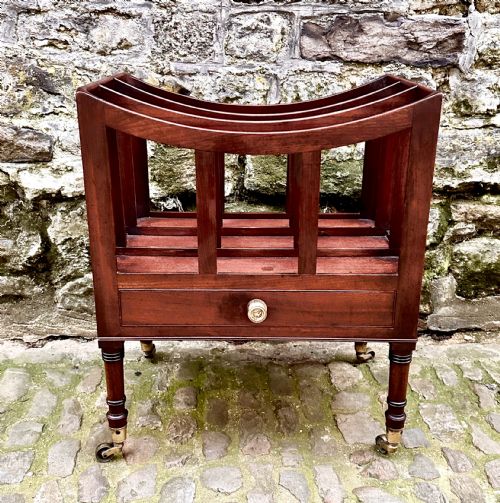
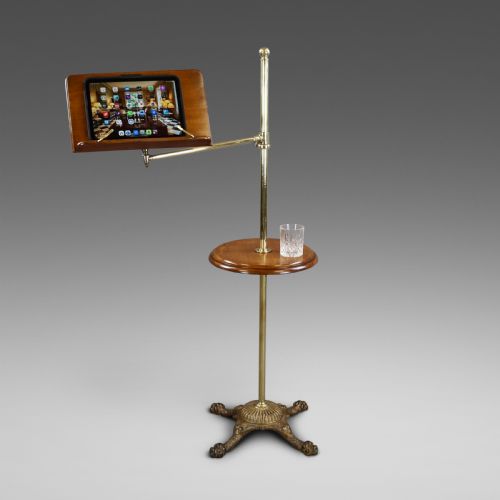
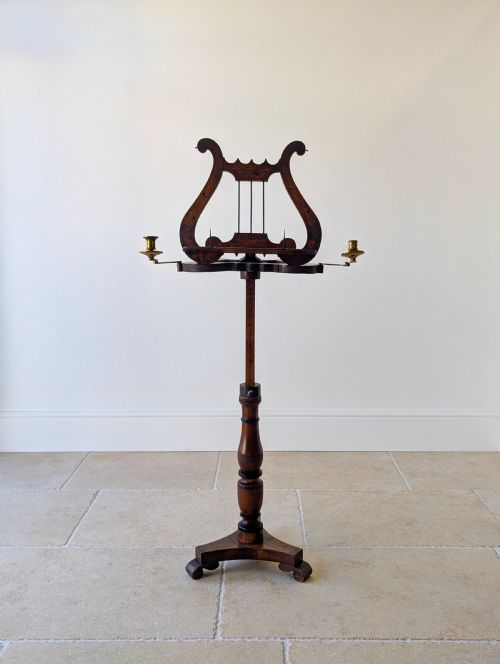
When you search for an antique brass music holder, you are looking at items designed for holding scores, books, and folios during recitals or daily practice. The selections on this page span several decades, featuring brass elements integrated into stands, reading tables, and canterburys.
You will encounter pieces originating from the Regency and Victorian periods, alongside items from the Georgian era. These objects served drawing rooms and parlours where music formed a central part of domestic entertainment.
The primary forms found here include adjustable music stands, lecterns, and magazine racks incorporating brass fittings. Each piece reflects the functional requirements of nineteenth-century musicians and readers.
How they were made
Craftsmen utilised cast and spun brass for adjustable stems, brackets, and revolving mechanisms, often combining the metal with dense timbers like mahogany, rosewood, and walnut. These materials provided the necessary weight and balance to support heavy folios.
Joinery and metalworking techniques worked in tandem, utilising brass screws, hinges, and ratchets to allow height and angle adjustments. Inlays of satinwood and ebonised finishes appeared on related stands, while structural stability came from solid timber framing and cast iron components.
Antique Brass Music Holder Retail Price Guide 2026
Typical asking prices for brass music holder among the pieces listed under this phrase on Sellingantiques today, from the lower quarter to the upper quarter. They describe what is for sale here now, not the wider market.
Some Victorian inventors patented ingenious leaf turners so musicians could change pages without lifting a hand from the keys.
What varies in quality
The standard of an antique brass music holder depends upon the precision of its mechanical adjustments and the integrity of its materials. Superior examples feature smooth, original brass ratchets and screws that hold heavy scores securely without slipping.
Construction details also distinguish the range, such as the depth of timber figuring, the crispness of brass casting, and the retention of original fittings rather than later replacements. Pieces with documented maker attribution or patent mechanisms often display a higher degree of refined finishing.
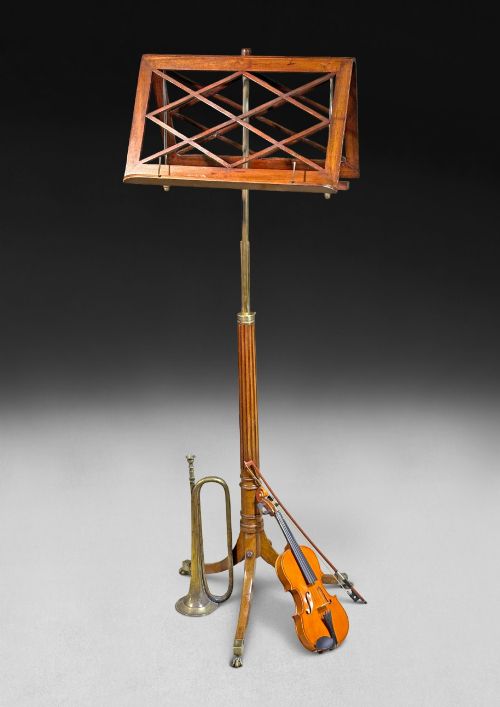
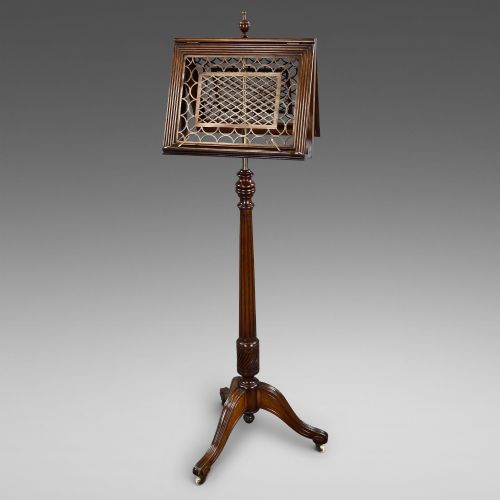
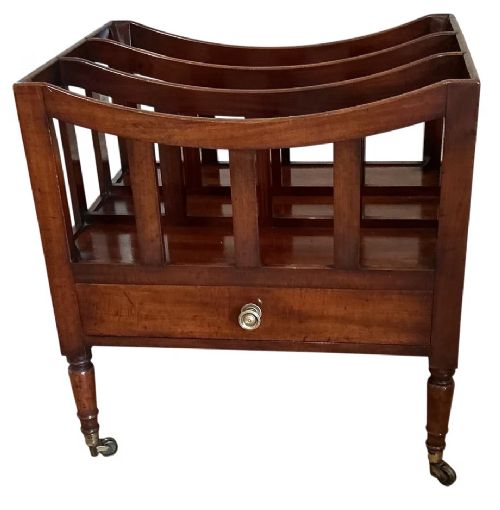
GILLOWS DUET MUSIC STAND·Regency Canterbury attributed to Gillows of Lancaster·Victorian Padbury’s Patent Indispensable Music Leaf Turner·J.C.Loudon Mahogany Canterbury·1930s Harrods Reading or Music Stand
The Antique Brass Music Holder Glossary
- Duet stand
- A music stand wide enough to accommodate two musicians reading from the same open score simultaneously. These often feature dual adjustable desks on a central column.
- Lectern
- A slanted reading desk designed to hold books or music at a comfortable height for a standing speaker or performer. They frequently incorporate adjustable brass stems.
- Lyre-form
- A decorative motif shaped like an ancient musical lyre, commonly incorporated into the central support or music desk of Regency and Victorian stands.
- Revolving
- A descriptor for stands or magazine racks built with a rotating top section, allowing access from multiple angles without moving the entire base.
Antique Brass Music Holder: Frequently Asked Questions
What is a music holder used for?
These pieces held open sheets of music, scores, and large folios for musicians practicing or performing in nineteenth-century parlours. They kept scores at a readable angle and height.
Later adaptations also saw them utilised as magazine racks or reading tables for newspapers and books in domestic libraries.
How do I adjust the height?
Most stands employ a brass thumbscrew, sliding stem, or ratchet mechanism to raise and lower the desk. Turning the screw loosens the inner rod, allowing you to set the desired height.
Care should be taken when adjusting older brass mechanisms to avoid stripping threads or forcing tight metal components.
Are these stands stable enough for heavy books?
The heavier examples, particularly those with cast iron weighted bases or solid mahogany frames, offer substantial stability for large volumes. The materials were chosen to support the weight of heavy bound music folios without tipping.
Slender reading stands require balanced placement to ensure heavy books do not compromise the centre of gravity.