

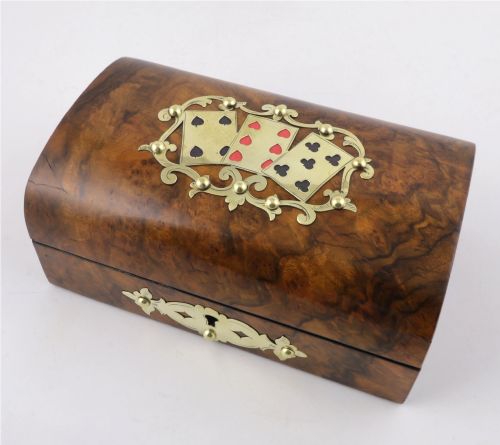
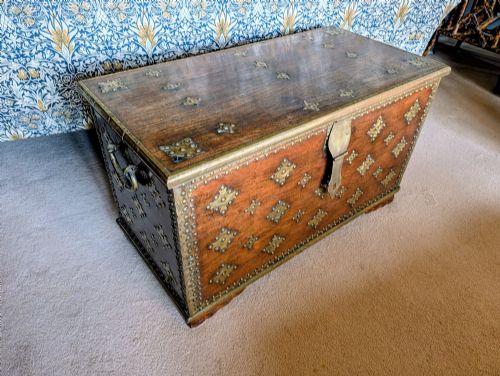
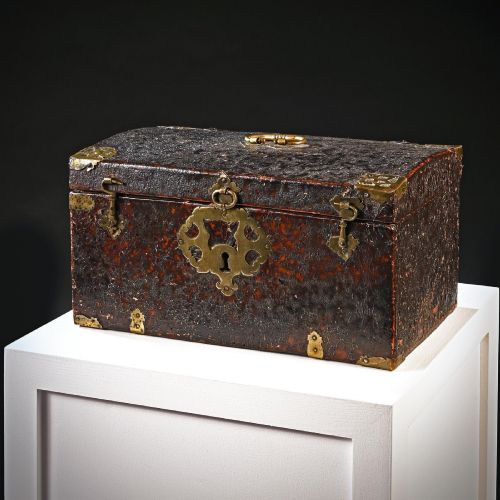
Antique Brass Mount Box
When searching for an antique brass mount box, buyers uncover containers reinforced with metal brackets, strapping and corners for travel and secure storage.
Antique Brass Mount Box
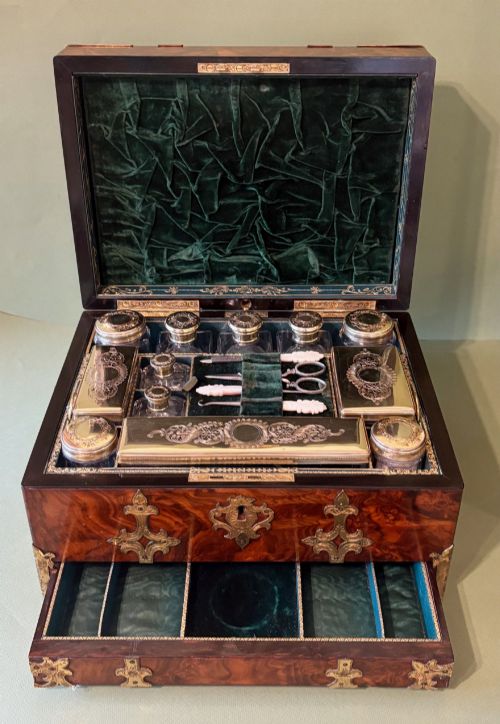
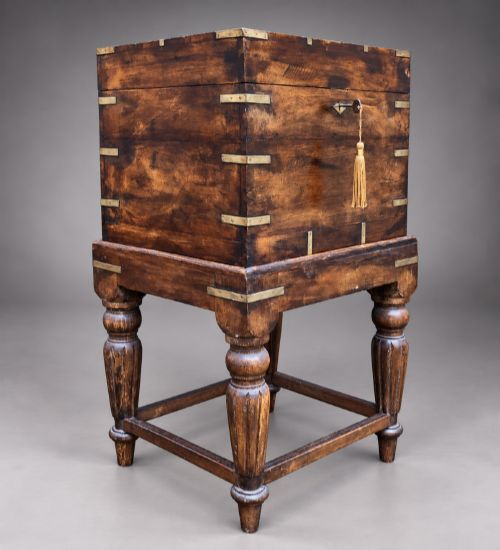
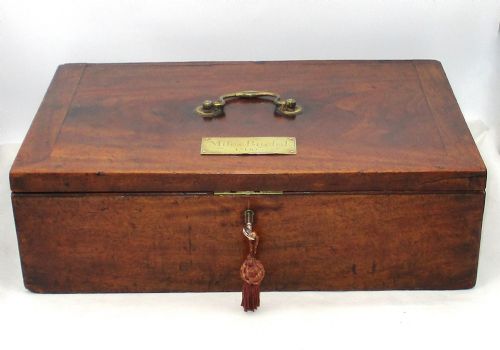
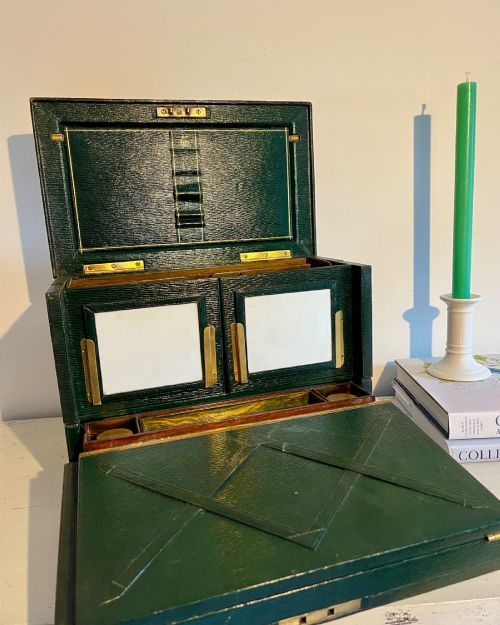
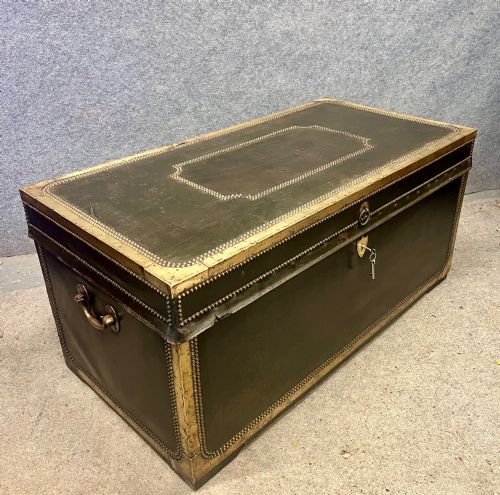
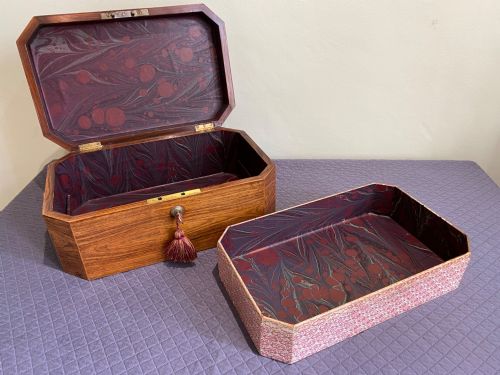
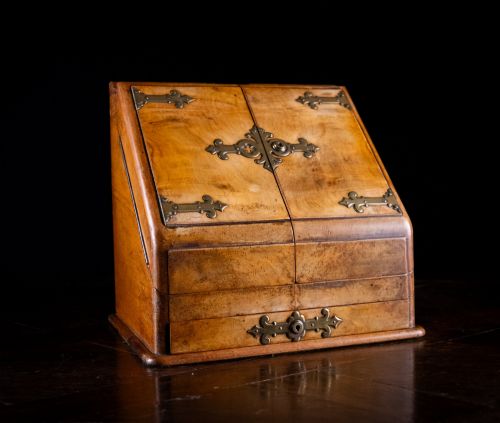
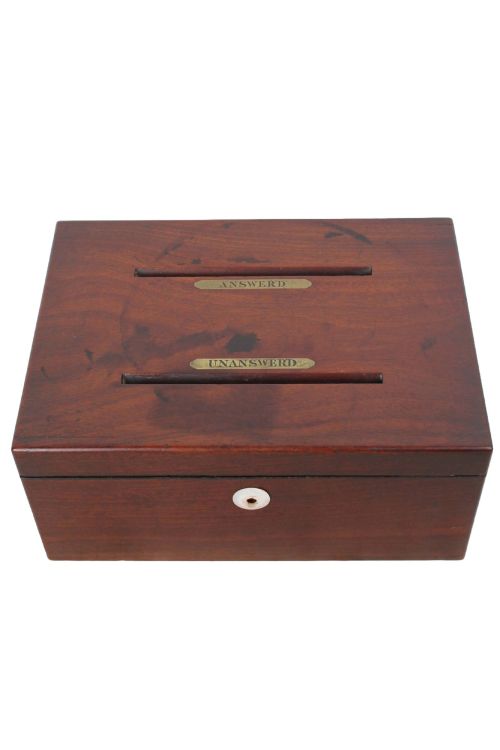
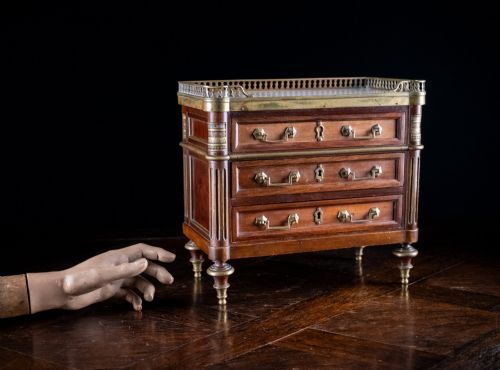
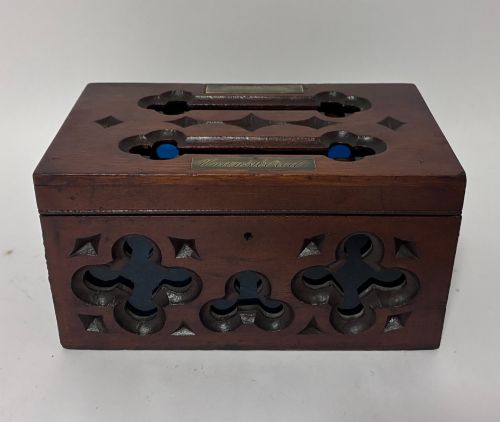
An antique brass mount box encompasses a broad range of vessels, from small walnut jewellery caskets and rosewood stationery boxes to large camphor wood campaign trunks and oak mule chests. These containers served varied functions in domestic, travel and administrative settings, holding letters, documents, valuables, games or personal items.
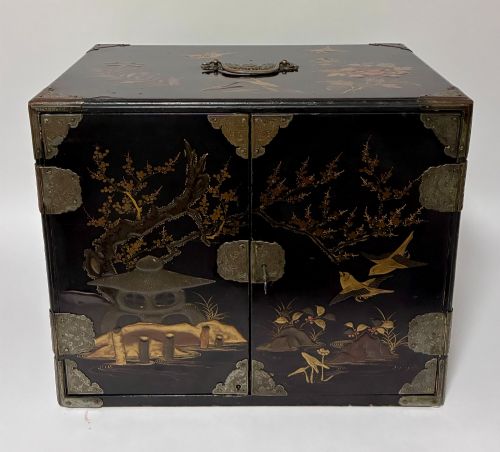
The selections available span multiple centuries, with significant representation from the eighteenth and nineteenth centuries, alongside Victorian creations and Regency pieces. Formats vary from tabletop storage cabinets and writing slopes to heavy coffers, blanket chests and strongboxes designed for colonial trade or domestic deployment.
Many items incorporate regional and global influences, appearing as Dutch East Indies padouk coffers, Portuguese colonial chests, or Chinese export camphor trunks. Buyers encounter both utilitarian campaign equipment built for military transit and decorative parlour pieces finished in burr walnut, coromandel, glass and leather.
How They Were Made
Construction relies on durable timbers such as mahogany, oak, walnut, camphor wood, padouk and coromandel, often faced with decorative veneers like burl or kingwood. Artisans joined carcases using traditional methods to withstand weight and movement.
Brass formed an essential component, utilised for structural corner mounts, flush drop handles, strapwork, escutcheons, locking mechanisms and decorative inlays. Metalwork provided both reinforcement against travel impacts and visual contrast against dark woods.
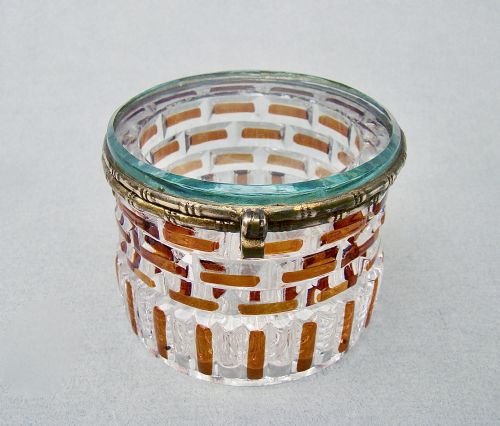
Interiors frequently featured specialised fittings, including velvet or leather linings, compartments for stationery and inkwells, lift-out trays, secret drawers and occasional decorative inserts of pietra dura, enamel, glass or mother-of-pearl.
Materials span domestic oak, walnut and mahogany alongside imported tropical woods like padouk, coromandel, macassar ebony and camphor.
What Varies in Quality
The calibre of timber selection and veneer matching defines the upper tiers, where figured walnut, burr woods or exotic hardwoods display natural grain patterns across every surface. Lesser examples utilise plain secondary timbers or heavy stains to disguise inconsistent grain.
The execution and gauge of the brass hardware signal workmanship, distinguishing hand-cast, deeply engraved or precision-fitted mounts from thin, stamped plates held by modern screws. Integrated locks, flush handles and well-aligned strapwork reflect higher workshop standards.
Internal complexity and secondary materials indicate grade, separating simple open compartments from fitted velvet interiors, secret drawers, leather desk slopes and inlaid details like pietra dura plaques, ivory or enamel.
The Antique Brass Mount Box Glossary
- Campaign trunk
- A heavy storage chest built in sections with recessed brass handles and corner brackets, designed for military transport during the nineteenth century. These items allowed officers to pack uniforms and equipment for overseas service.
- Escutcheon
- A protective metal plate surrounding a keyhole, usually fashioned from brass to match the box mounts. This element prevented wood wear from repeated key insertion.
- Stationery box
- A desk accessory featuring tiered partitions or slots for envelopes, letter paper and pens, often fitted with folding doors or sloping lids. These cabinets organised correspondence on Victorian and Regency writing desks.
- Coromandel
- A dense, heavily figured tropical hardwood featuring dark brown and black striations, frequently utilised for luxury nineteenth-century jewellery and glove boxes. Its scarcity made it a choice material for high-end decorative items.
- Padouk
- A durable, reddish-brown tropical timber favoured in colonial furniture-making and overseas trade chests due to its stability in humid climates. Pieces utilising this wood often originate from maritime or East Indian trade routes.
- Pietra dura
- An artistic technique involving the inlay of polished, cut coloured stones to form pictorial or geometric designs on box lids. This Italian decorative method appeared on luxury walnut and burl caskets.
Antique Brass Mount Box: Frequently Asked Questions
What is a campaign box?
A campaign box is a portable chest or desk constructed for military officers on the move. They feature protective brass corners and recessed handles to withstand rough transit.
These pieces break down or stack easily, combining practical utility with polished timber construction for life on active service.
How were stationery boxes used?
Stationery boxes sat on nineteenth-century desks to keep paper, envelopes and writing implements organised and ready for use. Their tiered interiors held different sizes of correspondence neatly.
Many examples included sloping lids, inkwells, or lockable doors to protect personal letters and private documents.
Why use camphor wood for trunks?
Camphor wood was chosen for travel chests because its natural aroma repelled insects and protected stored clothing from dampness. This made the wood ideal for long sea voyages.
Trunks made from this material often show a distinctive grain and survive from colonial trade and military service.
How to date an antique box?
Dating a box involves examining the timber species, construction joints, lock mechanisms and overall style. Regency pieces often display clean classical lines, while Victorian examples lean toward ornate carvings and fitted interiors.
Hardware styles, such as hand-cut screws or cast brass mounts, provide further clues to the decade of manufacture.