

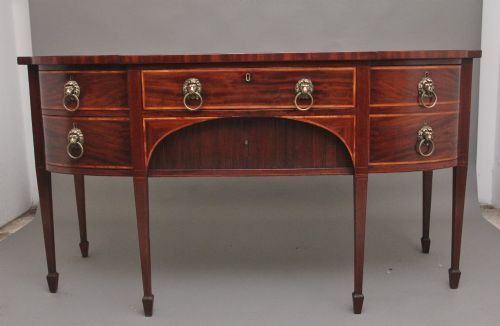


Antique Brass Inlaid Buffet
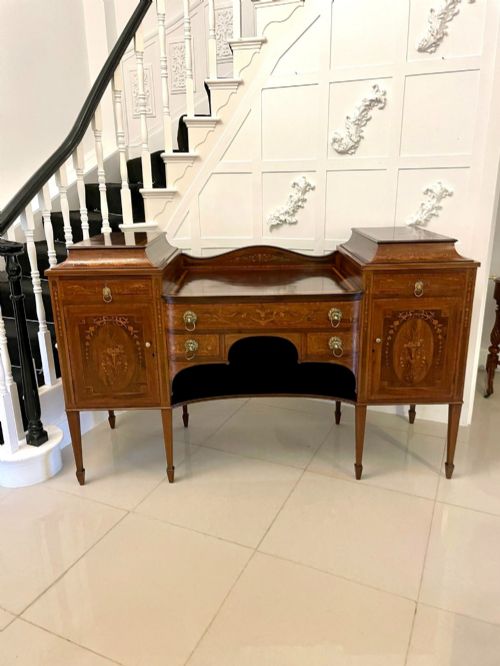
An antique brass inlaid buffet represents a substantial dining room furnishing that brings rich timber grain and metallic detail together for practical storage.
Antique Brass Inlaid Buffet
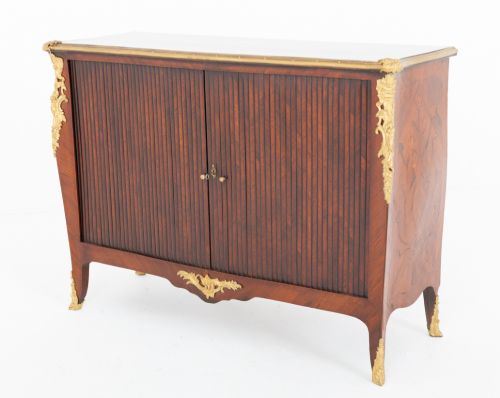
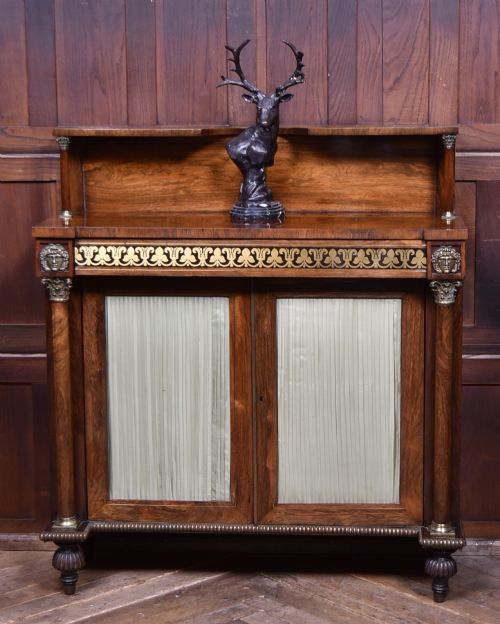
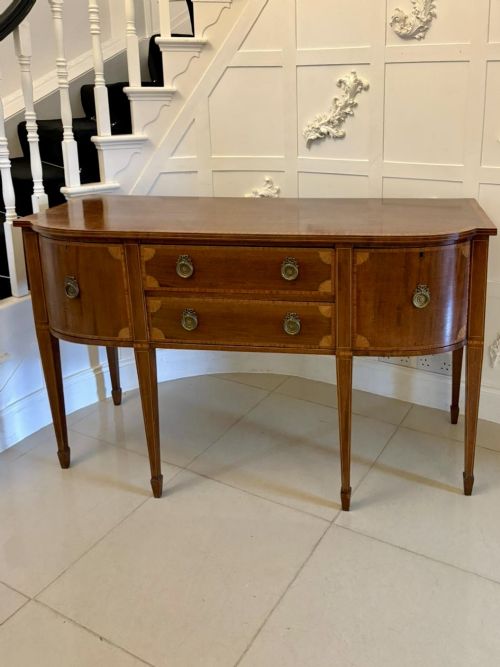
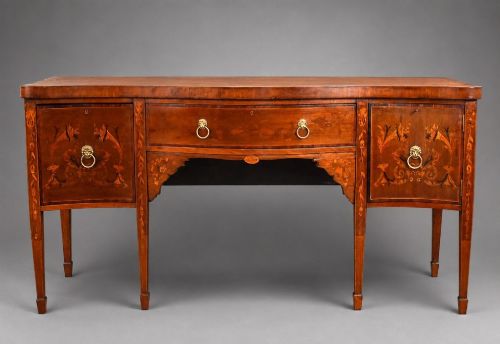
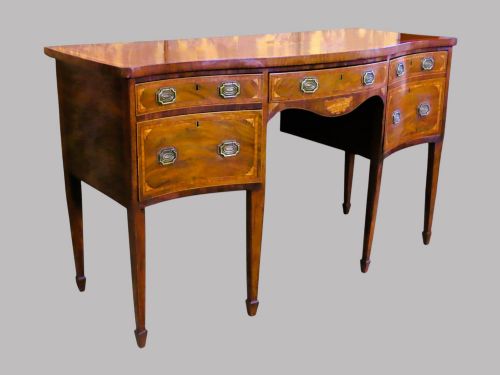
An antique brass inlaid buffet takes several forms across this selection, appearing primarily as sideboards, side cabinets, and credenzas designed for dining and entertaining spaces. These pieces span periods from the eighteenth century through the Edwardian era, showing how dining furniture evolved to accommodate serving and display.
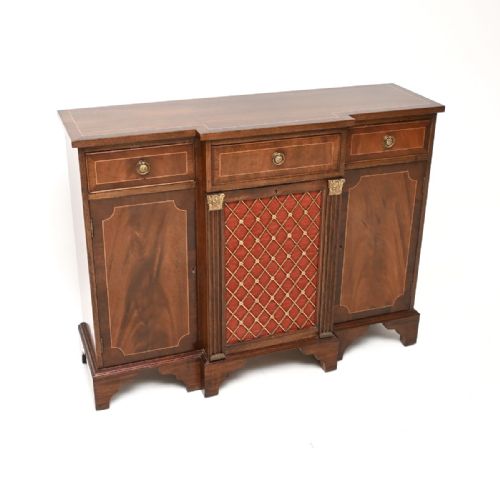
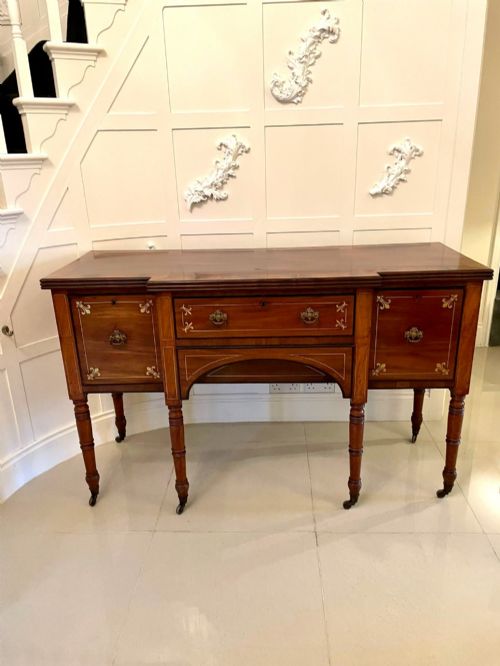
The version most commonly met on this page is the mahogany sideboard, often featuring bow fronts or breakfront profiles. Makers utilised rich timbers such as mahogany and walnut, augmented by satinwood and boxwood inlay alongside brass work.
Pieces range from simple Georgian and Regency serving tables to elaborate Victorian and French revival credenzas mounted with ormolu or plaques. Buyers select these items to anchor a dining room with period craftsmanship and functional surface area.
Materials and construction methods
Cabinet makers built these pieces using solid and veneered timbers, predominantly mahogany, supported by secondary woods like oak. Surfaces received intricate contrasting details through satinwood and boxwood inlay, creating geometric or botanical patterns across the front drawers and doors.
Brass formed a vital component of the construction, appearing both as delicate linear stringing inlaid directly into the timber and as cast mounts, handles, and gallery rails. Ormolu mounts and Sevres porcelain plaques appear on specific French revival credenzas, adding contrasting textures and colour to the dark wood carcases.
Antique Brass Inlaid Buffet Retail Price Guide 2026
Typical asking prices for brass inlaid buffet among the pieces listed under this phrase on Sellingantiques today, from the lower quarter to the upper quarter. They describe what is for sale here now, not the wider market.
Listings span multiple stylistic revivals, pairing traditional Georgian mahogany forms with Edwardian interpretations and French nineteenth-century credenzas.
Distinctions in construction and design
Quality separates pieces through the precision of the timber selection and the crispness of the brass work. Superior examples show continuous grain matching across drawer fronts and meticulously fitted brass stringing that remains flush with the surrounding wood.
The complexity of the carcase shape dictates much of the distinction, moving from straight-fronted boards to serpentine or breakfront designs that require advanced joinery. Maker attribution also separates standard production from workshop pieces bearing signatures or stamps from known cabinet makers.
Hewetsons London·Robson And Sons·Howard And Sons
The Antique Brass Inlaid Buffet Glossary
- Breakfront
- A piece of furniture where the central section projects forward from the flanking outer sections. This architectural arrangement creates depth and shadow across the front elevation of large sideboards.
- Ormolu
- Gilded bronze applied as mounts, feet, or decorative trim on furniture. This French technique adds metallic brilliance against dark cabinet timbers.
- Serpentine
- A curved line that undulates outward in the centre and curves inward at the ends. Cabinet makers employed this flowing contour to soften the heavy appearance of large dining room pieces.
- Marquetry
- The art of applying small pieces of veneer to a structure to form decorative patterns or pictorial scenes. Craftsmen used various tinted woods to achieve tonal shading without paint.
- Credenza
- A low side cabinet, originally Italian, often featuring glass doors or decorative mounts. These pieces served both for displaying precious objects and storing dining plate.
Antique Brass Inlaid Buffet: Frequently Asked Questions
Where were these buffets placed in a home?
These pieces traditionally stood in dining rooms against the main wall, serving as a surface for carving meats, arranging dishes, and pouring wine before service. Their scale allowed them to anchor large formal spaces while providing closed storage for linens and silverware.
In modern interiors, buyers place them in hallways, living rooms, and large dining areas where their surface displays lamps or decorative objects while interior shelves store tableware.
How do I distinguish a Georgian sideboard from a Victorian one?
Georgian pieces generally rely on architectural proportions, fine timber grain, and restrained stringing or crossbanding in satinwood. Their lines remain elegant and structural, reflecting eighteenth-century neoclassical design principles.
Victorian and later revival pieces often introduce heavier proportions, bolder brass mounts, ormolu details, and eclectic French influences such as marquetry or porcelain plaques. The decorative vocabulary shifts from subtle linear inlay to more exuberant surface ornamentation.
What is the difference between a sideboard and a credenza?
Sideboards traditionally featured a central drawer flanked by cupboards, designed specifically for dining room service and storage. They evolved to include pedestal ends and serving surfaces suited to large-scale entertaining.
Credenzas typically denote a low cabinet structure, frequently associated with French or Victorian revival styles, often incorporating glass-fronted display sections and prominent metal mounts. They functioned as both storage units and decorative display pieces.
How should I care for brass inlaid timber surfaces?
Maintain these pieces by dusting regularly with a soft, dry cloth and avoiding silicone-based polishes that build up over time. Applying traditional beeswax sparingly preserves the moisture and natural sheen of mahogany and walnut without harming the timber.
Protect the brass elements by keeping them dry and polishing them gently only when necessary to prevent tarnish, taking care not to let cleaning agents touch the surrounding wood veneer.