

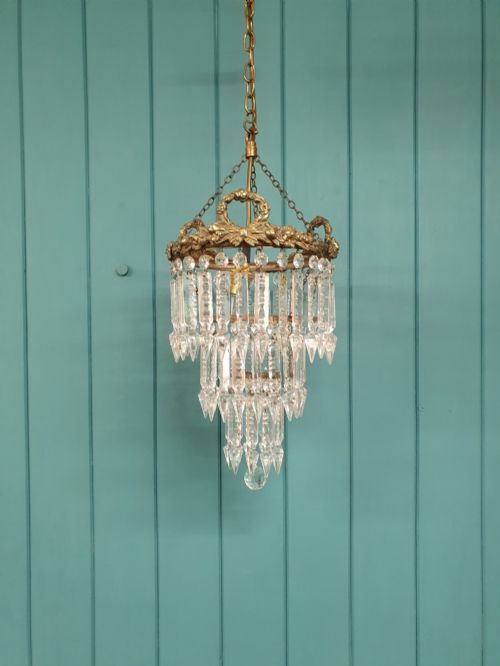


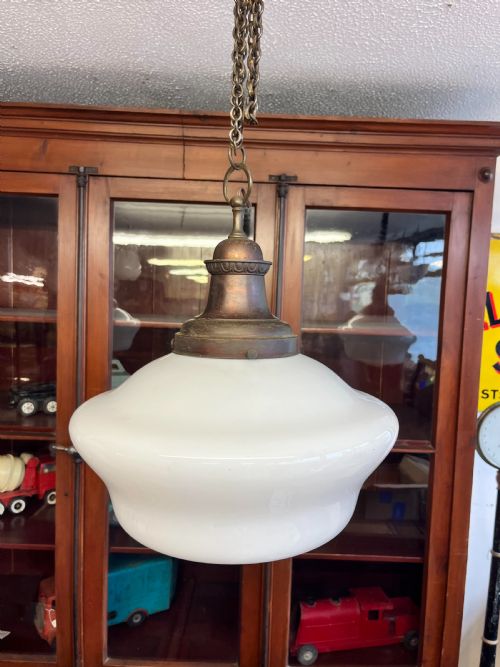

Antique Brass Gallery Light
An antique brass gallery light brings warm illumination and period character to a room through solid metalwork and patterned or opaline glass.
Antique Brass Gallery Light
An antique brass gallery light encompasses pendant lights, ceiling fixtures, and glass shades held by metal fitments. These pieces originate from the nineteenth century through to the mid-twentieth century.
Edwardian and 1930s examples form the core of what appears here, ranging from industrial shades to domestic hallway pendants and chandeliers.
The combination of brass mounts and glass diffusers creates functional overhead lighting suited to period interiors.
How they were made
Makers utilised cast and spun brass for the structural galleries, ceiling roses, and fittings, pairing the metal with blown or moulded glass.
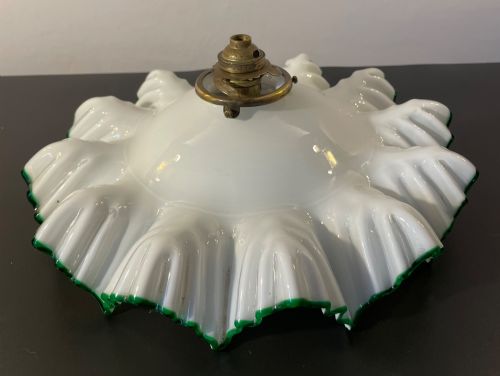
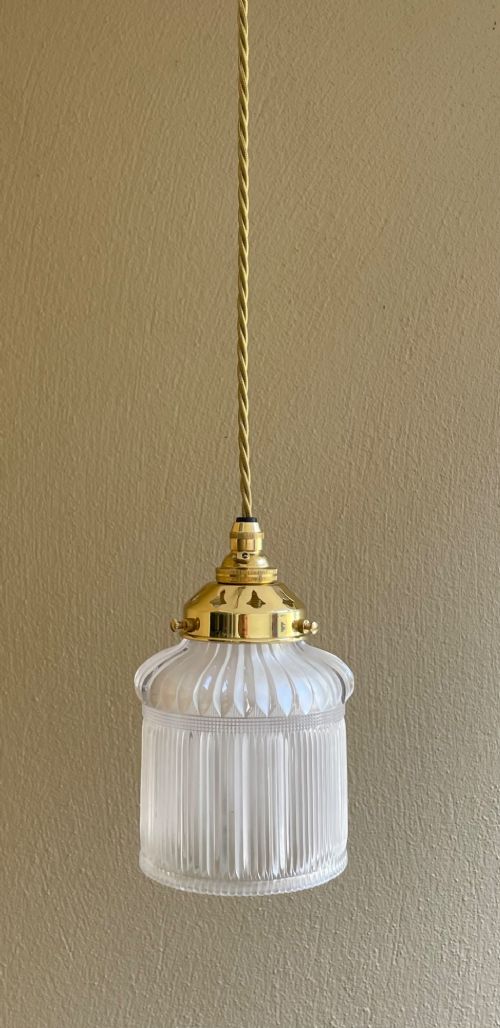
Glass components include opaline, prismatic, cut, and mercury glass, shaped into cones, spheres, or frilled lampshades to diffuse light effectively.
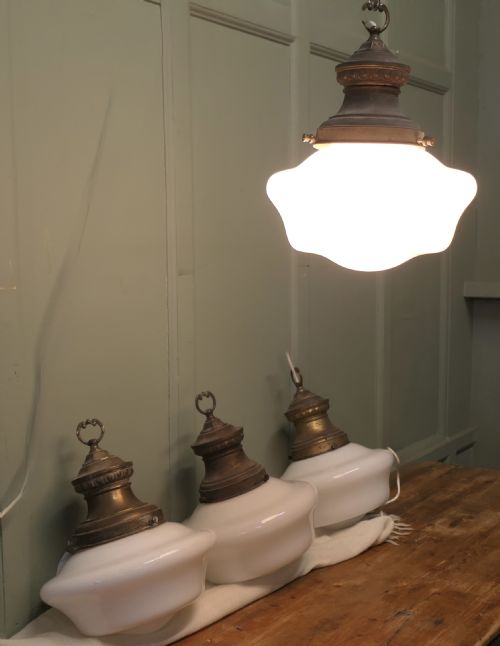
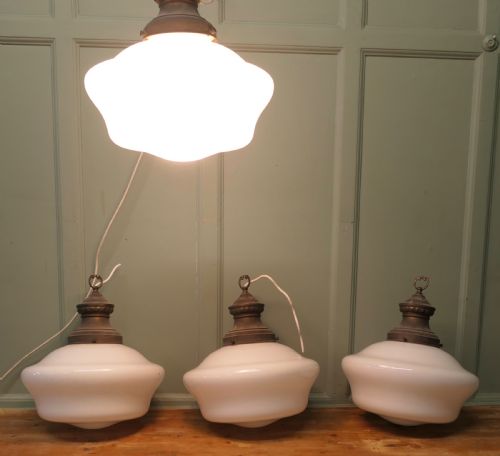
Listings feature brass fittings combined with opaline, prismatic, and cut glass across Edwardian, Art Deco, and industrial periods.
What varies in quality
The weight and finish of the brass galleries distinguish simpler utility fixtures from finer domestic lighting. Cast details and robust metal gauges denote superior construction.
Glass quality depends on the clarity, depth, and uniformity of the material, particularly in prismatic and opaline shades designed to bend or soften illumination.
The Antique Brass Gallery Light Glossary
- Opaline glass
- A milky, semi-translucent glass popular in the nineteenth and early twentieth centuries. It diffuses light with a soft glow.
- Prismatic glass
- Glass moulded with intricate geometric ridges on the surface. This pattern refracts and distributes light evenly across a space.
- Ceiling rose
- The decorative plate attached to the ceiling that covers the wiring and supports the weight of the pendant light.
Antique Brass Gallery Light: Frequently Asked Questions
How do I hang a pendant light?
These fixtures require secure attachment to ceiling joists or suitable wiring boxes capable of supporting the combined weight of brass and glass.
Professional electrical installation is recommended to ensure safety and correct height adjustment for your space.
Can I clean opaline glass shades?
Wash the glass gently in warm soapy water using a soft cloth. Avoid harsh abrasives that might scratch the surface.
Dry thoroughly before reattaching the shade to the brass gallery to prevent water spots.
How do I date an Edwardian light?
Examine the specific style of the brass gallery and the manufacturing characteristics of the glass. Edwardian pieces often display distinct period motifs and specific screw-fitting designs.
Comparing the drop, chain, and ceiling rose style to known period examples helps confirm the era.
Where should I place a gallery light?
Pendant lights suit hallways, kitchens, and living spaces where targeted overhead illumination is required. Their decorative brass and glass components enhance period interior schemes.
Ensure the hanging height allows adequate clearance beneath the fitting for daily movement.