
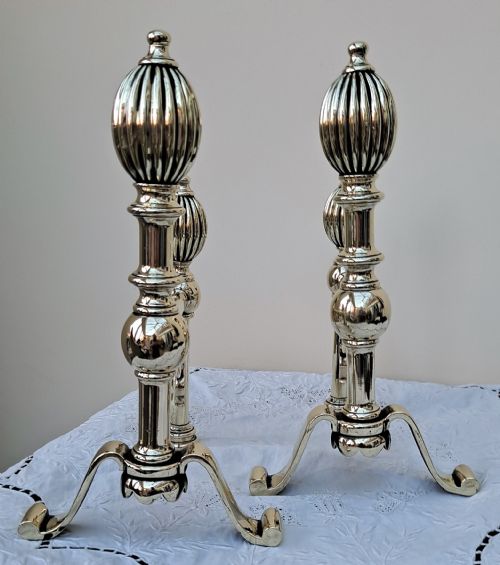


Antique Brass Fire Rests
Antique brass fire rests bring architectural weight and polish to a hearth, pairing utilitarian iron or steel with gleaming brass.
Antique Brass Fire Rests
When you search for antique brass fire rests, you encounter heavy hearth furniture designed to support fire irons or logs beside an open grate. The selection spans Victorian and Edwardian periods, frequently taking the form of pairs of andirons, fire dogs, or dedicated tool rests.
You are most likely to meet English Victorian examples fashioned from polished brass, often combined with cast iron or steel components for added stability. These pieces range from simple utilitarian supports to decorative items featuring neoclassical, Aesthetic Movement, or French Rococo styling.
How they were made
Maker's workshops relied on traditional metal casting, using brass and cast iron poured into moulds to create sturdy uprights and decorative finials. Skilled artisans then polished the brass surfaces to a bright finish while forging iron or steel bars to withstand daily exposure to heat.
Gilt brass and gilt bronze treatments appear on select pieces, offering a more opulent surface finish through the application of a thin layer of gold over the base metal. Iron and copper details are frequently incorporated alongside the primary brass structure to provide structural strength and colour contrast.
Materials across these listings encompass brass, iron, steel, cast iron, polished steel, gilt bronze, copper, and gilt brass.
What varies in quality
Quality rests upon the weight of the metal and the crispness of the cast ornamentation rather than surface shine alone. Heavier castings indicate thicker metal walls that endure years of moving logs and resting heavy iron fire tools without warping or tipping.
The sophistication of the design and the integrity of the joints separate standard workshop production from finer pieces. Details such as cleanly defined neoclassical motifs or hand-finished surfaces distinguish superior examples from plain utility hardware.
James Cartland & Sons
The Antique Brass Fire Rests Glossary
- Andirons
- Supports used to raise logs off the hearth floor to improve air circulation beneath a fire. They frequently incorporate hooks or rests to hold fireplace tools.
- Chenet
- The French term for a fire dog or andiron, often associated with ornate rococo or classical scrollwork. These pieces serve both a decorative and a functional purpose on the hearth.
- Aesthetic Movement
- A late nineteenth-century design style that emphasised visual beauty over narrative meaning, often drawing on simplified classical or natural forms. Pieces from this movement display restrained ornament and careful attention to line.
- Trivet
- A small metal stand supported on feet, utilised near the hearth or fire for holding kettles or warming plates. They share the brass and iron construction typical of fireside metalwork.
Antique Brass Fire Rests: Frequently Asked Questions
What are antique brass fire rests used for?
These pieces serve as sturdy supports for heavy iron fire irons, such as pokers, tongs, and shovels, keeping them organised beside the hearth. Many designs double as fire dogs or andirons, which hold logs in position above the hearth floor.
Their substantial construction allows them to withstand the heat and daily use associated with open coal or wood fires. Beyond pure utility, they act as focal points for the fireplace ensemble, bringing metallic warmth to the room.
How do I clean antique brass fire rests?
Gentle dusting with a soft cloth removes everyday soot and dry debris without disturbing the aged patina of the metal. Avoid harsh commercial abrasive cleaners that strip away historical character and thin brass plating.
If polishing is necessary, use a mild brass cream applied sparingly with a soft cloth, working around any iron or steel elements. Take care to protect surrounding floor surfaces from metal polish residue during the process.
How do I tell Victorian fire rests from Edwardian ones?
Victorian pieces frequently display heavier cast ornamentation, including elaborate neoclassical scrolls or decorative Aesthetic Movement geometry. The brass work tends to be thick and deep-set, reflecting the industrial confidence of the nineteenth century.
Edwardian examples often lean towards lighter proportions and refined steel combinations with cleaner lines. The transition in metal finishes during the Edwardian period favoured subtle polish over heavy ornamentation.
Can I use antique fire rests with a modern fireplace?
Most antique fire rests function effectively with modern open hearths or decorative fireplace baskets, provided the scale matches the opening. They offer stable support for contemporary fire tools just as they did in the nineteenth century.
Ensure that the weight and footprint of the rests suit your hearth space before placing them near active flames. Regular use requires checking that iron components remain free from excessive heat damage.