

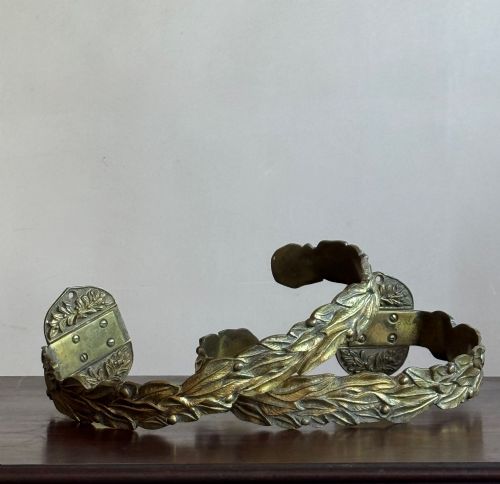


Antique Brass Drapery Tiebacks
Antique brass drapery tiebacks are decorative window hardware that hold heavy fabrics aside, bringing period character to a room.
Antique Brass Drapery Tiebacks
Antique brass drapery tiebacks are functional window fittings designed to secure curtains against the wall with decorative flair. When you search for antique brass drapery tiebacks, you encounter hardware spanning from the eighteenth century through the Victorian era.
The pieces available here include Georgian brass lion designs alongside ornate French ormolu examples and Gothic Revival dragon motifs. French Regency and Rococo Revival influences dominate the selection, often appearing in pairs or sets of four.
How they were made
These fixtures rely on cast brass, ormolu, and gilded bronze formed into robust mounts for heavy fabrics. Artisans shaped the metal through traditional casting methods, frequently applying a gold wash or mercury gilt finish to create a rich surface sheen.
Detailing often incorporates hand-chased elements and applied enamel accents, particularly on eighteenth-century pieces. Sturdy iron or brass fixing screws were integrated into the design to anchor the heavy metal hardware securely into window frames or masonry.
Antique Brass Drapery Tiebacks Retail Price Guide 2026
Typical asking prices for brass drapery tiebacks among the pieces listed under this phrase on Sellingantiques today, from the lower quarter to the upper quarter. They describe what is for sale here now, not the wider market.
The selection includes eighteenth-century examples featuring enamel work alongside nineteenth-century French ormolu pieces.
What varies in quality
The preservation of the original fire gilding or ormolu surface dictates the visual merit of the piece. Heavy, substantial metalwork with intact original gilding stands apart from worn items that have suffered harsh cleaning or modern replating.
Henri Picard
The Antique Brass Drapery Tiebacks Glossary
- Ormolu
- Gilded bronze produced by applying a mercury and gold amalgam to a bronze base and heating it until the mercury vaporised. This technique creates a durable, luminous golden finish characteristic of fine French hardware.
- Gilt bronze
- An alloy of copper and tin coated with a layer of gold leaf or gold paint. It provides a bright decorative surface similar to ormolu but often uses different chemical application methods.
- Rococo Revival
- A nineteenth-century design movement mimicking the asymmetrical, flamboyant curves and shell motifs of the eighteenth-century French court. It appears frequently in ornamental hardware of the Victorian period.
- Gothic Revival
- An architectural and decorative style drawing inspiration from medieval forms, featuring pointed arches, tracery, and mythical creatures such as dragons. This aesthetic produced dramatic, heavy metalwork for grand interiors.
Antique Brass Drapery Tiebacks: Frequently Asked Questions
How do I install antique drapery tiebacks safely?
Mark the desired height beside the window frame, ensuring the fixing screws anchor directly into timber studs or solid masonry. Because these metal pieces are heavy, adequate wall support prevents them from pulling loose under the weight of thick drapes.
Slide the curtain fabric neatly behind the projecting arm after mounting. Check that the projection extends far enough from the wall to accommodate the volume of your specific window dressings.
Can these tiebacks hold heavy velvet curtains?
Cast brass and ormolu hardware possesses the structural strength required to restrain heavy fabrics like velvet or brocade. The rigid metal arms keep thick drapes gathered securely without bending under daily use.
Ensure the mounting hardware matches the weight of the fabric and the sturdiness of the wall. Lighter decorative tiebacks suit sheer panels, while robust nineteenth-century pairs manage substantial drapery with ease.
How should I clean antique brass and ormolu?
Dust the metal gently with a soft, dry cloth to remove surface particles. Avoid commercial metal polishes, abrasive cloths, or chemical dips, which strip away the aged patina and the original gold wash.
Stubborn grime responds to a damp cloth with mild soap, followed by immediate drying. Preserving the original surface finish maintains the historical integrity and visual depth of the piece.
How do I date an antique tieback?
Examine the casting quality, fastener style, and decorative motifs to determine the period. Georgian designs often feature simplified classical or animal forms, while Victorian pieces lean toward heavy Gothic or elaborate Rococo Revival styling.
Look for maker signatures or stamps on the reverse mounting plates if present. Hand-chased details and mercury gilding point toward eighteenth-century or high-status nineteenth-century French manufacture.