

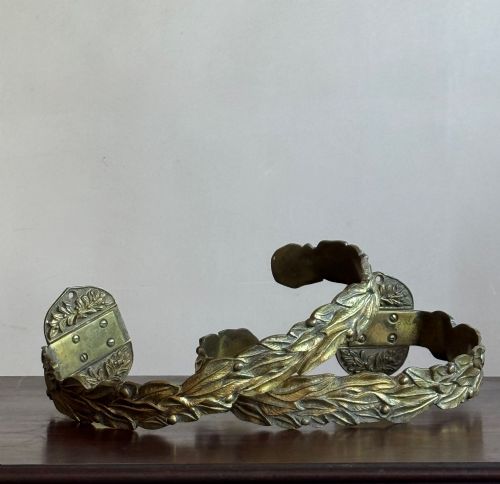


Antique French Drapery Hardware
Antique French drapery hardware holds heavy window textiles in place with decorative metalwork.
Antique French Drapery Hardware
Antique French drapery hardware consists of curtain tie backs, curtain tiebacks, and pelmets designed to secure and frame window dressings. These domestic fittings organise heavy fabrics while adding decorative detail to a room.
The pieces listed on this page appear in styles such as French Rococo Revival, Victorian Gothic Revival, Georgian, French Rococo, French Empire Revival, Louis XVI, and Gothic Revival. They date from the 18th century, 19th century, 1870, 1880, and the Victorian period.
Curtain tie backs are the version a buyer is most likely to meet on this page, often found in pairs. Pelmets also appear among the selections to complete the window dressing.
How they were made
Maker workshops produced antique French drapery hardware using metals such as ormolu, gilt bronze, brass, gilded bronze, gilt brass, gilt metal, and copper. Some examples incorporate enamel alongside the metalwork to add colour and texture.
Foundry techniques allowed artisans to cast intricate motifs like Gothic dragons into the metal before applying gilding or finishing surfaces. These methods produced robust fixtures intended for daily use in grand domestic interiors.
Antique French Drapery Hardware Retail Price Guide 2026
Typical asking prices for french drapery hardware among the pieces listed under this phrase on Sellingantiques today, from the lower quarter to the upper quarter. They describe what is for sale here now, not the wider market.
What varies in quality
The refinement of the casting and the depth of the chased detail separate standard items from finer examples. Artisans working in workshops like that of Henri Picard achieved sharper definition in sculptural elements such as dragons and scrollwork.
The choice of material and the retention of original gilding significantly influence the character of each piece. Heavier bronze castings and well-preserved ormolu surfaces demonstrate superior original manufacture.
Henri Picard
The Antique French Drapery Hardware Glossary
- Ormolu
- Gilded bronze produced by applying a mercury-gilding amalgam to a bronze base. This technique creates a rich golden finish found on fine 19th-century hardware.
- Pelmet
- A framework placed above a window to conceal curtain fixtures and drapery headings. These wooden or metal structures complete the top of a window dressing.
- Gilt Brass
- Brass treated with a thin layer of gold or gold-coloured finish. This material provided a bright metallic appearance for domestic fittings.
- Curtain Tie Back
- A decorative fixture attached to the wall beside a window to hold a curtain open. These pieces range from simple metal arms to sculptural designs.
Antique French Drapery Hardware: Frequently Asked Questions
What is antique French drapery hardware?
Antique French drapery hardware comprises metal fittings designed to manage window curtains. The category includes curtain tie backs and pelmets.
These items combine structural support with ornamental metalwork from periods such as the 18th and 19th centuries.
How were curtain tie backs used?
Curtain tie backs were mounted to the wall framing a window to hold heavy fabric drapes open. They allowed more light to enter the room while displaying the textile folds.
Pairs were typically installed at matching heights on either side of the window opening.
What materials are common in these pieces?
Common materials include ormolu, gilt bronze, brass, and copper. Enamel was also utilised in some 18th-century examples to add decorative colour.
These metals were cast and gilded to achieve a polished appearance suitable for formal interiors.
How do you identify Victorian Gothic Revival pieces?
Victorian Gothic Revival pieces often feature medieval-inspired motifs such as dragons and pointed architectural elements. These designs reflect the 19th-century revival of gothic forms in decorative arts.
Such items utilise heavy cast bronze or gilt brass to create a dramatic silhouette.