
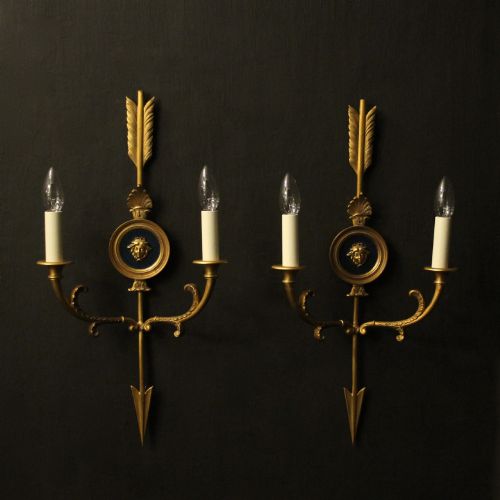
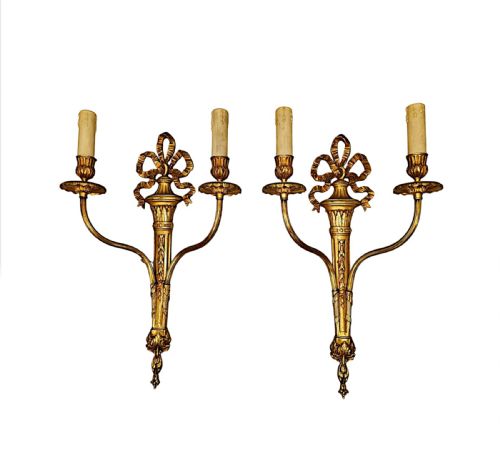
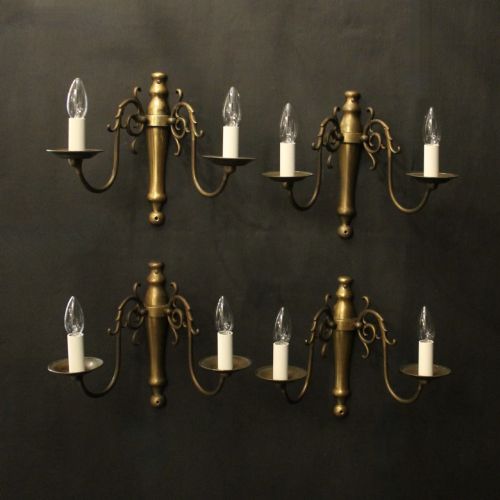
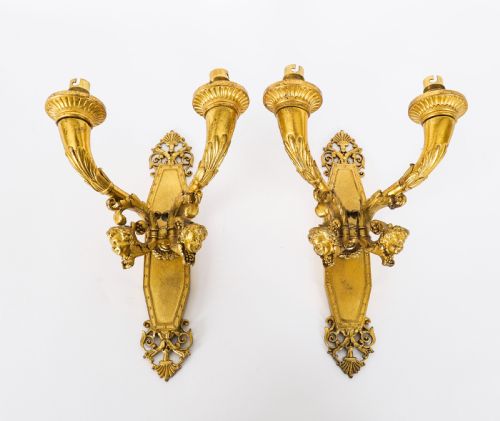

Antique Brass Applique Light
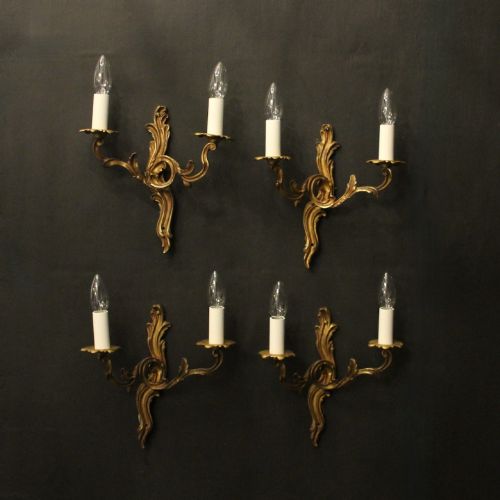
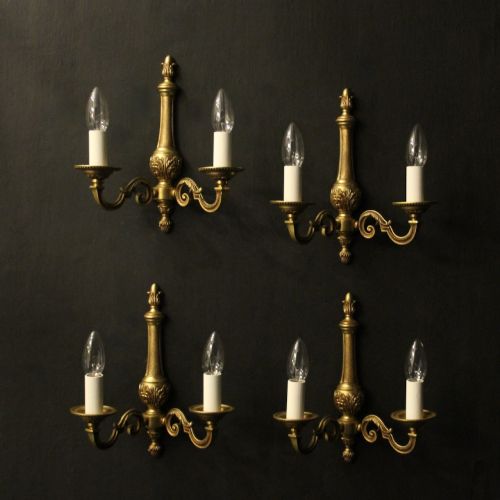
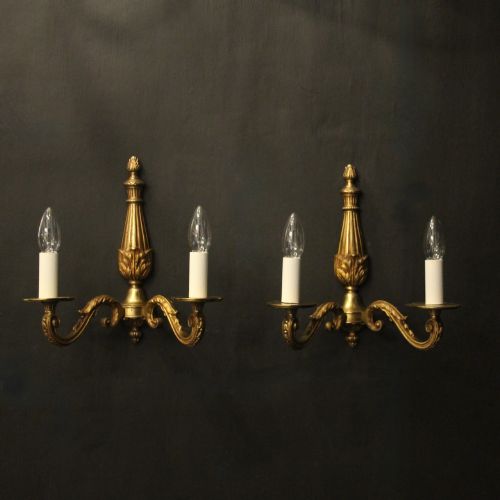
These antique brass applique light fixtures bring period illumination and decorative weight to a wall, spanning styles from French Rococo to English Traditional.
Antique Brass Applique Light
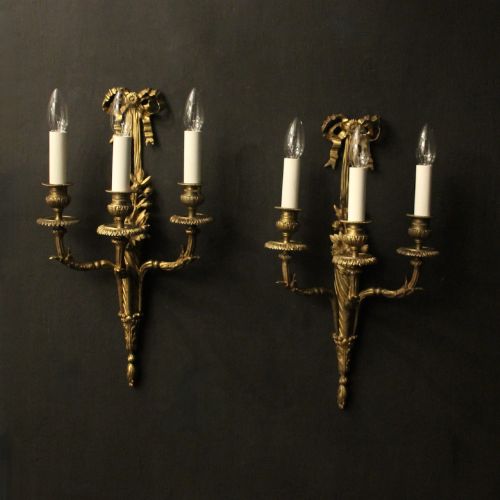
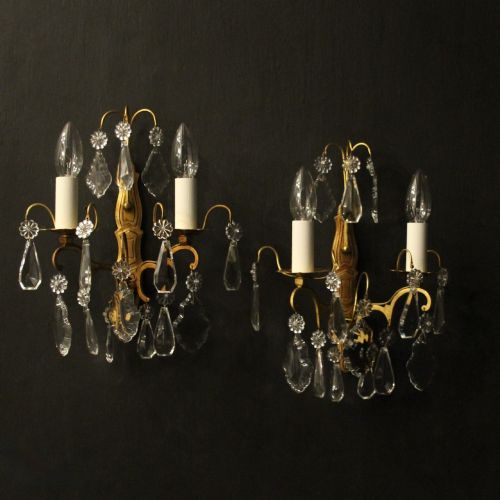
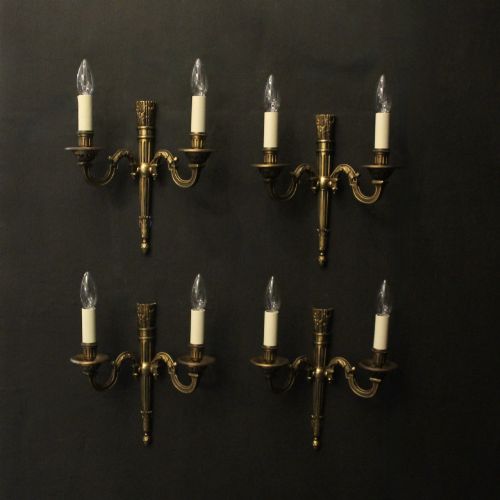
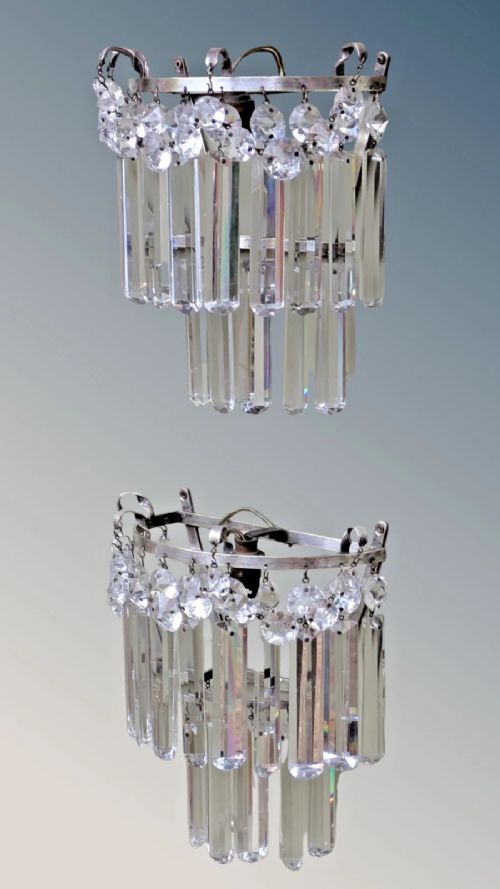
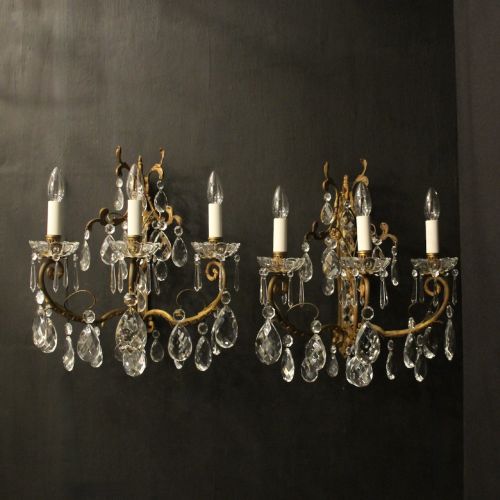
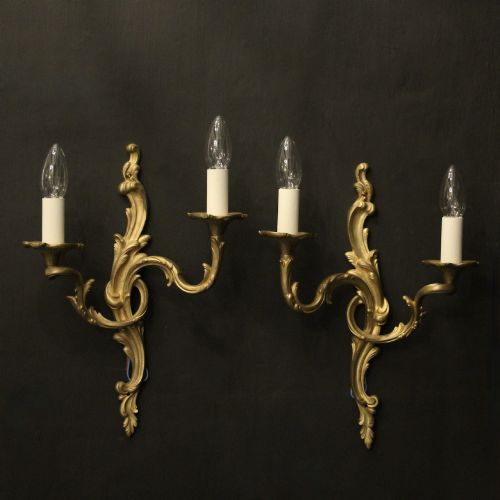
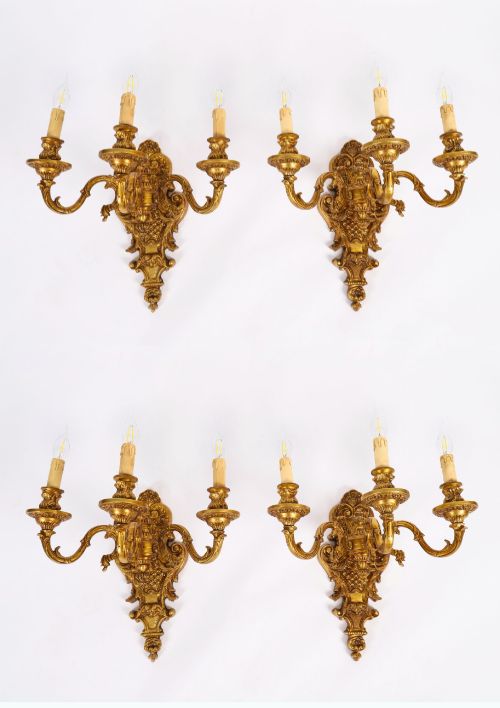
When you search for an antique brass applique light, you find wall-mounted light fittings designed to hold candles or electric bulbs against panelling and plaster. The pieces appearing here comprise single, twin, and triple-arm wall lights alongside wall sconces and half lanterns.
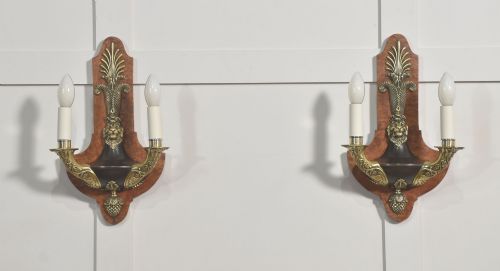
The selection leans heavily toward French production from the nineteenth and twentieth centuries, particularly matching pairs and sets of four originating from the 1920s and 1930s. Alongside these, English examples and pieces following French Empire, Louis XVI, and Rococo Revival styles populate the inventory.
Makers and designers drew upon classical motifs, ribbon twists, and naturalistic scrollwork to shape metal directly for domestic interiors. Each piece functions as both a light source and a sculptural brass relief fixed securely to the room's vertical surface.
How they were made
Foundries utilised brass, bronze, and ormolu, applying gilding to enrich the metallic surfaces through fire-gilding or chemical application. This combination of copper alloys created a durable armature capable of supporting complex branching arms and detailed cast ornaments.
Craftsmen cast the metal components in sections before chasing the surfaces by hand to sharpen details like acanthus leaves and ribbon bows. Crystal drops and cut glass elements were frequently added to refract the light cast by the twin or triple candle branches.
The inventory spans periods from Georgian and Victorian eras through to 1930, utilising brass, bronze, ormolu, and cut crystal.
What varies in quality
The crispness of the original metal casting dictates the refinement of the piece, separating sharp, hand-chased foliage from softer, more generalized mass-produced forms. High-grade items retain deep relief and precise definition in every scroll and classical motif.
The integrity of the surface finish and the weight of the metal distinguish superior examples from lighter alternatives. Uniformity across matched sets of four or six indicates careful workshop assembly and original pairing rather than later unification.
The Antique Brass Applique Light Glossary
- Applique
- A wall-mounted light fixture or decorative plaque designed to sit flat against a vertical surface. It projects outward to hold candles or electric lamps.
- Ormolu
- Finely ground high-carat gold applied to a bronze base metal using mercury amalgamation. This technique produces a rich, durable golden sheen characteristic of finer antique lighting.
- Rococo
- An ornate design style marked by asymmetry, C-scrolls, and naturalistic shell or plant motifs. It appears frequently in French lighting from the eighteenth-century revival periods.
- Empire style
- A neoclassical design vocabulary drawing inspiration from ancient Roman and Greek forms. It employs symmetrical geometry, laurel wreaths, and military trophies.
- Sconce
- A wall-mounted lighting bracket carrying one or more lamps or candles. The term often interchanges with applique in historical lighting inventories.
Antique Brass Applique Light: Frequently Asked Questions
How do I install an antique brass applique light?
These fixtures require mounting directly to wall studs or secure backing boxes to support the weight of cast bronze and brass arms. Professional electrical installation ensures internal wiring meets modern standards while preserving the exterior metal body.
Many pieces arrive rewired for contemporary use, though professional alignment helps distribute the weight evenly across older plaster walls.
Were these lights originally meant for candles?
The earlier examples in this selection were designed exclusively to hold wax candles, utilising reflective brass backplates to amplify the illumination. Later nineteenth and twentieth-century versions accommodated early electrical conversions alongside traditional candle sockets.
When examining the drip pans and nozzles, traces of original wax use often remain visible on pieces dating from the Georgian and Victorian eras.
How do I clean antique brass and ormolu?
Dusting with a soft, dry cloth preserves the fragile gilt surface without stripping away the historical patina built up over decades. Chemical polishes should be avoided entirely, as they remove the thin layer of gold leaf from gilded bronze and brass.
Gentle maintenance keeps the metal stable and retains the rich warmth prized by collectors of period lighting.
How can I date a brass wall light?
Stylistic cues provide the primary method for dating, with Louis XVI and Empire forms following strict classical symmetry while Rococo Revival designs embrace asymmetry. Construction methods, including the type of screws and the consistency of the casting, further clarify whether a piece originates from the nineteenth or twentieth century.
Matching sets from the 1920s and 1930s often display standardised mounting plates that differ from the hand-filed components of earlier Victorian and Georgian work.