

French Applique Wall Lights
French applique wall lights bring architectural polish and layered candle-or-electric illumination to a room, spanning grand Louis periods and sleek twentieth-century revivals.
French Applique Wall Lights
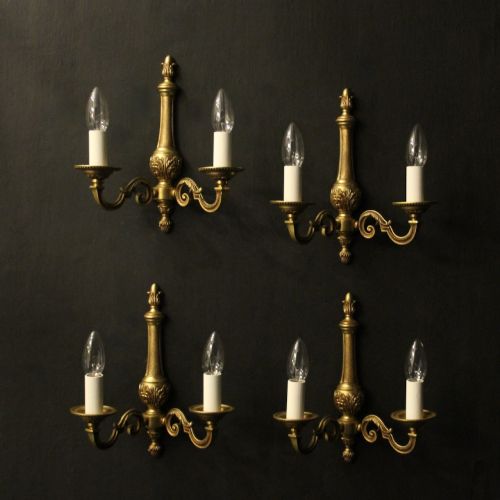
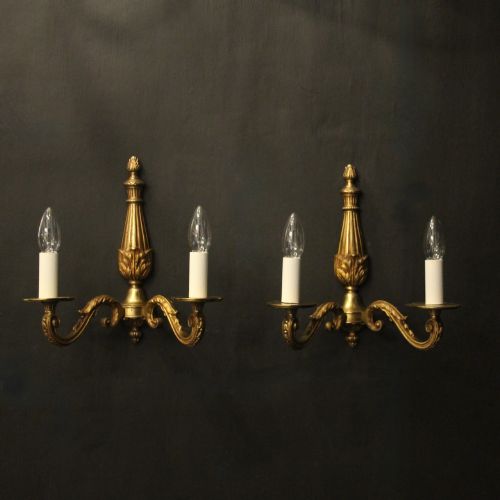
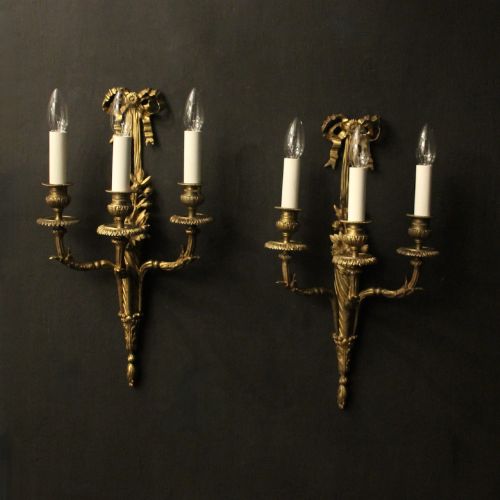
French applique wall lights encompass wall-mounted sconces and candelabras designed to project ambient illumination while serving as sculptural wall ornaments. The selection leans heavily towards twentieth-century productions from the 1920s and 1930s, alongside nineteenth-century examples and eighteenth-century origins.
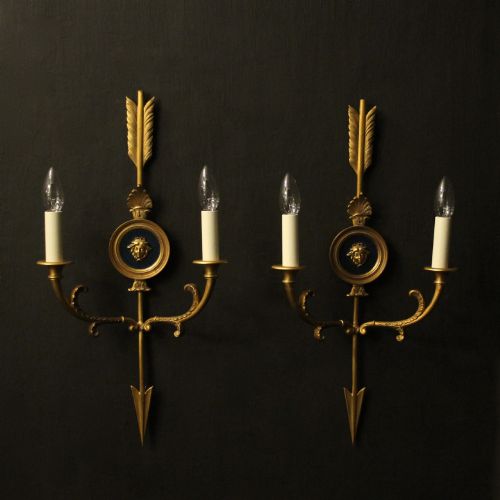
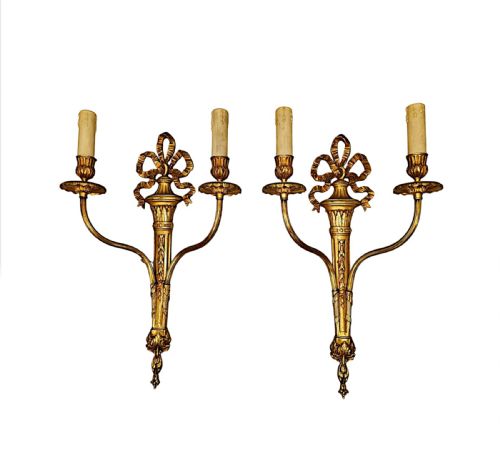
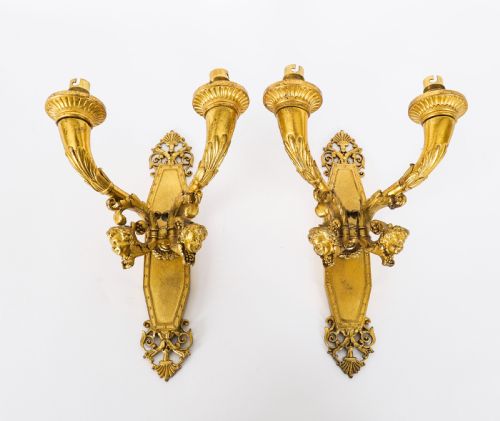
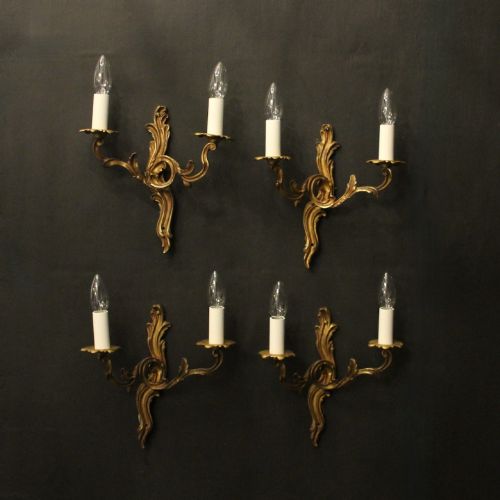
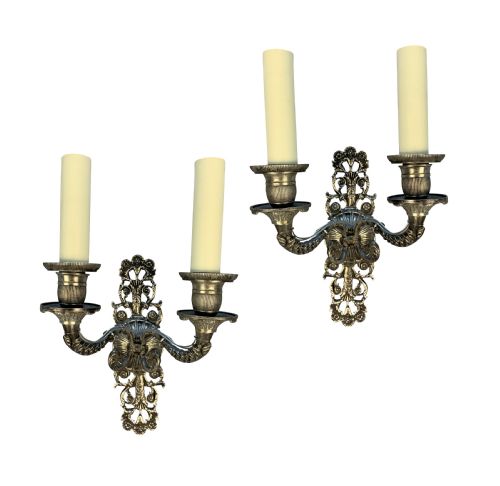
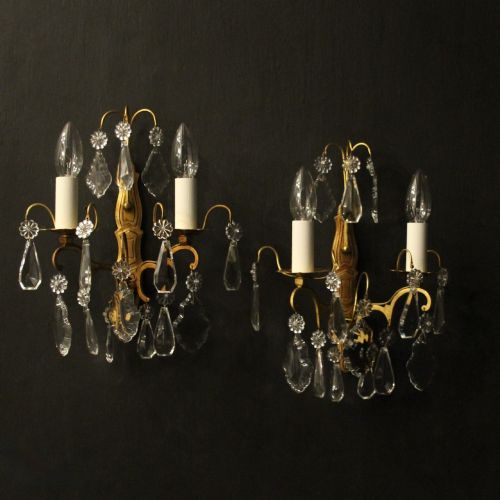
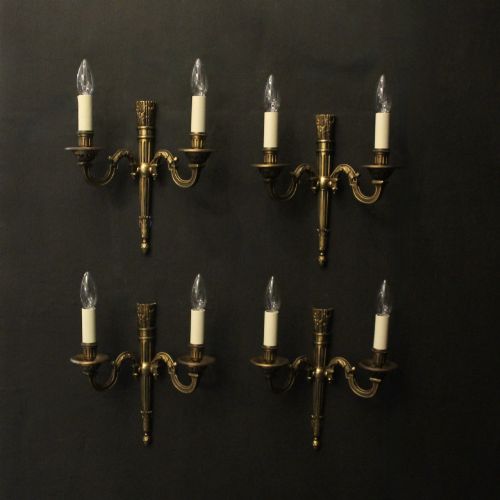
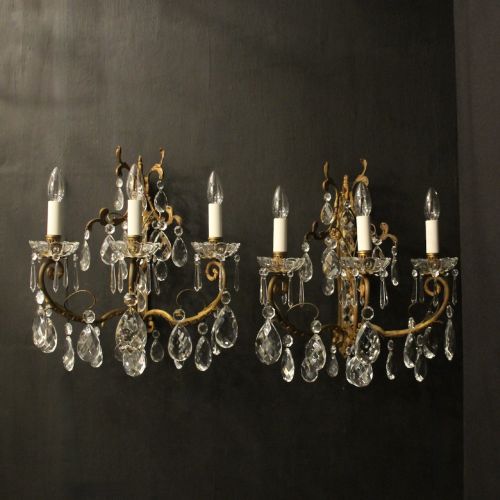
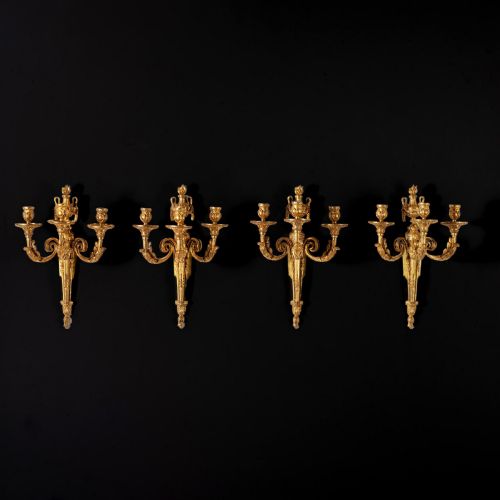
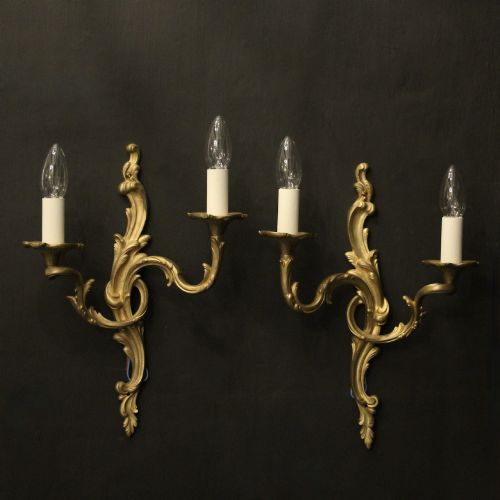
Buyers frequently encounter matched pairs or larger sets of four and six, configured with single, double, or triple branches. Styles traverse French Rococo, Neoclassical, Empire, and Louis XIV and XV revivals, often featuring cast motifs like ribbons, cherubs, and crystal drops.
Materials and Construction
Metal fabrication dominates the construction, utilising cast bronze, brass, and ormolu with gilded or silvered surfaces. Artisans employed traditional casting and chasing techniques to achieve intricate scrollwork, acanthus leaves, and floral details.
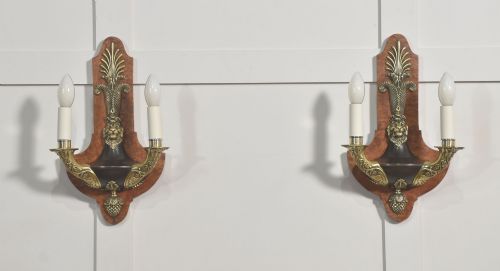
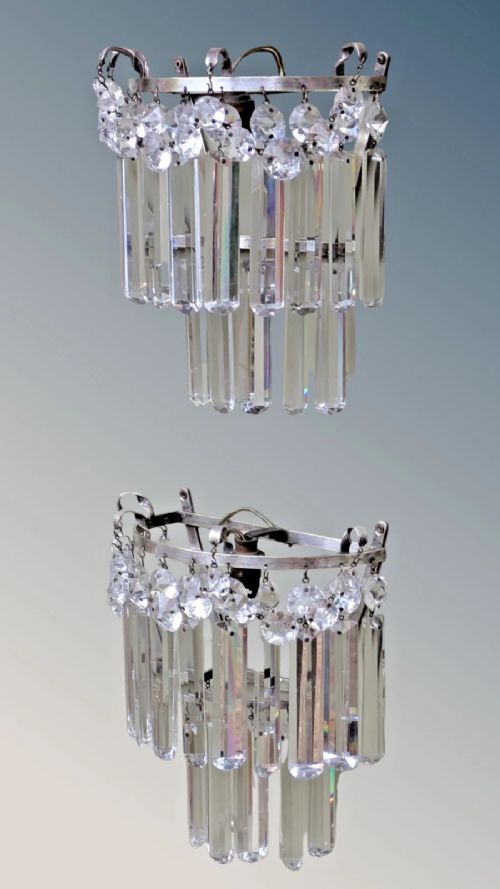
Combinations of cut crystal, glass, and porcelain flowers appear across various pieces to refract light and soften the metal framework. Burr walnut introduces contrasting organic texture in select nineteenth-century brass-mounted designs.
Listings span eight distinct decades of production, reaching back to eighteenth-century Georgian origins and eighteenth-century neoclassical designs.
Assessing Quality and Execution
Surface finishing, from the depth of the gilding to the integration of silver plating, defines the visual longevity of the piece. Superior examples exhibit harmonious proportions between backplates and candle arms, maintaining balance across pairs and larger sets.
Maison Baguès·Henri Picard
The French Applique Wall Lights Glossary
- Applique
- A wall-mounted light fitting designed to hold candles or electric lamps, synonymous with a wall sconce. These fixtures sit flat against the wall surface.
- Ormolu
- Finely ground high-carat gold applied to a bronze or brass base through mercury amalgamation or electroplating. This finish gives historic metalwork its characteristic warm glow.
- Rococo Revival
- A nineteenth-century reinvention of eighteenth-century French design characterised by asymmetric C-scrolls and naturalistic plant forms. The style emphasises theatrical curves over strict symmetry.
- Backplate
- The foundational metal plate that fastens directly to the wall and supports the projecting candle arms. It often bears the primary decorative relief of the fitting.
French Applique Wall Lights: Frequently Asked Questions
How do I wire antique wall lights?
Most vintage French wall lights require professional rewiring to meet modern electrical safety standards. Electricians can easily adapt standard internal channels or surface conduits to accommodate modern bulbs.
Qualified practitioners should handle the installation to ensure the heavy bronze or brass backplates anchor securely into wall studs or masonry.
Can I mix different periods in one room?
Pairing eighteenth-century revival sconces with twentieth-century brass fixtures works well if the scale and metal tone share a common visual weight. Maintaining consistency in the gilded or polished brass finish unifies diverse eras.
Placing matched pairs on opposite walls creates symmetry, allowing subtle stylistic differences between rooms to complement rather than clash.
How are wall lights securely mounted?
Heavy gilded bronze and ormolu appliques demand robust wall anchors capable of supporting considerable metal weight. Fixing screws must pass through the backplate directly into wall noggin or heavy-duty hollow wall fixings.
Professional installation ensures the projecting arms remain level and stable when bearing the weight of crystal drops or multi-branch candelabras.
How do I clean gilded bronze safely?
Dusting gently with a soft, dry microfibre cloth prevents the accumulation of grime on intricate ormolu and chased brass surfaces. Avoid abrasive cleaners, commercial metal dips, or harsh chemicals that strip historic gilding.
For stubborn residue, professional conservators recommend a gentle application of distilled water on a dampened cloth, followed immediately by thorough drying.