


Antique Boxed Chess Set
An antique boxed chess set brings history directly to the table, offering tactile craftsmanship and timeless strategy in one complete portable package.
Antique Boxed Chess Set
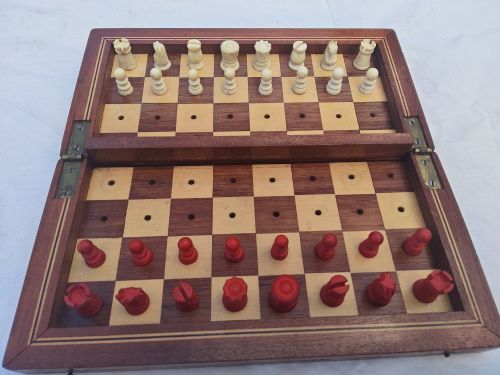
When you search for an antique boxed chess set, you are looking at complete playing pieces housed in their original containers, often accompanied by folding boards or integrated storage compartments. These pieces span the nineteenth century and the Edwardian era, showing how Victorians combined leisure with fine cabinetry.
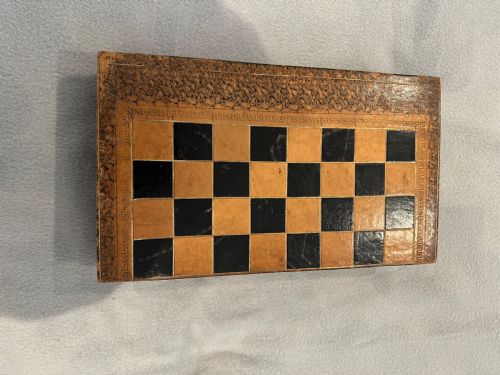
You will frequently meet sets rendered in the Staunton pattern, alongside alternative designs such as the Whittington, St George, and Calvert patterns. Many examples double as broader games compendiums, incorporating backgammon and draft pieces within mahogany, burr walnut, or leather-bound faux book boxes.
The origins stretch from English workshops to Ottoman Revival designs, reflecting the global popularity of the game during the industrial period. Whether travelling with a miniature bone set or hosting with a weighted four-inch club set, each combination tells a story of domestic entertainment.
Materials and construction
Turned boxwood and ebony form the backbone of traditional chess piece production, contrasting pale density with deep tropical darks. Bone also appears frequently, particularly in travelling sets where lighter materials reduce the overall weight.
Cabinet makers utilised rosewood, mahogany, and burr walnut for the accompanying boxes and boards, often lining the interiors with felt to protect the pieces. Brass hinges, clasps, and occasional leather bindings completed the portable housing for the game.
Weighted pieces incorporate lead loading within their bases to improve stability during play, a development that emerged alongside the standardisation of the Staunton design. Carving and turning were executed on lathes by skilled hands before being polished and fitted to their bespoke boxes.
Listings feature nineteen-century boxwood, ebony, mahogany, and bone sets alongside Edwardian travel pieces.
What separates the best pieces
The crispness of the turning on individual pieces dictates the initial visual appeal, particularly in the intricate carving of knight heads and rooks. Subtle details like hand-incised eyes and distinct crown markers show the touch of a master turner rather than factory mass production.
The quality of the housing box matches the standard of the contents, distinguishing superior sets through book-matched veneers, tight-fitting dovetail joints, and intact felt linings. Original weights and matching sets without replacement pieces command greater appreciation from collectors.
Jaques·F. H. Ayres·British Chess Company
The Antique Boxed Chess Set Glossary
- Staunton pattern
- The standard design of chess pieces introduced in the mid-nineteenth century, featuring architectural forms and a cross surmounting the king. It remains the universal standard for tournament play today.
- St George pattern
- An earlier nineteenth-century English chess set style characterised by simpler, sturdier pieces without finials on the king and queen. This design preceded the dominance of the Staunton pattern.
- Calvert pattern
- A distinct nineteenth-century style of carved bone or wood chess pieces, known for stacked floral motifs on the pawns and deep turning. These sets are highly sought after by specialist collectors.
- Games compendium
- A multi-game box containing chess, backgammon, cards, and draft pieces within a single fitted cabinet. They demonstrate Victorian ingenuity in space-saving domestic luxury.
- Whittington pattern
- A specific regional style of nineteenth-century chess pieces, often found in travelling sets. They offer collectors a variation from standard tournament designs.
Antique Boxed Chess Set: Frequently Asked Questions
How do I spot a Staunton chess set?
Look for the distinctive architectural king with a cross finial, queen with a coronet, and mathematically proportioned bases. The knights should display detailed carved horse heads with arched necks.
These sets were designed for clear visual recognition during tournament play, separating them from earlier symbolic or abstract regional styles.
Were these sets used for travel?
Many nineteenth-century examples were specifically built for journeys, featuring folding boards that double as storage boxes or compact wooden slide-lid containers. Bone and boxwood were favoured for their durability on the move.
Travelling sets often incorporated peg-in-hole boards or magnetic components in later eras to keep pieces steady during carriage rides.
How do I care for antique wood pieces?
Keep wooden chess sets out of direct sunlight and away from rapid temperature changes to prevent the boxwood and ebony from splitting. A light application of microcrystalline wax can protect the polished finish.
Avoid using water or modern chemical cleaners on antique felt linings and veneered game boards.