
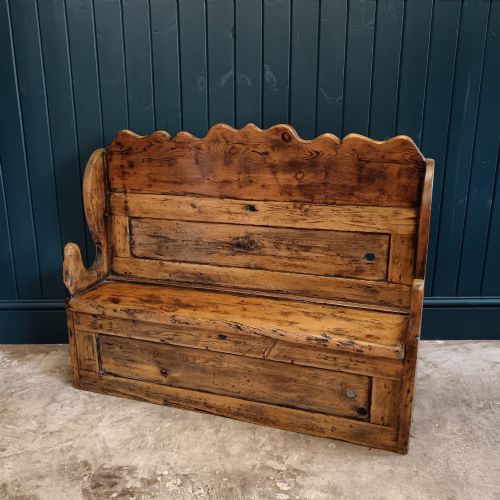
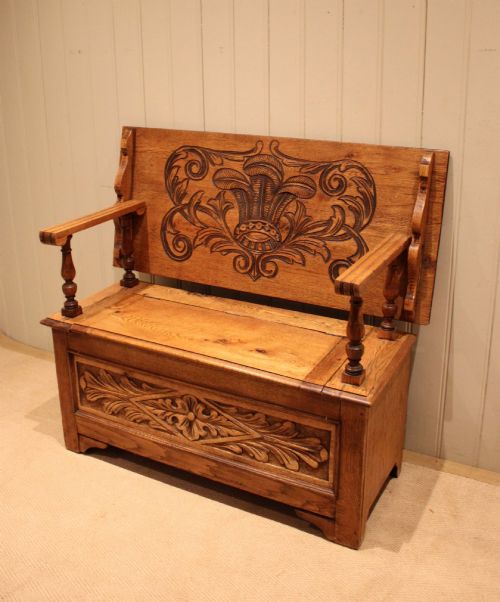
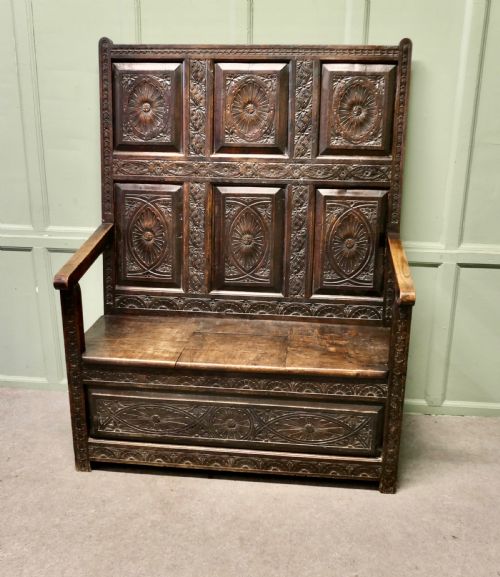
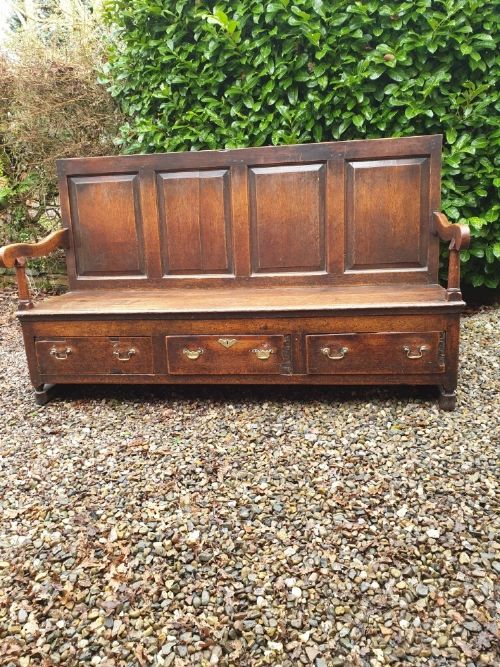
Antique Box Seat Bench
An antique box seat bench offers a dual purpose of comfortable seating and concealed storage, anchoring a hallway or kitchen with historical character.
Antique Box Seat Bench
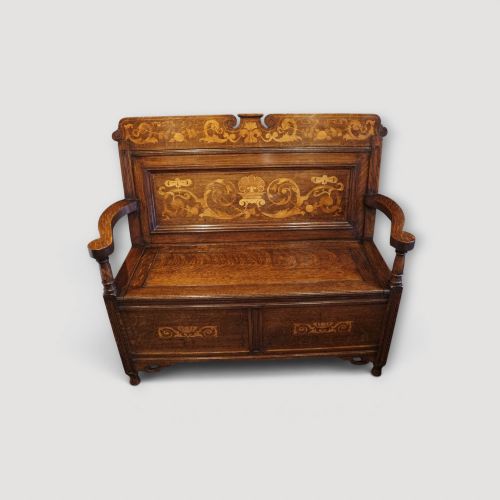
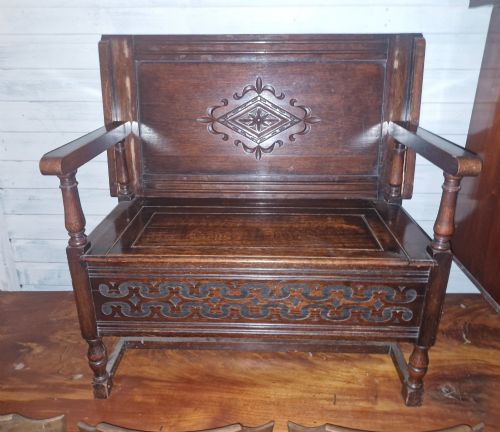
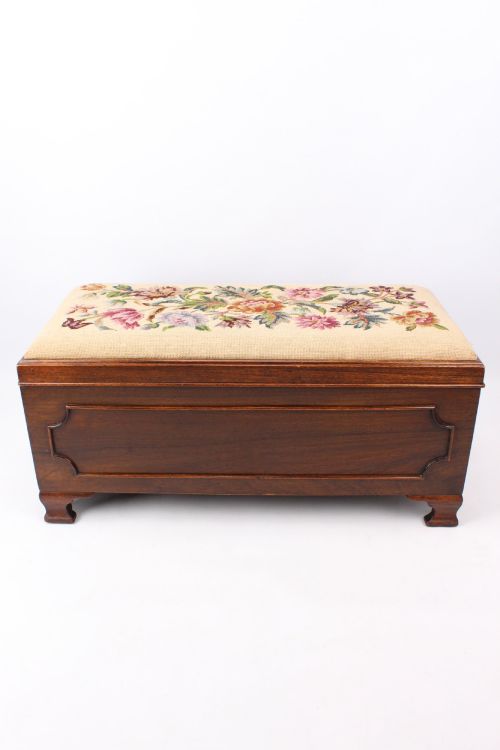
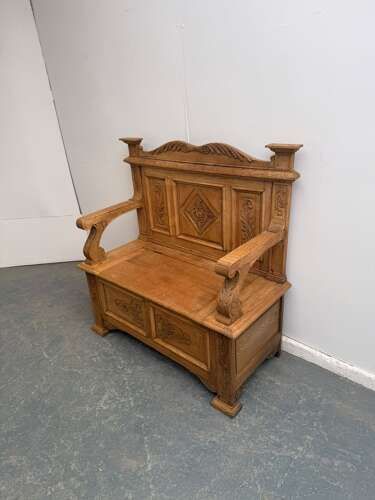
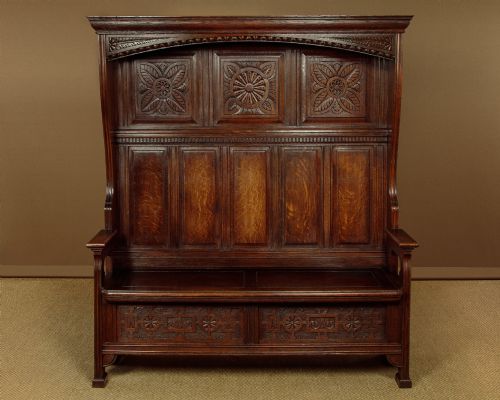
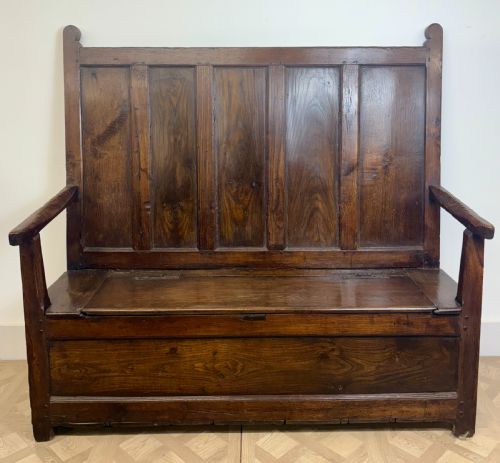
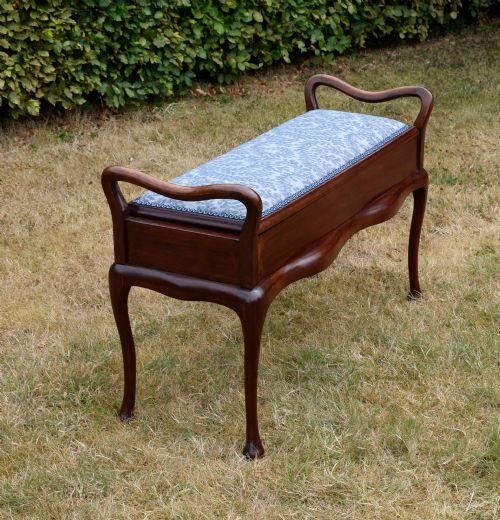
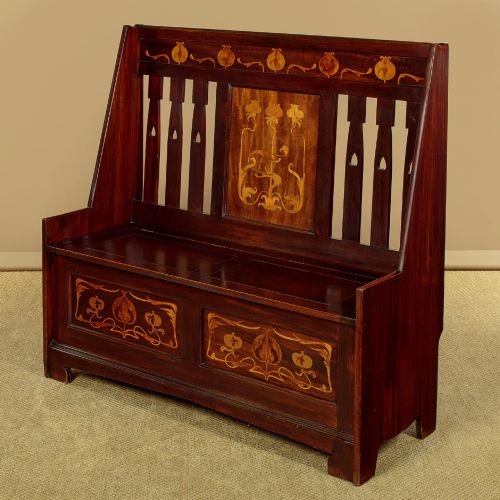
An antique box seat bench combines a rigid seating platform with an enclosed compartment beneath, designed to hold household goods while providing a place to sit. These pieces frequently appear as settles, hall benches, or monks benches originating from domestic and farmhouse contexts across Britain and continental Europe.
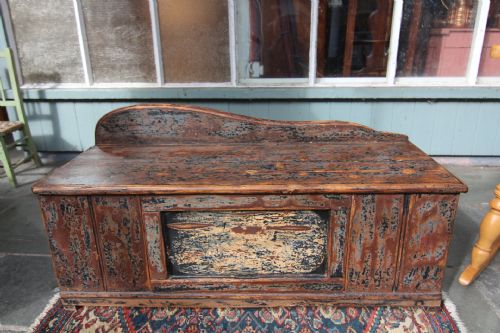
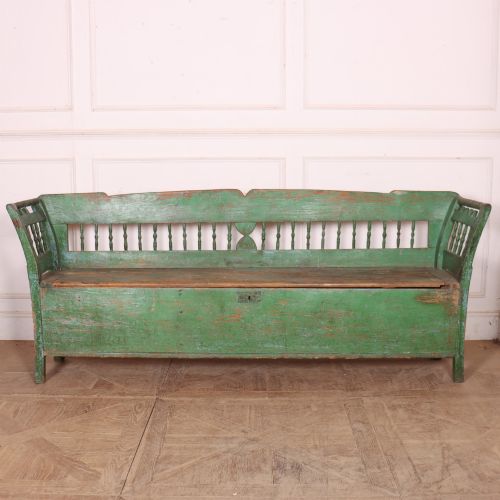
The most common examples encountered on this page date from the eighteenth and nineteenth centuries, constructed predominantly in oak, pine, and elm. Buyers will regularly find regional variants such as Welsh settles, Hungarian painted benches, and Victorian hall seats featuring hinged lift-up lids or fold-over tops.
How they were made
Cabinet makers and country joiners utilised native hardwoods like solid oak, elm, and ash, often joined with pegged mortise and tenon construction to withstand heavy daily use. Pine and painted softwoods served for regional and continental vernacular pieces, frequently finished with wax or hand-mixed pigments.
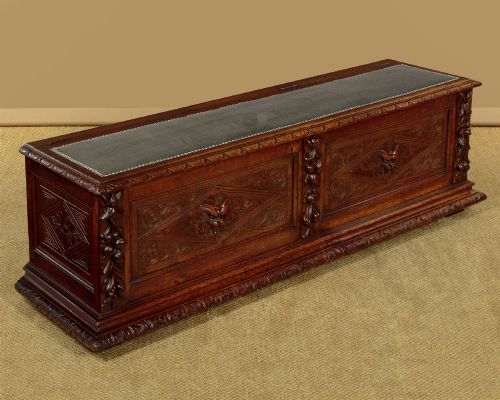
Secondary structural elements incorporated iron hinges and brass fittings to secure the storage compartment lids. Decorative flourishes on higher status examples relied on hand carving, panelled backs, and applied mouldings rather than applied veneers.
Listings feature solid oak, pine, and elm across periods spanning the seventeenth century through to the Edwardian era.
What varies in quality
The distinction between a standard utility piece and a superior example rests in the integrity of the timber selection and the depth of the original construction. Pieces hewn from thick, quarter-sawn solid oak with integrated panel backs command greater regard than later vernacular adaptations assembled from mixed woods.
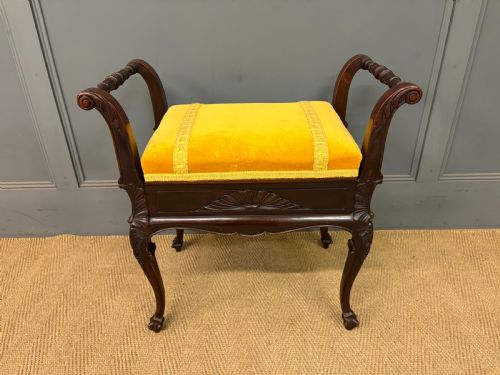
Proportion and execution of decorative carving also differentiate the range, as hand-carved motifs dating strictly to the period demonstrate superior craftsmanship compared to later revival additions. Furthermore, the survival of original hinges, latches, and undisturbed surface patination elevates the standing of an individual bench.
James Shoolbred & Co.·Hallett & Sons
The Antique Box Seat Bench Glossary
- Settle
- A wooden bench with a high back, solid arms, and a box seat compartment underneath. It was historically placed near the hearth to block draughts in large rooms.
- Cassapanca
- An Italian wooden chest with a back and arms that functions as a bench seat. These pieces often display sophisticated carved panelling and walnut construction.
- Monks bench
- A convertible piece of furniture featuring a hinged top that folds down over the arms to form a table. It incorporates a box compartment beneath the seat.
- Vernacular
- Furniture built by local tradesmen using regional materials and traditional designs rather than following academic metropolitan styles. This style prioritises practical utility over decorative convention.
- Patina
- The surface sheen and colour developed on wood through age, handling, and regular waxing. It serves as a visual indicator of authenticity and continuous use.
Antique Box Seat Bench: Frequently Asked Questions
Where should I place an antique box seat bench?
These benches suit narrow entrance hallways, boot rooms, or large country kitchens where their internal storage can be put to practical use. Their high backs also make them effective room dividers in open-plan spaces.
Position them against sturdy load-bearing walls away from direct heat sources to prevent the timber from drying out or warping over time.
How do I maintain the wood on my bench?
Apply a natural beeswax polish occasionally and buff it gently with a soft cloth to nourish the dry timber and preserve its finish. Avoid modern silicone-based sprays, which can build up and degrade the original surface.
Keep the interior clean and dry, and avoid placing damp items directly into the storage box to protect the historic grain.
How do I tell an 18th century settle apart from a Victorian revival piece?
Examine the construction methods visible inside the storage box, looking for hand-cut joints, pegged tenons, and timber shrinkage consistent with age. Eighteenth-century pieces generally show tool marks and wear patterns that differ from machine-cut nineteenth-century revival items.
The patination on older oak develops a deeper, softer lustre over centuries of contact that is difficult for later workshops to replicate accurately.
Were these benches used for storage?
Household storage was the primary function of the compartment beneath the seat, housing blankets, boots, and dry goods in rooms lacking fitted closets. The heavy lift-up lid doubled as a secure bench when closed.
In rural settings, this secure cavity also protected textiles and provisions from dampness and household pests.