
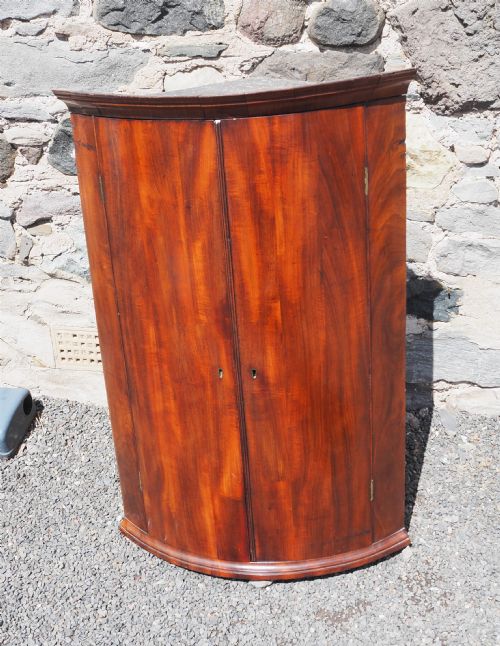

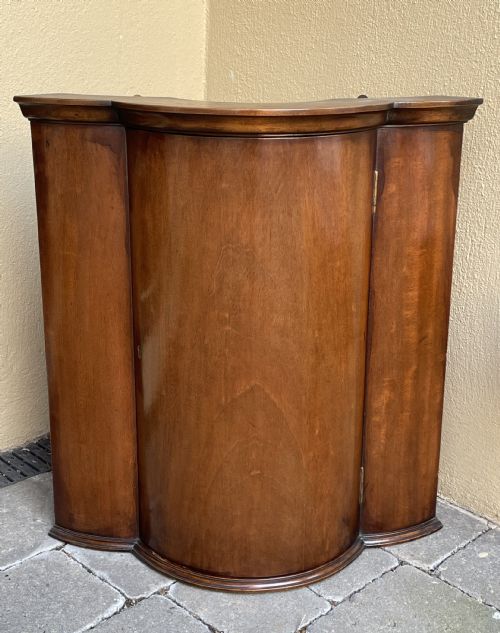

Antique Bowfront Storage Cupboards
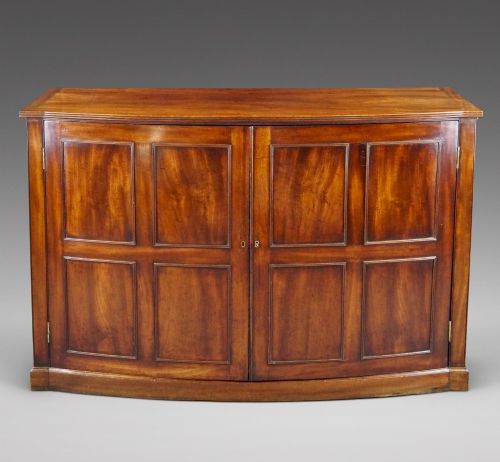
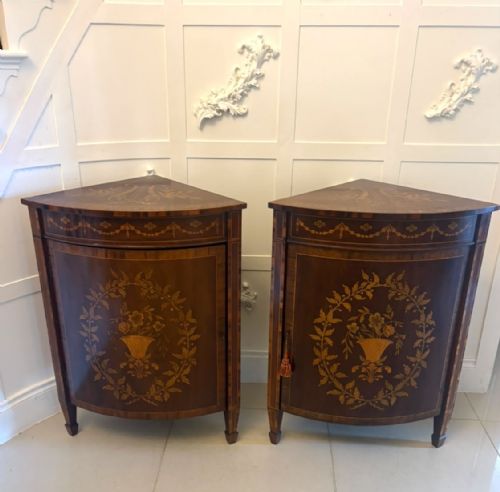
Antique bowfront storage cupboards bring curving timber fronts and corner fitted storage from Georgian and later periods into daily rooms.
Antique Bowfront Storage Cupboards
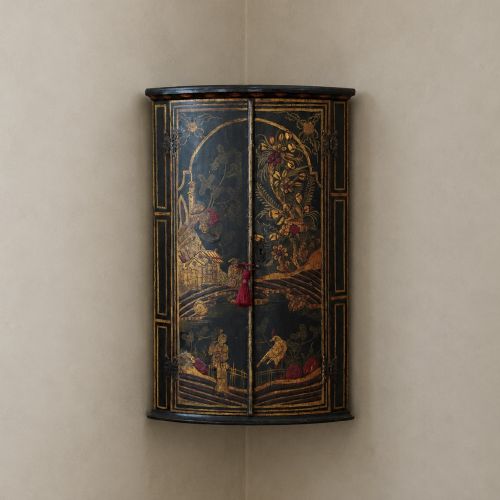
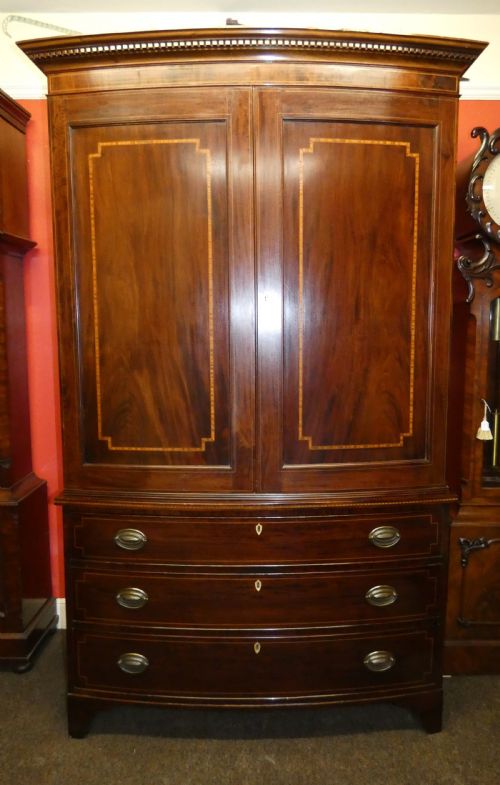
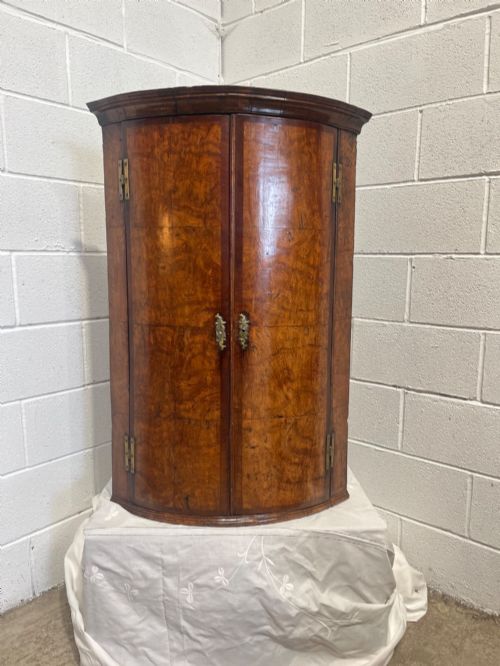
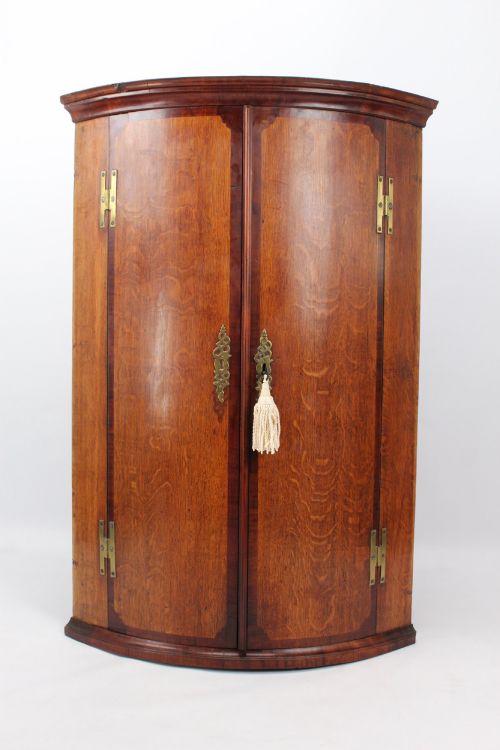
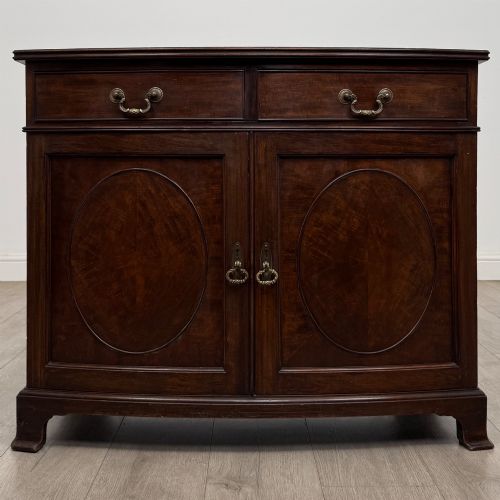
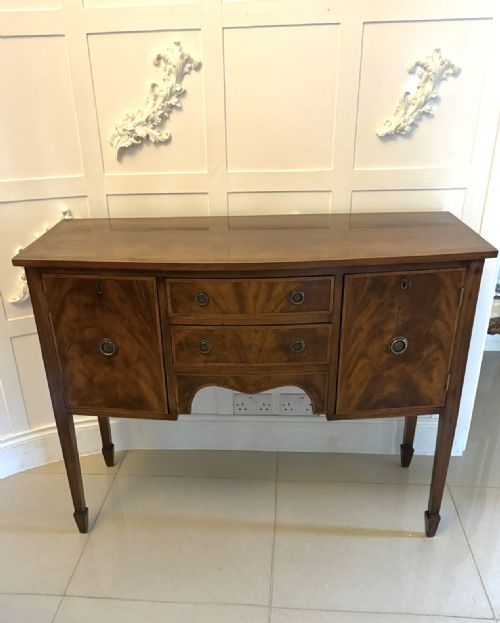
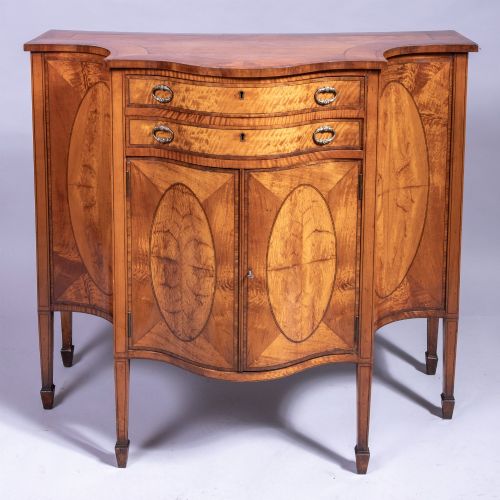
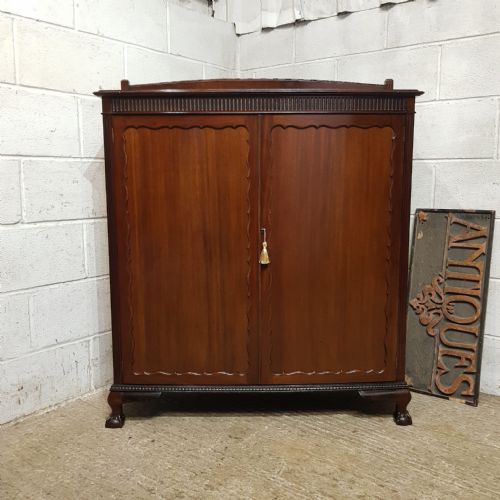
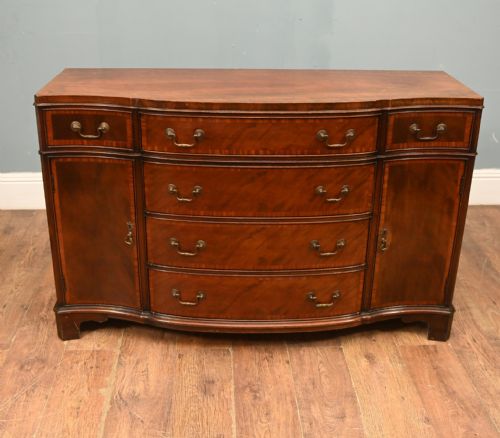
Antique bowfront storage cupboards span freestanding dining room sideboards, tall bedroom linen presses and hanging corner cabinets designed to utilise awkward angles. The form curves outward at the centre, projecting past the straight lines of standard case furniture to catch the light on figured timber grain.
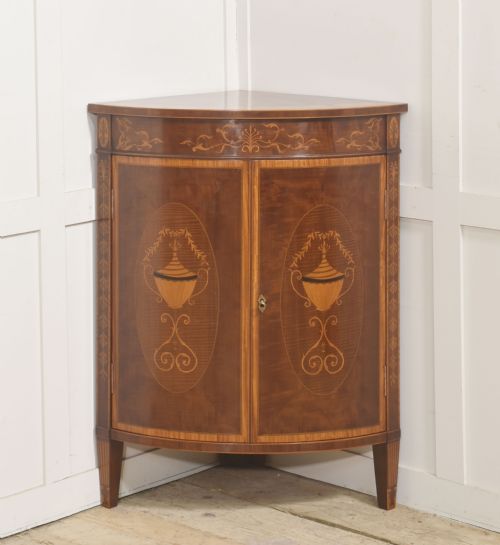
The pieces appearing on this page most commonly take the form of corner cupboards and side cabinets originating in the Georgian and Edwardian eras. Makers utilised mahogany, oak, and walnut to build these curved storage vessels, often mounting them on walls or placing them upon slender stands.
How they were made
Cabinet makers constructed the curved fronts using solid hardwoods or applied veneers over secondary timber carcases, employing steam or saw-cut segments to achieve the convex sweep. Flame mahogany veneer, burr walnut, and satinwood provided decorative surfaces, frequently edged with boxwood stringing or marquetry inlay.
Brass hardware including hinges, escutcheons, and bracket feet completed the construction of these storage pieces. Joinery relied on traditional dovetailed joints for drawers and pegged mortise and tenon frames to maintain stability in the curved carcase.
Listings span Georgian, Victorian, Edwardian, and Art Deco periods, utilising mahogany, oak, walnut, satinwood, and brass.
What varies in quality
Quality rests upon the selection of timber veneers and the precision of the curved joinery where the doors meet the frame. Finer examples display symmetrical flame mahogany or burr oak figures that wrap continuously across the front panels without interruption.
The refinement of secondary details such as hand-cut dovetails, original brass fitments, and subtle string inlay separate utilitarian storage from superior cabinet work. Pieces retaining their original surface finish and well-balanced proportions demonstrate greater craftsmanship.
The Antique Bowfront Storage Cupboards Glossary
- Bowfront
- A furniture front that curves outward in a convex arc. This shape softens room angles and accentuates the grain pattern of mahogany or walnut veneers.
- Flame mahogany
- A wood veneer cut from the branch junction of the mahogany tree. It produces a distinctive flickering pattern resembling tongues of flame.
- Linen press
- A tall storage cabinet featuring upper sliding trays or shelves enclosed by doors, positioned above a base of lower drawers. They stored folded textiles before fitted wardrobes became common.
- Corner cupboard
- A triangular cabinet built to fit directly into the corner of a room. Many examples were designed for hanging upon walls to save floor space.
- Stringing
- A narrow inlay of contrasting wood such as boxwood used to outline panels and doors. It provides a crisp linear border against darker mahogany or satinwood backgrounds.
Antique Bowfront Storage Cupboards: Frequently Asked Questions
How do I hang a wall corner cupboard?
Hanging corner cupboards require secure fixing into solid masonry or direct wall studs using heavy-duty internal brackets. The weight of solid mahogany or oak carcases demands robust support to prevent pulling away from the wall.
Most original hanging cupboards feature pre-drilled fixing points through the internal backboards or rely on sturdy strap hinges and robust top mouldings to bear the load safely.
What rooms suit a bowfront cabinet?
These compact storage pieces suit dining rooms, hallways, and living spaces where a curved projection softens linear room layouts. Corner variations utilise dead space efficiently in smaller rooms.
Side cabinets and sideboards provide surface display space alongside internal shelving for tableware, books, or everyday household items.
How do I identify Georgian pieces?
Georgian pieces display hand-cut dovetails, secondary timbers like oak or pine inside drawers, and traditional shellac finishes applied by hand. The proportions reflect eighteenth-century design standards.
Cabinet construction from this period uses pegged joinery and lacks modern mechanical fasteners or synthetic glues.
Are these cupboards suitable for daily use?
These storage cupboards function well for modern use, offering deep internal shelving and enclosed space for contemporary storage needs. Solid wood and robust veneer construction withstands regular opening and closing.
Care should be taken to maintain stable room humidity to protect antique timber and delicate veneer surfaces from splitting.