


Antique Book Trough Stand
An antique book trough stand keeps volumes close at hand while adding character to a study or sitting room.
Antique Book Trough Stand
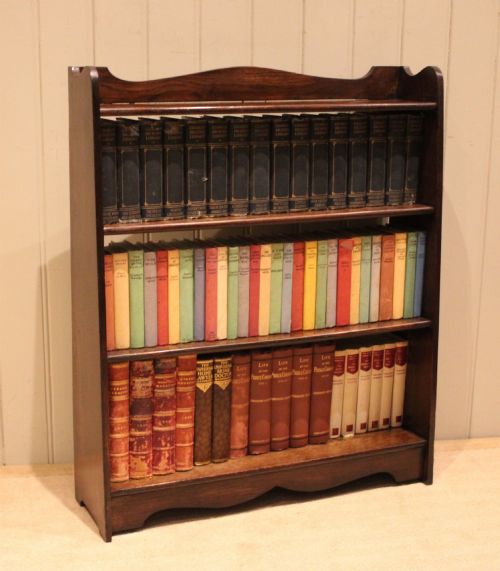
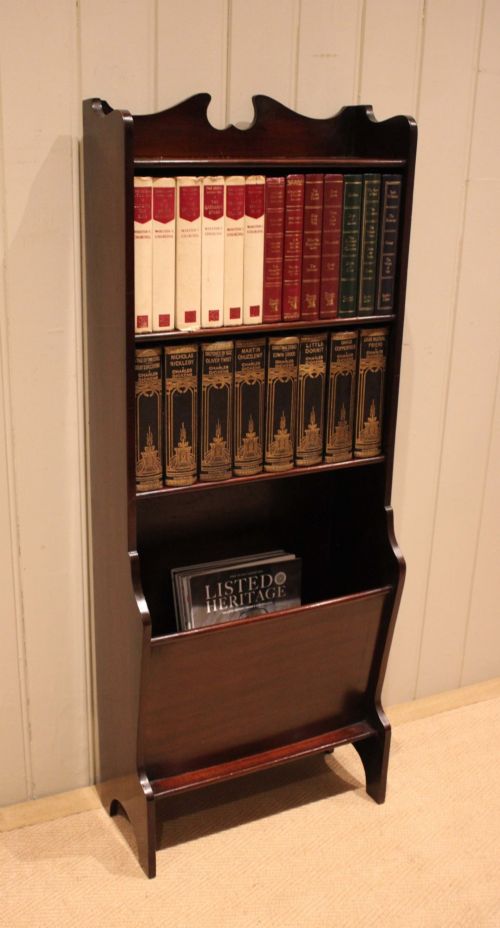
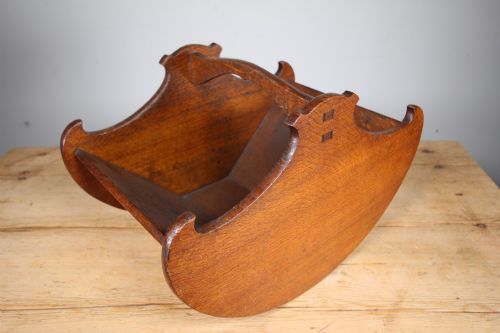
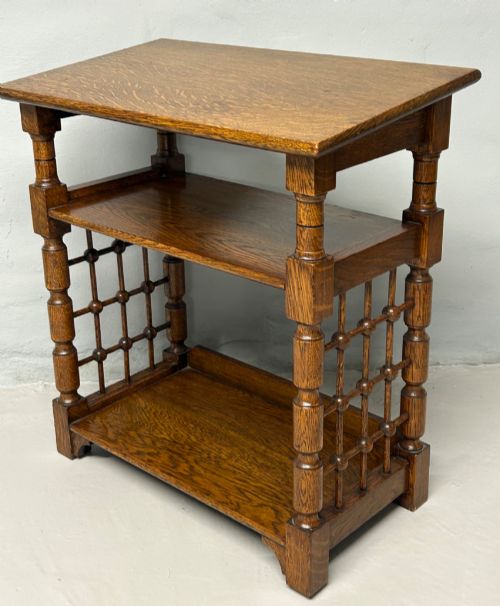
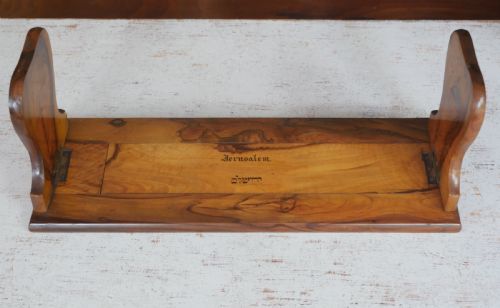
An antique book trough stand is a dedicated piece of furniture designed to hold, display, or transport books and magazines within domestic interiors. These items appear across the nineteenth and twentieth centuries, spanning periods from the Regency era through to the Edwardian period and the 1930s.
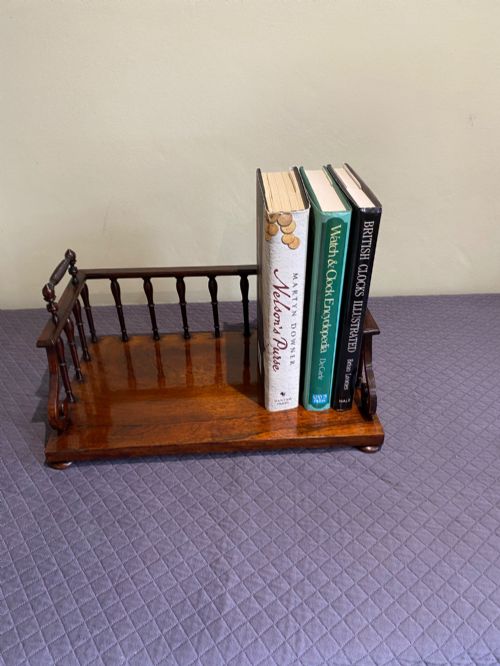
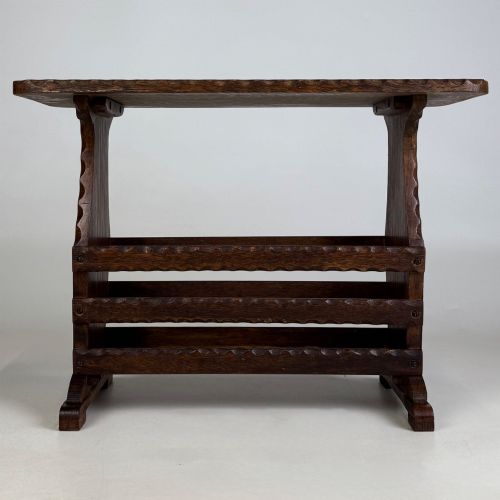
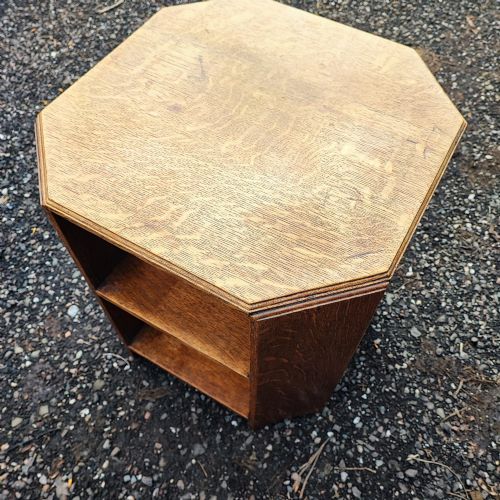
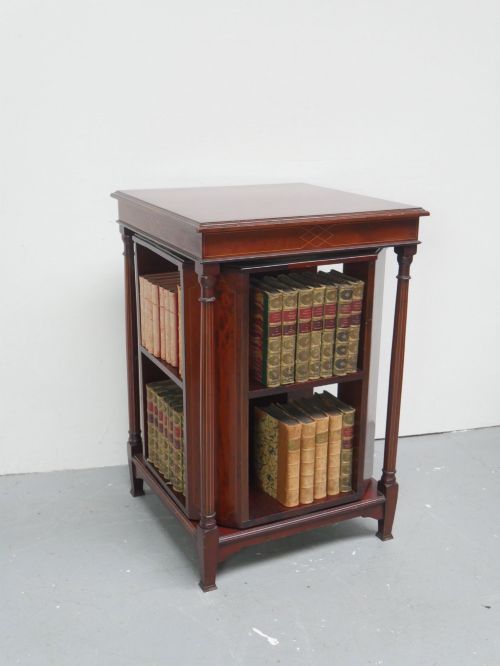
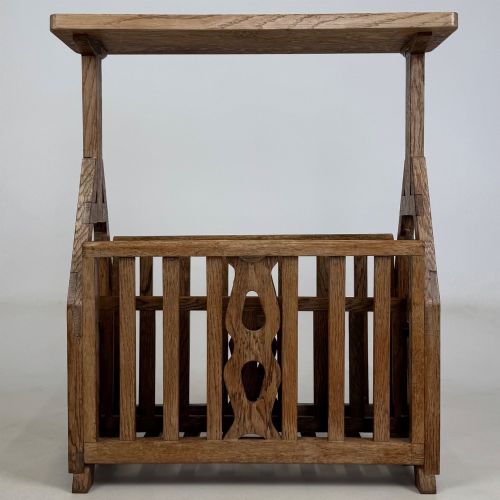
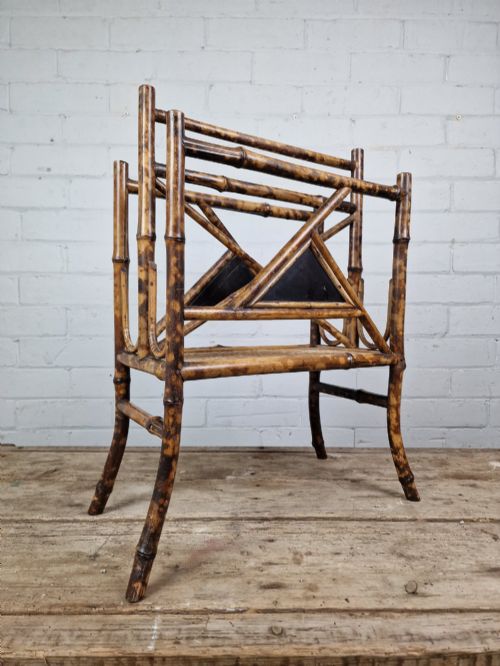
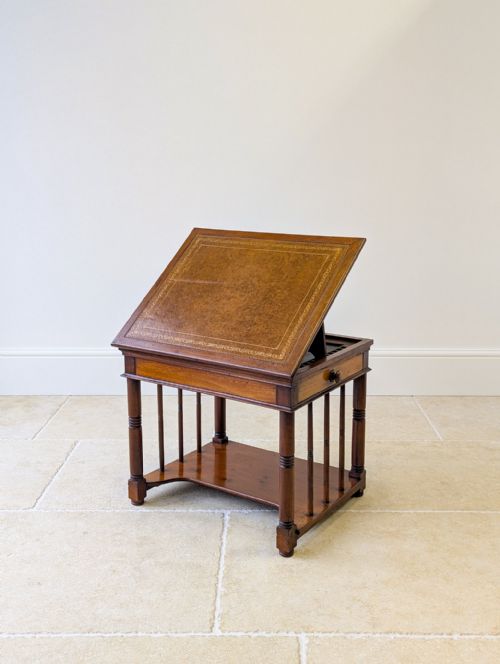
The form encompasses floor-standing troughs, table-top models, revolving bookcases, and combined side tables with magazine racks. Oak and mahogany dominate the selection, often accompanied by walnut, rosewood, and occasional ebonised wood or bamboo.
Buyers will most frequently encounter Edwardian and Victorian iterations, particularly those rendered in solid oak or inlaid mahogany reflecting Arts and Crafts or standard vernacular design.
How they were made
Cabinetmakers utilised durable hardwoods like oak, mahogany, and walnut to construct the primary bodies, employing solid timber and figured veneers depending on the workshop. Brass fittings frequently reinforced sliding book ends, hinges, and mounts.
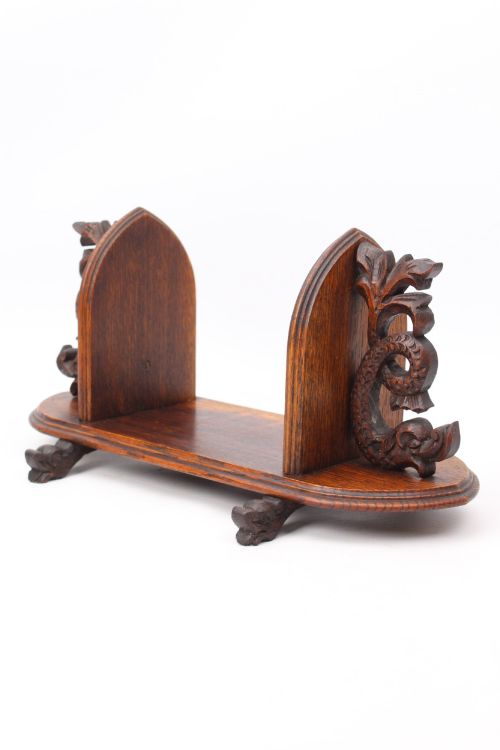
Decorative detailing involved inlaid woods, carved motifs typical of the Arts and Crafts movement, and specialised treatments such as ebonisation or pietra dura inserts. Joinery relied on traditional mortise and tenon methods alongside structural framing designed to support heavy volumes.
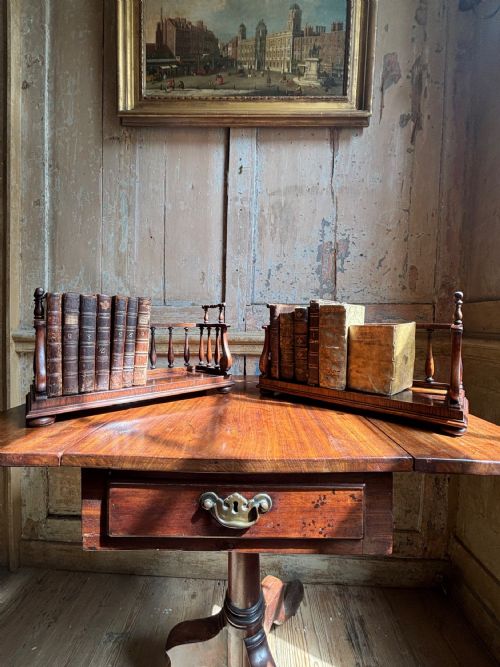
Miniature complete works of William Shakespeare come housed in their own dedicated micro-bookcase.
What varies in quality
Quality rests in the selection of timber grain, such as flame mahogany or quarter-sawn oak, and the precision of the joinery used in framing the trough. Cabinetmakers who incorporated thoughtful details like brass mounts, intricate inlay, or operable extending mechanisms elevated an everyday utility piece into fine furniture.
The integrity of the construction, from stable bases on floor-standing stands to smooth movement on revolving mechanisms or extending slides, separates standard production items from workshop-attributed examples.
Arthur Simpson·Betjemanns·Waring and Gillows
The Antique Book Trough Stand Glossary
- Book trough
- A V-shaped or open-sided rack designed to hold books upright or at a slight angle. They sit on tables or incorporate their own floor-standing legs.
- Book slide
- An extending desk accessory with adjustable ends, allowing volumes to remain upright as the number of books decreases or increases. These often feature brass mounts or decorative wooden bases.
- Canterbury
- A partitioned stand originally built for sheet music, frequently adapted to hold magazines and newspapers alongside books. They often feature carrying handles and lower drawer storage.
- Pietra dura
- An artistic technique using inlaid cut and fitted polished coloured stones to form images. This appears on specialised Victorian book slides.
- Arts and Crafts
- A design movement emphasising handcraftsmanship, simple structural forms, and vernacular materials. Oak is particularly common in pieces from this tradition.
Antique Book Trough Stand: Frequently Asked Questions
Where should I place a book trough stand?
Floor-standing models suit placement beside an armchair, a sofa, or within a home library to hold current reading material. Table-top versions sit comfortably on desks, sideboards, or occasional tables.
Ensure the piece rests out of direct sunlight to protect polished mahogany, walnut, or inlaid wooden surfaces from fading over time.
How do I care for antique wood?
Dust the timber regularly with a dry, soft cloth to prevent grit accumulation on carved or inlaid surfaces. Apply occasional quality beeswax to nourish the wood and maintain its natural lustre.
Avoid placing wooden stands near direct heat sources or damp environments, which can cause timber to warp or veneers to lift.
Can these stands support heavy volumes?
Most solid oak, mahogany, and walnut examples were built to carry heavy reference works, bound periodicals, and libraries of books. Sturdy framing and secure joinery enable them to bear substantial weight without structural strain.
Lighter constructions, such as bamboo or smaller decorative stands, are better suited to lighter paperbacks and magazines.