


Antique Bone Games
These antique bone games pieces bring tactile history to your table, offering miniature chess sets, cribbage boards, and dominoes carved over the past two centuries.
Antique Bone Games
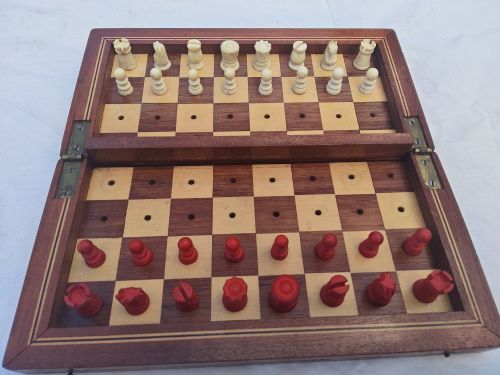
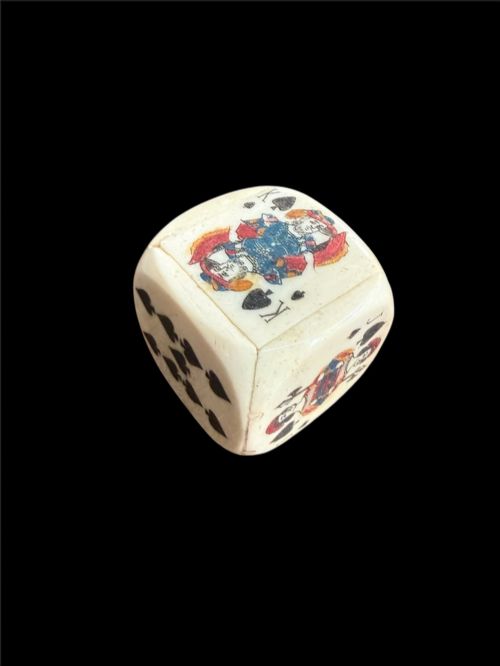
When you search for antique bone games, you are looking at tactile pastimes and pastimes equipment spanning from the nineteenth century into the twentieth. These items range from travelling chess sets and cribbage boards to boxed dominoes, dice shakers, and intricate prisoner of war pieces.
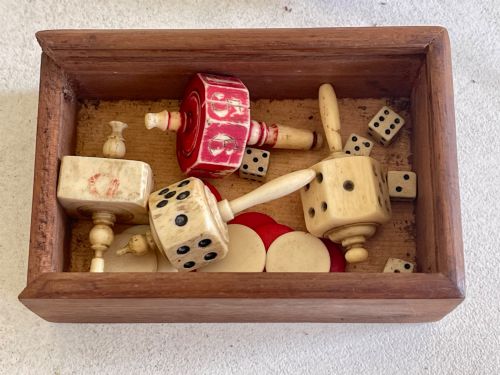
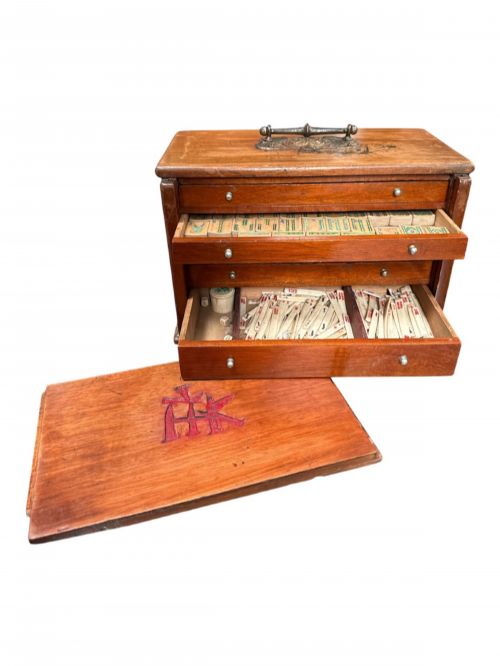
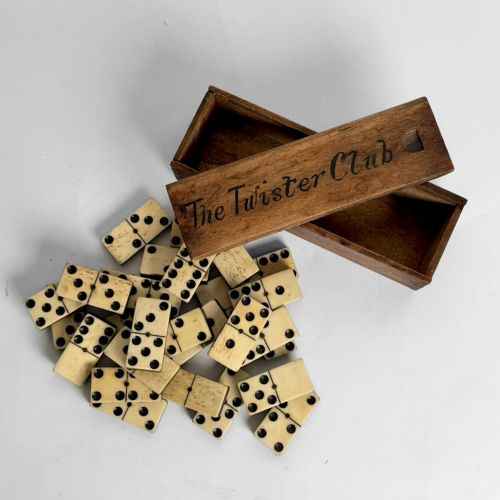
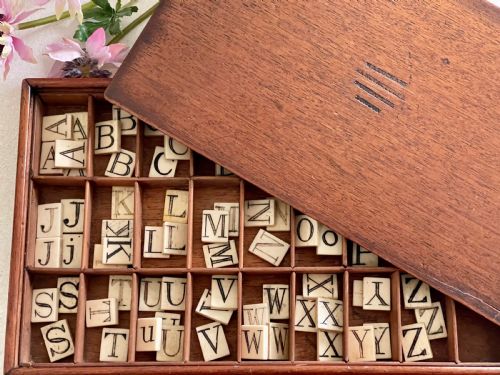
The most common versions on this page are nineteenth-century and Victorian bone domino sets, often housed in sliding wooden cases alongside miniature chess sets and cribbage boxes. You will also encounter specialised items like teetotums, mahjong sets, and oversized gaming counters.
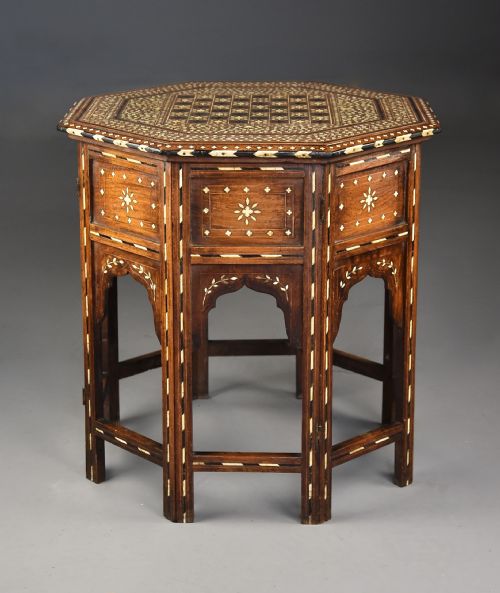
Origins vary widely across the selection, featuring English folk art, Anglo-Indian inlaid pieces, Syrian occasional tables, and Chinese regional sets. Materials extend beyond bone to include wood, brass, mahogany, walnut, rosewood, and ebony.
What varies in quality
The calibre of these objects rests in the crispness of the hand-carved detail and the preservation of the original bone surface. Finer examples display precise turning on miniature chess pieces and deeply incised numbering on dominoes rather than shallow, uneven markings.
Quality also shows in the construction of the accompanying containers, from simple wooden sliding boxes to fitted mahogany cribbage boxes and leather travelling cases. Well-preserved patination on both the bone and the surrounding timber marks a superior survival.
Captive hands carved tiny spinning tops and dominoes from scraps behind barracks walls, leaving us miniature games born of long hours.
The Antique Bone Games Glossary
- Teetotum
- A small spinning top used for gambling games, often carved from bone by nineteenth-century prisoners of war. These multi-sided tops feature letters or numbers on their faces.
- Cribbage board
- A board used to keep score in the card game cribbage, featuring rows of small drilled holes for pegs. Examples here are constructed from woods like mahogany and kingwood alongside bone.
- Treen
- Small handmade wooden household objects and utilitarian items, sometimes associated with nineteenth-century gaming counters and pots. The term covers turned and carved wooden pieces.
- Prisoner of war work
- Objects carved by detained soldiers, predominantly during the Napoleonic conflicts, utilising scrap bone and horn. These items include domino sets, boxes, and gaming pieces.
- Mahjong set
- A tile-based game originating in China, typically comprising bone and bamboo tiles housed in fitted wooden cabinets. Sets from Shanghai and regional makers appear in twentieth-century dates.
Antique Bone Games: Frequently Asked Questions
What are antique bone games?
These are historical gaming implements and sets, including chess pieces, dominoes, cribbage boards, and dice, carved primarily from bone during the nineteenth and early twentieth centuries.
They encompass utilitarian travel sets, folk art creations, and intricate prisoner of war pieces designed for domestic entertainment.
How were bone games used?
People used them for social pastimes and gambling, playing card games with cribbage boards, strategy games with chess sets, and matching games with dominoes.
Many portable sets were designed for travel, featuring compact wooden boxes or leather cases to keep small pieces secure on journeys.
How do I date antique bone games?
Dating relies on the style of the carving, the construction of the wooden boxes, and the materials used, with nineteenth-century pieces showing distinct hand-tooled characteristics.
Victorian, Edwardian, and early twentieth-century examples often carry specific stylistic markers like Whittington pattern chess sets or Hoshiarpur inlay work.
How should I care for bone items?
Keep bone objects away from direct sunlight and sudden temperature shifts to prevent the material from drying out and splitting over time.
Handle them gently with clean hands, and avoid using harsh chemical cleaning products on either the bone surface or the surrounding wooden cases.