



Antique Bohemian Drinking Glass
These antique bohemian drinking glass pieces bring rich colour and precise wheel-cut detail to the table, and collectors prize them for their striking visual weight.
Antique Bohemian Drinking Glass
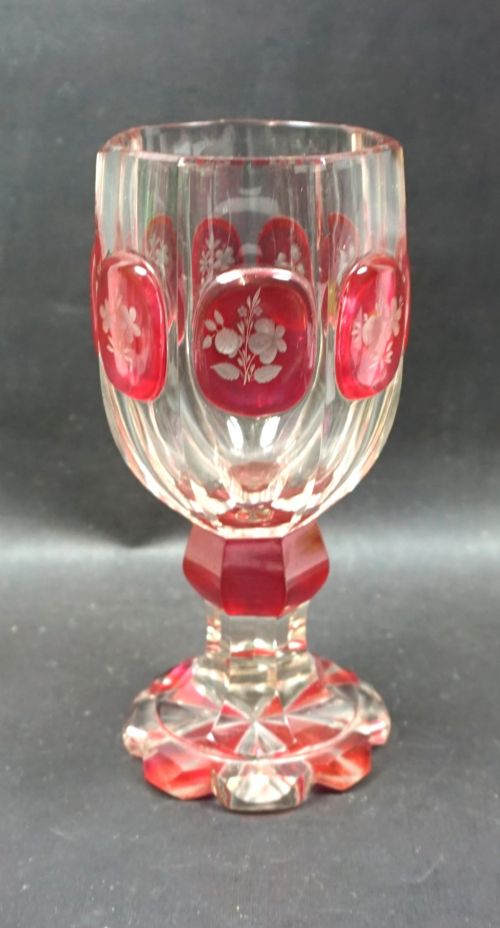
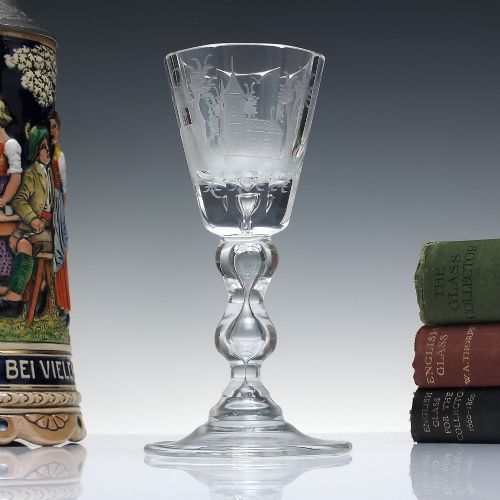
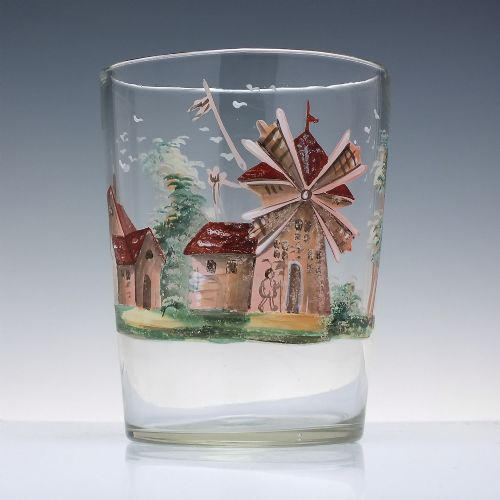
When searching for antique bohemian drinking glass, you are looking at European tableware spanning from the seventeenth century through to the art deco era, featuring distinct regional techniques and forms. The selection here leans heavily towards nineteenth-century Victorian pieces, including ruby flash glass, green cut wine glasses, and enamelled tumblers.
Forms range from simple tumblers and roemers to heavy triple-cased gilt goblets and complete drinks sets. Origins trace directly to Bohemian workshops, capturing centuries of skilled glassmaking traditions from the Georgian period onward.
How they were made
Glassmakers utilised clear and coloured glass, often applying ruby flash or layered cased techniques to build depth before cutting through the outer stratum. This method exposed the contrasting hues beneath, creating sharp geometric or pictorial designs.
Decoration relied heavily on intricate wheel engraving to carve floral and scroll motifs into the surface, alongside polychrome enamel and gilt details fixed by heat. Master craftsmen shaped goblets, roemers, and beakers by hand, resulting in robust forms with substantial tactile presence.
Antique Bohemian Drinking Glass Retail Price Guide 2026
Typical asking prices for bohemian drinking glass among the pieces listed under this phrase on Sellingantiques today, from the lower quarter to the upper quarter. They describe what is for sale here now, not the wider market.
The listings on this site show materials spanning clear glass, ruby flash, crystal, and enamel across Victorian and Biedermeier styles.
What varies in quality
The distinction between ordinary and exceptional work rests on the crispness of the wheel engraving and the depth of the glass layers. Superior examples display clean, deeply carved lines that catch the light precisely, whereas lesser pieces show shallow or blurred surface work.
Colour saturation and the precision of the enamel or gilt application also set the standard. Triple-cased pieces with complex colour strata demand greater technical mastery than single-layer vessels, elevating the overall achievement of the object.
Frits Heckert
The Antique Bohemian Drinking Glass Glossary
- Flash glass
- A thin layer of coloured glass applied over a colourless or contrasting base body before being cut away to reveal the underlayer. This technique creates high-contrast designs without the expense of solid coloured material.
- Roemer
- A traditional Germanic drinking vessel featuring a wide bowl sitting on a cylindrical stem decorated with applied prunts. It typically appears in shades of green glass.
- Cased glass
- A method where a glass vessel is formed from two or more distinct layers of different coloured glass fused together during blowing. It allows artisans to carve through multiple strata for polychromatic depth.
- Prunt
- A small, applied blob of molten glass melted onto the stem or base of a vessel to provide a secure grip and decorative texture. They are characteristic of traditional northern European glassware.
- Enamel
- Opaque or translucent powdered glass fused to the surface of a finished object through firing. It adds permanent surface colour and pictorial decoration.
Antique Bohemian Drinking Glass: Frequently Asked Questions
How do I date bohemian glassware?
Dating relies on matching the stylistic cues, colour palettes, and manufacturing techniques to known production periods like Biedermeier or Victorian.
Examining the depth of the cut, the formulation of the glass, and any archival signatures helps narrow the decade of origin.
Were these glasses used daily?
Many robust tumblers and roemers served functional roles on dining tables for wine and beer during the nineteenth century.
Heavily gilded or multi-cased goblets were often display pieces meant to showcase household wealth rather than regular service.
What is ruby flash glass?
Ruby flash glass consists of a clear glass core coated with a microscopically thin layer of gold-ruby glass.
Artisans then cut through this outer red skin using a polishing wheel to expose the clear glass beneath in decorative patterns.