
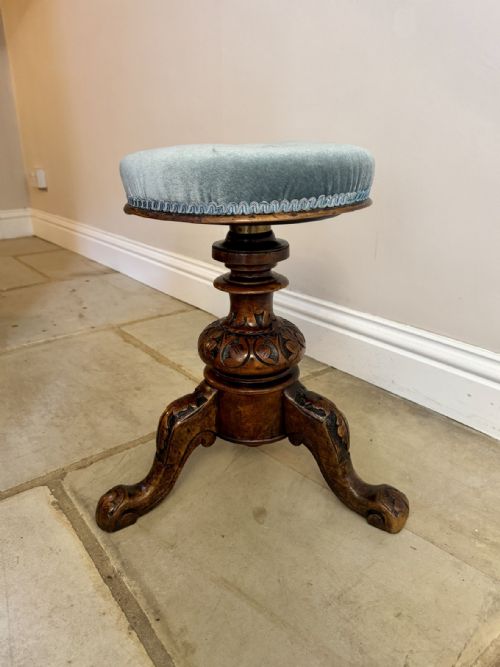


Antique Blue Velvet Seating
Antique blue velvet seating brings rich texture and historic forms into a room, offering everything from single bedroom chairs to matched sets for the dining table.
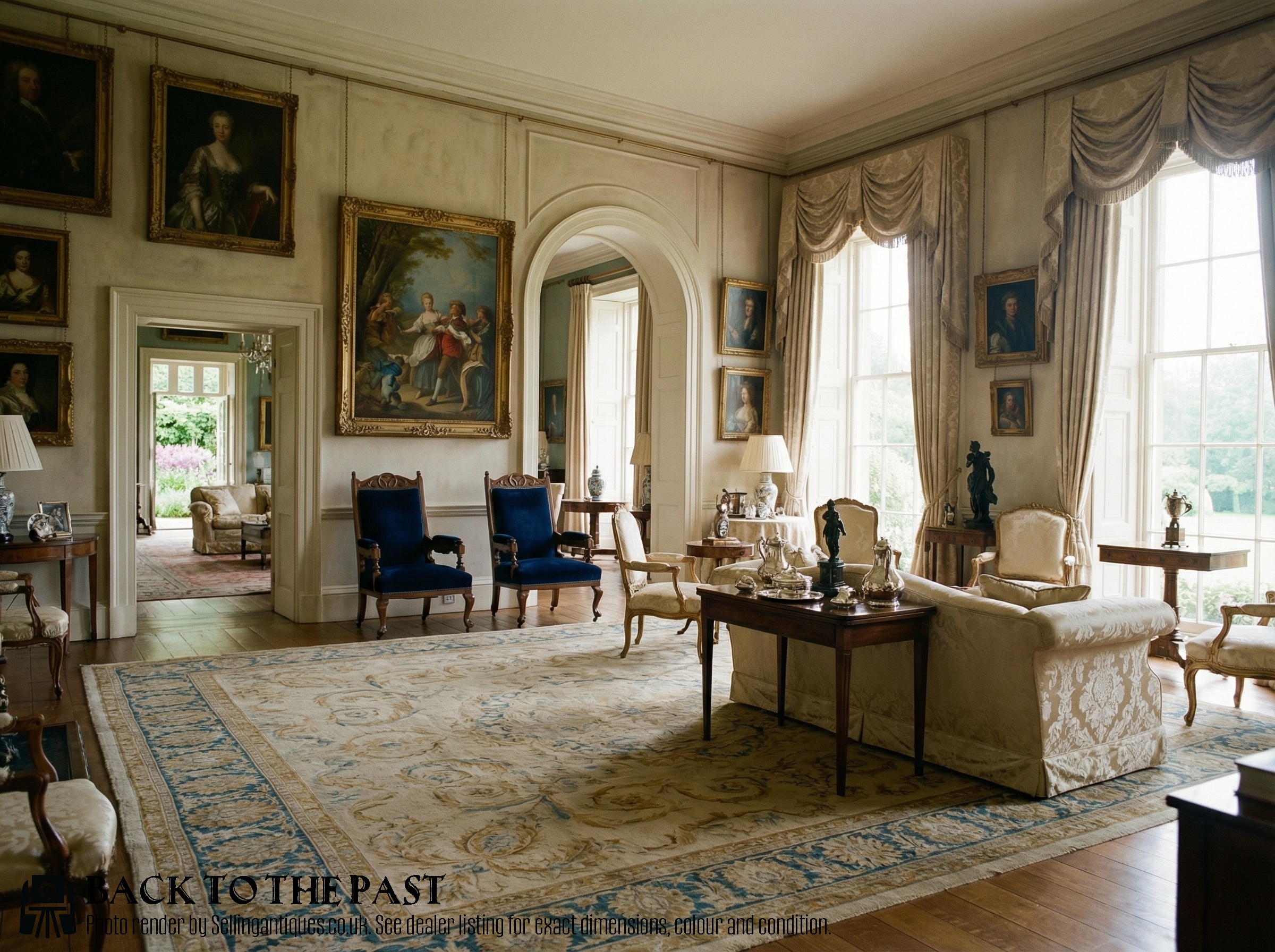
Antique Blue Velvet Seating
Antique blue velvet seating encompasses a broad variety of forms designed for comfort and reception across several centuries, ranging from compact stools and nursing chairs to expansive sofas, day beds, and large dining sets.
The pieces appearing on this page span the seventeenth century through to the early twentieth century, taking in Victorian, Edwardian, Regency, Louis XVI, and Jacobean Revival styles.
Frames are constructed from woods such as mahogany, walnut, rosewood, oak, ebonised wood, and giltwood, paired with blue velvet upholstery that frequently highlights period details like carved crests, turned legs, and tassel trims.
Materials and construction
Cabinet makers utilised dense hardwoods including mahogany, walnut, rosewood, and oak to build resilient frames that support the weight and tension of upholstered seating over generations.
Decorative elements involve intricate hand carving, giltwood applications, ebonised finishes, and turned legs, while upholstery relies on rich velvet fabric paired with traditional stuffing and trim details.
Joinery methods vary by period, from seventeenth-century Scottish joinery and Jacobean Revival framing to nineteenth-century sprung seats and nineteenth-century X-frame constructions.
Listings feature eighteenth-century, nineteenth-century, and early twentieth-century pieces, spanning the Victorian, Edwardian, and Regency eras.
What separates the finest examples
The distinction between standard and superior pieces rests on the crispness of the timber carving, the integrity of the frame construction, and the harmony between the wood and the blue velvet upholstery.
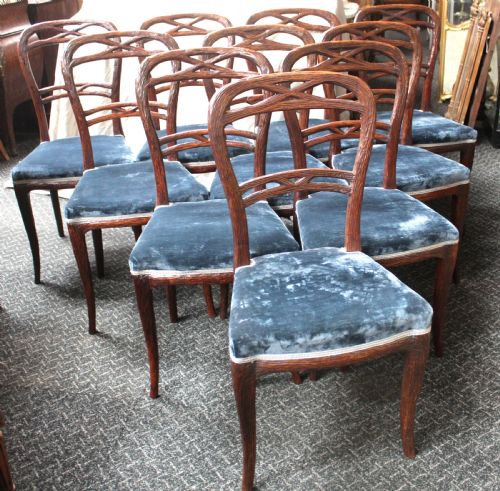
Original matching sets, such as dining chairs or pairs of armchairs, command greater interest than assembled groups because the proportion and timber grain remain consistent across every piece.
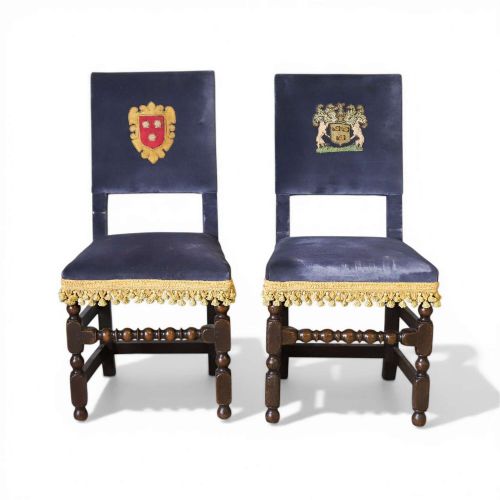
The pedigree of the maker or the specific regional style - such as Scottish armorial clan chairs or documented workshop pieces - elevates the historical significance of the furniture.
Liberty·Holland & Son
The Antique Blue Velvet Seating Glossary
- Fauteuil
- An open-framed armchair with upholstered armrests originating in France, typically featuring exposed carved wood.
- Giltwood
- Timber treated with gold leaf or gold paint to create a brilliant decorative surface, common in Louis XVI style seating.
- Ottoman
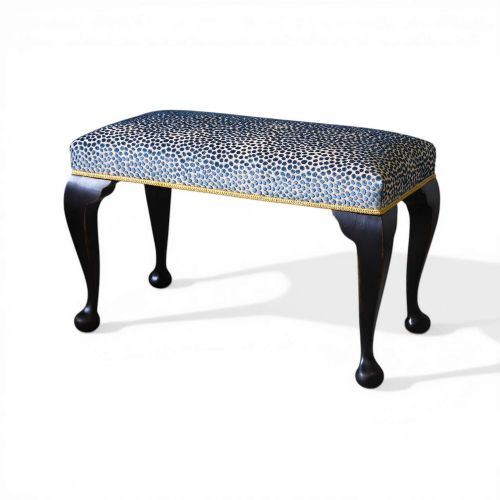
- A padded seat or bench without a back or arms, often designed with deep upholstery and large proportions.
- Ebonised wood
- Timber stained or painted black to imitate ebony, a technique favoured during the Victorian and Aesthetic periods.
- Armorial
- Bearing a heraldic crest or coat of arms, frequently carved into the woodwork of high-status historic chairs.
Antique Blue Velvet Seating: Frequently Asked Questions
How do I clean antique velvet?
Velvet requires gentle brushing with a soft-bristled brush to lift the pile and remove surface dust without crushing the fibres.
Moisture and harsh cleaning agents should be avoided to prevent permanent water marking on historical pile fabrics.
Are these chairs suitable for daily dining?
Many dining chairs from the Victorian and Edwardian periods are structurally robust enough for regular use around a table.
Sets must be assessed individually for joint stability and frame strength before committing them to heavy everyday dining.
What is a nursing chair?
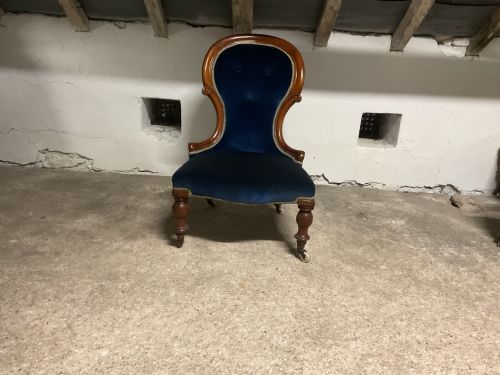
A nursing chair is a low-seated Victorian chair designed originally to allow a mother to feed or tend to an infant comfortably.
The shortened legs and supportive back make them exceptionally functional as low lounge seating in modern bedrooms.
How do I identify a Louis XVI style chair?
Louis XVI style seating is distinguished by neoclassical restraint, featuring straight fluted legs, carved oval or rectangular backs, and symmetrical ornamentation.
Nineteenth-century interpretations of this style apply these classical French motifs to walnut or giltwood frames upholstered in rich velvet.