


Antique Blue Velvet Box
These antique blue velvet box pieces offer tactile charm and period elegance, serving as functional containers or decorative furnishings.
Antique Blue Velvet Box
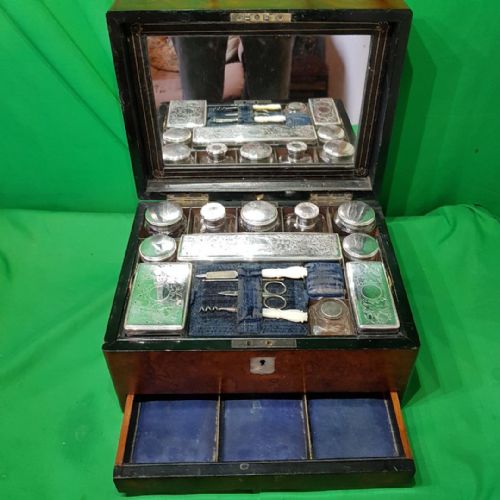
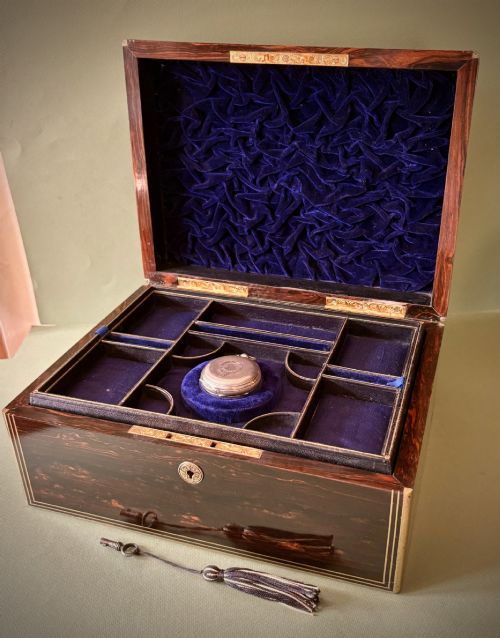
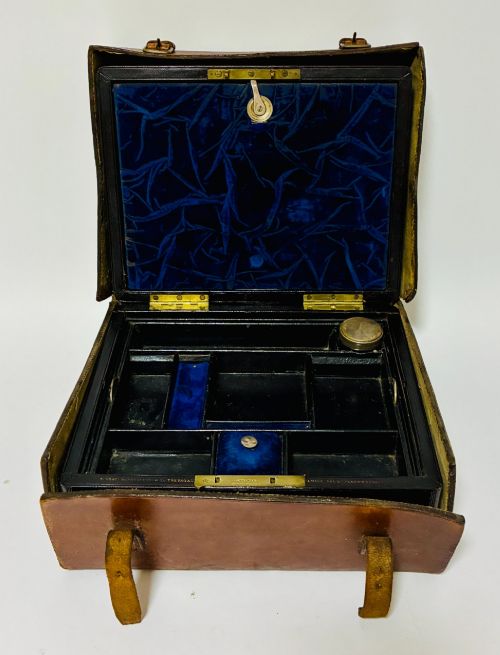
An antique blue velvet box encompasses several functional forms, spanning travelling sets, jewellery boxes, dressing cases, and display tables. When searching for an antique blue velvet box, buyers encounter items dating from the nineteenth and early twentieth centuries.
The recorded periods include Victorian, Edwardian, and Regency examples, alongside specific years like 1860, 1870, 1900, 1910, and 1930. Forms range from fitted vanity boxes and scientific instrument cases to presentation boxes and spoon boxes.
Objects often incorporate compartments, brass mounts, glass inserts, and silver or silver-plated elements. These containers reflect the domestic and personal habits of past eras, serving both utility and display.
How they were made
Carpenters and cabinet makers utilised timber carcasses fashioned from rosewood, mahogany, burr walnut, and kingwood. These wooden structures provided sturdy foundations for the exterior coverings and internal compartments.
Velvet fabric formed the tactile lining or exterior upholstery, frequently paired with brass hardware, glass components, and silver hallmarks. Craftspeople fitted interior trays, mirrors, and utensil slots by hand to secure jewellery, instruments, or cutlery.
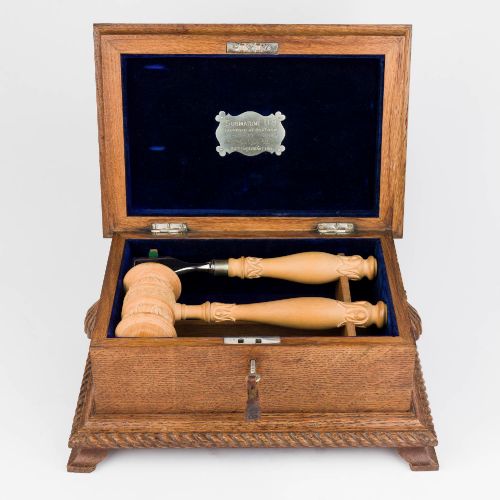
A launch casket built for a Royal Navy submarine proves that even maritime warfare occasionally required plush blue velvet padding.
What varies in quality
The selection of cabinet timbers and the precision of the joinery define the standard of construction. Burr walnut, rosewood, and kingwood veneers demonstrate higher ambition than plain secondary woods.
Internal fittings, original silver hardware, and Maker-marked components elevate an example. The retention of original velvet linings and functional locking mechanisms also distinguishes superior pieces.
F. West·H. Matthews
The Antique Blue Velvet Box Glossary
- Burr walnut
- A figured timber harvested from walnut tree growths, valued for its swirling grain patterns on Victorian boxes.
- Dressing case
- A fitted box containing compartments for cosmetics, brushes, and personal grooming tools.
- Bijouterie table
- A glass-topped display table designed to showcase small decorative objects and jewellery.
- Kingwood
- A dense, richly coloured exotic timber often utilised for high-status nineteenth-century boxes.
- Hallmark
- An official stamp applied to silver components, indicating purity, maker, and assay office.
Antique Blue Velvet Box: Frequently Asked Questions
What were antique blue velvet boxes used for?
These boxes served multiple domestic and personal purposes, ranging from storing precious jewellery to housing travelling dressing sets and scientific instruments.
Owners utilised them for daily grooming, safekeeping valuables, or displaying decorative curiosities within period interiors.
How do I date an antique blue velvet box?
Dating relies upon examining the timber species, construction techniques, hardware styles, and any accompanying silver hallmarks.
Victorian, Edwardian, and Regency pieces each exhibit distinct joinery methods and aesthetic preferences characteristic of their specific eras.
Are the velvet linings usually original?
Velvet linings survive in varying states of preservation, reflecting the frequency of use and environmental conditions over the decades.
Original textiles show authentic signs of age, whereas replacements generally appear cleaner and less faded than the surrounding woodwork.
How should I care for an antique box?
Preservation involves maintaining stable indoor humidity and keeping wooden surfaces away from direct sunlight to prevent timber splitting.
Velvet textiles benefit from gentle dusting with a soft brush, avoiding chemical cleaners or excessive moisture.