


Engraved Silver Glass Jar
An engraved silver glass jar brings the meticulous craftsmanship of the nineteenth and twentieth centuries straight to your dressing table or sideboard.
Engraved Silver Glass Jar
When you search for an engraved silver glass jar, you are looking at hollowware and vanity pieces that combine heavy glass bodies with worked metal lids and mounts. The examples you encounter on this page span the nineteenth century and the Edwardian era, taking forms such as trinket boxes, vanity jars, biscuit barrels, and scent bottles.
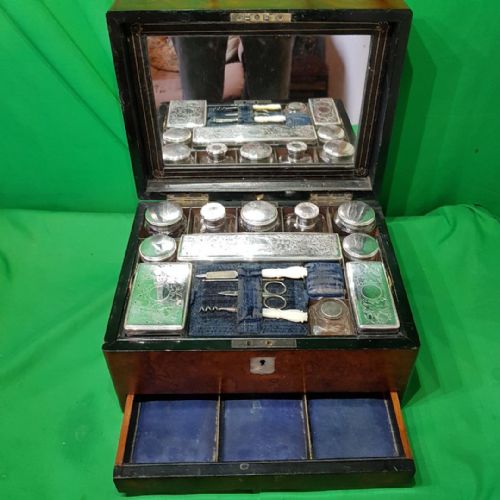
The glass elements range from plain vessels to deeply cut crystal and amethyst glass, whilst the metal portions utilise sterling silver, silver plate, and silver gilt. Many items originate from domestic makers and retailers, occasionally paired with fitted travel cases in burr walnut or lined with velvet.
Most pieces date from the Victorian period, reflecting a time when dressing table sets and dining accessories demanded elaborate metalwork and robust glass. You will also find Georgian style pieces and later Edwardian designs that continue the tradition of combining cut glass with chased or engraved silver.
Materials and construction
The manufacture of these pieces required close collaboration between glasscutters and silversmiths. Glass bodies were blown and frequently heavy-cut or moulded to catch the light, while mounts and lids were fashioned from solid sterling silver or plated metal.
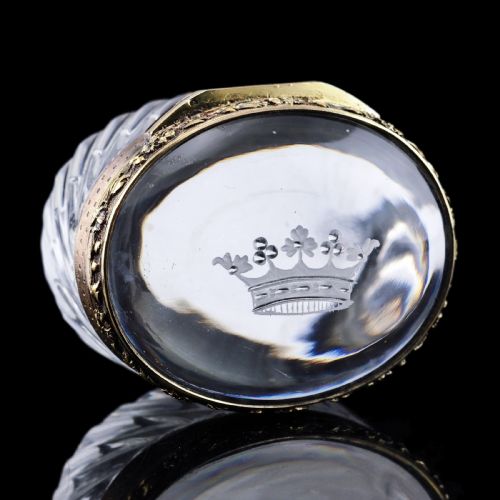
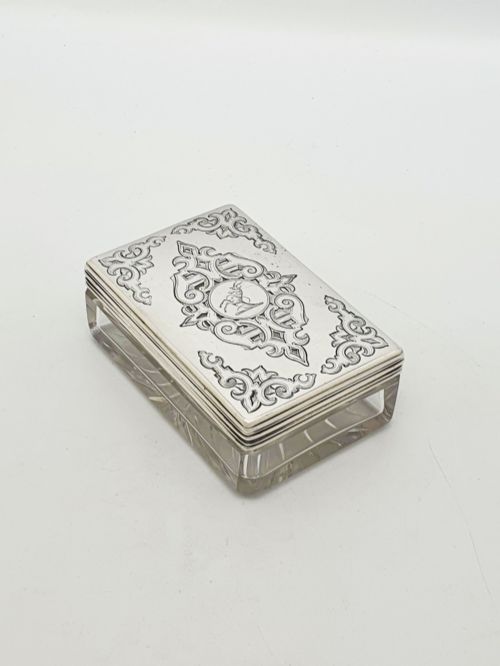
Engraving and chasing upon the silver lids demanded steady hands to carve floral, geometric, or heraldic motifs into the metal. Silver gilt mounts involved applying a thin layer of gold over silver, creating a rich two-tone effect seen on French and British vanity boxes.
Heraldic dragon finials atop Victorian biscuit barrels ensure your dry snacks are guarded by mythical beasts.
Judging quality in silver and glass
Quality rests upon the weight and clarity of the glass and the crispness of the metalwork. Heavy cut crystal and thick-walled amethyst glass indicate superior vessels, whereas lighter moulded glass sits at the accessible end of the scale.
The depth and detail of the engraving on the silver lid separate standard production from finer workshop output. Crisp hallmarks, substantial gauge silver mounts, and well-fitted hinges demonstrate that a piece received greater attention during its creation.
Walker & Hall
The Engraved Silver Glass Jar Glossary
- Sterling silver
- An alloy consisting of ninety-two point five percent silver and seven point five percent other metals, typically copper. This standard composition is marked by British assay offices to guarantee purity.
- Silver gilt
- Sterling silver that has been coated with a thin layer of gold on its surface. This technique imparts a warm golden sheen to the interior or exterior of mounts.
- Cut crystal
- Glass containing lead oxide, which increases its weight, brilliance, and refractive index. Artisans cut geometric or floral patterns into the surface using rotating wheels.
- Biscuit barrel
- A covered ceramic or glass container designed for storing biscuits on the dining table. They frequently feature swing handles and matching silver plated or solid silver rims.
- Vanity jar
- A small container used for holding cosmetics, creams, or hair pins on a dressing table. They generally feature a removable or hinged silver lid.
Engraved Silver Glass Jar: Frequently Asked Questions
What were glass jars with silver lids used for?
These vessels served various domestic purposes, from storing biscuits on the dining table to holding powders, pins, and cosmetics on dressing tables. Many formed part of larger fitted travelling sets or extensive dressing table services.
Their sturdy construction allowed them to withstand daily use in prosperous nineteenth-century households while presenting an ornamental face to visitors and family alike.
How do I date a silver mounted glass jar?
Dating relies primarily on the hallmarks stamped into the silver mounts, which indicate the assay office, date letter, and maker's mark. Stylistic clues such as the cut of the glass and the form of the lid also help narrow down the decade of production.
Victorian pieces often display elaborate floral engraving, whilst later Edwardian and Art Deco examples favour cleaner geometric lines and simpler symmetry.
Are silver plate and sterling silver marked differently?
Solid sterling silver pieces carry official assay office hallmarks, including a lion passant in British items to denote the silver standard. Silver plated items instead bear manufacturer marks, trade names, or stamps indicating electroplate.
Recognising these stamps ensures you understand the underlying metal composition of the lid and mounts before acquiring a piece.
How should I clean the silver and glass?
Cleaning requires separating the silver components from the glass where possible to prevent harsh polishes from damaging the crystal or coloured glass body. Use a soft cloth and a dedicated silver cleaner gently on the metal mounts, avoiding contact with any cemented joints.
Warm soapy water suffices for washing the glass, followed by thorough drying to prevent water spots from clouding the cut surfaces.