






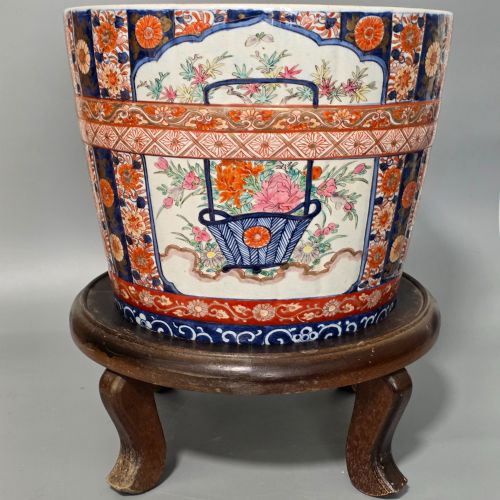


Antique Blue Jardiniere
An antique blue jardiniere brings sculptural plant display indoors, uniting rich cobalt pigments with robust ceramic bodies.
Antique Blue Jardiniere
An antique blue jardiniere serves as a decorative pot designed to hold indoor plants and flower displays. These vessels appear in forms ranging from compact table bowls to substantial floor-standing planters paired with matching pedestals.
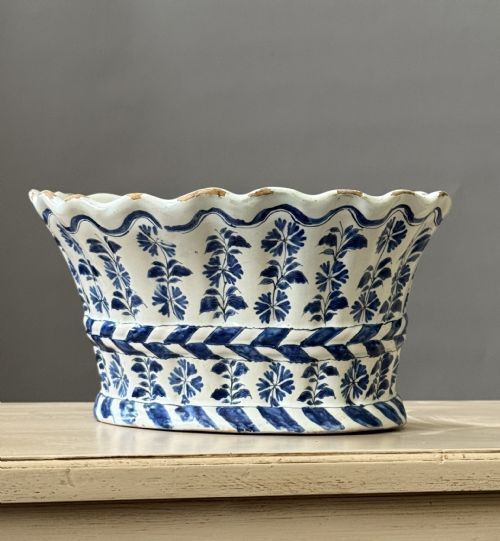
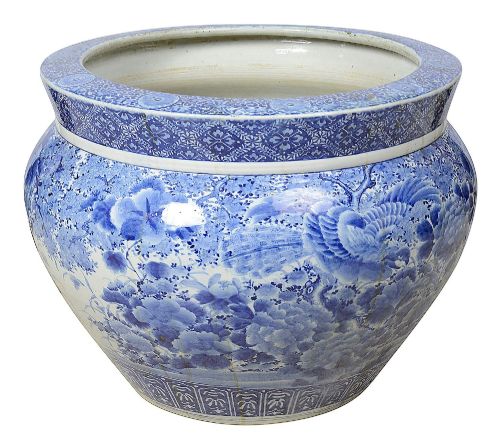
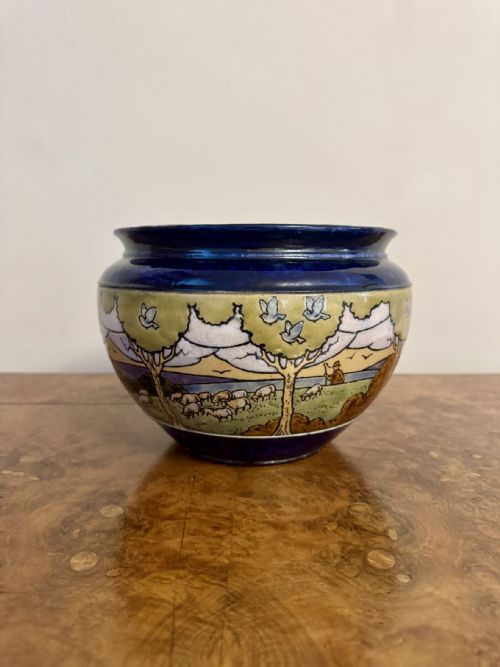
The pieces on this page span the eighteenth, nineteenth, and early twentieth centuries, originating from English potteries, French workshops, and Asian kilns. Domestic English examples share space with Japanese Imari porcelain and Chinese blue and white fish bowls.
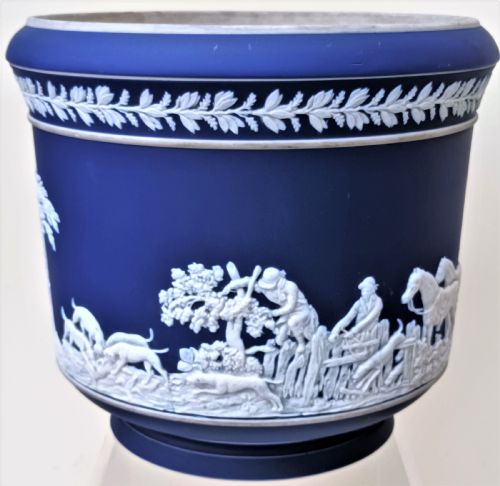
Buyers encounter distinct regional traditions, such as Victorian jasperware, majolica, and Delftware. Each style applies characteristic blue decoration to earthenware, stoneware, or porcelain bodies.
Materials and production methods
Potters shaped these vessels using clay bodies including earthenware, dense stoneware, and translucent porcelain, occasionally incorporating cast iron or bronze. Artisans applied cobalt blue pigments beneath or over the glaze to achieve deep tonal contrasts during firing.
Techniques varied from hand-thrown bodies to mould-pressed relief decoration, as seen in jasperware and majolica wares. Glazing processes created glossy, crackle, or salt-glazed surfaces designed to withstand moisture from planted roots.
Antique Blue Jardiniere Retail Price Guide 2026
Typical asking prices for blue jardiniere among the pieces listed under this phrase on Sellingantiques today, from the lower quarter to the upper quarter. They describe what is for sale here now, not the wider market.
Listings feature periods spanning from the early eighteenth century through to the early twentieth century, utilising porcelain, stoneware, earthenware, and bronze.
Evaluating craftsmanship and design
Quality rests upon the crispness of moulded relief work, the depth of the cobalt pigment, and the uniformity of the glaze. Master potteries achieved sharper botanical or geometric detailing and smoother surface finishes.
The presence of matching stands, original liners, and distinct maker marks elevates a piece. Finer examples display balanced proportions and sophisticated hand-painted motifs rather than flat, mechanical transfer printing.
Royal Doulton·Doulton Lambeth·Doulton Burslem·William Adams and Sons·Burmantofts Art Pottery·Clement Massier·George Jones·Royal Worcester·Royal Crown Derby·Coalport
The Antique Blue Jardiniere Glossary
- Jardiniere
- A large ornamental pot or bowl used for holding flowers or potted plants. The term derives from the French word for gardener.
- Jasperware
- A type of fine stoneware developed by Josiah Wedgwood featuring white raised ornamentation against a coloured background, commonly blue. It requires precise chemical control during kiln firing.
- Imari
- A style of Japanese porcelain decorated in underglaze blue and overglaze red, gold, and green. Export wares reached Europe in large quantities from the Edo period onward.
- Majolica
- A heavy earthenware pottery covered with an opaque lead glaze containing tin oxide. This technique produces vibrant coloured surfaces popular during the Victorian era.
- Bough pot
- An early vessel designed specifically to hold cut flowering branches for interior decoration. These often feature pierced lids to keep stems upright.
Antique Blue Jardiniere: Frequently Asked Questions
What is the difference between a jardiniere and a plant pot?
A jardiniere is an ornamental container traditionally meant to display a potted plant rather than holding soil directly. It often sits in a prominent interior space as a decorative centrepiece.
Standard plant pots prioritise utility and drainage holes, whereas antique jardinieres frequently lack drainage and require an inner liner or saucer to protect surfaces.
How do I care for an antique ceramic jardiniere?
Dust the surface regularly with a soft cloth and avoid harsh chemical cleaners that might damage historical glazes. Protect the interior by placing a modern plastic pot inside rather than planting directly into the vessel.
Keep the piece away from direct heat sources and sudden temperature shifts to prevent stress on the ceramic body or historic glazes.
Did these pieces always come with stands?
Larger floor-standing examples often included matching ceramic pedestals or associated hardwood stands to elevate the vessel. Tabletop models were designed to stand directly on furniture without extra supports.
When a jardiniere retains its original or period stand, it represents a complete set that enhances the overall silhouette and presence of the piece.
How can I tell the period of a blue and white jardiniere?
Examine the base for maker marks, registration numbers, or impressed factory stamps that provide dating clues. Stylistic details, such as Victorian neoclassical motifs or Japanese Meiji period painting styles, also point to specific eras.
The weight, texture of the clay body, and characteristics of the glaze help distinguish eighteenth-century wares from later nineteenth and twentieth-century productions.