
Antique Blue Glass
Antique blue glass brings deep cobalt, opalescent, and iridescent tones into domestic spaces through items shaped across the eighteenth, nineteenth, and early twentieth centuries.
Antique Blue Glass
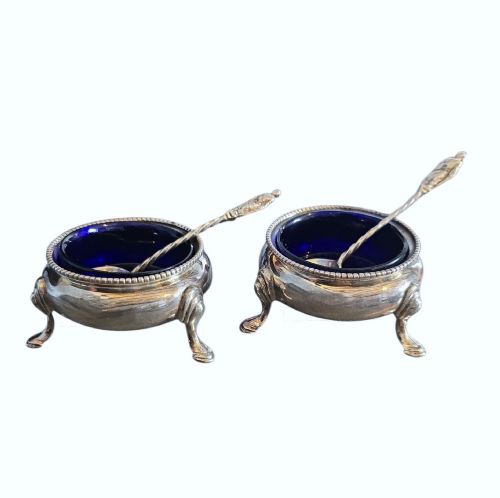
When searching for antique blue glass, collectors encounter domestic vessels and decorative containers spanning the Georgian, Victorian, Edwardian, and Art Deco periods. These pieces include table decanters, salt cellars, vanity jars, scent bottles, and drinking vessels formed in various shades of blue.
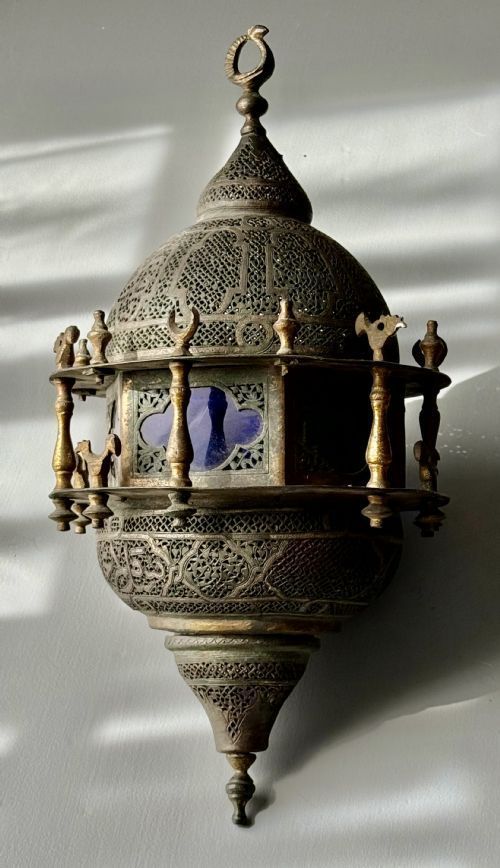
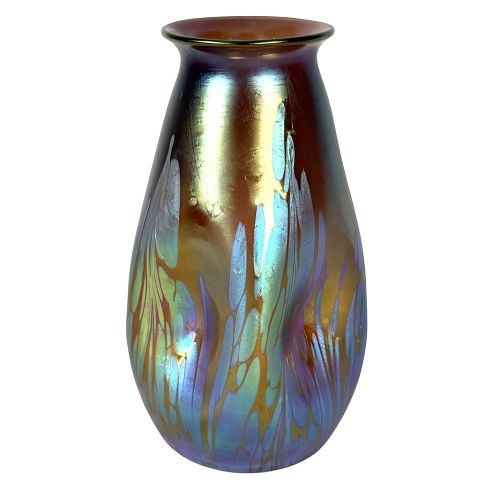
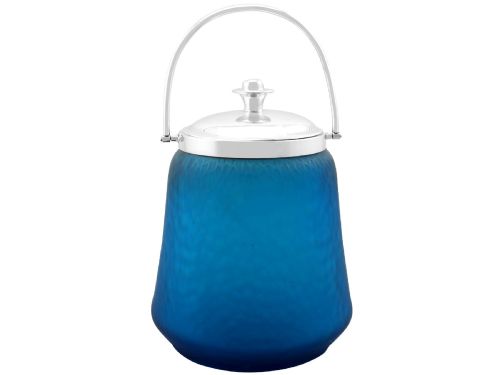
The objects found here range from functional dining table accessories fitted with sterling silver mounts to independent art glass vases from European makers. Items often combine deep cobalt or pale opalescent hues with brass, silver, or enamel work characteristic of their respective eras.
Victorian and Georgian examples frequently feature rich Bristol blue tones applied to decanters and cream jugs, while later twentieth-century pieces shift towards iridescent and opalescent finishes. Each piece represents the prevailing domestic tastes and glass-working methods of its specific decade of origin.
How they were made
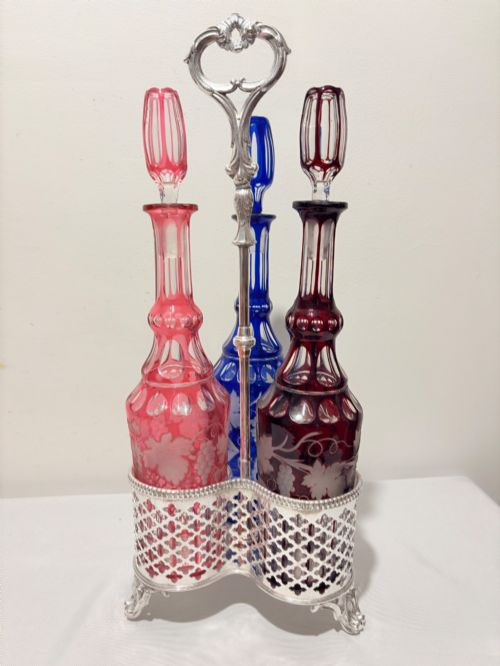
Makers produced these items using blown or moulded glass techniques, frequently incorporating metallic oxides to achieve deep cobalt and turquoise colourations. Artisans then shaped the molten material into vessels such as three-ring decanters, vases, and small jars.
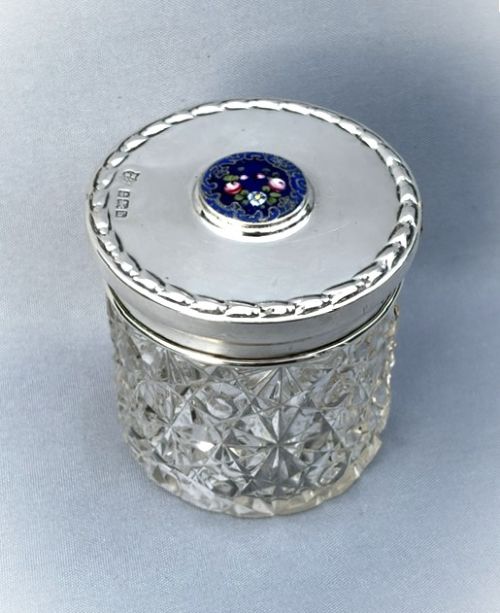
Many glass bodies received secondary treatment through metal mounting, where silversmiths added sterling silver collars, pierced frames, or hinged lids. Enamel decoration and applied brass frameworks also appear on specific nineteenth and twentieth-century items.
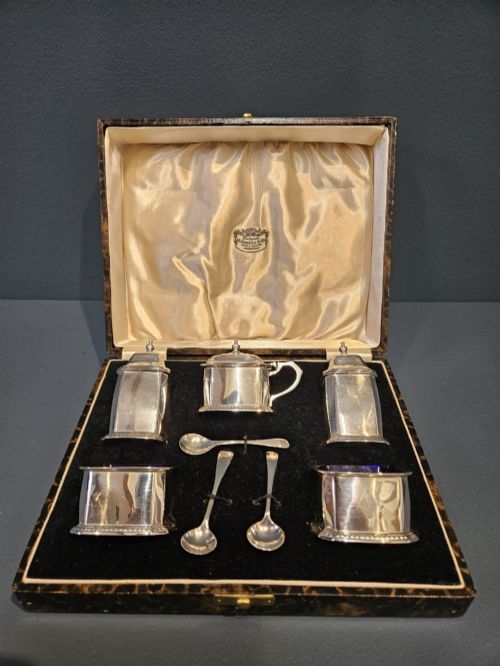
Several Victorian pieces include tiny silver spoons intended precisely for measuring out grains of salt from deep blue glass liners.
What varies in quality
Quality in these objects rests upon the clarity of the glass matrix and the precision of any associated metalwork. Finer pieces demonstrate consistent colour saturation without internal bubbles or cloudiness, alongside crisp moulding or hand-blown profiles.
The integration between the glass vessel and its metal mountings also defines the standard of the piece. Superior examples feature hallmarked sterling silver or finely chased brass mounts that fit the glass body without movement or excessive solder.
Loetz·Henry Clifford Davis·R Lalique·Daum Frères
The Antique Blue Glass Glossary
- Bristol blue
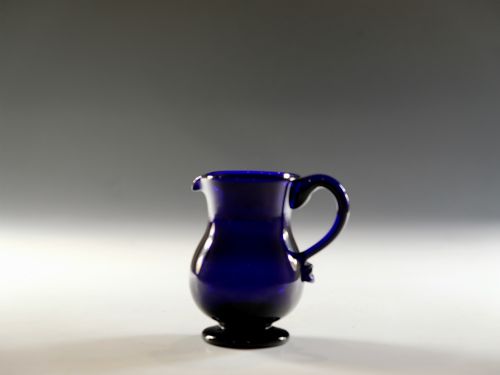
- A deep cobalt glass colour historically associated with English glasshouses around the Bristol area during the eighteenth and nineteenth centuries. This intense hue often appears on decanters, cream jugs, and finger bowls.
- Opalescent glass
- A translucent glass type that displays milky blue or white highlights when lit from the front and amber tones when lit from behind. It gained popularity during the late nineteenth and Art Deco periods.
- Decanter
- A vessel designed for holding and serving wine or spirits, typically fitted with a stopper. In blue glass, these often feature multiple applied rings around the neck.
- Guilloche enamel
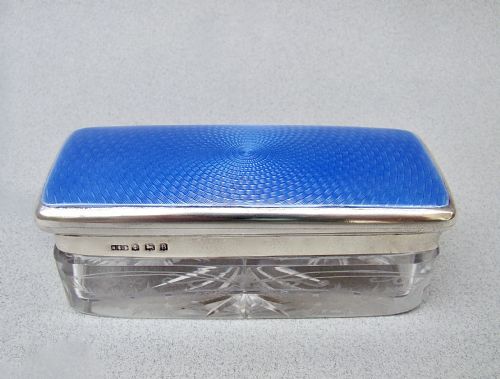
- A decorative technique where engine-turned metal is covered with transparent enamel, frequently found on the lids of twentieth-century vanity jars and dressing table sets.
- Iridescent glass
- Glass treated with metallic vapours while hot to produce a rainbow sheen across the surface. This effect characterises many Art Deco and turn-of-the-century European vases.
Antique Blue Glass: Frequently Asked Questions
What is Bristol blue glass?
Bristol blue refers to a deep, vibrant cobalt colour produced by English glassmakers from the Georgian era onwards. It gained fame through its use on utilitarian drinking vessels and spirits decanters.
Genuine pieces often display heavy lead content and hand-blown characteristics rather than uniform modern machine production.
How can I date my blue glass?
Examine the base for pontil marks, wear patterns, and manufacturing seams that indicate whether the piece was hand-blown or machine-moulded. Associated silver hallmarks or metal mounts often provide exact assay years.
Stylistic indicators such as Art Deco geometric forms or Victorian floral chased mounts help narrow down the decade of production.
Where were these glass pieces made?
Production centres spanned across Britain, France, Bohemia, and Austria during the nineteenth and early twentieth centuries. Specific regions specialised in distinct styles, such as Bohemian enameled wares or French opalescent vessels.
Maker signatures or country-of-origin stamps on the base or mounts help identify the exact regional origin.