
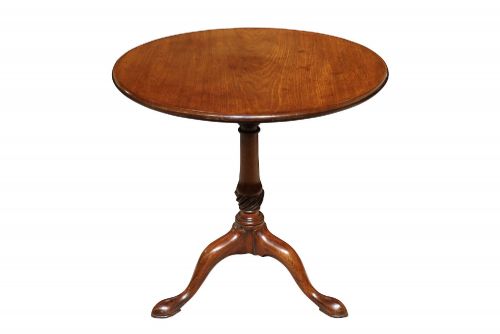

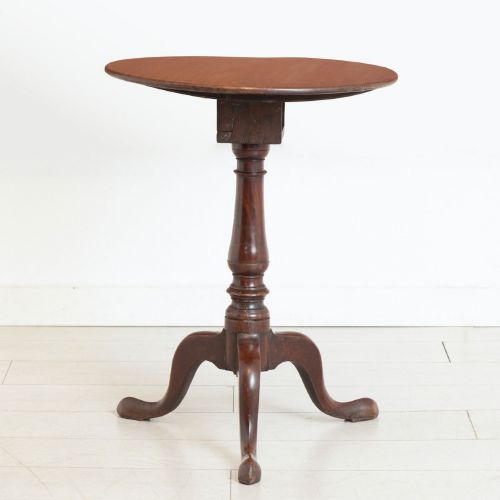


Antique Birdcage Table
An antique birdcage table combines a pivoting tilt-top mechanism with a revolving wooden cage block beneath, built for practical multi-use living.
Antique Birdcage Table
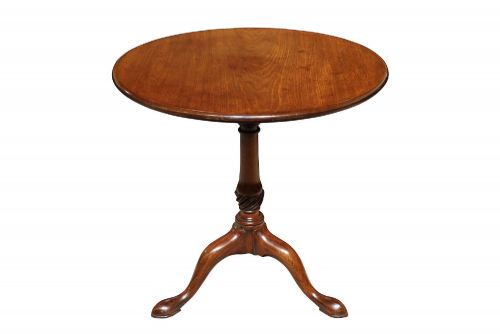
The antique birdcage table is primarily represented by tripod forms originating in the eighteenth century during the Georgian and George III periods.
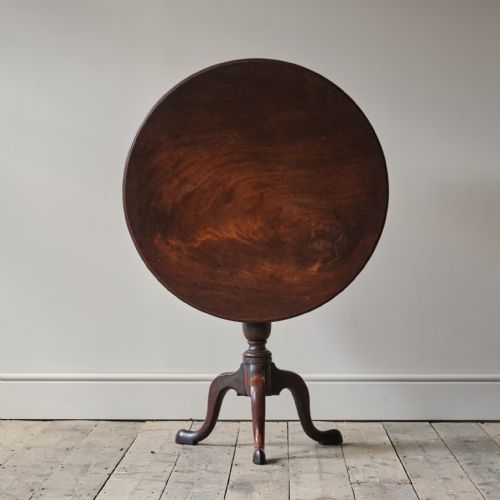
These tables serve as occasional, wine, supper or tilt-top side pieces designed to save floor space when tilted upright against a wall.
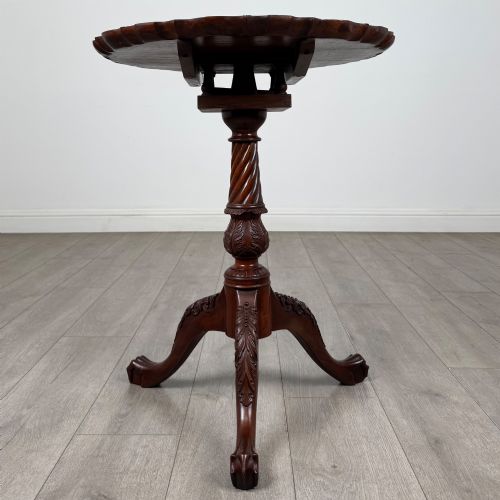
The defining architectural feature is the small timber cage beneath the circular top that allows both rotation and tilting actions.
Materials and construction
Makers predominantly selected solid mahogany for its dense grain and structural stability, occasionally utilising oak for country-made alternatives.
The pivoting mechanism relies on a pair of parallel wooden blocks connected by vertical spindles, creating the miniature cage framework.
Tripod bases terminate in three curved legs, frequently featuring pad or claw-and-ball feet supporting a central turned pillar.
Antique Birdcage Table Retail Price Guide 2026
Typical asking prices for birdcage table among the pieces listed under this phrase on Sellingantiques today, from the lower quarter to the upper quarter. They describe what is for sale here now, not the wider market.
The listings span from the seventeenth century through the Edwardian era, with eighteenth-century Georgian mahogany examples dominating the material record.
Evaluating craftsmanship
Quality rests upon the selection of timber, visible in single-piece circular tabletops rather than joined planks, alongside fine turning on the central column.
The tightness and smooth operation of the birdcage mechanism demonstrate superior joinery, where minimal play exists between the moving spindles and the top block.
Refined examples exhibit carved details such as piecrust rims or pierced galleries rather than plain turned edges.
John Bivins·Windmills and Bennet·William Clement of Totnes·Paul Lelong
The Antique Birdcage Table Glossary
- Birdcage
- A timber framework of small vertical spindles placed beneath the tabletop that permits the surface to tilt and rotate independently of the column.
- Tilt top
- A tabletop mounted on a catch mechanism allowing the surface to fold vertically when not in use.
- Tripod base
- A pedestal support dividing into three spreading legs that provide stable footing for a central pillar.
- Supper table
- A large occasional table intended for dining use, frequently fitted with a birdcage action to clear floor space.
- Piecrust edge
- A raised, scalloped tabletop border carved from the solid wood rim of the circular surface.
Antique Birdcage Table: Frequently Asked Questions
What is an antique birdcage table used for?
These pieces functioned historically as flexible furniture for drawing rooms, serving tea, wine, or supper before folding flat to stand against a wall.
Today they serve as occasional accent furniture, side tables, or lamp stands that introduce period proportion to modern rooms.
How does the birdcage mechanism work?
The mechanism consists of a small wooden frame fitted directly beneath the tabletop, containing tiny turned spindles that link the surface to the central pillar.
This construction allows the tabletop to rotate horizontally in a full circle and tilt vertically for storage.
How do I date an antique birdcage table?
Dating relies on examining the timber selection, leg profiles, and the turning style of the central pedestal column against known eighteenth and nineteenth-century design periods.
Georgian examples frequently feature dense mahogany, single-piece tops, and slender tripod legs ending in pad or ball-and-claw feet.
Are all birdcage tables tilt top?
The defining characteristic of the birdcage support is its dual function permitting both rotation and the tilting action of the surface.
While almost every example incorporates this pivoting capability, occasional variations focus primarily on the revolving movement of the supper table top.