

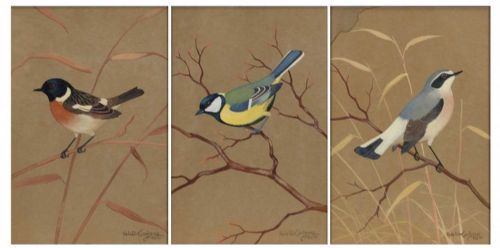


Antique Bird Watercolour
These delicate works capture avian subjects on paper, offering buyers a window into historic natural illustration and decorative art.
Antique Bird Watercolour
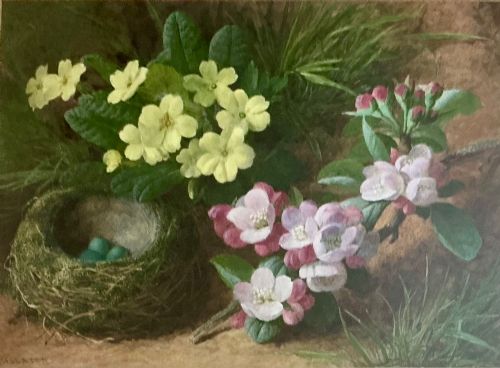
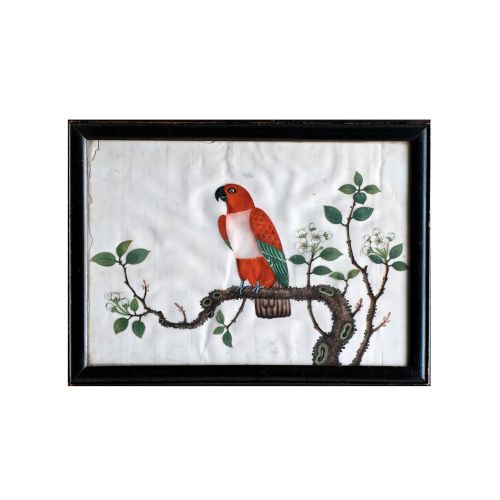
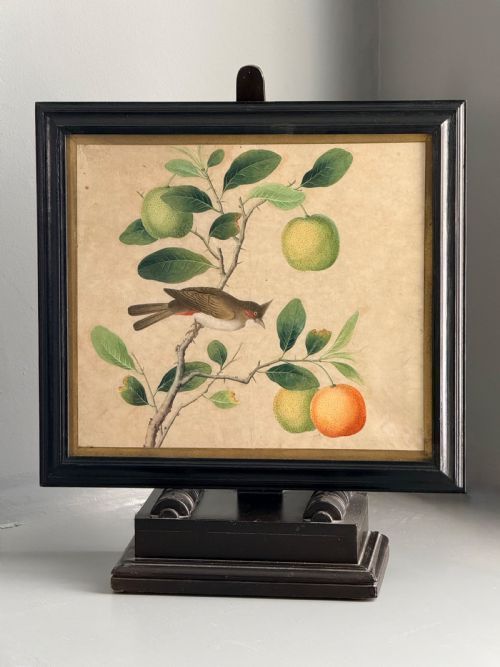
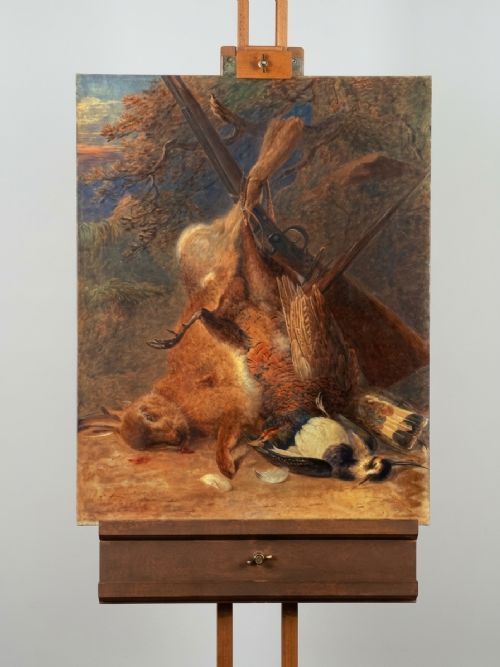
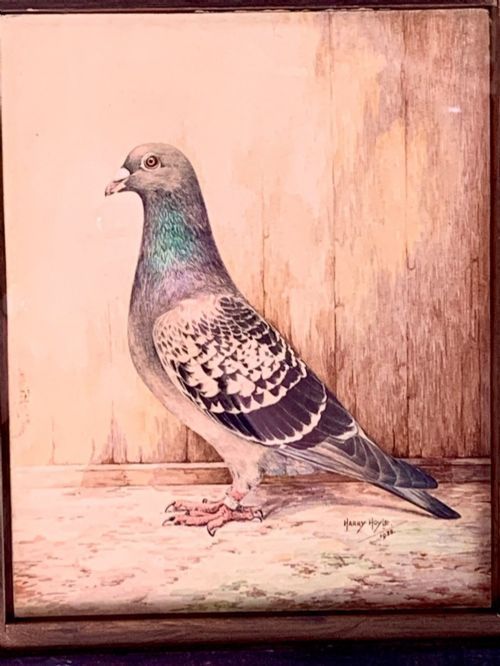
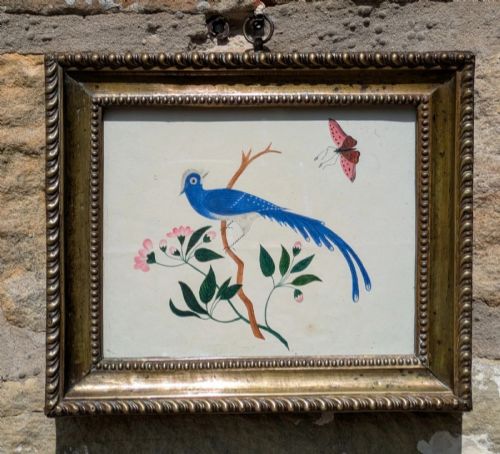
An antique bird watercolour represents a painted study or decorative depiction of avian subjects created on paper or pith paper, ranging from detailed natural history observations to charming Regency and Victorian compositions. These works appear within framed artwork, paintings, and wall art, reflecting centuries of artistic interest in ornithology and domestic decoration.
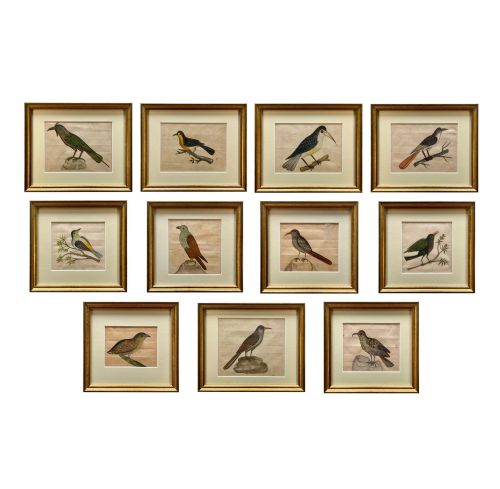
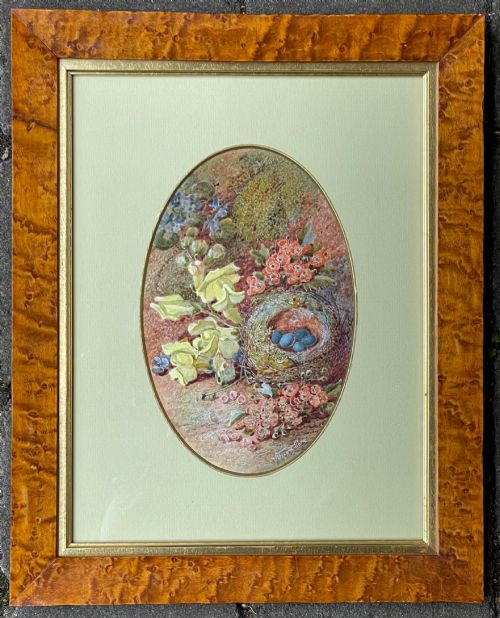
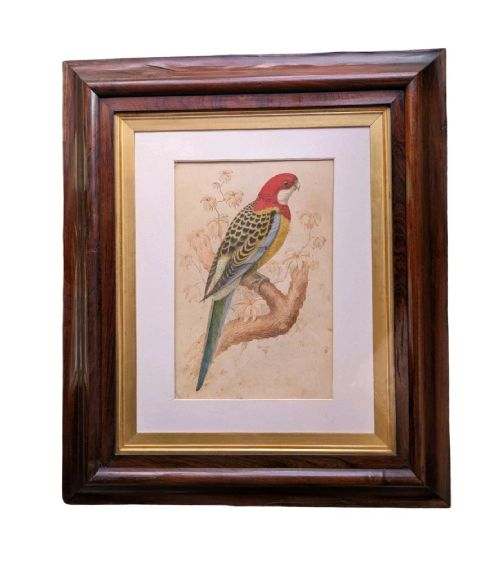
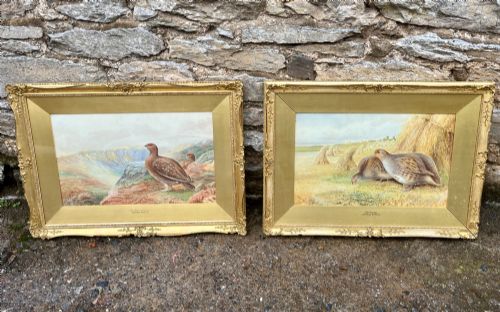
The selections available on this page include examples spanning the Georgian, Regency, Victorian, Edwardian, and mid-twentieth-century periods. Buyers will encounter individual framed paintings, matched pairs, and series depicting garden birds, game birds, exotic species, and birds situated among branches or floral nests.
Originating from British studios, European continental hands, and Chinese export traditions, these watercolours demonstrate varied regional approaches to avian subjects. Pieces may present solitary specimens with scientific precision or place birds within romantic landscapes and botanical still life settings.
How they were made
Artists applied watercolour paint, bodycolour, and gouache onto paper or prepared pith paper, often building transparent washes alongside opaque highlights to render plumage texture and iridescent colour. Many works incorporate delicate pen and ink detailing to define the fine structure of feathers, beaks, and claws.
Surviving pieces rely on traditional framing methods, utilising wood frames such as maple, ebonised timber, and gilded mouldings alongside glass protection. Deep giltwood mounts and original mats frequently accompany these watercolours, preserving the delicate painted surfaces from direct contact with glazing.
Antique Bird Watercolour Retail Price Guide 2026
Typical asking prices for bird watercolour among the pieces listed under this phrase on Sellingantiques today, from the lower quarter to the upper quarter. They describe what is for sale here now, not the wider market.
Several feathered subjects include royal competition winners, carrier pigeons, and rogue parrots immortalised on paper.
What varies in quality
The standard of execution depends upon the precision of brushwork and the artist's ability to render anatomical accuracy and lifelike posture in the bird. Superior examples display meticulous attention to feather patterning and naturalistic light, whereas simpler works adopt a more generalized decorative approach.
Preservation of pigment vibrancy and paper condition differentiate examples across the range. Watercolours that retain their original colour intensity without excessive fading, paired with period frames and mounts, demonstrate higher integrity.
George Sydney Shepherd·Vincent Clare·R. Hurst·George Rankin·Frederick Tatham·Ralston Gudgeon·William Andrews Nesfield·Harry Bright·Eloise Harriet Stannard·William Stephen Coleman·Arthur Wardle·R Lauritsch·Rowland Henry Hill·John Sherrin·Paul-Louis Barruel·Arthur E Gonne·William Cruikshank·Archibald Thorburn
The Antique Bird Watercolour Glossary
- Bodycolour
- Watercolour paint mixed with a white pigment to make it opaque. This technique adds solid highlights and dense areas of tone to an otherwise transparent medium.
- Gouache
- A heavy, opaque water-based paint similar to bodycolour. It provides flat, vibrant areas of colour often used in natural history illustration.
- Pith paper
- A delicate porous material formed from the pith of the Tetrapanax papyrifer plant. Artists used this fragile surface primarily for Chinese export paintings.
- Giltwood
- Wood carved and coated with gold leaf or metallic powder. It frequently forms the decorative surface of period frames and deep mounts.
- Birdseye maple
- Timber featuring characteristic small circular markings resembling birds' eyes. It was a favoured wood for framing nineteenth-century works on paper.
Antique Bird Watercolour: Frequently Asked Questions
What periods do these watercolours come from?
The works span from the eighteenth century through the Regency, Victorian, and Edwardian eras up to the mid-twentieth century. Stylistic indicators within the mounting and framing often assist in dating the piece alongside the artist's recorded working years.
Earlier examples often reflect botanical or natural history interests, while later twentieth-century works lean towards expressive realism or illustrative publication pieces.
How were these bird paintings originally displayed?
Many were housed in domestic parlours, studies, or libraries within matching wooden frames, frequently featuring maple or ebonised finishes. They served both as decorative art and as evidence of the owner's appreciation for natural history.
Collectors often kept smaller studies within portfolios before framing them later for wall display.
Are these works hand-painted originals?
The listings consist entirely of original hand-painted watercolours, gouache works, and bodycolour illustrations on paper or silk. Artists applied wet media directly to the surface by hand rather than utilising mechanical reproduction.
Examining the surface under magnification reveals individual brushstrokes and the physical texture of pigment resting on the paper fibres.
How should I protect an antique watercolour?
Watercolours are sensitive to ultraviolet light and damp environments, which can cause pigments to fade and paper to develop foxing spots. Hanging them away from direct sunlight preserves the original colour intensity of the bird plumage.
Ensuring that the framing uses acid-free backing materials prevents chemical degradation of the paper over time.