


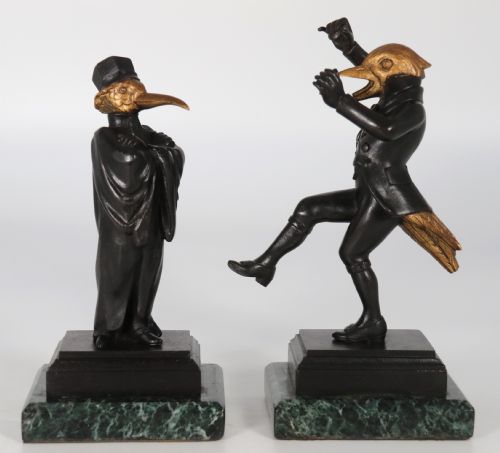


Antique Bird Sculpture Base
An antique bird sculpture base anchors figures of hawks, budgerigars and gulls to marble, onyx, quartz, wood and granite plinths.
Antique Bird Sculpture Base
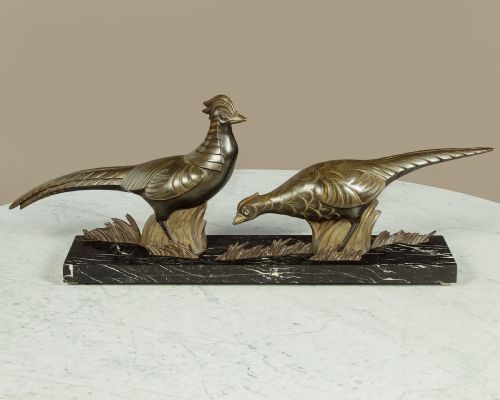
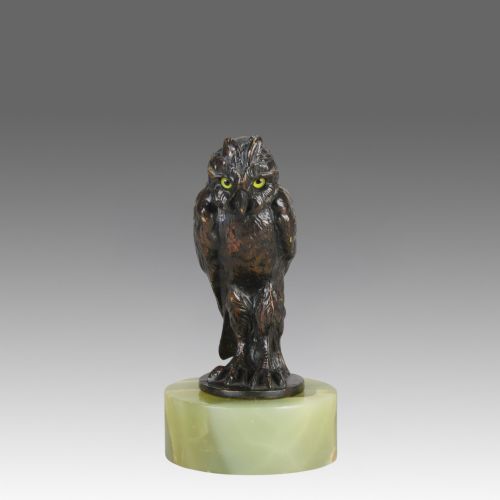
Pieces frequently emerge from the Victorian era and the Art Deco period, incorporating styles such as Animalier, Viennese cold painting and folk art. You will encounter subjects including hawks, owls, pheasants, budgerigars and waterfowl secured firmly to their respective foundations.
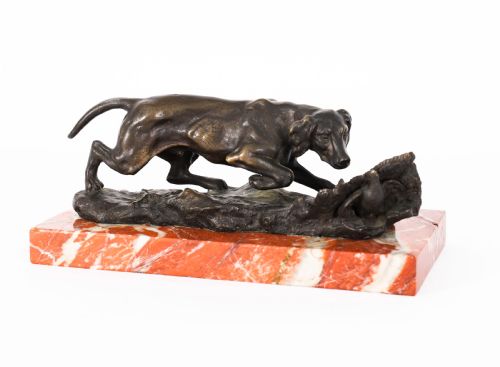
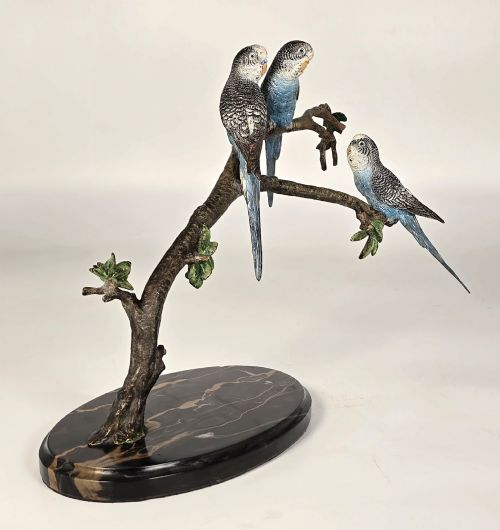
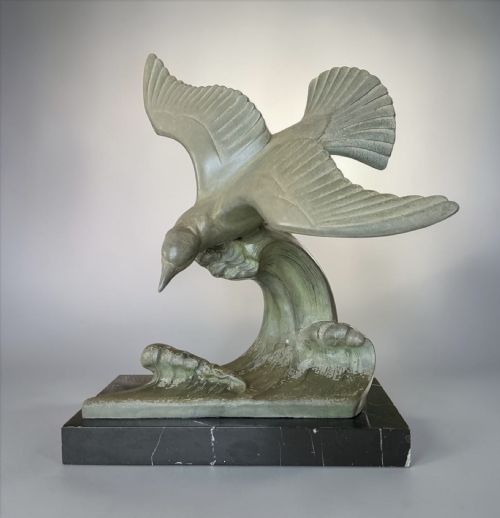
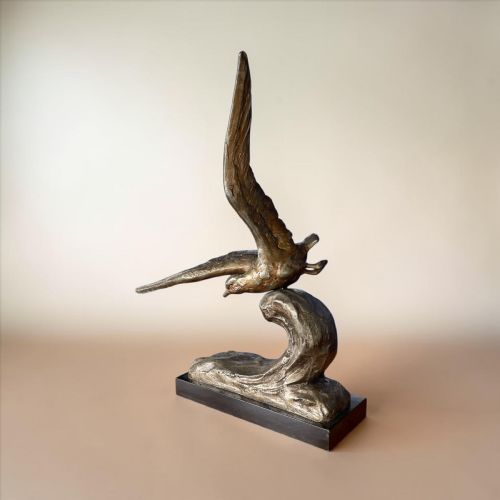
Many examples integrate the mounting plinth as an essential element of the design, such as a wave supporting an albatross or a naturalistic branch emerging from a stone base. These combinations establish stability while framing the sculptural subject above.
Materials and construction methods
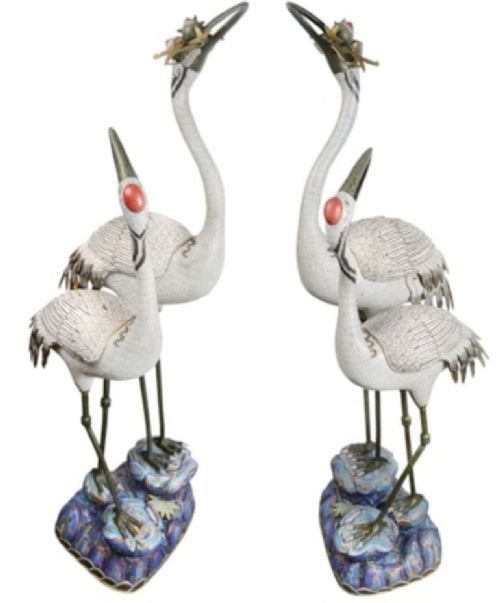
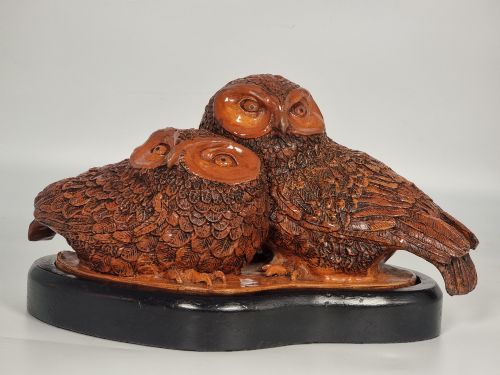
Foundations rely heavily on dense heavy stones such as black marble, white marble, onyx, granite and unworked quartz rock to anchor cantilevered or top-heavy metal sculptures. Wood bases, including mahogany and root wood, provide traditional warm alternatives for oriental bronzes and folk art carvings.
The sculptural elements affixed to these bases utilise bronze, brass, silvered bronze and patinated metal, frequently enhanced with cold painted polychrome finishes. Artisans secure the figures using threaded rods, pins or nuts fitted through the underside of the stone or wooden plinths.
A theatrical pair of metal birds wears expressions suggesting they have deeply strong opinions about the local weather.
Evaluating craftsmanship and integrity
Quality reveals itself in the harmony between the bird and its foundation, where heavy stone plinths balance the outward projection of wings or tails without tipping. Superior examples feature custom-fitted mounts rather than generic blocks adapted long after initial production.
The fidelity of the casting and the preservation of hand-applied cold paint or patination distinguish finer studio works from commercial pieces. Careful integration of naturalistic elements, such as quartz rock or carved waves, signals superior artistic execution.
Carl Kauba·Franz Xaver Bergmann·Zoldan Kovats·Gyoko·P.MAREC
The Antique Bird Sculpture Base Glossary
- Cold painted bronze
- Bronze figures decorated with unfired oil-based paints applied after casting. This technique is particularly prevalent in Austrian animal bronzes.
- Animalier
- A nineteenth-century artistic movement dedicated to the realistic depiction of animals. Sculptors in this tradition paid close attention to anatomical accuracy.
- Patinated metal
- Metal treated with chemicals, heat or acids to produce a coloured surface layer. It protects the underlying alloy and creates varied bronze or dark tones.
- Qing Dynasty
- The final imperial dynasty of China, lasting from the mid-seventeenth century until the early twentieth century. Pieces from this era often feature distinctive ceramic glazes.
- Vienna Bronze
- Small, highly detailed bronze figures produced in Austrian workshops during the late nineteenth and early twentieth centuries. They are renowned for intricate cold-painted finishes.
Antique Bird Sculpture Base: Frequently Asked Questions
Are bronze birds always mounted to marble?
Bronze birds appear on a diverse variety of materials depending on their period of origin and intended aesthetic. While black marble and onyx are common for Art Deco pieces, other works utilise natural quartz rock, root wood, mahogany or granite.
Folk art examples frequently employ simpler painted wood or metal plates as foundations. The choice of base generally reflects the artistic conventions of the workshop and the weight distribution of the sculpture.
What does cold painted mean on bronze?
Cold painting describes a technique where pigment is applied to a finished bronze casting without being subjected to kiln firing. This method allowed artisans to achieve vibrant, multicoloured plumage on birds such as budgerigars, hawks and owls.
Because the paint sits on the metal surface rather than fusing with it, surviving examples often display characteristic wear that helps confirm their age. Gentle handling preserves these delicate polychrome finishes.
How can I tell a Victorian base from Art Deco?
Victorian and nineteenth-century bases tend to feature ornate naturalism, heavy carved timbers or classical mouldings that reflect academic sculptural traditions. The birds mounted upon them often display dramatic narrative action, such as hunting dogs or sporting birds.
Art Deco bases from the 1920s and 1930s favour geometric streamlining, sleek polished black marble slabs, stepped profiles and contrasting materials like opaline glass or chrome. The avian subjects in these later pieces emphasise stylised silhouettes and aerodynamic lines.