





Antique Bijar Rug
An antique bijar rug brings heavy Kurdish weaving traditions into a room, offering dense pile and lasting structure.
Antique Bijar Rug
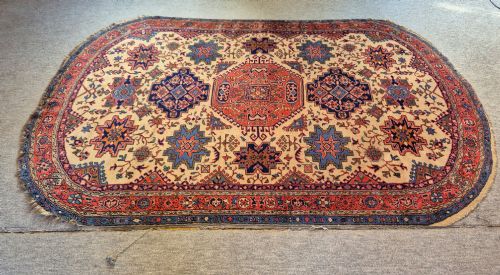
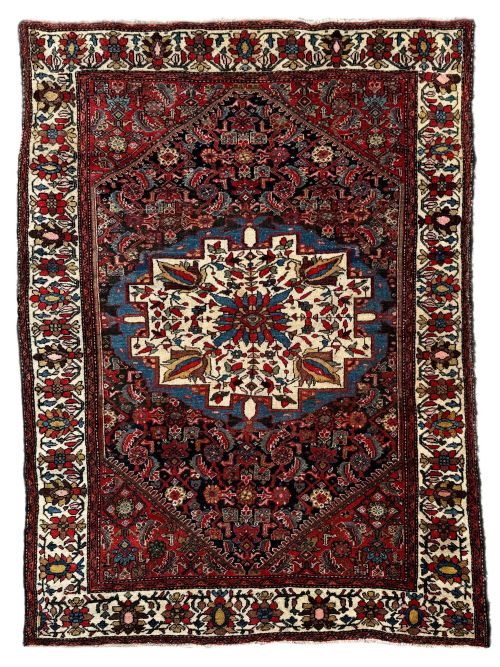
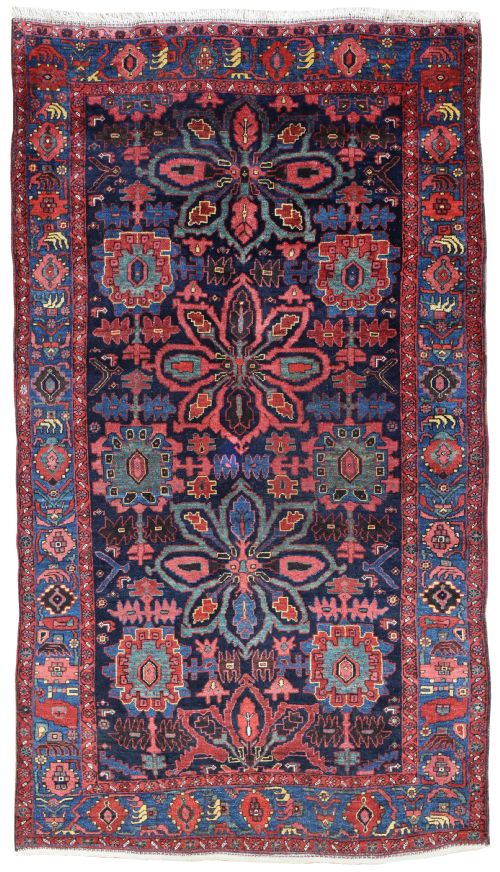
An antique bijar rug is a heavy wool floor covering originating from the Kurdish region of West Persia. These pieces arrive in various formats on this page, ranging from small area rugs and runners to large room-size carpets and kilims.
The objects span from the nineteenth century into the early decades of the twentieth century. Traditional Persian designs and Kurdish tribal motifs dominate the selection, often taking the form of large carpets or smaller kelleh formats.
Materials and construction
Makers constructed these pieces using wool and hand-spun wool for the pile, supported by cotton foundations. The heavy construction relies on tightly packed knots and dense beating of the weft during weaving.
Weavers utilised traditional Persian and Kurdish methods to produce flatwoven kilims alongside knotted carpets. Natural colour variations appear across the pile, including unusual lemon grounds on specific tribal examples.
Antique Bijar Rug Retail Price Guide 2026
Typical asking prices for bijar rug among the pieces listed under this phrase on Sellingantiques today, from the lower quarter to the upper quarter. They describe what is for sale here now, not the wider market.
One unexpected piece turns up with an unusual lemon ground colour, showing the playful eye of the Kurdish weaver.
Factors that define quality
Quality rests on the density of the weave and the crispness of the traditional Persian or Kurdish design. Heavier knotting and sturdier construction separate room-size carpets and kelleh formats from lighter village pieces.
The Antique Bijar Rug Glossary
- Kelleh
- A large rectangular format of Persian carpet, typically longer than a standard area rug. These proportions suit hallways and principal rooms.
- Kilim
- A flatwoven textile produced without a pile. These pieces offer lighter floor coverings or wall hangings.
- Kurdish
- Pertaining to the weavers of West Persia who produced these rugs. Their tribal techniques created exceptionally dense structures.
- Runner
- A long, narrow carpet format designed for corridors and passages. These pieces feature elongated traditional patterns.
- Pile
- The upright wool surface of the rug formed by knotted yarn. The thickness and tightness of this layer determine the weight of the piece.
Antique Bijar Rug: Frequently Asked Questions
How do I clean an antique bijar rug?
Vacuum gently without using a rotating brush roll to protect the wool pile and cotton foundation.
Professional specialist cleaning is recommended for deep dirt to preserve the natural fibres and dyes.
Where were these rugs made?
These textiles originate from the town of Bijar and surrounding Kurdish villages in West Persia.
Local weavers produced them using traditional tribal methods passed down through generations.
What size do these carpets come in?
The selection includes small area rugs, long runners, and large room-size carpets.
Dimensions range from compact formats under two metres up to grand carpets exceeding five metres in length.
How do I date an older rug?
Dating relies on stylistic markers, construction techniques, and materials like hand-spun wool.
Listings place these examples across the nineteenth and early twentieth centuries.