


Antique Belgian Artwork
These antique belgian artwork pieces span nineteenth-century realism to early twentieth-century movements, offering collectors rich oil paintings and delicate drawings to furnish period interiors.
Antique Belgian Artwork
When buyers search for antique belgian artwork, they encounter a range of framed oil paintings, watercolours, and pencil drawings created across the nineteenth and early twentieth centuries. These works include animal paintings, maritime scenes, farmyard views, and domestic interiors produced by regional artists and masters.
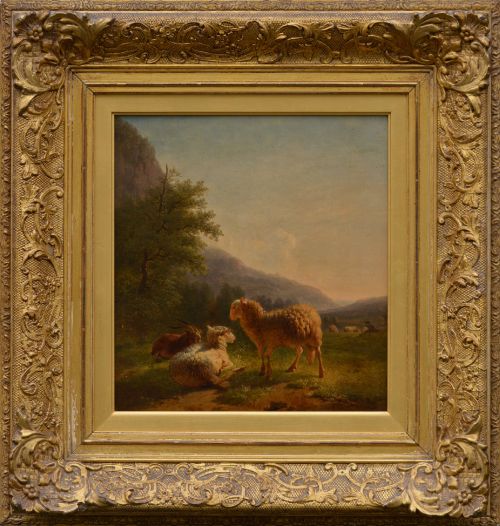
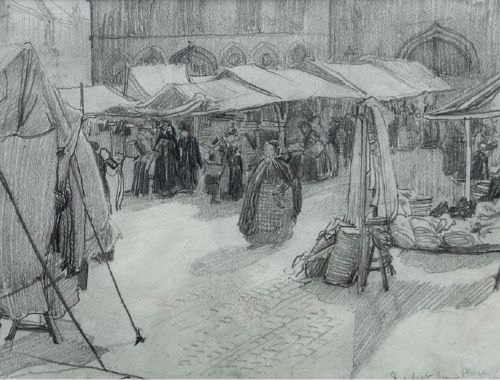
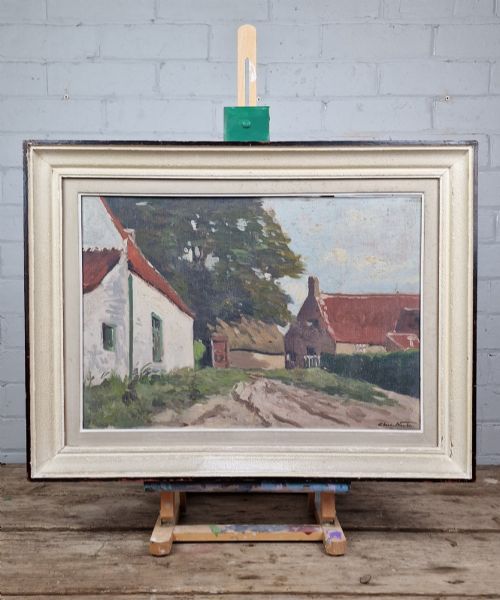
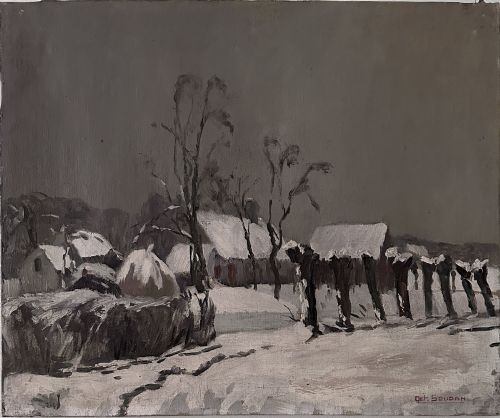
The most common pieces on this page are nineteenth-century oil paintings on canvas or board depicting rural landscapes and livestock, reflecting the dominant realist and romantic tendencies of the period. Alongside these are early twentieth-century watercolours and post-impressionist works capturing local markets and coastal views.
How they were made
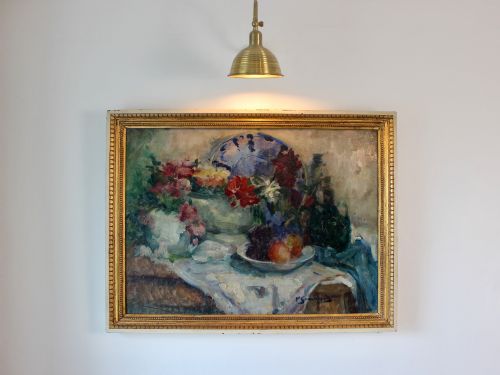
These works rely on traditional painting and drawing supports, primarily oil paint applied to canvas, wood panels, or paper, often mounted within period giltwood or gesso frames. Pigments are brushed onto prepared grounds with careful attention to light, shadow, and texture, particularly within luminist and realist compositions.
Works on paper utilise charcoal, pencil, or watercolour techniques, capturing finer details in architectural and figural subjects. Original framing frequently incorporates moulded gesso and gilt finishes that complement the visual weight of the paintings.
Sheep and workhorses dominate the pastures, quietly outnumbering the human portraits across these nineteenth-century Belgian fields.
What varies in quality
Quality in these pieces rests upon the confidence of the brushwork, the depth of the composition, and the fidelity of the tonal balance established by the artist. Stronger examples display assured handling of light and anatomical proportion, whereas lesser works show stiffer execution and more formulaic arrangements.
The preservation of the original painted surface and the integrity of the accompanying period frame also contribute significantly to the standing of a piece. Works that retain their original stretcher bars, untouched paint layers, and period gilding command greater appreciation among collectors.
Eugène Verboeckhoven·Charles Houben·Louis Charles Verwee·Victor Simonin·Paul Delvaux·Frans Gailliard·Franz van Severdonck·Jules Rambo·Pauwels·Jules Evarist van Biesbroeck·Frederick Tully Lott·Hendricus Joseph Dillens·Pierre Emmanuel Dielmans·Henri Schouten·Paul Jean Clays·Gustav Goemans·Fernand Toussaint·J L VAN Leemputten·GH Thompson·Maurice Wagermans·Paul Paul
The Antique Belgian Artwork Glossary
- Luminism
- A nineteenth-century painting style focusing on the effects of light on landscape and atmosphere. It emphasises detailed brushwork and subtle tonal gradations.
- Post-Impressionism
- An art movement extending impressionism while rejecting its limitations, favoring heavier reliance on symbolic content and distinct colour patterns.
- Giltwood
- Wood that has been thinly coated with gold leaf or gold paint. It is commonly found on antique picture frames.
- Gesso
- A plaster-like binder mixture used to prepare wood or canvas surfaces for painting or to form moulded details on frames. It provides a smooth base for subsequent gilding or pigment application.
- Trench art
- Decorative items made by soldiers, prisoners of art, or civilians from war scraps and materials. Battlefield drawings and carved objects from the First World War fall into this category.
Antique Belgian Artwork: Frequently Asked Questions
What subjects appear in antique belgian artwork?
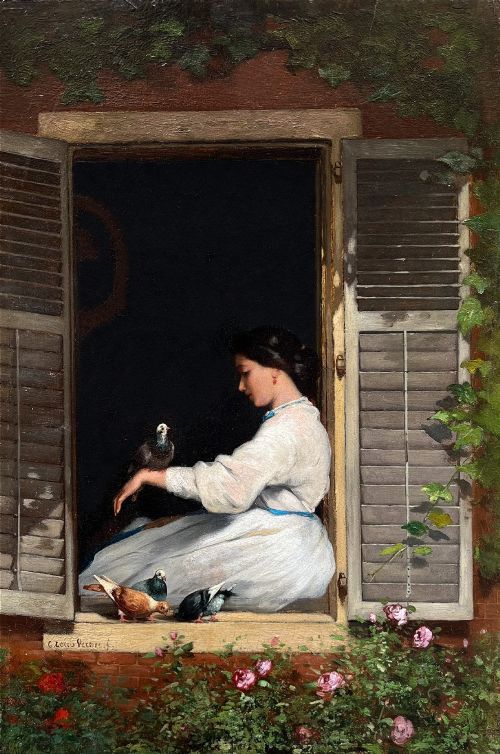
The listings feature a high proportion of pastoral scenes, featuring sheep, ponies, and cattle rendered by nineteenth-century animal painters. Other recurring subjects include maritime vessels, bustling markets, farmyards, and interior domestic moments.
Artists also recorded city views and coastal towns such as Bruges and Ostend through watercolours and pencil drawings. These varied subjects mirror the broader European shifts from romanticism toward realism and post-impressionism.
How can I date an antique belgian painting?
Dating relies primarily on stylistic evidence, signatures, biographical records of the artist, and the physical construction of the canvas and frame. Nineteenth-century works frequently employ dark, earthy palettes and romantic or realist compositions, while early twentieth-century pieces incorporate brighter palettes influenced by impressionism.
Examine the back of the panel or stretcher for old labels, inscriptions, or stamps left by framing shops and galleries. Comparing the signature with documented examples from the same artist provides a narrower window of creation.
Are most of these pieces framed?
A substantial portion of the pieces listed retain their original or period frames, which are frequently constructed from wood with gesso and gilt ornamentation. These frames often complement the aesthetic of the artwork and provide historical context regarding how the piece was displayed.
Buyers should examine listing descriptions to confirm whether a frame is period-correct or a later replacement. Original framing enhances the integrity of the piece as a complete historical object.
How should I care for antique oil paintings?
Keep oil paintings away from direct sunlight, excessive heat sources, and damp environments to prevent the canvas from warping and the paint from cracking. Dust the surface gently with a soft, dry brush without applying pressure to the pigment.
Avoid using household cleaning products, water, or solvents on the painted surface or the gilt frame. Professional conservation should be sought if the canvas requires cleaning or structural repair.