







Antique Bedspread
These antique bedspread textiles bring patterned cotton, silk, and linen into interiors through regional embroidery and weaving traditions.
Antique Bedspread
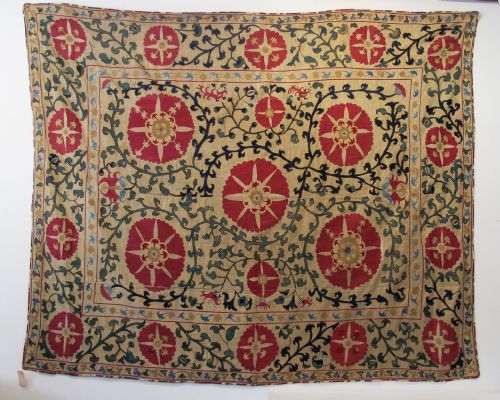
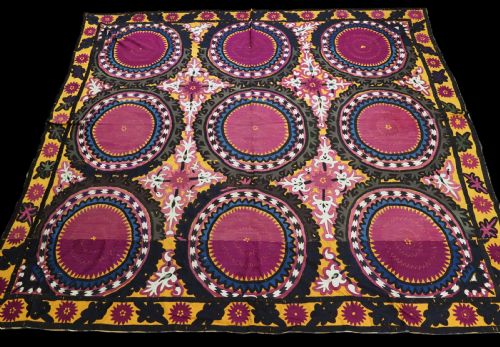
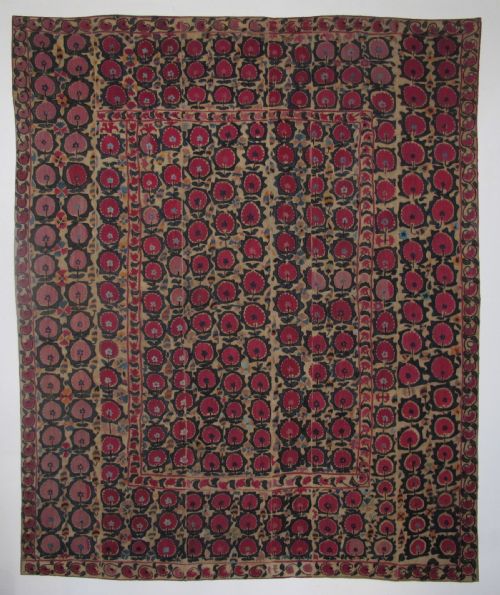
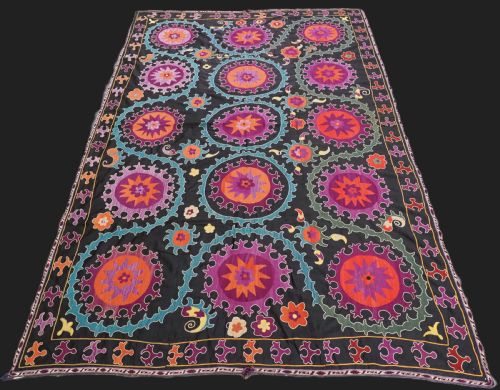
When you search for an antique bedspread, you find a range of large decorative textiles including Central Asian suzanis, Indian palampores, and British linen coverlets. The pieces on this page span from the eighteenth century through to the early twentieth century, originating from regions such as Uzbekistan, Persia, and Britain.
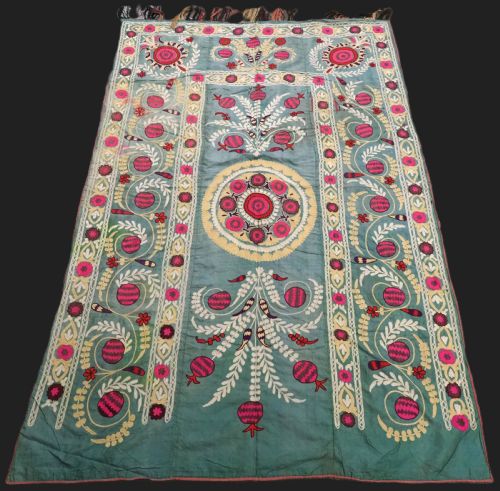
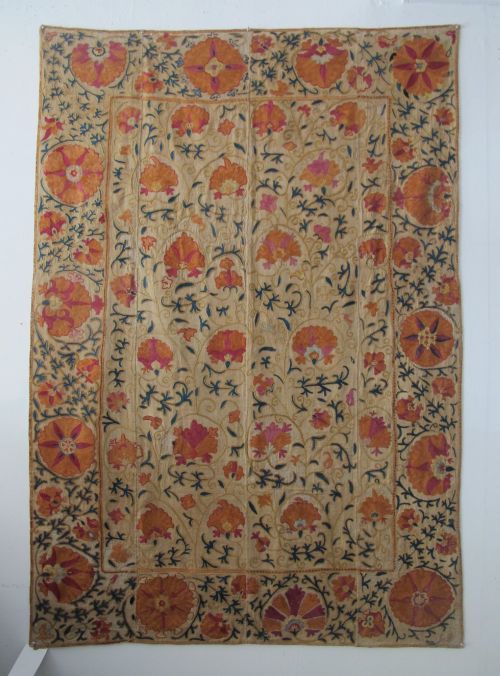
The most common examples encountered here are Uzbek suzanis worked in silk embroidery on cotton or adras grounds, alongside flat-woven jajim textiles and quilted linen coverlets. These textiles functioned traditionally as bed covers, wall hangings, and ceremonial household furnishings.
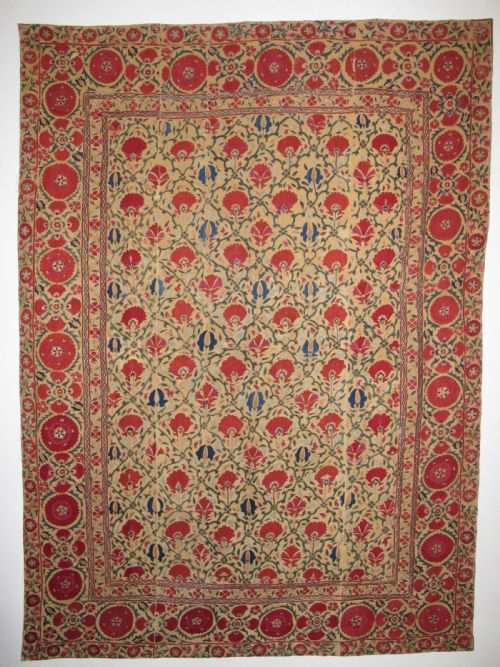
Makers utilised distinct regional patterns, from the bold medallions of Samarkand and Bukhara suzanis to the intricate floral motifs of Indian palampores and eighteenth-century British linen work.
Materials and construction methods
The foundation grounds rely on natural fibres, predominantly cotton, linen, and hand-woven silk and cotton blends known as adras, dyed with both natural and early synthetic colourants. Textile workers embroidered these grounds using fine silk thread, executing dense chain stitches and couching techniques.
Weavers also produced flat-weave textiles using wool and cotton on traditional looms, constructing striped and geometric floor spreads and wall hangings such as the Moj Mowj jajim from West Persia.
Workers quilted multiple layers of linen together for eighteenth-century British coverlets, creating textured surfaces through parallel lines of stitching.
Antique Bedspread Retail Price Guide 2026
Typical asking prices for bedspread among the pieces listed under this phrase on Sellingantiques today, from the lower quarter to the upper quarter. They describe what is for sale here now, not the wider market.
Listings on this page include nineteenth-century Central Asian suzanis worked in silk on cotton grounds from regions like Samarkand and Bukhara.
Assessing quality in textile pieces
Quality rests upon the density of the silk embroidery, the precision of the needlework, and the visual harmony of the colour palette across the textile ground. Pieces described as full work suzanis demonstrate a higher concentration of stitchery that covers more of the underlying fabric.
The condition of the textile ground and the stability of the silk thread determine the structural integrity of the piece. Surviving examples with vibrant natural dyes and minimal ground wear represent the upper end of the range.
The Antique Bedspread Glossary
- Suzani
- An embroidered Central Asian textile, usually worked in silk thread on a cotton or silk ground. These large decorative panels were traditionally made by brides as part of their dowry.
- Adras
- A hand-woven fabric made with a silk warp and a cotton weft, providing a firm ground for traditional embroidery. This material appears frequently in Central Asian textile production.
- Palampore
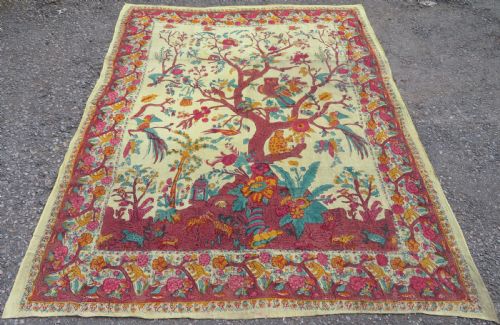
- A large, hand-painted or printed Indian cotton bed cover featuring intricate tree of life designs. These textiles were imported into Britain and Europe during the eighteenth century.
- Jajim
- A heavy flat-weave textile constructed in narrow strips and joined together, often utilising wool or cotton. These durable flat weaves served multiple domestic purposes as rugs and wall hangings.
- Nim suzani
- A smaller variant of the standard Central Asian suzani, covering a reduced surface area with embroidery. These compact pieces functioned as smaller covers or wall hangings.
- Coverlet
- A lightweight bed cover placed over other bedclothes for decorative effect. Eighteenth-century British examples often feature quilted linen construction.
Antique Bedspread: Frequently Asked Questions
How were antique bedspreads used traditionally?
These textiles served practical and ceremonial roles within domestic spaces across Central Asia, India, and Britain. They functioned as bed covers, dowry items, and decorative wall hangings in traditional homes.
In Central Asian households, large embroidered panels decorated domestic interiors and marked important family celebrations. British and Indian examples provided layered warmth and surface pattern on beds and furniture.
How do I care for an antique silk suzani?
Historic textiles require gentle handling to preserve fragile silk threads and older cotton or linen grounds. Keep them out of direct sunlight to prevent the fading of natural and early dyes.
Display these pieces as wall hangings using padded sleeves or specialist mounting methods to avoid putting weight on individual stitches. Professional textile conservation cleaning is recommended when required.
What is the difference between a suzani and a coverlet?
Suzanis are decorative embroidered textiles originating primarily from Uzbekistan, featuring silk needlework on cotton, silk, or adras grounds. They were produced as specific regional furnishings and dowry pieces.
Coverlets are bed covers designed to sit atop other bedclothes, encompassing British quilted linen examples and woven spreads. While both terms describe bed coverings, their construction methods and geographic origins differ.
How can I identify the age of an embroidered textile?
Dating relies on observing material characteristics, dye types, and regional design traits recorded in the textile. Eighteenth-century British pieces typically employ quilted linen, while nineteenth-century Central Asian examples feature distinct regional embroidery styles.
Structural details, such as the use of hand-spun cotton grounds and early natural dye palettes, help distinguish nineteenth-century production from later vintage examples.