

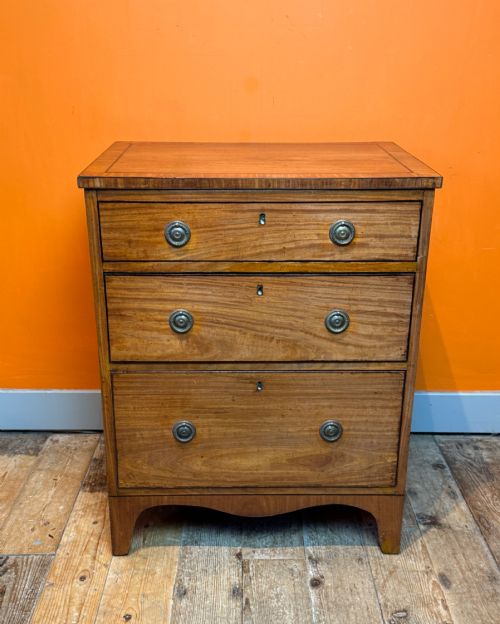
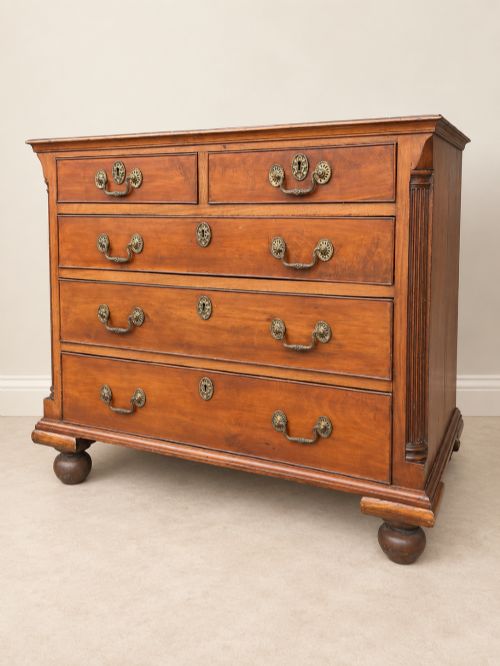
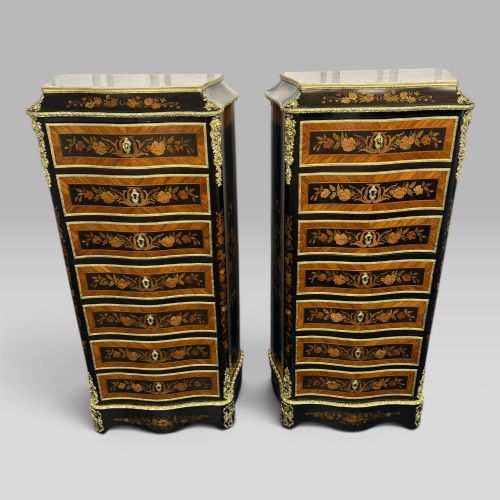
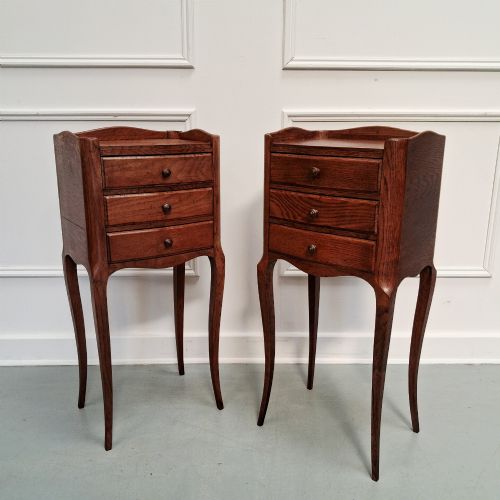

Antique Bedside Tallboy
An antique bedside tallboy provides compact vertical storage beside a sleeping space, bringing period timber and proportion into a bedroom.
Antique Bedside Tallboy
When you search for an antique bedside tallboy, you encounter narrow chests of drawers, bedside cabinets, and Wellington chests designed for compact spaces. These pieces span the Victorian, Edwardian, and Georgian periods, alongside twentieth-century revivals.
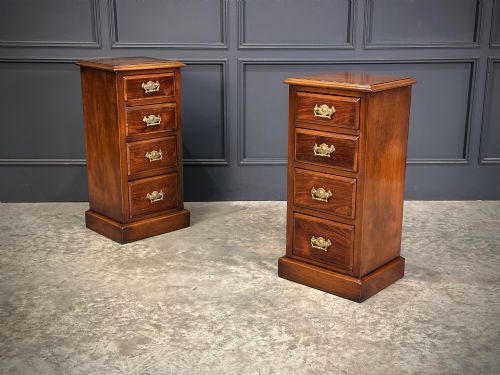
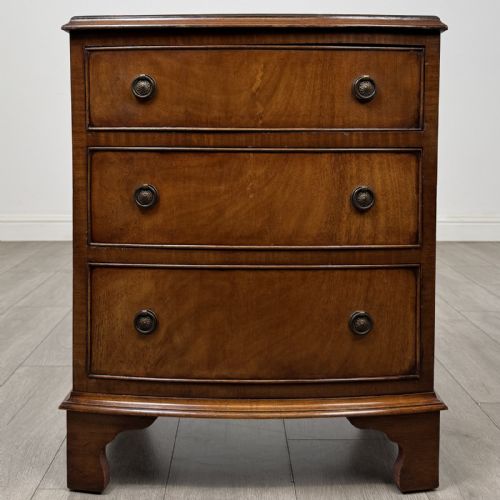
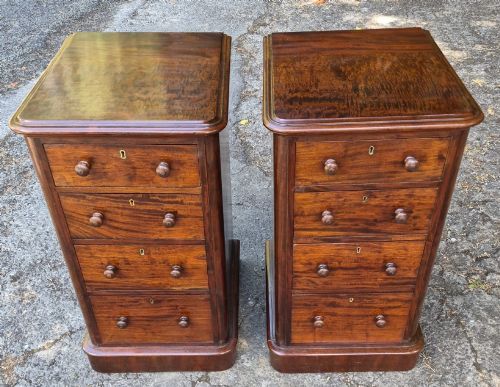
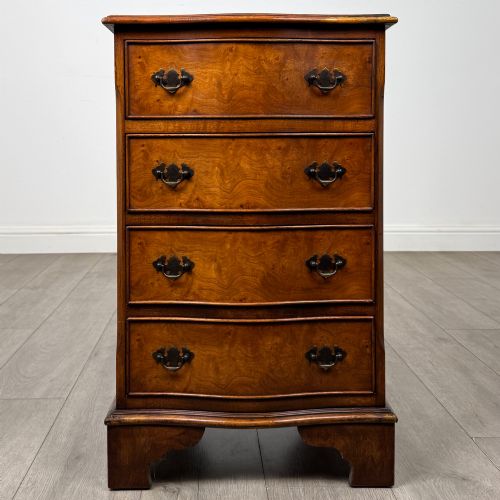
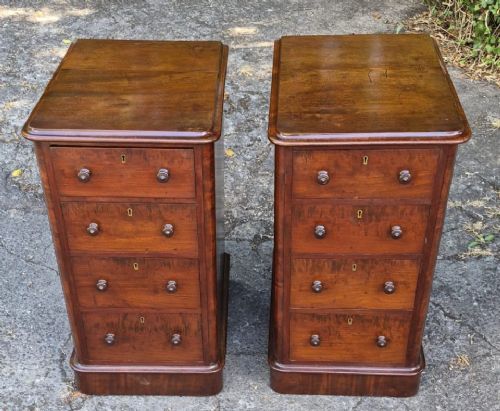
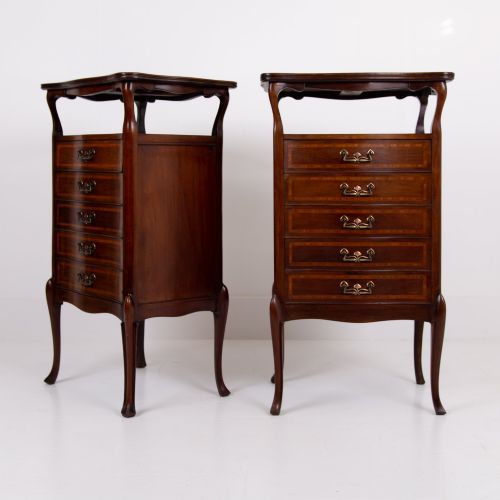
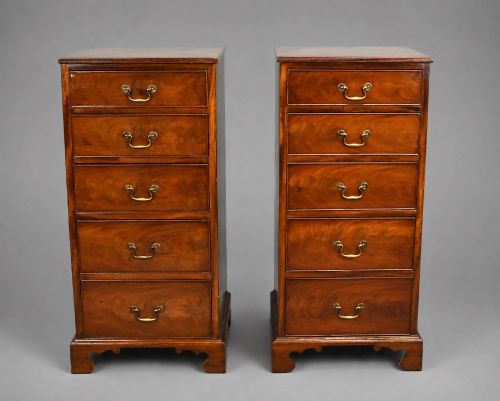
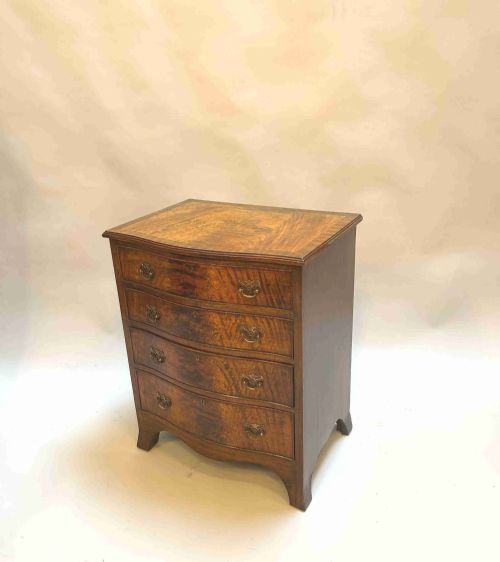
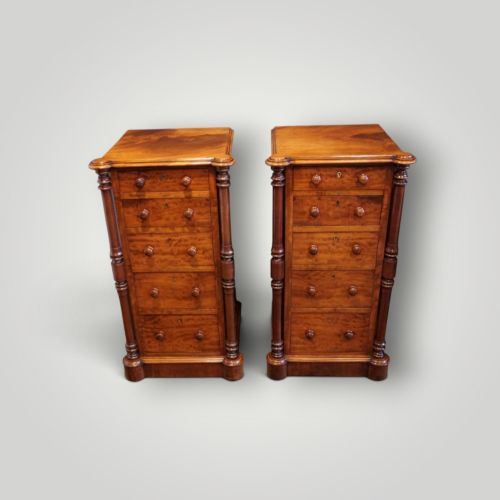
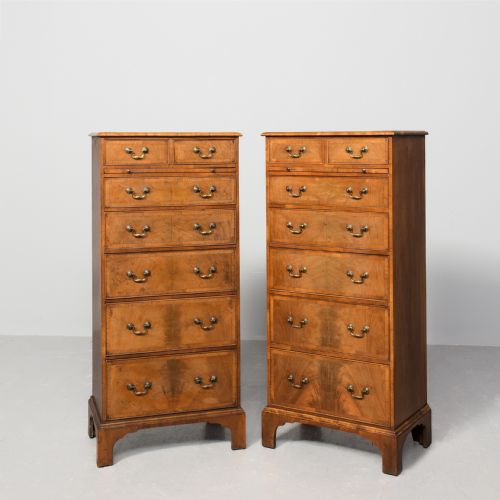
The selection on this page relies heavily on Victorian and Edwardian examples, frequently appearing as matched pairs. Forms range from bow fronts and serpentine shapes to narrow pillar chests fitted with multiple drawers.
Originating as practical bedroom furniture, these cabinets utilise heights well while keeping a minimal footprint next to a bed.
How they were made
Cabinet makers constructed these pieces primarily using solid mahogany, walnut, and pine, often enhanced by decorative veneers such as burr walnut, rosewood, satinwood, and kingwood. Timber selection dictated the visual weight and grain pattern of each drawer front.
Joinery techniques included traditional dovetailing for drawer construction and precise framing to support marquetry, parquetry, and inlay work. Brass handles, bracket feet, and brushing slides completed the functional detailing of the carcase.
Antique Bedside Tallboy Retail Price Guide 2026
Typical asking prices for bedside tallboy among the pieces listed under this phrase on Sellingantiques today, from the lower quarter to the upper quarter. They describe what is for sale here now, not the wider market.
Military-style lockers disguised as polite bedroom furniture let Victorian officers take their filing habits into the campaign tent.
What varies in quality
Quality rests in the precision of the timber matching and the crispness of the inlay or marquetry across the drawer fronts. Superior examples exhibit tightly fitted drawer joints and well-figured grain that flows naturally across the surfaces.
Proportions also dictate distinction, particularly in narrow or tall forms where balance is essential. Pieces retaining original brass hardware and well-preserved secondary timbers stand apart from altered items.
Warings Liverpool
The Antique Bedside Tallboy Glossary
- Tallboy
- A tall chest of drawers, often constructed in two sections, providing elevated storage with a compact footprint.
- Wellington chest
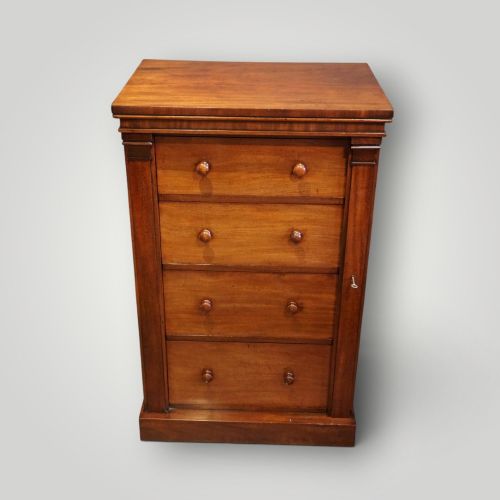
- A sturdy, vertical chest featuring a hinged locking stile that secures all the drawers simultaneously.
- Brushing slide
- A pull-out shelf integrated into the cabinet framework, originally used for folding clothes or grooming.
- Marquetry
- Decorative veneer work forming intricate pictorial patterns using various coloured woods.
- Serpentine
- A curved furniture front characterised by a convex centre flanked by concave curves.
Antique Bedside Tallboy: Frequently Asked Questions
What is an antique bedside tallboy used for?
These tall chests provide enclosed drawer storage suited to tight spaces beside a bed. Their vertical build holds personal items while maintaining a minimal floor footprint.
They function equally well as standalone drawer units in smaller dressing rooms or studies where horizontal surface area is limited.
How do I identify a Victorian tallboy?
Victorian pieces typically employ solid mahogany, burr walnut, or rosewood, often featuring deep colour and heavier proportions than earlier Georgian furniture. Drawer construction relies on hand-cut dovetails and solid secondary timbers like pine.
Details such as turned wooden knobs, brass drop handles, or locking side stiles on Wellington chests help confirm the nineteenth-century origin.
Are these chests usually found as pairs?
Many listings for bedside cabinets and narrow chests appear as matched pairs, particularly from the Victorian and Edwardian eras. Cabinet makers often produced symmetrical sets for twin bed arrangements.
Finding a matched pair remains desirable for balanced bedroom placement, though single pieces also appear frequently in the selection.
How do I care for antique timber furniture?
Keep wooden chests away from direct heat sources and strong sunlight to prevent the timber and delicate veneers from drying out or splitting. Routine dusting with a dry, soft cloth maintains the polished surface.
Occasional application of traditional beeswax feeds the grain and preserves the patina without building up synthetic residues.